Loading market data...
Boeing is on the cusp of a landmark 500-jet 737 Max deal with China, expected during President Trump's March 2026 visit, signaling a major boost for the aviation giant and US-China trade.
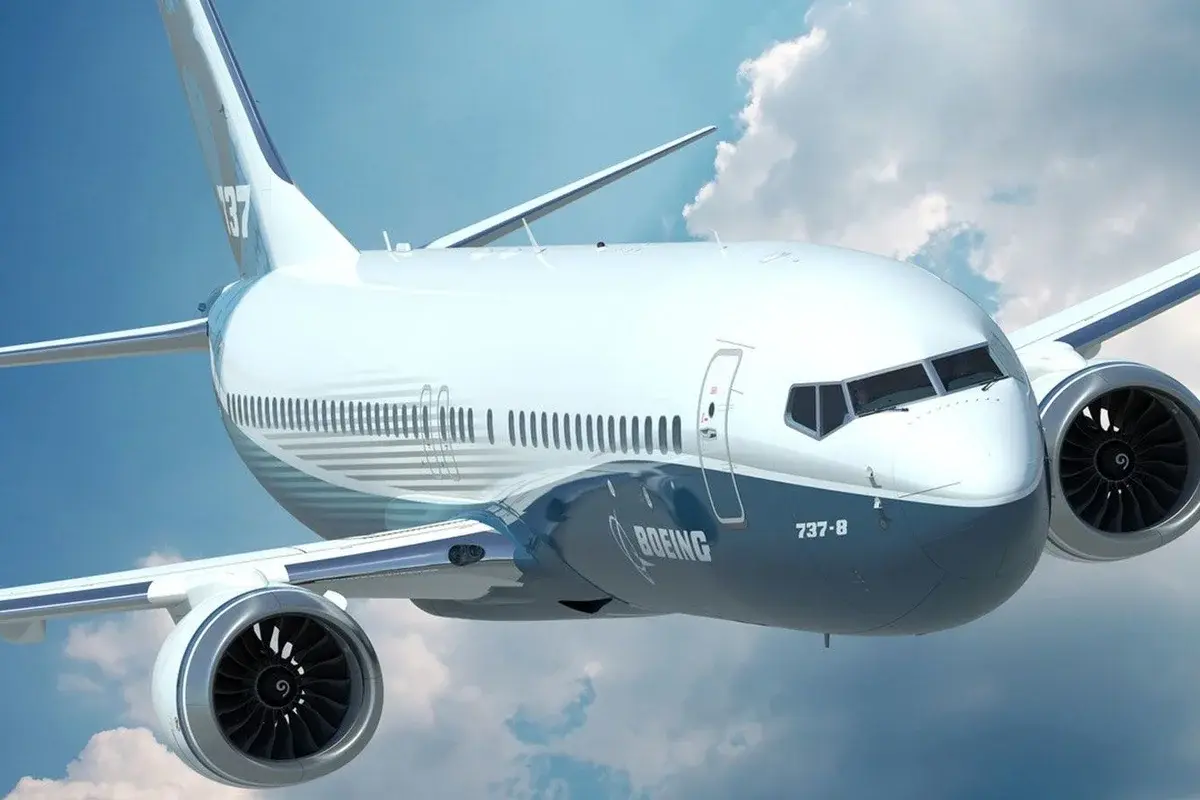
SEATTLE, USA – As global aviation markets continue their robust recovery, Boeing Co. stands on the precipice of securing one of its largest aircraft orders in history: a potential deal for 500 '737 Max' jets to China. This monumental sale, keenly watched by investors and industry analysts, is anticipated to be unveiled during President Donald Trump's upcoming state visit to Beijing, scheduled from March 31 to April 2, 2026. This trip marks President Trump's first official visit to China since 2017, underscoring the strategic trade implications of this high-profile negotiation.
The Catalyst
The potential 500-aircraft order for Boeing 737 Max jets serves as a significant catalyst, aiming to inject substantial momentum into Boeing's order book and financial outlook. Beyond the narrowbody deal, negotiations are also progressing for a separate widebody aircraft transaction, which could involve approximately 100 Boeing 787 Dreamliner and 777X aircraft. While the narrowbody deal is expected to feature prominently during the upcoming summit, the widebody agreement may be finalized and announced at a later date. This strategic timing highlights the intricate dance between commercial aviation and high-level international diplomacy, with aircraft orders frequently serving as centerpieces in broader trade negotiations between the U.S. and China.
Financial Forensics
This potential order is critical for Boeing (BA), as China, historically a cornerstone of its business, has significantly scaled back orders in recent years. Historically, China accounted for approximately 25% of Boeing's total order book. However, this figure has dwindled, with Boeing currently holding only 133 to 134 unfilled orders from Chinese airlines, representing a mere 2% of its global order backlog. A successful conclusion to this deal would effectively end a prolonged sales drought from Chinese customers that has persisted since 2017.
For 2026, analysts anticipate a positive trajectory for Boeing. The company's stock has already demonstrated impressive performance in early 2026, climbing over 9% year-to-date by mid-January, reaching a two-year high of $248.75. Analyst consensus ratings lean towards a "moderate buy," with average 12-month price targets ranging from $251.91 to $271.63 as of March 2026, and some optimistic projections reaching $285 to $300. Furthermore, Boeing's free cash flow is projected to reach $2.3 billion in 2026, signaling improved financial health.
The value of the 500 '737 Max' jets alone could be substantial, potentially running into tens of billions of U.S. dollars at list prices, though large deals often involve significant discounts. This influx of orders would bolster Boeing's production stability and enhance its revenue growth prospects, particularly given that narrowbody jets from both Airbus and Boeing are reportedly sold out until 2035.
Comparison of Boeing's China Order Book
| Category | Historical (pre-2017) | Current (March 2026, before deal) | Potential New Order (March 2026) |
|---|---|---|---|
| Share of Boeing Order Book | ~25% | ~2% (133-134 jets) | Significant increase |
| 737 Max Jets | Substantial | Limited | 500 jets |
| Widebody Jets | Substantial | Limited | ~100 (787/777X) |
| Sales Drought Ended | N/A | Since 2017 | Yes |
Source: FinScann Analysis, Bloomberg, Reuters
Market Impact
News of the impending deal sent a wave of optimism through the markets, with Boeing shares (BA) recording a notable jump of 3.7% to 4.1% in afternoon trading following the initial reports. This positive investor sentiment reflects the critical importance of the Chinese market to global aerospace manufacturers. A firm order would not only provide a much-needed boost to Boeing's stock performance but also signal a thawing in U.S.-China trade relations.
The broader aviation industry is experiencing a robust recovery, with the International Air Transport Association (IATA) forecasting a 4.9% year-over-year growth in passenger traffic for 2026, primarily driven by the Asia Pacific region's projected 7.3% expansion. The global airline industry is expected to surpass $1 trillion in annual revenue for the first time in 2026. While supply-side constraints, such as limited aircraft availability and labor shortages, persist, original equipment manufacturers (OEMs) are anticipated to increase their delivery rates in 2026.
However, the deal is not without its complexities. Negotiations still face "several sticking points," and the U.S. is reportedly pushing for a firm contract rather than merely a high-value announcement. There remains a possibility that discussions could reach an impasse. Furthermore, Airbus, Boeing's primary European rival, is also in discussions with China for an additional order of 500 jets, underscoring the intense competition for market share in this crucial region.
Key Takeaways
Moat Analysis & Investment Play
Boeing operates in a formidable duopoly with Airbus, a classic example of an "economic moat" due to extremely high barriers to entry, immense capital requirements, and stringent regulatory hurdles. This ensures that only two major players dominate the large commercial aircraft market. An "investment play" in Boeing at this juncture would be betting on the cyclical recovery of the aviation sector, coupled with the company's ability to capitalize on renewed international trade relations and substantial aircraft demand from key emerging markets like China. The potential 500-jet order from China solidifies its competitive position and underscores the enduring global demand for its aircraft.
FinScann Verdict
The impending Boeing-China 737 Max deal represents a pivotal moment for the American aerospace giant, signaling a potential revival in its critical relationship with the world's second-largest aviation market. While negotiations contain inherent complexities and competition from Airbus remains robust, the successful culmination of this order would provide a substantial uplift to Boeing's financials and investor sentiment for 2026 and beyond. FinScann views this development as a strong indicator of a recovering aviation sector and a strategic win that could significantly de-risk Boeing's investment profile.
Q: What is the significance of the 500-jet order for Boeing? A: This order for 500 737 Max jets is significant because it would be one of the largest sales in Boeing's history, ending a prolonged sales drought from China since 2017. It would substantially boost Boeing's order backlog and revenue, particularly as China historically represented a quarter of its sales.
Q: When is President Trump's state visit to Beijing scheduled? A: President Donald Trump is scheduled to visit Beijing from March 31 to April 2, 2026, where the 500-jet Boeing deal is expected to be unveiled.
Q: Are there other aircraft involved in the negotiations besides the 737 Max? A: Yes, in addition to the 500 '737 Max' jets, discussions are also ongoing for a widebody aircraft deal that could include approximately 100 Boeing 787 Dreamliner and 777X jets. This widebody deal might be announced separately at a later date.
Q: How has Boeing's stock reacted to this news in early 2026? A: Boeing's stock has reacted positively, with shares rising between 3.7% and 4.1% in afternoon trading following reports of the potential deal. Year-to-date in early 2026, Boeing stock had already gained over 9% by mid-January.
Q: What is the broader outlook for the aviation industry in 2026? A: The aviation industry is projected to see a 4.9% year-over-year growth in passenger traffic in 2026, driven significantly by the Asia Pacific region. The industry is expected to exceed $1 trillion in annual revenues for the first time in 2026, despite persistent supply-side constraints.
Disclaimer: For information only; not investment advice. Stock market investments carry risks. Please consult a SEBI-registered advisor before investing. FinScann assumes no liability for decisions made based on this report.

Financial journalist specializing in market analysis, stock research, and investment trends. Dedicated to providing accurate, timely insights for informed decision-making.
Credentials: Experienced financial journalist with expertise in equity markets and economic analysis
The information provided in this article is for educational and informational purposes only and should not be construed as financial, investment, or legal advice. Finscann does not provide personalized investment recommendations.
For detailed terms and conditions, please read our Disclaimer and Terms of Service.

Amid escalating Iran-USA tensions in March 2026, global crude oil prices are surging past $85, with the Strait of Hormuz blockade impacting global...

Trump’s call for Iran’s Revolutionary Guard to surrender has added a new layer of geopolitical tension to an already volatile Middle East landscape.

Former U.S. President Donald Trump has called for Iran's military to surrender, as West Asia tensions escalate, impacting global oil, gold, and...
SoftBank’s plan to secure a record $40 billion loan highlights the accelerating pace of investment across the artificial intelligence sector.

Amid escalating US-Iran conflict and a full closure of the Strait of Hormuz, crude oil prices surge.