Loading market data...
Trump’s call for Iran’s Revolutionary Guard to surrender has added a new layer of geopolitical tension to an already volatile Middle East landscape. The remarks highlight the fragile nature of U.S.-Iran relations and their potential impact on global energy markets, investor sentiment, and geopolitical stability. As markets assess the implications of rising regional tensions, developments involving Iran’s military leadership and international diplomacy could play a major role in shaping global economic trends and market volatility in the coming weeks.
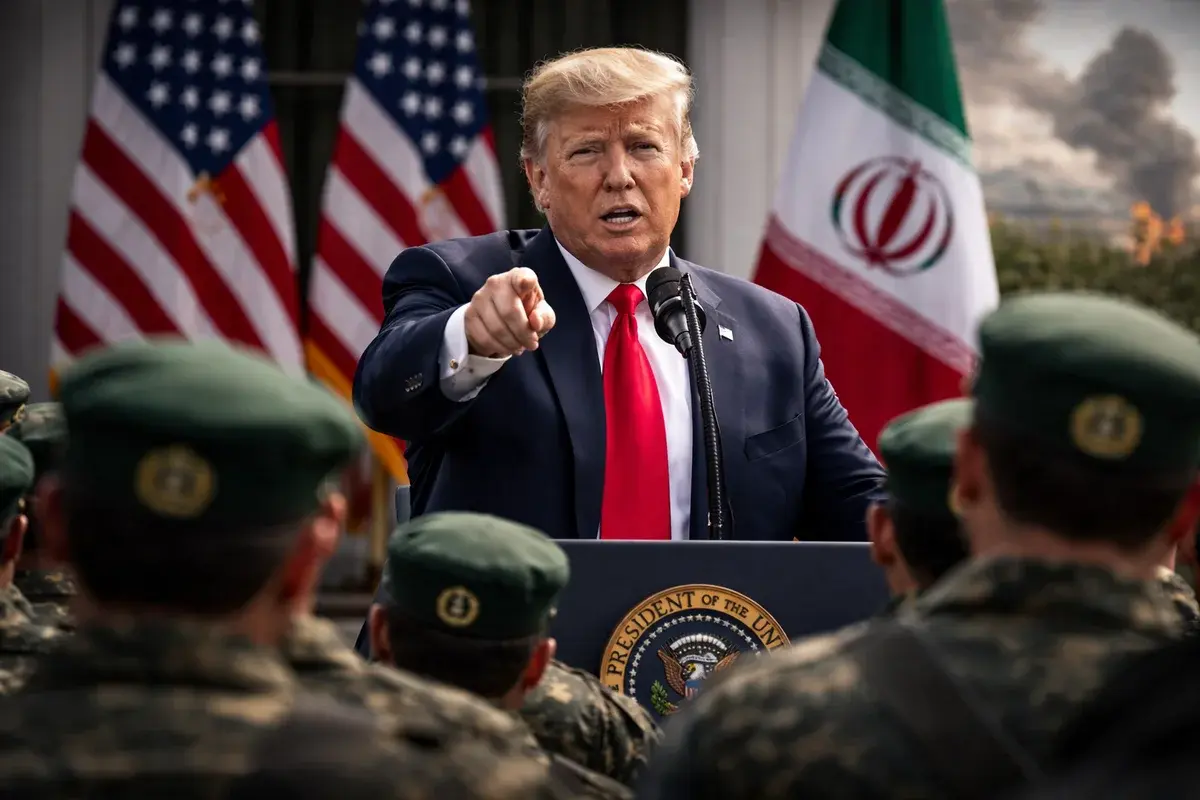
A fresh wave of geopolitical tension has emerged in West Asia after former U.S. President Donald Trump publicly called on members of Iran’s powerful military force, the Islamic Revolutionary Guard Corps (IRGC), to surrender. Speaking at an event at the White House honoring Major League Soccer champions, Trump delivered a dramatic message directed at Iran’s military leadership, offering what he described as “full immunity” to IRGC members who choose to lay down their arms.
Trump warned that those who continue fighting would face severe consequences, framing the moment as a turning point for Iran’s political future. He urged IRGC members to abandon their current path and support what he described as a movement toward a “new and better Iran.”
The remarks immediately drew global attention because of their potential to further escalate tensions between the United States and Iran. With the Middle East already facing instability due to ongoing regional conflicts, Trump’s statements could have broader implications for geopolitics, energy markets, and global investor sentiment.
During the event at the White House, Trump addressed the Iranian military organization directly, urging members of the Islamic Revolutionary Guard Corps to surrender and abandon military confrontation.
The IRGC is one of the most powerful institutions in Iran, overseeing elite military units, intelligence operations, and a vast economic network. By appealing directly to the organization’s members, Trump attempted to send a message that the United States is willing to offer protection and immunity to those who defect.
Trump stated that members who choose to surrender would be “perfectly safe” and would receive complete immunity, presenting the move as an opportunity to stand with the Iranian people rather than continue supporting the country’s current leadership.
| Key Statement | Details |
|---|---|
| Message to IRGC | Surrender and lay down arms |
| Offer | Full immunity for those who defect |
| Warning | Severe consequences for continued fighting |
| Strategic Objective | Encourage internal shift in Iran |
The call represents an unusually direct appeal to members of a foreign military organization and reflects the increasingly confrontational rhetoric surrounding U.S.-Iran relations.
In addition to addressing the Revolutionary Guard, Trump also directed remarks toward Iranian diplomats stationed around the world.
He encouraged them to seek asylum and cooperate with the United States, suggesting that their participation could help create political change in Iran.
According to Trump, diplomats who choose to leave their posts and assist U.S. efforts could play an important role in what he described as rebuilding Iran’s future political structure.
This type of messaging is rare in international diplomacy, as it effectively calls on officials of another sovereign nation to abandon their government.
| Diplomatic Signal | Implication |
|---|---|
| Call for asylum | Encouraging defections |
| Appeal to diplomats | Support U.S. efforts |
| Political goal | Create “new Iran” |
| Strategic messaging | Increase pressure on Iranian leadership |
The remarks are likely to provoke strong reactions from Tehran, which considers the IRGC a central pillar of national security and political stability.
Understanding the significance of Trump’s remarks requires examining the role of the Islamic Revolutionary Guard Corps within Iran.
The IRGC was established after the 1979 Iranian Revolution and has since evolved into one of the most powerful institutions in the country. It operates independently from Iran’s regular armed forces and reports directly to the nation’s supreme leadership.
Beyond its military role, the IRGC also controls large segments of Iran’s economy, including construction, telecommunications, and energy infrastructure.
| IRGC Function | Description |
|---|---|
| Military Force | Elite defense units |
| Political Influence | Major role in national policy |
| Economic Control | Extensive business networks |
| Regional Operations | Influence across Middle East |
Because of its influence across military, economic, and political spheres, the IRGC remains central to Iran’s national power structure.
Trump’s appeal to the organization therefore represents a direct challenge to one of Iran’s most important institutions.
Geopolitical tensions between the United States and Iran have historically had significant effects on global financial markets.
The Middle East is a crucial region for global energy supply, and any escalation in conflict involving Iran can trigger sharp movements in oil prices.
Iran sits near the Strait of Hormuz, one of the world’s most important oil shipping routes, through which a significant portion of global crude exports pass.
| Market Risk Factor | Impact |
|---|---|
| Middle East tensions | Increased oil price volatility |
| Energy supply concerns | Global market uncertainty |
| Investor sentiment | Risk-off trading |
| Commodity markets | Oil and gold volatility |
Investors often react quickly to geopolitical developments involving Iran because of the potential implications for global energy supply chains.
The relationship between the United States and Iran has been strained for decades, shaped by political conflicts, economic sanctions, and regional rivalries.
Tensions intensified significantly after the United States withdrew from the Iran nuclear agreement and imposed strict economic sanctions on Tehran.
Since then, diplomatic relations have remained limited, and periodic confrontations have raised fears of wider regional instability.
Trump’s latest remarks represent another escalation in rhetoric and could influence the already fragile diplomatic environment in the region.
As geopolitical tensions evolve, the international community will closely monitor Iran’s response to Trump’s statements.
If Iranian leaders interpret the remarks as an attempt to undermine their military structure, it could trigger strong diplomatic or military responses. Alternatively, global powers may attempt to de-escalate tensions through diplomatic channels.
For financial markets, developments in the U.S.-Iran relationship remain a key risk factor. Oil prices, commodity markets, and global equity markets often react strongly to signals of rising instability in the Middle East.
Investors, policymakers, and international observers will therefore continue watching the situation closely as events unfold.

Financial journalist specializing in market analysis, stock research, and investment trends. Dedicated to providing accurate, timely insights for informed decision-making.
Credentials: Experienced financial journalist with expertise in equity markets and economic analysis
The information provided in this article is for educational and informational purposes only and should not be construed as financial, investment, or legal advice. Finscann does not provide personalized investment recommendations.
For detailed terms and conditions, please read our Disclaimer and Terms of Service.
No related topics available
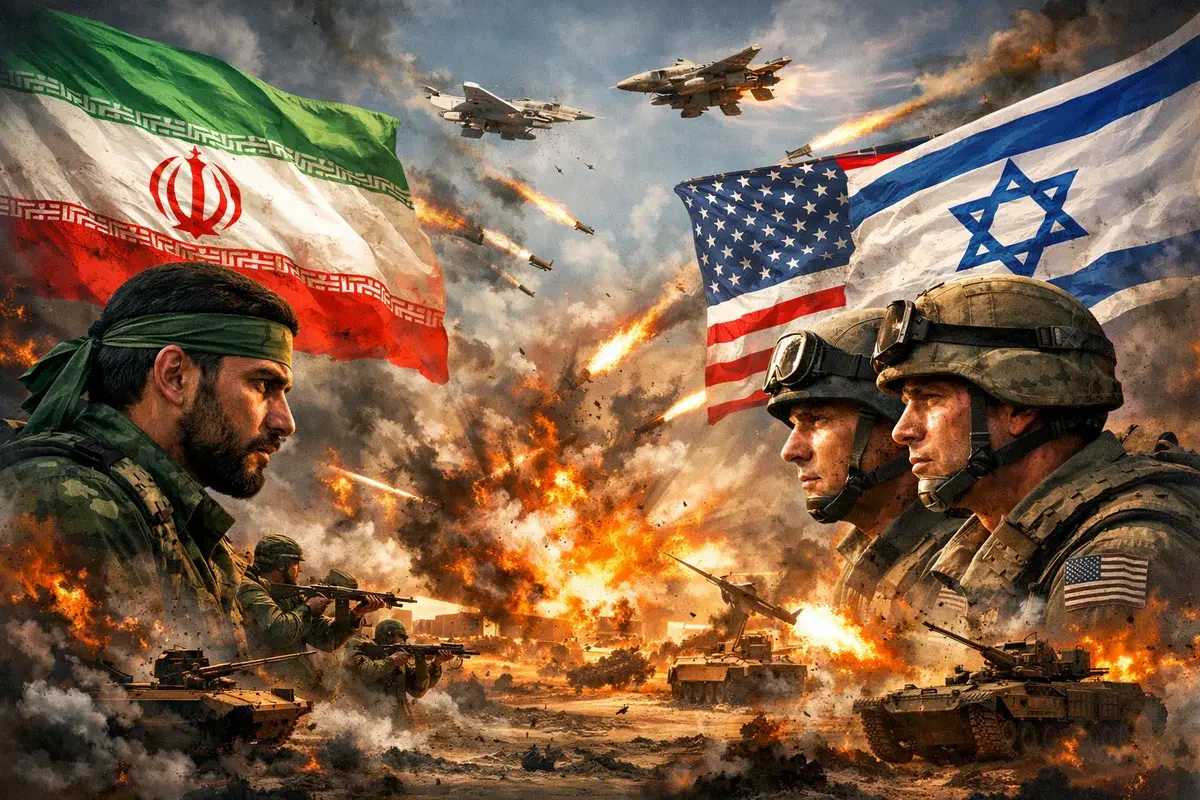
Amid escalating Iran-USA tensions in March 2026, global crude oil prices are surging past $85, with the Strait of Hormuz blockade impacting global...
Former U.S. President Donald Trump has called for Iran's military to surrender, as West Asia tensions escalate, impacting global oil, gold, and...
SoftBank’s plan to secure a record $40 billion loan highlights the accelerating pace of investment across the artificial intelligence sector.

Amid escalating US-Iran conflict and a full closure of the Strait of Hormuz, crude oil prices surge.

Explore the breaking financial impact of escalating US-Iran tensions on India's economy, crude oil, gold prices, and global markets in March 2026.