Loading market data...
Former U.S. President Donald Trump has called for Iran's military to surrender, as West Asia tensions escalate, impacting global oil, gold, and Indian markets.
U.S. President Donald Trump has issued a direct call for the Iranian military to surrender, intensifying an already volatile situation in West Asia as a joint U.S.-Israeli military campaign against Iran escalates. This dramatic development, coming amidst a week of continuous missile and drone exchanges, has sent geopolitical risk premiums soaring across global financial markets, particularly impacting crude oil prices, gold, and generating significant volatility in the Indian stock market (NSE, BSE). The conflict, which commenced on February 28, 2026, with coordinated U.S. and Israeli airstrikes that killed Iran's Supreme Leader Ayatollah Ali Khamenei, is now in its sixth day, threatening regional stability and global economic interests.
The Catalyst
The immediate trigger for this heightened rhetoric and military confrontation was President Trump's statement on March 5, 2026, urging members of the Iranian Revolutionary Guard, military, and police to lay down their arms and offering immunity to those who cooperate. This follows days of intense military operations, which began with U.S. and Israeli strikes on Iranian targets in late February. The initial strikes targeted Iran's leadership, missile arsenal, and nuclear program. Trump has framed the campaign as a decisive military effort, claiming significant losses for Iran's military capabilities, including their navy and air defense systems. While Iran's Foreign Minister, Abbas Araghchi, has reportedly said Tehran is not seeking a ceasefire and sees no reason to negotiate, other reports indicated Iran was seeking talks, which Trump dismissed as "too late.". The conflict has widened beyond Iran, with missile and drone attacks reported across the Gulf, including in the UAE, Bahrain, Qatar, and Kuwait. India's Ministry of External Affairs expressed deep concern on March 3, urging restraint and dialogue.
Financial Forensics
The escalating conflict in West Asia has immediately translated into a substantial geopolitical risk premium across key financial assets. Crude oil and gold prices have surged, reflecting investor flight to safety and concerns over supply disruptions.
Crude Oil and LNG: The Strait of Hormuz, a critical energy chokepoint between Oman and Iran, through which approximately one-fifth of global oil consumption and LNG trade passes, remains a focal point of concern. Around 15 million barrels per day (mb/d) of oil and condensate transit this strait daily, with a significant portion (around 84-89%) destined for Asian markets, including India, China, Japan, and South Korea. Disruptions here could severely impact global supply chains. Goldman Sachs Research estimated on March 3, 2026, that traders were demanding an additional $14 per barrel for oil due to increased risks. Brent crude surged to over $80 per barrel by March 6, 2026, representing a moderate elevation from pre-conflict levels, while European natural gas prices also saw a significant jump following disruptions at Qatari facilities. Analysts from Goldman Sachs project potential oil price increases ranging from $1 to $15 per barrel, depending on the extent and duration of Strait of Hormuz restrictions. Former NITI Aayog CEO Amitabh Kant warned that every $10 per barrel rise in crude oil prices could add $13-14 billion to India's annual import bill, widening the current account deficit and pressuring the rupee.
Gold as a Safe Haven: Gold prices have reacted sharply, initially surging to $5,419.32 per troy ounce on March 2, 2026, a more than six percent increase in days, as investors sought traditional safe-haven assets. While there was some profit-taking and volatility, with prices correcting to around $5,340 before stabilizing, the overall trend remains bullish due to sustained geopolitical uncertainty. Analysts from JP Morgan have raised their gold price target to $6,300 per troy ounce by December 2026, with others projecting even higher long-term targets. As of March 6, 2026, gold was trading around $5,114.21 per t.oz, still reflecting a significant geopolitical risk premium.
Indian Market Implications: The escalating West Asia conflict has created substantial headwinds for the Indian economy. India, which imports approximately 85% of its oil requirements, faces significant inflationary pressures and potential currency depreciation.
Table 1: Key Financial Asset Movements Amid West Asia Tensions (March 2026)
| Asset Class | Movement (Feb 28 - Mar 6, 2026) | Key Factor | Source |
|---|---|---|---|
| Brent Crude Oil | Up 13% (to > $80/barrel) | Strait of Hormuz disruption concerns | |
| Spot Gold | Up ~6% (intraday high $5,419.32) | Safe-haven demand amid geopolitical uncertainty | |
| BSE Sensex | Down >2% (intraday Mar 4) | FII outflows, inflation concerns, risk aversion | |
| NSE Nifty 50 | Down >2% (intraday Mar 4) | Global market weakness, oil price surge | |
| Indian Rupee (INR) | Weakened (to ~92.30/USD intraday Mar 4) | Rising crude import bill, FII selling |
Note: Data reflects observed movements and estimates during the specified period, based on immediate market reactions to escalating tensions.
Market Impact
The Indian equities market has experienced considerable turmoil since the conflict began. Benchmark indices, the BSE Sensex and NSE Nifty 50, tumbled significantly in early March. On March 4, the Sensex crashed 1,758.22 points (2.19%) to 78,480.63, and the Nifty tanked 530.85 points (2.13%) to 24,334.85 in early trade, reflecting widespread selling due to escalating geopolitical risks and soaring oil prices. Over three trading sessions, both benchmarks fell approximately 4 percent, wiping out nearly ₹21.5 trillion in investor wealth. Foreign Institutional Investors (FIIs) have been net sellers, offloading equities worth ₹3,753 crore on Thursday, March 5, while Domestic Institutional Investors (DIIs) provided some buying support. The India VIX, often called the market's fear gauge, jumped significantly, indicating heightened investor anxiety.
However, there have been brief periods of recovery. On March 5, Indian equities snapped a three-day losing streak, with the Sensex rising 899.71 points (1.14%) to settle at 80,015.90, and the Nifty advancing 285.40 points (1.17%) to close at 24,765.90. This recovery was partly attributed to value buying, a rally in global markets, and reports suggesting a possible resolution to the conflict, alongside U.S. assurances of security for shipping through the Strait of Hormuz.
Defence stocks in India, such as Hindustan Aeronautics (HAL), Bharat Electronics (BEL), and Paras Defence, have shown a notable surge, with some rising up to 13% even as the broader market faced pressure. This rally is driven by increased focus on defence preparedness, higher government spending (Union Budget 2026-27 allocated ₹7.85 lakh crore to defence), and India's push for indigenous manufacturing under the Atmanirbhar Bharat initiative. Companies like Mazagon Dock Shipbuilders Ltd. saw shares jump by about 9% on March 6, 2026, following news of progress on a ₹99,000 crore Project 75(I) submarine deal.
Key Takeaways for Investors
FinScann Verdict
The escalating conflict in West Asia, marked by President Trump's call for surrender from Iran's military, represents a significant global geopolitical and economic shock. While the Indian market has shown resilience in short bursts, the underlying macroeconomic headwinds from soaring crude prices and persistent global uncertainty are substantial. Investors should maintain a cautious, diversified approach, prioritizing defensive sectors and assets like gold, while strategically evaluating opportunities in the robust Indian defence sector. The duration and intensity of the conflict will dictate the ultimate economic fallout for India and the global economy.
Q: How will the conflict in West Asia affect India's energy security? A: India is highly dependent on crude oil imports, with over 80% of its requirements met through imports, and more than 40% of these imports transit through the Strait of Hormuz. Escalating tensions and potential disruptions in this critical chokepoint pose a direct threat to India's energy security, leading to higher import costs, inflation, and pressure on the Indian Rupee.
Q: Why are Indian defence stocks performing well amidst a market downturn? A: Indian defence stocks are benefiting from increased geopolitical tensions globally, which heighten the focus on national security and defence preparedness. The Indian government's substantial budget allocations (e.g., ₹7.85 lakh crore for defence in 2026-27) and a strong emphasis on indigenous manufacturing under the Atmanirbhar Bharat initiative provide robust order book visibility and long-term growth prospects for these companies, making them attractive to investors as a defensive play.
Q: What is the impact of the conflict on gold prices, and should investors consider it? A: Gold prices typically surge during periods of geopolitical instability as investors seek safe-haven assets. The current conflict has seen spot gold prices jump significantly. Analysts expect gold to remain elevated, with some raising price targets for the year. Investors often consider gold as a hedge against currency devaluation and market volatility, making it a relevant asset for portfolio diversification in uncertain times.
Disclaimer: For information only; not investment advice. Stock market investments carry risks. Please consult a SEBI-registered advisor before investing. FinScann assumes no liability for decisions made based on this report.

Financial journalist specializing in market analysis, stock research, and investment trends. Dedicated to providing accurate, timely insights for informed decision-making.
Credentials: Experienced financial journalist with expertise in equity markets and economic analysis
The information provided in this article is for educational and informational purposes only and should not be construed as financial, investment, or legal advice. Finscann does not provide personalized investment recommendations.
For detailed terms and conditions, please read our Disclaimer and Terms of Service.

Amid escalating Iran-USA tensions in March 2026, global crude oil prices are surging past $85, with the Strait of Hormuz blockade impacting global...
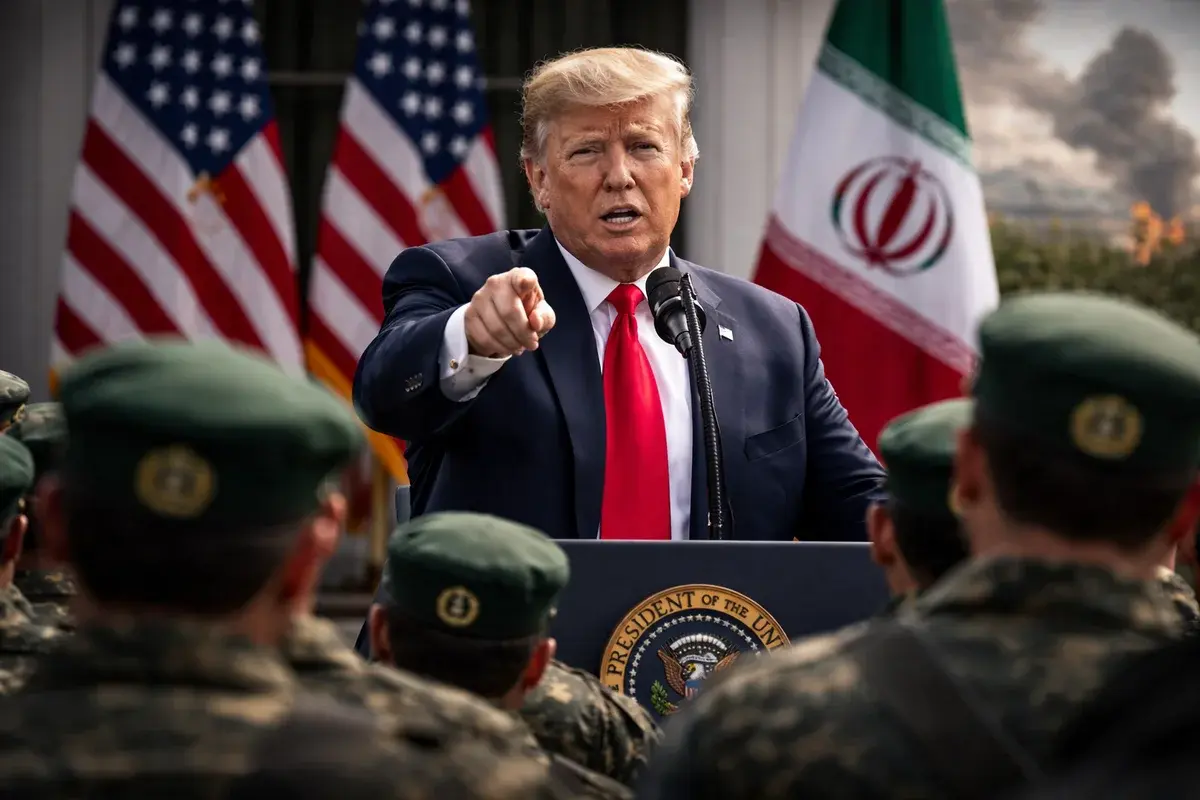
Trump’s call for Iran’s Revolutionary Guard to surrender has added a new layer of geopolitical tension to an already volatile Middle East landscape.

SoftBank’s plan to secure a record $40 billion loan highlights the accelerating pace of investment across the artificial intelligence sector.

Amid escalating US-Iran conflict and a full closure of the Strait of Hormuz, crude oil prices surge.

Explore the breaking financial impact of escalating US-Iran tensions on India's economy, crude oil, gold prices, and global markets in March 2026.