Loading market data...
Indian stock markets declined sharply on March 6 as banking and financial stocks led losses amid rising crude oil prices and geopolitical tensions in the Middle East. While large lenders such as ICICI Bank, State Bank of India, and Axis Bank dragged benchmark indices lower, defense and energy stocks including Bharat Electronics, ONGC, and Reliance Industries posted gains. The session highlighted the growing influence of global macroeconomic factors on Indian equities, while sectors such as defense manufacturing and energy continue to attract investor interest due to long-term growth opportunities.

Indian equity markets ended Friday’s session in negative territory as rising crude oil prices and geopolitical tensions in the Middle East triggered broad-based selling across sectors. Banking and financial stocks led the decline, while select defense, energy, and metal stocks managed to post gains.
| Top Gainers | % Change | Top Losers | % Change |
|---|---|---|---|
| Bharat Electronics | +2.52% | ICICI Bank | -3.13% |
| Oil and Natural Gas Corporation | +1.28% | Eternal | -2.96% |
| Reliance Industries | +1.27% | Shriram Finance | -2.77% |
| NTPC | +0.82% | State Bank of India | -2.54% |
| Hindalco Industries | +0.59% | Axis Bank | -2.54% |
The BSE Sensex fell 1,097 points (1.37%) to close at 78,918.90, while the NSE Nifty 50 dropped 315 points (1.27%) to settle at 24,450.45.
Indian markets witnessed sharp volatility as crude oil prices surged following escalating conflict in the Middle East. The geopolitical tensions, particularly involving Iran and regional security developments, have heightened concerns about global energy supply disruptions.
Since India imports a significant portion of its crude oil requirements, rising oil prices directly impact inflation expectations, trade balance, and corporate profitability. Investors therefore reacted quickly by reducing exposure to risk assets.
During the session, the Sensex dropped as much as 1,203 points intraday, hitting a low of 78,812, while the Nifty touched a low of 24,415 before recovering slightly toward the close.
Another key factor influencing market sentiment was foreign capital movement. According to exchange data, foreign institutional investors (FIIs) sold equities worth ₹3,752 crore, while domestic institutional investors (DIIs) bought shares worth ₹5,153 crore, partially cushioning the market fall.
The biggest drag on the benchmark indices came from banking and financial stocks, which saw heavy selling during the session.
Shares of ICICI Bank declined more than 3%, making it the biggest contributor to the Nifty’s fall. The stock witnessed profit booking after a strong rally earlier in the week.
Similarly, Shriram Finance also dropped sharply as investors reduced exposure to non-banking financial companies amid broader market uncertainty.
Public sector banking giant State Bank of India and private lender Axis Bank also slipped more than 2.5% each, reflecting weakness across the financial sector.
The financial sector carries significant weight in benchmark indices, meaning that declines in large banking stocks often have a disproportionate impact on overall market performance.
| Financial Stock | Closing Move | Key Driver |
|---|---|---|
| ICICI Bank | -3.13% | Profit booking |
| Shriram Finance | -2.77% | NBFC selling pressure |
| State Bank of India | -2.54% | Sector-wide weakness |
| Axis Bank | -2.54% | Market volatility |
The banking sector’s weakness amplified the broader market decline.
Despite the overall market weakness, a few stocks managed to post gains, particularly in sectors linked to defense and energy.
Shares of Bharat Electronics rose more than 2.5%, supported by strong investor interest after the stock traded ex-dividend during the session.
BEL is one of India’s leading defense electronics companies, manufacturing radar systems, missile guidance systems, and advanced defense technologies.
Energy stocks also performed relatively well due to rising oil prices. Shares of Oil and Natural Gas Corporation gained about 1.28%, as higher crude prices typically improve earnings prospects for upstream oil producers.
Meanwhile, conglomerate Reliance Industries rose about 1.27%, supported by strength in its energy and petrochemical businesses.
Power sector giant NTPC and metals producer Hindalco Industries also closed in positive territory.
| Sector | Key Stocks | Market Reaction |
|---|---|---|
| Defense | Bharat Electronics | Positive |
| Energy | ONGC, Reliance | Gains |
| Power | NTPC | Moderate rise |
| Metals | Hindalco | Slight increase |
These gains highlight how certain sectors can benefit from global macroeconomic shifts even during broader market declines.
The Nifty Midcap 100 index also closed lower, falling 0.69% to 57,393, reflecting risk aversion among investors.
Major midcap losers included:
However, select stocks still saw strong gains.
Defense PSU Bharat Dynamics surged 5.81%, while Cochin Shipyard gained 3.27% amid increasing investor interest in defense manufacturing companies.
Technology firm Persistent Systems also rose 3.09%, reflecting continued demand for IT services.
The Nifty Smallcap 100 index fell 0.24%, indicating relatively limited downside compared with large-cap and midcap indices.
Major smallcap losers included:
On the gaining side, railway logistics company Jupiter Wagons surged 19.35%, while infrastructure developer Ircon International gained 9.67%.
Liquor manufacturer Radico Khaitan also rallied 8.52%, reflecting strong investor sentiment toward the consumer goods sector.
Defense PSU Garden Reach Shipbuilders & Engineers rose over 5% after signing a strategic partnership with Kalyani Strategic Systems to develop advanced naval platforms and maritime technologies.
The rally in GRSE highlights growing investor interest in India’s defense manufacturing sector.
Under the government’s Atmanirbhar Bharat initiative, India has been encouraging domestic defense production to reduce reliance on imports.
Collaborations between shipbuilders and defense technology firms are expected to accelerate development of indigenous military platforms, including unmanned naval systems and advanced maritime weapons.
This structural shift is creating long-term growth opportunities for defense companies across India’s capital markets.
Despite Friday’s sharp decline, analysts believe that the broader long-term outlook for Indian equities remains positive.
However, in the near term, markets are likely to remain volatile due to several global risk factors:
Investors will closely monitor developments in global energy markets and geopolitical conditions, as these factors could continue influencing market sentiment.

Financial journalist specializing in market analysis, stock research, and investment trends. Dedicated to providing accurate, timely insights for informed decision-making.
Credentials: Experienced financial journalist with expertise in equity markets and economic analysis
The information provided in this article is for educational and informational purposes only and should not be construed as financial, investment, or legal advice. Finscann does not provide personalized investment recommendations.
For detailed terms and conditions, please read our Disclaimer and Terms of Service.
No related topics available

Reliance Industries Ltd. leverages a US waiver to boost Russian oil imports. Discover the financial impact, market implications, and strategic...

Foreign Institutional Investors offloaded ₹17,000 crore in Indian IT stocks in February 2026, sparking fears of AI disrupting software services.

Indian stock market plunges in March 2026 as Sensex nears 700-point drop. Global tensions and surging crude oil prices fuel volatility.
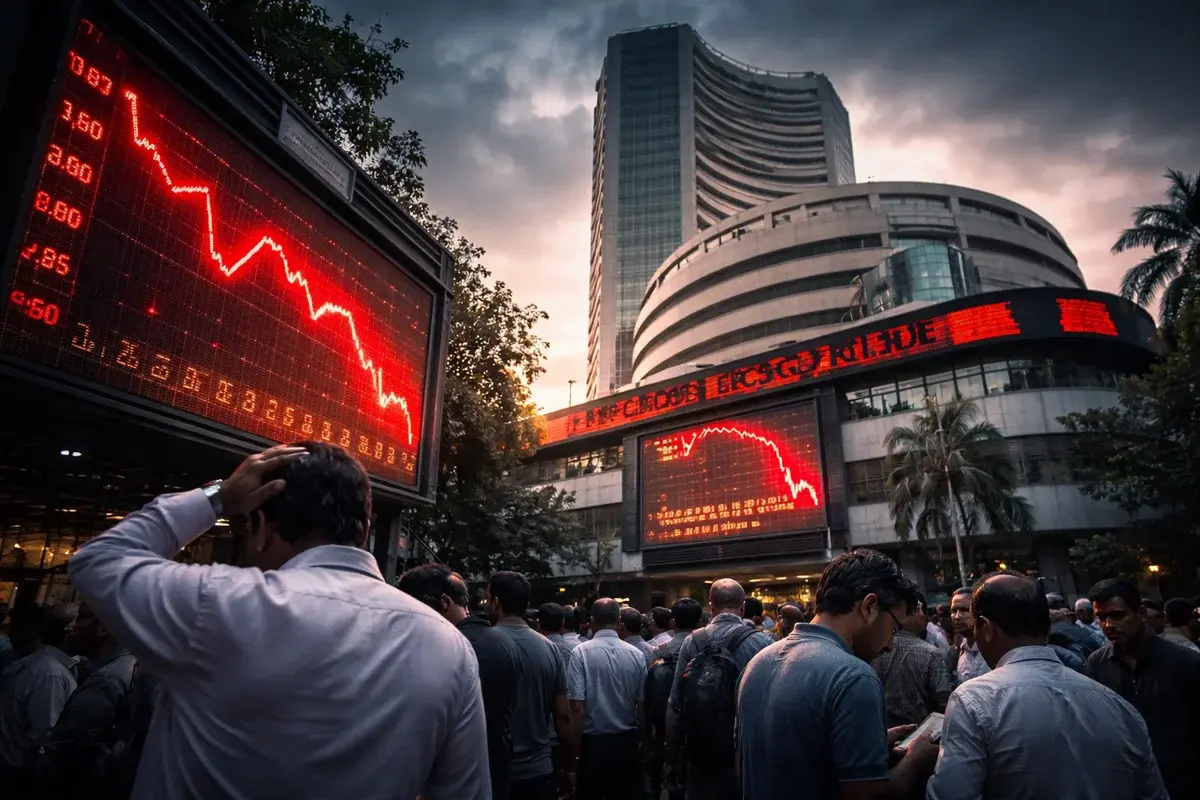
The decline in Indian stock markets reflects the growing influence of geopolitical risks and global commodity prices on investor sentiment.
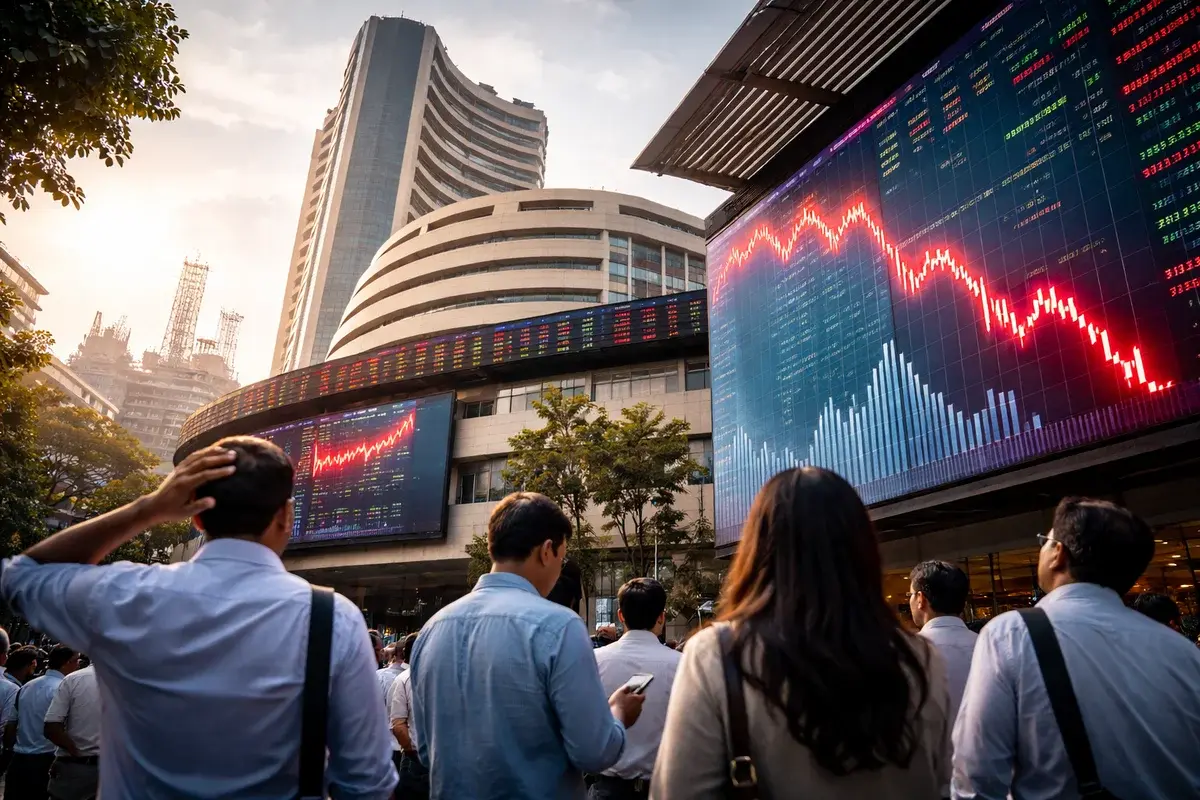
The decline in Indian equity markets highlights how global geopolitical developments continue to shape investor sentiment and financial performance.