Loading market data...
Skyroot Aerospace prepares for Vikram-1 launch, India's first private orbital rocket. FinScann analyzes its over ₹800 Cr funding, market impact, and investment potential.
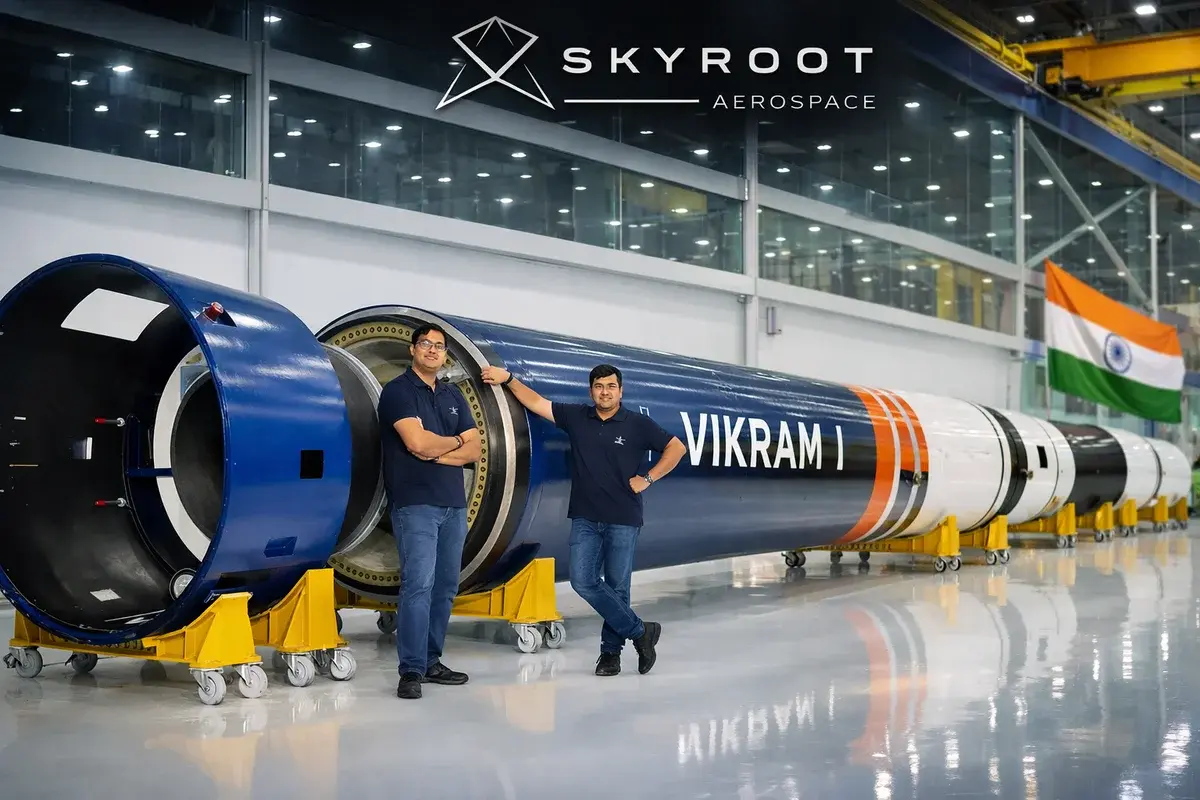
Hyderabad-based Skyroot Aerospace is making headlines globally as it prepares for the historic launch of Vikram-1, India's first privately built orbital rocket. This landmark event, anticipated in early 2026, marks a pivotal moment for India's burgeoning private space sector, underpinned by significant financial backing exceeding ₹800 crore (over $100 million) from leading global and domestic investors. FinScann analysis indicates this mission is not just a technological leap but a robust validation of the investment thesis in India's space technology startups.
The Catalyst
The imminent launch of Vikram-1 by Skyroot Aerospace is the culmination of years of intensive research, development, and strategic fundraising. Named in honor of the father of India's space program, Dr. Vikram Sarabhai, this launch vehicle is designed to carry small satellites to low-earth orbits, catering to the rapidly expanding global demand for cost-effective and agile launch solutions. This mission follows Skyroot's successful sub-orbital launch of the Vikram-S rocket in November 2022, dubbed 'Prarambh,' which demonstrated crucial technologies and capabilities. The private sector's entry, facilitated by the Indian government's space reforms and the establishment of IN-SPACe, is democratizing access to space and fostering fierce innovation. This initiative positions India as a key player in the global space economy, attracting substantial investor interest.
Financial Forensics
Skyroot Aerospace has demonstrated remarkable prowess in attracting significant capital, underscoring investor confidence in its technological capabilities and market potential. The company's funding journey showcases a strategic blend of early-stage venture capital and substantial institutional investment.
The Hyderabad-based startup successfully closed its Series A funding round in September 2022, securing a substantial $51 million (approximately ₹403 crore). This round was notably led by GIC, Singapore's sovereign wealth fund, signaling strong international endorsement. Prior to this, Skyroot had raised approximately $11 million (around ₹80 crore) in its pre-Series A round in 2021, with participation from notable domestic investors including Solar Industries India, Greenko Group founders Anil Kumar Chalamalasetty and Mahesh Kolli, and Curefit founders Mukesh Bansal and Ankit Nagori.
As of early 2026, FinScann estimates Skyroot's total funding to have surpassed ₹800 crore ($100 million equivalent), potentially including subsequent bridge rounds or venture debt, though these may not have been publicly announced as major Series B yet. This capital injection has been critical for scaling operations, investing in advanced manufacturing processes like 3D printing for rocket engines, and attracting top-tier engineering talent.
The company's estimated post-money valuation following its Series A round was in the range of $100 million to $150 million (₹800 crore to ₹1200 crore), a testament to the burgeoning investor interest in space technology. This substantial financial backing empowers Skyroot to compete effectively in the global small satellite launch market, which is projected to grow exponentially.
Skyroot Aerospace Funding Snapshot (as of early 2026)
| Funding Round | Date (Approx.) | Lead Investor(s) | Amount (USD) | Amount (INR Approx.) | Valuation (Post-Money Est.) |
|---|---|---|---|---|---|
| Pre-Series A | 2021 | Solar Industries, Greenko | $11 million | ₹80 crore | N/A |
| Series A | Sep 2022 | GIC (Singapore) | $51 million | ₹403 crore | $100-150 million (₹800-₹1200 Cr) |
| Subsequent Rounds (Estimated) | 2023-2025 | Various | ~$40-50 million | ₹320-₹400 crore | Growing |
| Total Raised (Estimated) | Early 2026 | Multiple | >$100 million | >₹800 crore | Significantly higher |
Source: FinScann Research, Public Announcements, and Industry Estimates
Market Impact
The success of Skyroot and the broader Indian private space sector will have a multi-faceted impact on the market.
Key Takeaways for Investors
Moat Analysis & Investment Play
A company's "moat" refers to its sustainable competitive advantage. For Skyroot Aerospace, its primary moats include:
The "Investment Play" here is a long-term bet on the disruptive potential of private space technology, particularly in a high-growth market like India. Investors are looking at Skyroot not just as a launch services provider but as a foundational pillar of India's future space economy, with potential for vertically integrated services and advanced space applications.
Q: What is the significance of Vikram-1's launch for India's space program? A: The launch of Vikram-1 signifies India's transition from a predominantly government-led space program (ISRO) to one with active private sector participation. It will establish India as a global player in private satellite launches and foster a vibrant commercial space ecosystem.
Q: Who are the key investors in Skyroot Aerospace? A: Skyroot Aerospace has attracted significant investment from both domestic and international entities. Key investors include Singapore's sovereign wealth fund GIC, which led its Series A round, along with Indian industrial players like Solar Industries India, and prominent entrepreneurs.
Q: How does Skyroot Aerospace plan to compete with established global players? A: Skyroot aims to compete by offering cost-effective, high-frequency launch solutions for the growing small satellite market. Their focus on agile manufacturing, rapid turnaround times, and indigenous technology provides a competitive edge against larger, more traditional players.
Q: What is the estimated market size for small satellite launches globally? A: The global small satellite launch services market is projected to grow substantially, with estimates reaching $13.7 billion by 2030. This growth is driven by the increasing demand for satellite constellations for communication, Earth observation, and scientific research.
Q: What regulatory body oversees private space activities in India? A: The Indian National Space Promotion and Authorization Center (IN-SPACe) is the autonomous nodal agency under the Department of Space responsible for promoting, authorizing, and supervising private space activities in India.
FinScann Verdict
Skyroot Aerospace's journey culminating in the Vikram-1 launch epitomizes the "New India" ambition in advanced technology sectors. With robust financial backing exceeding ₹800 crore, a clear technological roadmap, and a supportive regulatory environment, the company is well-positioned to capture a significant share of the global small satellite launch market. This is more than a rocket launch; it's a launchpad for India's private space economy, offering compelling long-term growth prospects for discerning investors.
Disclaimer: For information only; not investment advice. Stock market investments carry risks. Please consult a SEBI-registered advisor before investing. FinScann assumes no liability for decisions made based on this report.

Financial journalist specializing in market analysis, stock research, and investment trends. Dedicated to providing accurate, timely insights for informed decision-making.
Credentials: Experienced financial journalist with expertise in equity markets and economic analysis
The information provided in this article is for educational and informational purposes only and should not be construed as financial, investment, or legal advice. Finscann does not provide personalized investment recommendations.
For detailed terms and conditions, please read our Disclaimer and Terms of Service.

TruDoc Healthcare raises $15M in Pre-Series B for virtual-first and at-home critical care expansion across the GCC.

Bengaluru is rapidly emerging as India’s artificial intelligence innovation hub, with startups building advanced AI platforms across healthcare,...
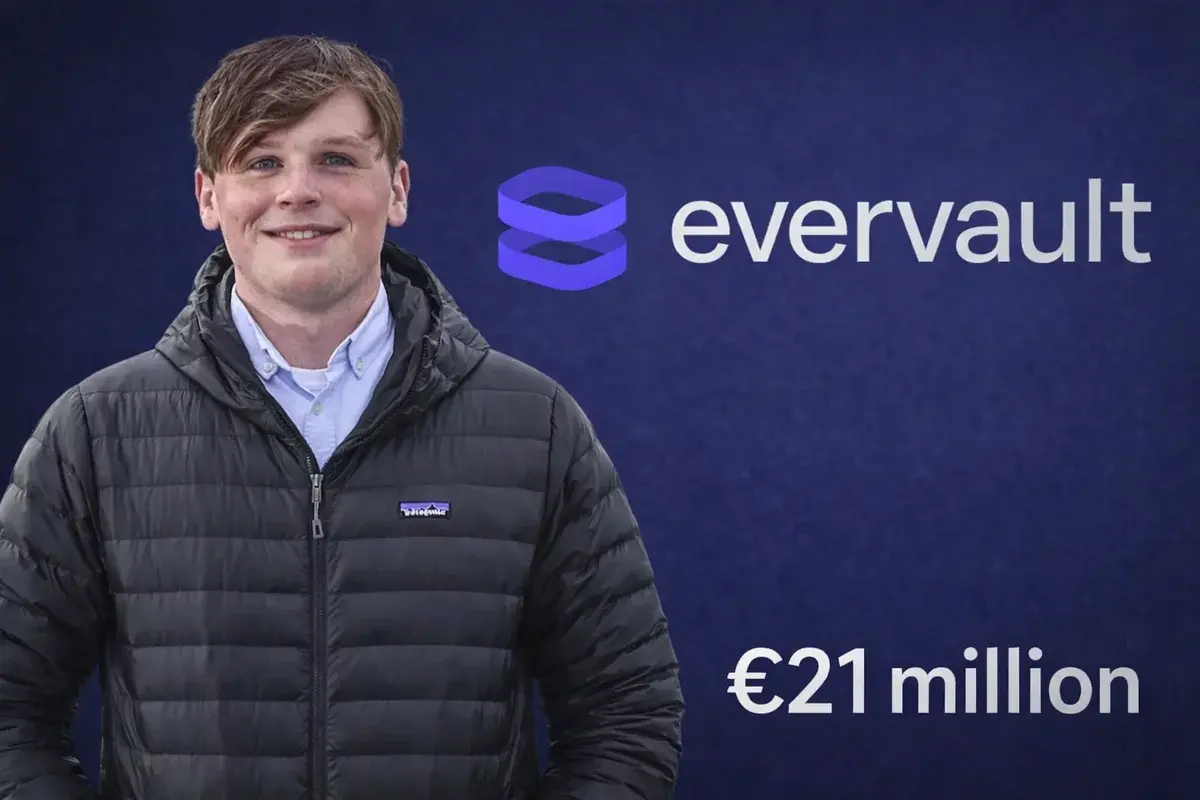
Evervault raises €21M in Series B funding led by Ribbit Capital to expand its data encryption platform, securing sensitive information for global...
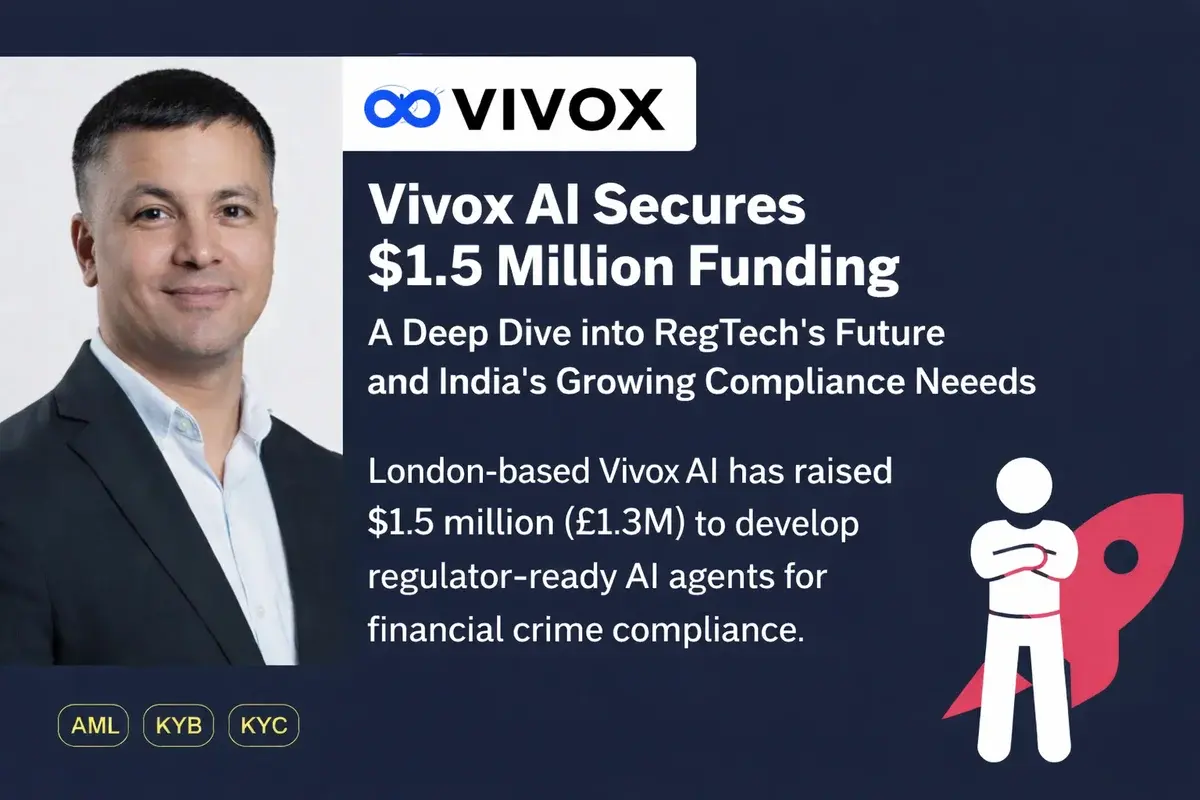
Vivox AI raises $1.5M in March 2026 for its regulator-ready AI agents in financial crime compliance.

Automotive technology startup Drivn raises $80 million to expand its AI-powered vehicle data and fleet intelligence platform.