Loading market data...
Karnataka's Budget 2026 sparks a major rally in United Spirits & liquor stocks. FinScann analyzes the excise policy overhaul, deregulation, and market impact.
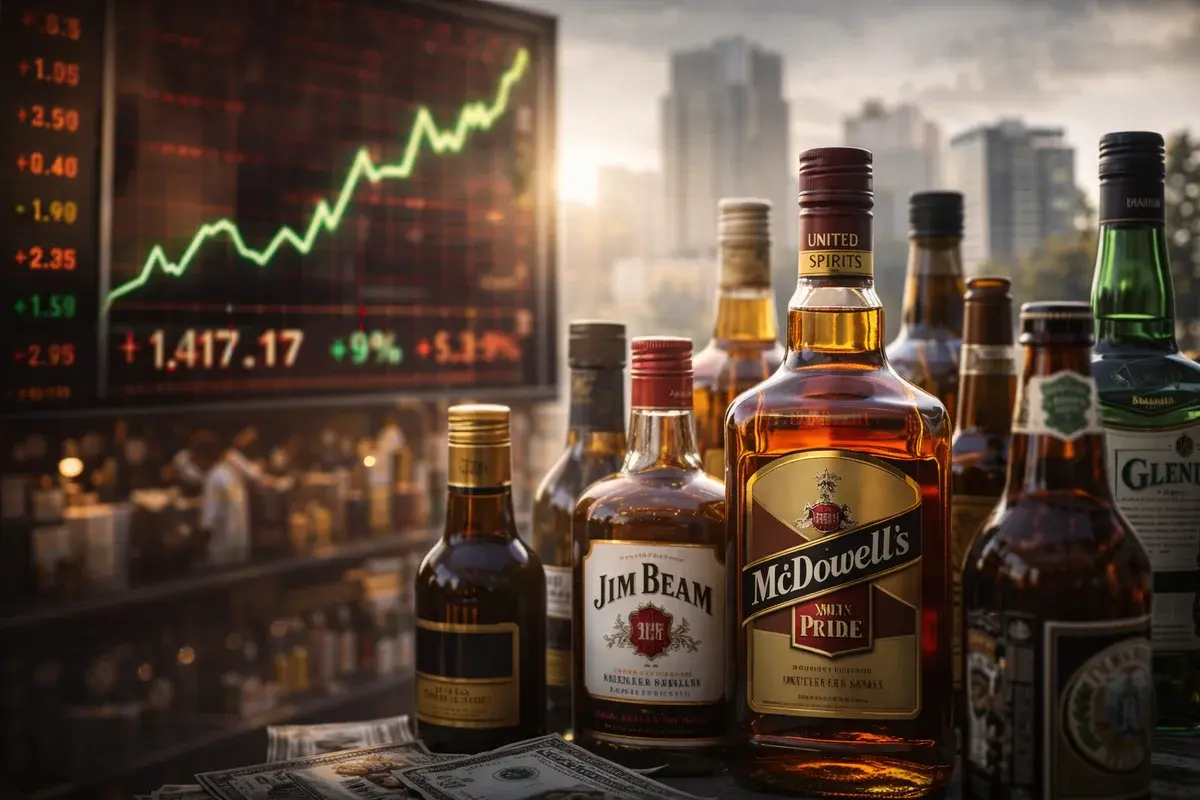
Indian liquor stocks, led by United Spirits, witnessed a significant surge of up to 7% on Friday, March 7, 2026, following Karnataka Chief Minister Siddaramaiah's announcement of a sweeping excise policy revamp in the state's Budget 2026-27. This pivotal reform, set to reshape the alcohol industry landscape in one of India's most lucrative markets, includes a shift to a globally recognized taxation standard and the complete deregulation of alcohol pricing. Investors responded enthusiastically to the proposed changes, signaling optimism for enhanced profitability and operational flexibility for liquor manufacturers.
The Catalyst
During his presentation of the Karnataka Budget for 2026-27, Chief Minister Siddaramaiah unveiled plans for a major overhaul of the Karnataka Excise Act. The core of this reform involves moving away from the existing system, where liquor was taxed based on content benchmarked to broader global classifications, to a new framework where tax rates will be determined by the actual alcohol content present in the final product. This transition to an "Alcohol-in-Beverage (AIB) based excise duty structure" is scheduled to take effect from April 2026 and will be phased in over the next three to four years to ensure a smooth market adaptation. Crucially, the Chief Minister also announced that the state government will no longer fix liquor prices. This deregulation will empower manufacturers to set prices within defined slabs, fostering greater market competition and strategic pricing decisions.
Financial Forensics
The proposed shift to an AIB-based excise duty structure is seen as a significant move towards global best practices in alcohol taxation, directly linking excise duty to the alcohol content, which is a primary driver of tax collection and public health considerations. This new system aims to rationalize pricing across alcoholic beverages. Under the previous regime, the government's role in price fixation often stifled competition and limited manufacturers' ability to respond to market dynamics. With the deregulation, manufacturers gain unprecedented control over their pricing strategies, allowing them to adjust prices based on market demand, brand value, and competitive landscape. Furthermore, the new policy simplifies the pricing structure by reducing the number of slabs from 16 to just 8, making the process less cumbersome for companies. This increased flexibility is expected to positively impact the margins and revenue growth of liquor companies operating in Karnataka, a state that accounts for approximately 15% of India's Indian-Made Foreign Liquor (IMFL) market. The state government has set an ambitious revenue target of ₹45,000 crore from the excise sector for 2026-27.
Market Impact
The announcement triggered an immediate and robust rally across the alcoholic beverage sector on the National Stock Exchange (NSE). United Spirits, a Diageo subsidiary and the country's leading beverage alcohol company, saw its shares surge by 7% to trade at ₹1,417 apiece on the NSE. Other prominent players also experienced significant gains: United Breweries (backed by Heineken) and Tilaknagar Industries climbed approximately 5% each, while Radico Khaitan rallied 6%. Smaller gains were also observed in Sula Vineyards (+2%), Allied Blenders (+3%), and Globus Spirits (+3%). This positive market reaction contrasts sharply with the "heavy beating" liquor stocks took earlier in May last year when the Karnataka government implemented a hike in Additional Excise Duty (AED) on Indian-Made Liquor (IML) and beer. On the day of the announcement, the broader Nifty 50 was down 0.77%, underscoring the sector-specific bullish sentiment driven by the reform. This policy change is seen as a significant de-risking event for the industry, potentially leading to more predictable revenue streams and improved operating efficiencies.
Key Takeaways
FinScann Verdict
The Karnataka Budget 2026 excise policy revamp marks a monumental shift towards a more market-driven and transparent regulatory environment for the state's liquor industry. FinScann believes these reforms offer a substantial tailwind for companies like United Spirits, United Breweries, and Radico Khaitan, potentially unlocking significant value through increased pricing flexibility and a streamlined operational landscape.
Comparative Performance of Key Liquor Stocks (March 7, 2026, 1:30 PM IST)
| Company Name | NSE Symbol | Price (₹) | % Change (Intraday) |
|---|---|---|---|
| United Spirits | MCDOWELL-N | 1,417 | +7% |
| Radico Khaitan | RADICO | 2,738 | +6% |
| United Breweries | UBL | 1,731 | +5% |
| Tilaknagar Industries | TI | 457.75 | +5% |
| Globus Spirits | GLOBUSSPR | 884.30 | +3% |
| Allied Blenders | ABDL | 473.30 | +3% |
| Sula Vineyards | SULA | N/A | +2% |
| Source: ETMarkets.com, NSE |
Q: What exactly is the "Alcohol-in-Beverage (AIB) based excise duty structure" announced in Karnataka? A: The AIB-based excise duty structure means that taxes on alcoholic beverages will now be levied based on the actual alcohol content (strength) of the product, rather than broader categories or total volume. This is considered a globally recognized standard for alcohol taxation.
Q: When will the new excise policy changes take effect in Karnataka? A: The revised structure, including the AIB-based taxation and pricing deregulation, is scheduled to take effect from April 2026. The transition for the alcohol content-based taxation will be phased in over the next three to four years.
Q: How does the deregulation of liquor prices benefit manufacturers like United Spirits? A: The deregulation allows manufacturers to set their own prices based on market competition, demand, and brand value, rather than having the government fix them. This gives companies greater control over their revenue and profit margins, enabling strategic pricing for premium products and competitive positioning.
Q: Did liquor stocks always react positively to excise policy changes in Karnataka? A: No, not always. For instance, shares of alcohol makers experienced a significant downturn in May last year when the Karnataka government implemented a hike in Additional Excise Duty (AED) on Indian-Made Liquor (IML) and beer. This suggests that the nature of the policy change, whether it increases or decreases the regulatory burden and tax liability, dictates the market's reaction.
Q: Will this new policy lead to cheaper liquor prices for consumers in Karnataka? A: While the deregulation allows manufacturers more pricing flexibility, the overall impact on consumer prices is complex. Manufacturers might adjust prices to optimize profitability and market share. The reduction in pricing slabs from 16 to 8 could simplify the pricing, but whether this translates to across-the-board lower prices for consumers will depend on competitive dynamics and individual company strategies.
Disclaimer: For information only; not investment advice. Stock market investments carry risks. Please consult a SEBI-registered advisor before investing. FinScann assumes no liability for decisions made based on this report.

Financial journalist specializing in market analysis, stock research, and investment trends. Dedicated to providing accurate, timely insights for informed decision-making.
Credentials: Experienced financial journalist with expertise in equity markets and economic analysis
The information provided in this article is for educational and informational purposes only and should not be construed as financial, investment, or legal advice. Finscann does not provide personalized investment recommendations.
For detailed terms and conditions, please read our Disclaimer and Terms of Service.
IndiGo shares decline as Middle East airspace restrictions lead to flight cancellations. FinScann analyzes the financial impact, rising fuel costs,...

FinScann analyzes Meesho's 7% share surge in two sessions. Discover the catalysts, financial health, and why Monday's market opening is pivotal for...

The surge in GRSE shares highlights the growing momentum in India’s defense manufacturing sector as companies expand capabilities through strategic...
The sharp rise in LIG Nex1’s share price reflects growing investor interest in defense technology companies as global security tensions intensify.
The rise in Reliance Industries’ share price reflects the broader influence of global energy policy on corporate financial performance and market...