Loading market data...
The decline in Indian equity markets highlights how global geopolitical developments continue to shape investor sentiment and financial performance. Rising crude oil prices triggered by the US-Iran conflict have increased uncertainty across global markets, impacting sectors sensitive to energy costs and inflation. As investors track investment trends, market expansion, and sector outlook across global economies, crude oil dynamics remain a critical factor influencing industry growth, business strategy, and broader market stability in the months ahead.
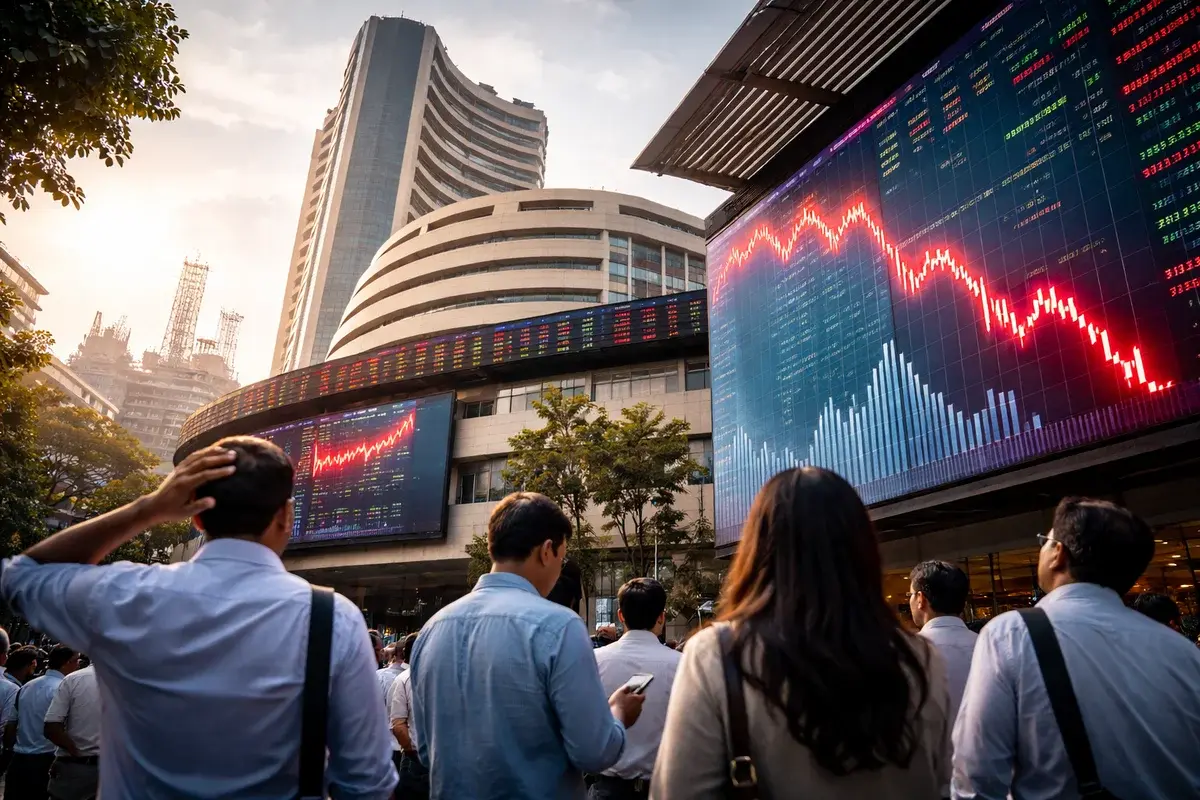
Indian equity markets witnessed a sharp decline on March 6, as geopolitical tensions in the Middle East triggered a fresh wave of investor caution. The benchmark Nifty 50 index slipped nearly 1%, touching an intraday low of 24,575, while the BSE Sensex dropped more than 600 points, falling to around 79,395 during trading.
The sell-off comes as global investors react to the escalating conflict involving the United States and Iran, which has driven crude oil prices sharply higher. The spike in energy prices has raised concerns about inflation, fiscal pressure, and potential economic slowdown — all of which can negatively impact equity markets.
For India, which imports the majority of its crude oil, rising energy prices pose a particularly significant challenge. As a result, investors have been trimming risk exposure, especially in sectors sensitive to fuel costs and macroeconomic shifts.
A key driver behind the market decline is the surge in crude oil prices following the geopolitical conflict. According to market analysts, crude oil prices have already risen by around 16% since tensions escalated between the United States and Iran.
VK Vijayakumar, Chief Investment Strategist at Geojit Financial Services, noted that the ongoing conflict is keeping global financial markets on edge. Investors are closely watching developments in the Middle East, particularly any disruption to oil supply routes.
However, Vijayakumar pointed out that the current rise in crude oil prices is not as severe as some previous geopolitical crises. Historically, global markets have experienced far sharper spikes in oil prices during wars or supply disruptions.
| Metric | Details |
|---|---|
| Nifty 50 Intraday Low | 24,575 |
| Sensex Intraday Low | 79,395 |
| Market Decline | ~1% |
| Crude Oil Price Increase | ~16% |
| Key Market Concern | US-Iran conflict |
Analysts believe that if crude oil prices stabilize around $85 per barrel, the broader market impact may remain limited. However, any sustained move above this level could significantly alter the market outlook.
India is one of the world’s largest crude oil importers, making its economy highly sensitive to fluctuations in global oil prices. Nearly 85% of India’s crude oil demand is met through imports, meaning even moderate price increases can have wide-ranging economic consequences.
Higher crude prices can increase inflationary pressure, widen the country’s current account deficit, and raise transportation and manufacturing costs. These ripple effects often weigh on corporate earnings and investor confidence.
| Market Indicator | Data |
|---|---|
| India Oil Import Dependence | ~85% |
| Key Global Benchmark | Brent Crude |
| Inflation Risk | High if crude rises further |
| Economic Impact | Trade deficit, fuel costs |
| Sensitive Sectors | Aviation, logistics, manufacturing |
This sensitivity explains why Indian equity markets often react strongly to geopolitical events involving oil-producing regions.
Trading activity on Friday showed significant volatility across several widely traded stocks as investors adjusted their positions amid the uncertain market environment.
Shares of companies such as Vodafone Idea, Filatex Fashions, and Suzlon Energy were among the most actively traded during the session. These stocks often see heightened trading volumes during periods of market uncertainty, as traders look for short-term opportunities.
Market experts say that volatility is likely to remain elevated in the near term as traders react to both geopolitical developments and movements in crude oil prices.
| Business Metric | Details |
|---|---|
| Highly Traded Stocks | Vodafone Idea, Suzlon Energy |
| Market Activity | Elevated volatility |
| Investor Behavior | Risk reduction |
| Trading Trend | Short-term speculation |
| Key Driver | Global uncertainty |
While broader market indices declined, some individual stocks continued to experience strong trading activity due to speculative interest.
The weakness in Indian markets mirrors trends seen across global equities. Investors worldwide are increasingly adopting a risk-off approach, shifting capital into safer assets such as gold, US Treasury bonds, and the US dollar.
Geopolitical conflicts historically trigger such shifts, as investors prioritize capital preservation over riskier investments like equities.
Additionally, rising oil prices can complicate central bank policies around the world. Higher energy costs tend to push inflation upward, which may limit the ability of central banks to reduce interest rates.
This macroeconomic uncertainty is contributing to the cautious mood currently dominating global financial markets.
Financial markets have long been sensitive to geopolitical tensions, particularly when they involve major oil-producing regions.
Past events such as the Gulf War, the Iraq War, and tensions in the Strait of Hormuz have historically triggered sharp market reactions. However, markets often stabilize once investors gain clarity about the potential economic impact.
Analysts say the current market reaction follows a familiar pattern: an initial decline driven by uncertainty, followed by gradual recovery once geopolitical risks become clearer.
| Historical Indicator | Impact |
|---|---|
| Gulf War | Sharp oil price surge |
| Iraq War | Short-term equity volatility |
| Strait of Hormuz tensions | Global energy market disruption |
| Market Pattern | Initial drop, later stabilization |
This historical perspective suggests that while short-term volatility is likely, markets may recover once geopolitical risks subside.
Looking ahead, crude oil prices will remain the most important factor influencing the direction of Indian markets.
If oil prices remain near $80–$85 per barrel, analysts believe the broader market may stabilize. However, a sharp spike beyond this range could trigger additional selling pressure across equities.
Investors are also monitoring whether the conflict escalates further or whether diplomatic efforts lead to de-escalation. Either scenario could significantly influence market direction in the coming weeks.

Financial journalist specializing in market analysis, stock research, and investment trends. Dedicated to providing accurate, timely insights for informed decision-making.
Credentials: Experienced financial journalist with expertise in equity markets and economic analysis
The information provided in this article is for educational and informational purposes only and should not be construed as financial, investment, or legal advice. Finscann does not provide personalized investment recommendations.
For detailed terms and conditions, please read our Disclaimer and Terms of Service.

Indian stock market plunges in March 2026 as Sensex nears 700-point drop. Global tensions and surging crude oil prices fuel volatility.
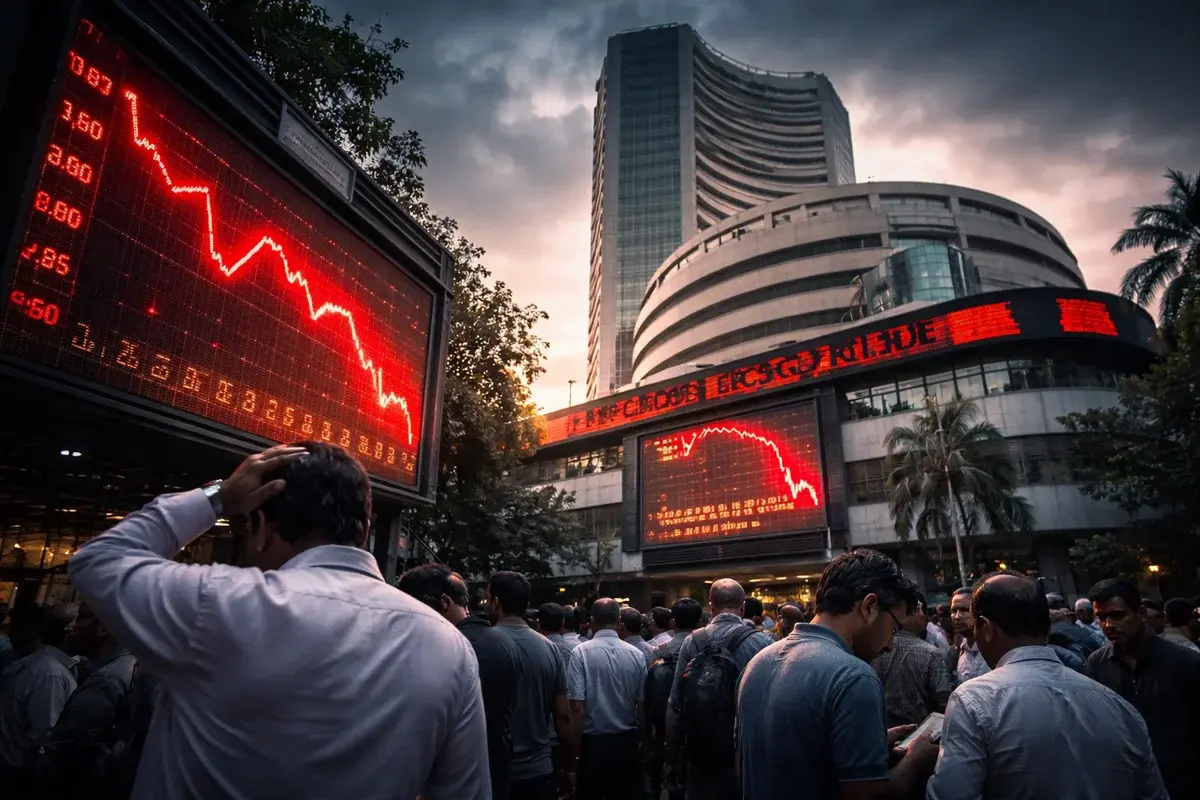
The decline in Indian stock markets reflects the growing influence of geopolitical risks and global commodity prices on investor sentiment.

FinScann presents a deep dive into Indian stocks to watch on March 6, 2026. Navigate market volatility driven by crude oil, geopolitics, and...
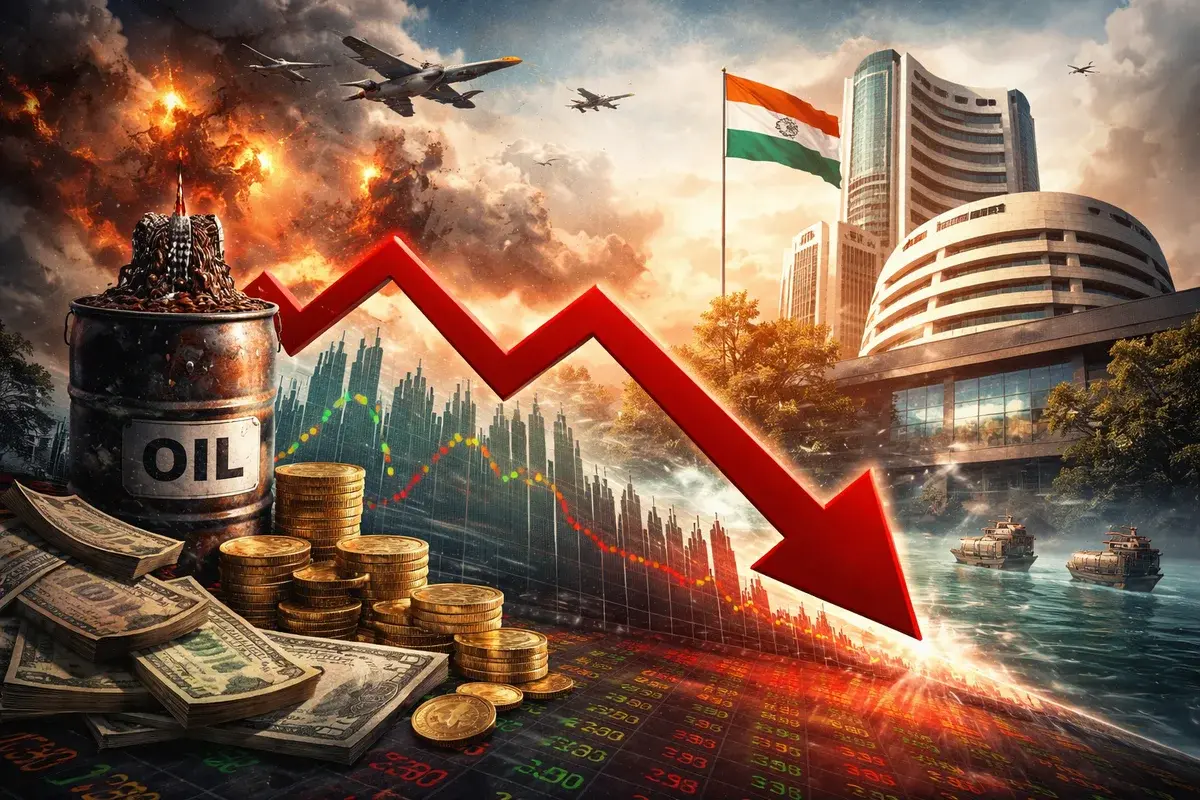
Indian equity markets opened on a cautious note as global investor sentiment weakened amid escalating geopolitical tensions involving the United...

Indian stock market plunges as Nifty 50 falls 285 points to 24,765 and Sensex drops 899 points.