Loading market data...
The US-Iran conflict has escalated significantly in March 2026, driving oil prices toward $100, surging gold to multi-year highs, and impacting global stock markets, including India's Nifty and Sensex.

The escalating conflict between the United States and Iran has sent shockwaves through global financial markets, with the eighth consecutive day of hostilities on March 7, 2026, pushing commodity prices to critical levels and triggering widespread market volatility. What began with US and Israeli strikes on Iranian targets on February 28, 2026, including the reported killing of Supreme Leader Ali Khamenei, has quickly devolved into a broader regional conflagration. Iran has retaliated fiercely, launching extensive drone and missile attacks across the Gulf, targeting Qatar, Saudi Arabia, and drawing Lebanon into the fray through Iran-backed Hezbollah's actions against Israel. This unprecedented escalation threatens global supply chains, fuels inflation fears, and compels investors, particularly in India, to reassess their portfolios amid heightened geopolitical risk.
The Catalyst
The direct military actions commenced on February 28, 2026, when the US and Israel launched coordinated airstrikes on Iran, reportedly striking over 3,000 targets in the first week. Key Iranian leaders were targeted, including the country's Supreme Leader Ayatollah Ali Khamenei. Iran swiftly responded, intensifying its air campaign with 10 drones targeting Qatar and multiple waves of drone and missile strikes across the Gulf region. Further exacerbating regional instability, the Israeli military confirmed the killing of Hezbollah commander Zaid Ali Jumaa in Beirut, a move that prompted retaliatory attacks by the Iran-backed group on Israel. Gulf countries are now on high alert, facing sustained threats to energy and civilian infrastructure.
Financial Forensics
The primary financial fallout from this escalating conflict is evident in the energy markets and safe-haven assets.
Crude Oil Prices: The conflict has triggered an immediate and dramatic surge in crude oil prices. Brent crude futures, which were previously trading around $67-$70 per barrel, surged past $90 per barrel by early March, approaching the critical $100 mark. WTI crude futures reached $90.13 per barrel by March 6, representing a 35% price escalation over seven days since hostilities began. Analysts warn that prolonged disruptions, particularly through the Strait of Hormuz, could push prices to $120-$150 per barrel. This surge is the largest weekly gain since the Russia-Ukraine conflict in 2022.
Strait of Hormuz Disruption: At the heart of the energy crisis is the Strait of Hormuz, a vital chokepoint through which approximately 20-21% of the world's crude oil and liquefied natural gas (LNG) supplies transit. As of March 2, 2026, the Strait was effectively closed to container traffic, with major shipping lines like Maersk, Hapag-Lloyd, and CMA CGM suspending transits and rerouting vessels via the longer Cape of Good Hope. This has led to the introduction of war risk surcharges of up to $1,500 per TEU and the cancellation of war risk cover by leading maritime insurers, significantly increasing freight and insurance costs. Hormuz crossings remained near zero by March 4, indicating a severe disruption to global maritime trade.
Gold as a Safe Haven: Gold prices have surged dramatically as investors flock to traditional safe-haven assets. Spot gold shot up from around $5,100 to an intraday high of $5,419.32 per ounce on March 2, 2026. The precious metal is now trading near $5,400 per troy ounce, rapidly approaching its all-time high of $5,594.82 recorded on January 29, 2026. Analysts from JP Morgan have raised their gold price target to $6,300 per troy ounce by December 2026, highlighting sustained bullish sentiment. This rally builds on a strong trend, with gold having gained nearly 20% in 2026 even before the conflict escalated.
Global Stock Market Volatility: International equity markets have reacted with sharp declines. The Dow Jones Industrial Average fell over 400 points and the S&P 500 dropped 0.7% on March 2. European and Asian indexes experienced similar declines of 1-2%. Emerging markets, including India, have been particularly vulnerable.
Indian Market Performance: The Indian equity markets have faced significant selling pressure. The BSE Sensex tanked 2,743.46 points (3.37%) and the NSE Nifty tumbled 533.55 points (2.11%) in early trade on March 2, 2026. Overall, Indian equities declined by approximately 4% within two days of the conflict's onset. The India VIX (Volatility Index) spiked by 25% in a single session, reflecting elevated investor nervousness and a shift towards risk-averse positioning. Foreign Institutional Investors (FIIs), who were net buyers in February 2026, are now anticipated to withdraw capital from emerging markets like India, exacerbating downward pressure.
Market Impact
The geopolitical crisis has profound implications across various sectors:
Key Takeaways for Investors
FinScann Verdict
The US-Iran conflict has rapidly escalated, posing significant risks to global economic stability. While the immediate focus remains on soaring crude oil prices and surging gold, investors must prepare for sustained market volatility, inflationary pressures, and severe supply chain disruptions. FinScann advises a cautious approach, emphasizing portfolio diversification and strategic allocation to resilient assets to navigate these turbulent times effectively.
Q: What is the primary cause of the current surge in oil prices? A: The primary cause is the escalating conflict between the US, Israel, and Iran, particularly the effective closure or severe disruption of the Strait of Hormuz, a critical chokepoint for global oil supplies. This threatens approximately 20-21% of global crude oil and LNG trade.
Q: How has the Indian stock market reacted to this conflict? A: The Indian stock market has reacted negatively, with benchmark indices like the Sensex and Nifty experiencing sharp declines of over 2-3% in early March 2026. The India VIX, a measure of volatility, has also spiked significantly, indicating increased investor anxiety.
Q: Why are gold prices rising during this conflict? A: Gold is considered a traditional safe-haven asset, meaning investors flock to it during periods of geopolitical uncertainty and economic instability to preserve capital. The US-Iran conflict has intensified this demand, pushing spot gold prices near their all-time highs.
Q: What are the key risks for India's economy due to this conflict? A: India faces several key risks, including a sharply rising crude oil import bill, which can lead to higher domestic inflation and adversely affect the country's twin deficits. Additionally, disruptions to trade routes and potential FII outflows pose challenges to economic stability and the Indian Rupee.
Q: How long is this conflict expected to last, and what are the market implications? A: The duration of the conflict remains uncertain, with some US officials projecting it could last four to five weeks. While a short, contained conflict might have limited long-term economic spillovers, a prolonged engagement risks sustained economic pressure through elevated oil prices, higher inflation, and continued financial market uncertainty. Investors are advised against overreacting to short-term noise, but to remain cautious.
Disclaimer: For information only; not investment advice. Stock market investments carry risks. Please consult a SEBI-registered advisor before investing. FinScann assumes no liability for decisions made based on this report.

Financial journalist specializing in market analysis, stock research, and investment trends. Dedicated to providing accurate, timely insights for informed decision-making.
Credentials: Experienced financial journalist with expertise in equity markets and economic analysis
The information provided in this article is for educational and informational purposes only and should not be construed as financial, investment, or legal advice. Finscann does not provide personalized investment recommendations.
For detailed terms and conditions, please read our Disclaimer and Terms of Service.

Global markets face sharp declines in March 2026 as escalating US-Israel-Iran tensions fuel oil price surges, weak US jobs data raises stagflation...

Boeing is on the cusp of a landmark 500-jet 737 Max deal with China, expected during President Trump's March 2026 visit, signaling a major boost for...

Amid escalating Iran-USA tensions in March 2026, global crude oil prices are surging past $85, with the Strait of Hormuz blockade impacting global...
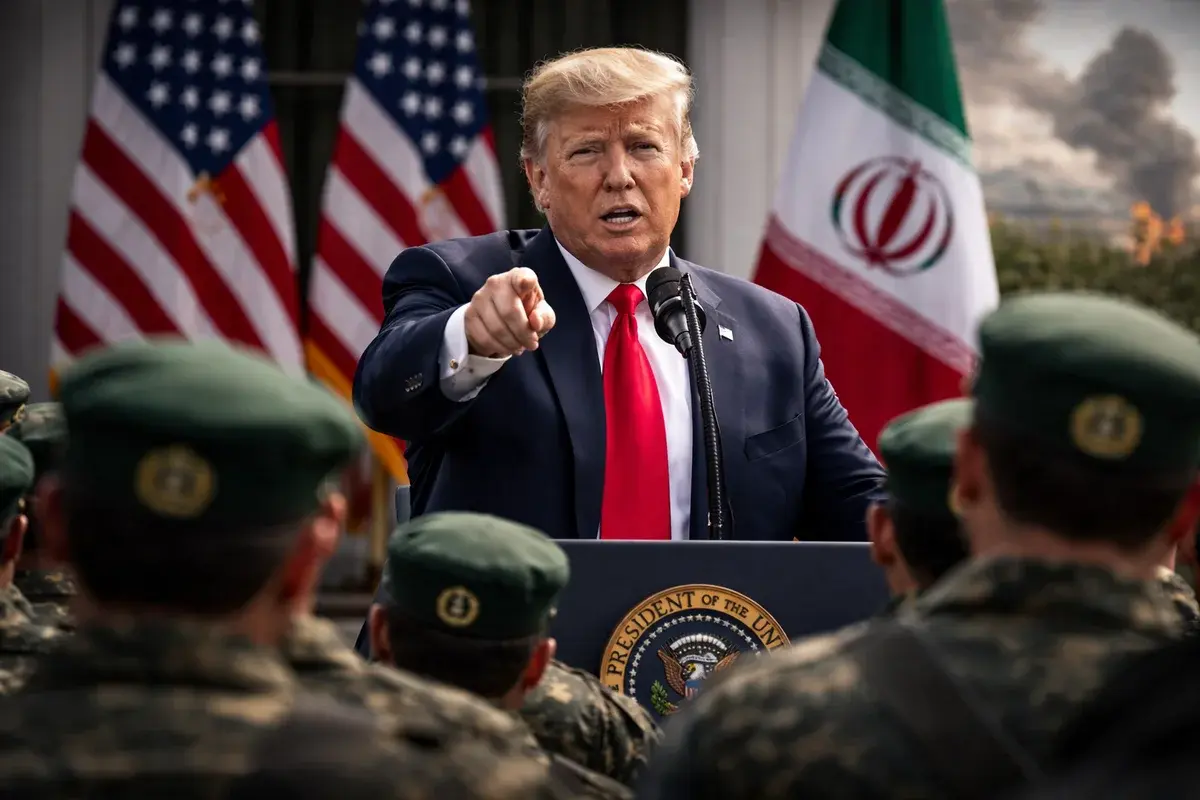
Trump’s call for Iran’s Revolutionary Guard to surrender has added a new layer of geopolitical tension to an already volatile Middle East landscape.

Former U.S. President Donald Trump has called for Iran's military to surrender, as West Asia tensions escalate, impacting global oil, gold, and...