Loading market data...
Deep analysis of Inamo’s $8 million Series A funding led by Prime Venture Partners. Explore India’s quick-commerce infrastructure shift, dark store economics, EBITDA outlook, venture capital trends, and long-term investment implications.
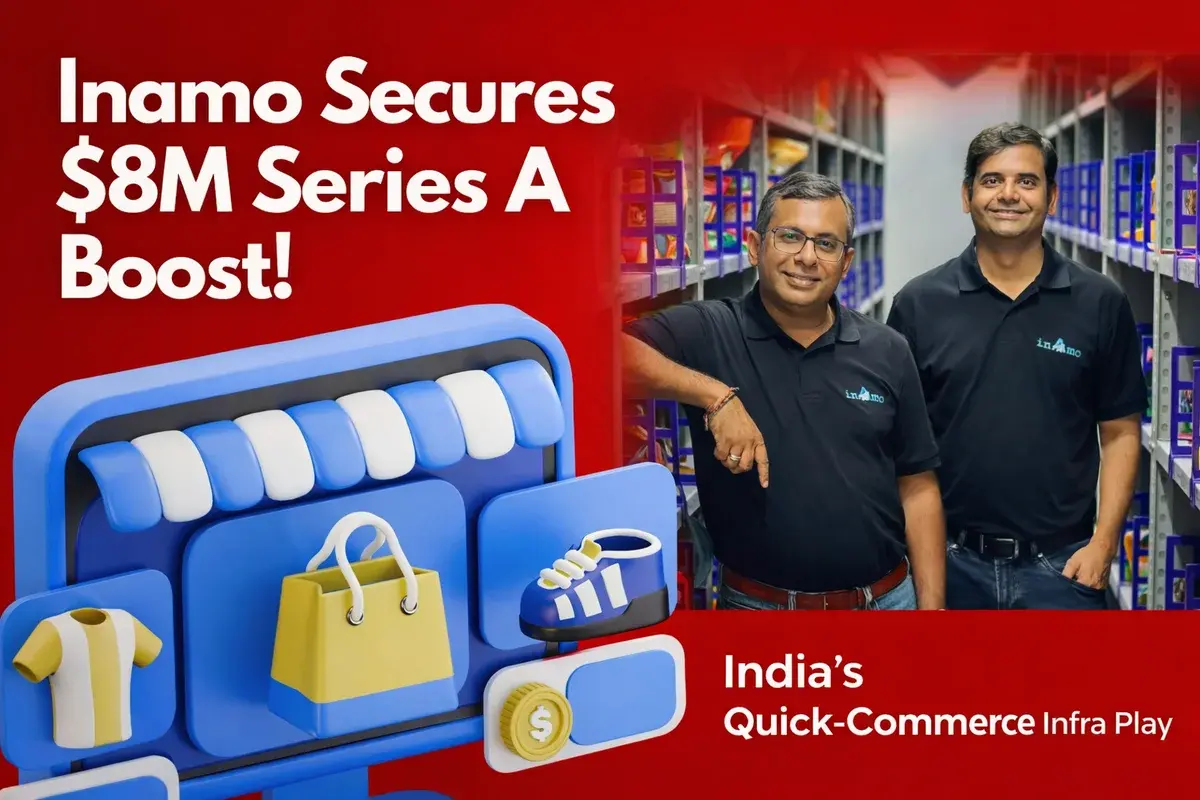
Inamo’s $8 million Series A round, led by Prime Venture Partners, underscores a broader capital cycle shift in India’s quick-commerce sector — from GMV-driven expansion to EBITDA-focused infrastructure consolidation. With a hybrid equity-plus-debt structure and a backend dark-store strategy, Inamo is positioning itself as a high-leverage enabler in a market projected to cross $40 billion by the end of the decade. For investors tracking startup funding India trends, this round reflects disciplined capital deployment rather than aggressive burn.
India’s quick-commerce industry is entering a more mature phase. The early years were defined by rapid expansion, customer acquisition battles, and aggressive discounting. In 2026, the conversation has shifted toward sustainable margins, operational density, and capital discipline. Investors are increasingly prioritizing EBITDA margins and cash flow predictability over top-line growth. Against this backdrop, Inamo’s Series A funding round becomes strategically significant rather than just another venture capital headline.
The funding environment itself has tightened. Venture capital trends show selective deployment, longer due diligence cycles, and stronger scrutiny of unit economics. In this climate, infrastructure-focused startups are gaining favor because they offer operating leverage without the volatility of direct consumer exposure.
On March 2, 2026, Inamo secured $8 million in Series A funding led by Prime Venture Partners. The round also included structured debt participation, signaling lender confidence in asset-backed or revenue-backed visibility.
Unlike equity-only funding rounds common during peak liquidity cycles, the inclusion of debt indicates:
This hybrid structure suggests that investors are backing a scalability model with tighter capital discipline rather than a high-burn expansion strategy.
Inamo operates as a backend infrastructure enabler in India’s quick-commerce ecosystem. Instead of competing with delivery apps, it focuses on dark-store development, operational optimization, and fulfillment infrastructure.
| Metric | Details |
|---|---|
| Founded | 2023 |
| Sector | Quick-Commerce Infrastructure |
| Core Focus | Dark Stores & Fulfillment Backend |
| Revenue Model | B2B leasing + infra services |
| Funding Stage | Series A |
| Capital Raised | $8 Million (+ debt) |
| Lead Investor | Prime Venture Partners |
| Market Position | Backend enabler for rapid delivery platforms |
| Competitive Edge | Asset-light infra + density optimization |
This positioning reduces exposure to marketing burn and customer acquisition volatility, which have historically compressed margins in quick-commerce models.
India’s quick-commerce market is projected to exceed $40–50 billion by 2030, supported by urban density, digital payments, and changing consumption patterns. However, valuation reset dynamics are visible across the ecosystem.
Where earlier funding cycles rewarded GMV acceleration, 2026 capital markets are emphasizing:
| Metric Focus | 2022–23 Cycle | 2026 Cycle |
|---|---|---|
| GMV Growth | Primary Driver | Secondary |
| EBITDA Margins | Ignored | Critical |
| Cash Runway | Long Burn | Controlled |
| Capital Discipline | Limited | Essential |
| Yield Compression Sensitivity | Low | High |
This shift favors infrastructure providers that monetize capacity rather than discounts.
“Institutional investors are increasingly prioritizing EBITDA visibility and sustainable cash flow generation over top-line growth,” says a Mumbai-based fund manager tracking the sector. “Backend infrastructure plays often provide stronger margin durability compared to consumer-facing delivery brands.”
Inamo’s model revolves around designing, operating, and leasing dark-store infrastructure to quick-commerce operators. It also provides backend optimization tools for inventory flow and fulfillment density.
Unlike consumer apps, which face:
Infrastructure providers generate revenue through long-term contracts and operational efficiency.
| Business Type | Revenue Stability | Marketing Burn | Margin Profile | Capital Risk |
|---|---|---|---|---|
| Q-Commerce App | Volatile | High | Thin | High |
| Infra Provider | Contractual | Low | Improving | Moderate |
| Traditional Logistics | Stable | Low | Moderate | Asset Heavy |
The infrastructure layer benefits from predictable leasing income and improved asset utilization over time.
While Inamo has not publicly disclosed full financials, early indicators from its funding structure imply improving operating leverage.
Key inferred characteristics:
| Financial Indicator | Strategic Interpretation |
|---|---|
| Equity + Debt Mix | Balanced capital strategy |
| Early Revenue Traction | Contract-backed revenue |
| Limited Consumer Exposure | Lower marketing volatility |
| Asset Optimization Focus | Higher potential ROIC |
As the company scales city clusters, unit economics are expected to improve through density optimization. Higher dark-store throughput improves EBITDA margins over time, reducing dependency on fresh equity infusion.
Inamo’s expansion thesis is rooted in backend consolidation and operational density.
• Expansion across Tier-1 and Tier-2 urban clusters • Multi-client infrastructure partnerships • Technology-enabled warehouse automation • Inventory analytics integration • Dark-store consolidation of fragmented operators • Capital-efficient cluster-based scaling
The broader startup funding India ecosystem is increasingly favoring such disciplined expansion strategies over hypergrowth narratives.
Despite structural advantages, risks remain.
• Margin pressure from oversupply of dark stores • Regulatory scrutiny around urban warehousing • Competitive infra startups entering similar verticals • Funding slowdown impacting expansion pace • Demand fluctuations in discretionary spending
Infrastructure plays, while more stable, remain sensitive to broader quick-commerce demand cycles.
| Segment | Current Momentum | Outlook | Capital Flow Sentiment |
|---|---|---|---|
| Quick-Commerce Apps | Stabilizing | Moderate Growth | Selective |
| Dark-Store Infrastructure | Strong | Positive | Rising |
| Venture Capital India | Disciplined | Cautious Optimism | Controlled |
| Last-Mile Logistics | Strong | Positive | High |
Capital flows are clearly tilting toward backend enablement rather than consumer acquisition wars.
Inamo’s defensibility depends on network density and long-term contracts. Once dark-store infrastructure is optimized for a specific geography, switching costs increase for partners.
Strategic advantages include:
If executed well, this could lead to a valuation reset upward in future funding rounds as EBITDA visibility improves.
Long-term investors tracking private markets should monitor EBITDA progression, client concentration risk, and expansion pacing. Infrastructure-backed plays often provide steadier alpha generation compared to volatile consumer startups.
Short-term market participants should note that while this funding round does not directly affect listed equities, it reflects broader structural changes in India’s quick-commerce profitability roadmap.
Valuation comfort for future rounds will hinge on demonstrated operating leverage rather than topline acceleration alone. Capital allocation discipline will determine whether Inamo evolves into a scalable infra backbone or remains a niche operator.
Investors tracking India’s logistics and quick-commerce ecosystem through listed equities can access markets via platforms such as Zerodha, Groww, Upstox, and Angel One.
Q: Why is infrastructure gaining preference over consumer quick-commerce apps? Infrastructure models provide stronger margin visibility, lower marketing burn, and better capital discipline.
Q: Does structured debt increase risk? In revenue-backed infrastructure plays, debt often indicates lender confidence rather than financial stress.
Q: Is quick-commerce growth slowing in India? Growth remains strong, but capital markets now prioritize sustainable unit economics over rapid GMV expansion.
Q: Could infrastructure models eventually list publicly? If scale and stable cash flows are achieved, REIT-style or logistics infrastructure listings could become viable over time.
India’s startup ecosystem is recalibrating toward sustainability. Inamo’s $8 million Series A round represents more than funding; it reflects a structural pivot in how capital views the quick-commerce sector.
In an environment defined by valuation resets, EBITDA scrutiny, and tighter venture capital deployment, infrastructure players may quietly become the long-term winners. If quick-commerce is the visible front-end engine, companies like Inamo are building the operating framework beneath it.
⚠️ DISCLAIMER: We Are Not Financial Advisors

Financial journalist specializing in market analysis, stock research, and investment trends. Dedicated to providing accurate, timely insights for informed decision-making.
Credentials: Experienced financial journalist with expertise in equity markets and economic analysis
The information provided in this article is for educational and informational purposes only and should not be construed as financial, investment, or legal advice. Finscann does not provide personalized investment recommendations.
For detailed terms and conditions, please read our Disclaimer and Terms of Service.
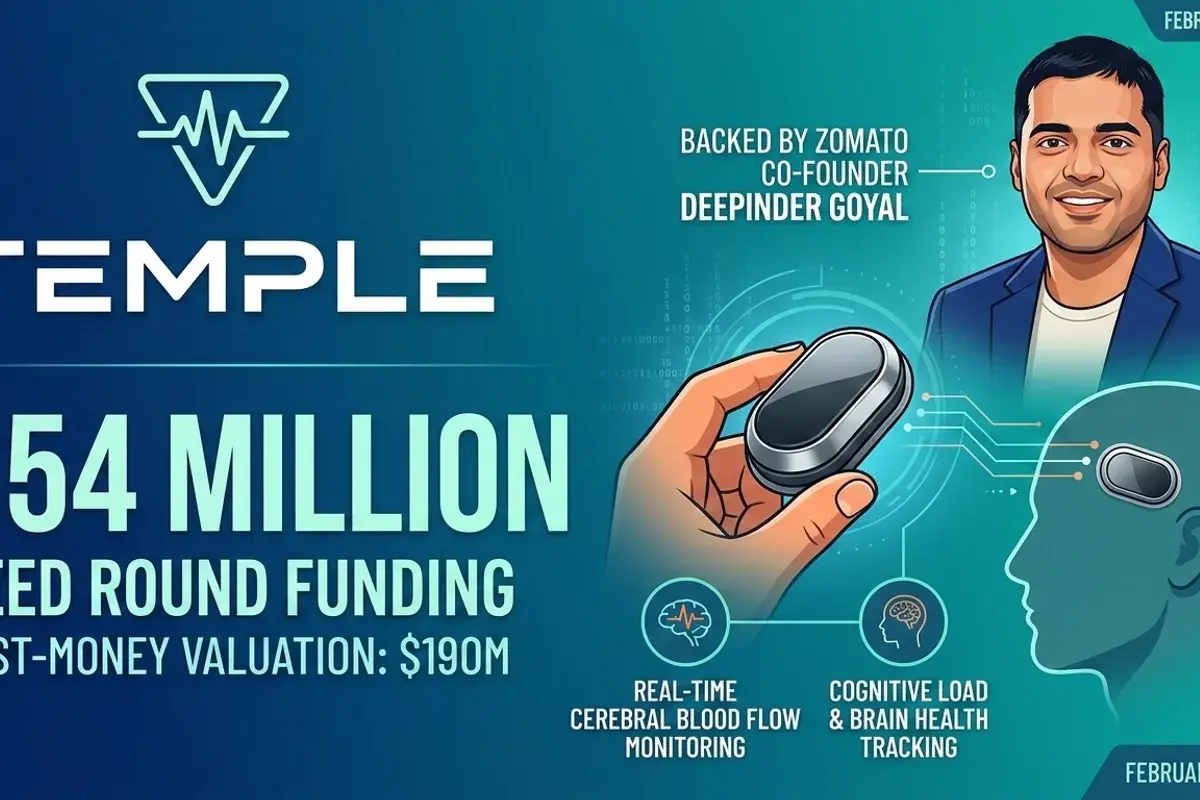
Deepinder Goyal’s entry into health-tech with Temple marks a pivot from consumer services to deep-tech hardware.

Origa’s success underscores a broader market trend: Vertical AI is the new frontier. By solving the "complexity problem" in pre-sales, Origa is...
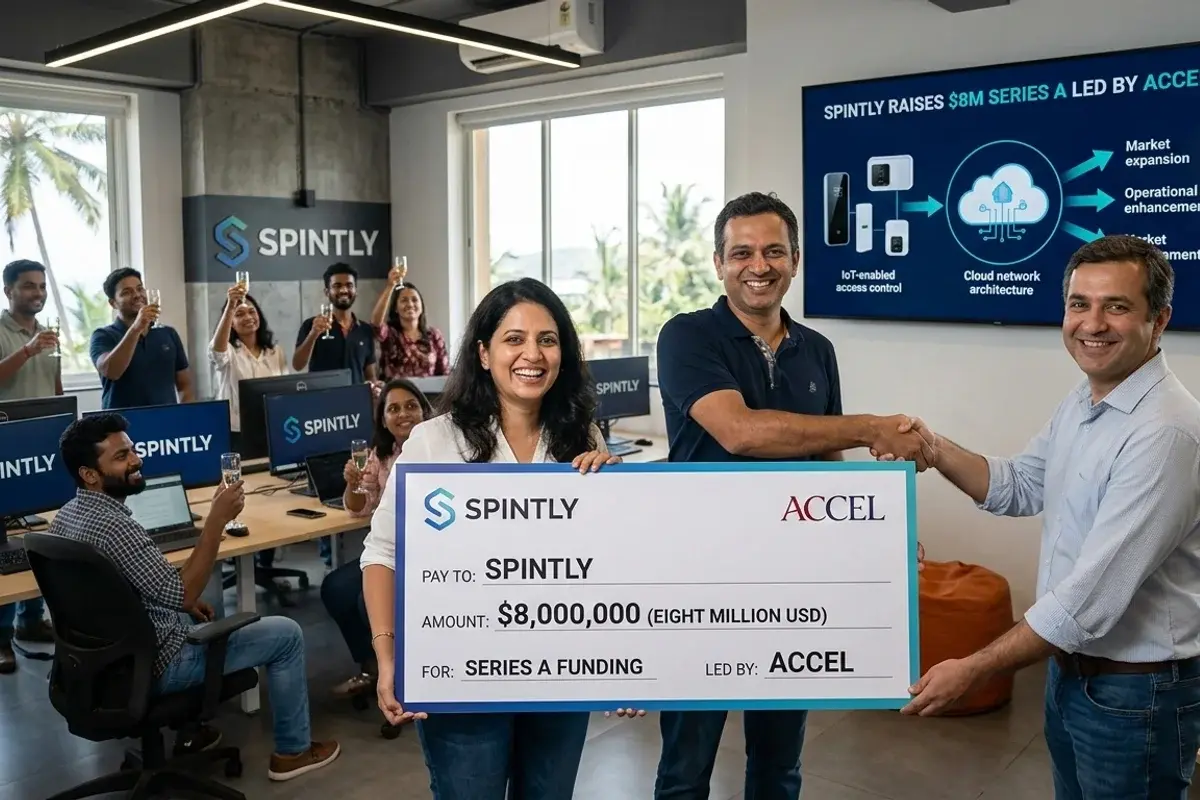
Goa-based IoT and security tech firm Spintly raises ₹66.5 Cr ($8M) Series A led by Accel to fuel global expansion and AI-driven R&D in February 2026.

Sophia Space secures $10 million in seed funding to develop passive-cooled space computers and modular orbital data centers.
Proptech startup Spintly secures $8 million in Series A funding led by Accel to expand its wireless BLE mesh access control system and AI-powered...