Loading market data...
India's oil and gas sector faces mixed fortunes in Q3 FY26: Upstream players like ONGC and Oil India see profit shifts amid crude volatility, while downstream giants BPCL and HPCL leverage refining margins. FinScann analyzes the impact of crude prices, LNG costs, and regulatory shifts.
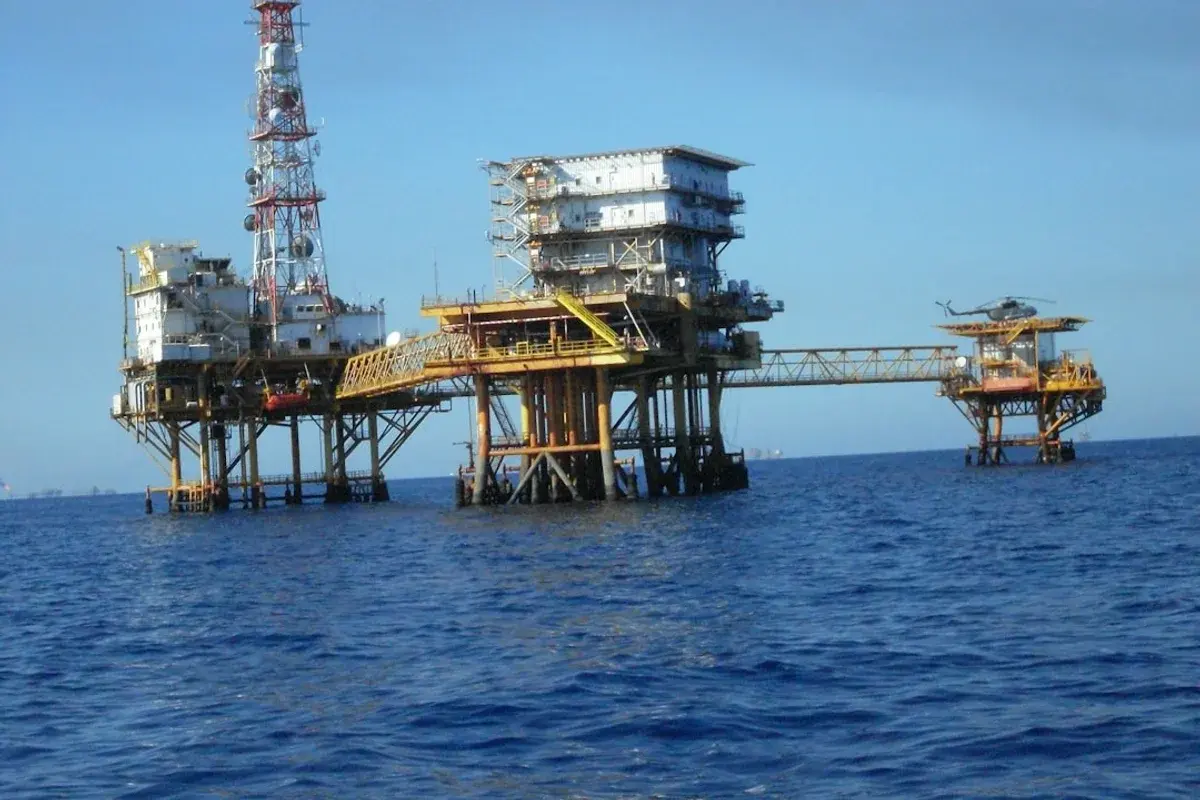
Amidst a complex energy landscape, India’s public sector oil and gas majors presented a nuanced performance in Q3 FY26. While upstream entities like Oil and Natural Gas Corporation (ONGC) and Oil India grappled with lower crude realizations, leading to profit moderation, downstream behemoths Bharat Petroleum Corporation Ltd (BPCL) and Hindustan Petroleum Corporation Ltd (HPCL) delivered robust earnings driven by stellar refining margins. The persistent volatility in global crude prices, coupled with the escalating cost of Liquefied Natural Gas (LNG), is reshaping profitability across the value chain, demanding strategic agility and capital discipline from these key players. Investors are closely scrutinizing cash flow resilience and long-term growth drivers as the sector eyes a potential valuation reset.
The Indian energy sector stands at a critical juncture, buffeted by global commodity price swings and evolving domestic consumption patterns. As the world navigates geopolitical tensions and a push towards energy security, the performance of India's oil and gas giants provides a crucial barometer for economic stability and future growth. The recently announced Q3 FY26 results (October-December 2025) reveal a bifurcated narrative: a challenging environment for crude oil producers offset by a strong showing from refiners, with the specter of elevated LNG costs casting a shadow over the gas distribution segment. The broader market trend indicates that companies with diversified portfolios and strong operational efficiencies are better positioned to weather these volatile conditions.
The Catalyst: Crude Swings and LNG Spikes
The period under review has been defined by a dual dynamic impacting the Indian oil and gas sector. On one hand, global crude oil prices, while exhibiting some volatility, have seen forecasts pointing towards a softer trajectory in 2026 and 2027. The U.S. Energy Information Administration (EIA) projects Brent crude to average around $58 per barrel in 2026 and $53 per barrel in 2027, a significant shift from the highs observed in previous periods. J.P. Morgan Global Research echoes this sentiment, forecasting Brent crude to average approximately $60 per barrel in 2026, driven by soft supply-demand fundamentals. This downward pressure on crude realizations directly impacts upstream exploration and production (E&P) companies.
Conversely, the cost of imported Liquefied Natural Gas (LNG) has remained a significant concern, creating headwinds for gas off-takers and city gas distribution (CGD) companies. Reduced allocations of cheaper domestic Administered Price Mechanism (APM) gas have forced CGD players to increasingly rely on more expensive regasified LNG (RLNG) from international markets. Experts project Henry Hub-linked LNG contracts for Indian CGD firms to average around $13.40/mn Btu in 2026, considerably higher than the domestic gas prices of $6.55/mn Btu from conventional fields. This disparity is squeezing margins for companies heavily reliant on gas imports, forcing difficult choices between absorbing costs and passing them on to price-sensitive consumers.
A notable positive for upstream players has been the abolition of the windfall tax on domestically produced crude oil, effective December 2, 2024. This fiscal measure, introduced in July 2022, was removed as global crude prices stabilized, easing a significant regulatory burden that previously impacted the net realizations of E&P companies.
Financial Forensics: A Segmented Performance
The Q3 FY26 earnings illustrate a clear divergence in financial health between the upstream and downstream segments of the Indian oil and gas industry.
Upstream Sector: Margin Compression and Resilient Profits
Companies like Oil and Natural Gas Corporation (ONGC) and Oil India (OIL), core to India’s energy security, presented mixed results.
ONGC reported a consolidated net profit of ₹11,946.42 crore for Q3 FY26, marking a robust 23% year-on-year (YoY) increase. This bottom-line growth was significantly aided by higher realizations from new gas wells and reduced statutory levies, which effectively cushioned the impact of lower crude oil prices. However, on a standalone basis, ONGC's net profit saw a 15% sequential decline to ₹8,371.85 crore from Q2 FY26, with revenue from operations remaining largely flat YoY at ₹1.67 lakh crore. Crude realization for ONGC stood at $61.63 per barrel in Q3 FY26, a decline from $72.57 per barrel in the corresponding period of the previous year. Natural gas revenues, however, improved, with the gas sales price rising to $6.59 per million British thermal units (MMBtu). The company declared a second interim dividend of ₹6.25 per equity share.
Oil India Ltd. faced more pronounced challenges, reporting a consolidated net profit of ₹1,428.83 crore for Q3 FY26, a sharp 24.66% sequential decline and a 29.13% year-on-year plunge. Despite revenue growth in Q2 FY26 to ₹8,394.11 crore, the company witnessed significant margin compression, with operating margins (excluding other income) contracting to 27.44%. Standalone PAT fell by 34% YoY to ₹808 crore, largely due to a decrease in crude realization to $62.84 per barrel from $73.82 per barrel a year ago. The company’s consolidated revenue from operations for Q3 FY26 was ₹9,111.43 crore, largely flat YoY and QoQ. Oil India declared an interim dividend of ₹7 per share.
Downstream Sector: Refining Margins Drive Stellar Performance
In stark contrast, downstream oil marketing companies (OMCs) like Bharat Petroleum Corporation Ltd (BPCL) and Hindustan Petroleum Corporation Ltd (HPCL) delivered exceptional results, largely propelled by robust Gross Refining Margins (GRMs).
BPCL reported a stellar performance in Q3 FY26, with consolidated net profit soaring by 88.87% YoY to ₹7,188.40 crore. This was driven by a 16.10% sequential profit growth and strong operational efficiencies. Net sales climbed 13.42% sequentially to ₹1,19,029.43 crore, while operating margins expanded to 9.82%, marking the highest in over two years. The company's average GRM for the nine months ended December 2025 stood at $9.68 per barrel, significantly up from $5.95 per barrel in the prior year. BPCL announced a second interim dividend of ₹10 per equity share.
HPCL also showcased impressive financial health, with consolidated net profit surging 57.70% YoY to ₹4,011.40 crore in Q3 FY26. Standalone net profit jumped 34.70% to ₹4,072.49 crore. Total income increased by 4.82% YoY to ₹1,25,169.47 crore. The company benefited from improved GRMs, which rose to $8.85 per barrel in Q3 FY26 from $6.01 per barrel in Q3 FY25. This strong performance was also supported by government compensation for LPG under-recoveries.
Gas Distribution Sector: Under Pressure from LNG Costs
The city gas distribution (CGD) sector, including players like Indraprastha Gas Ltd. and Mahanagar Gas Ltd., continues to face headwinds. The sustained high prices of spot LNG remain a key concern, impacting domestic demand and compressing margins. With reduced access to cheaper domestic gas, these companies are increasingly exposed to volatile international prices, leading to shrinking profit margins and potential derating of stocks.
Industry Financial Metrics Snapshot (Q3 FY26)
| Metric | ONGC (Upstream - Consolidated) | Oil India (Upstream - Consolidated) | BPCL (Downstream - Consolidated) | HPCL (Downstream - Consolidated) |
|---|---|---|---|---|
| Net Profit (₹ Cr) | ₹11,946.42 | ₹1,428.83 | ₹7,188.40 | ₹4,011.40 |
| YoY Net Profit Growth | +23% | -29.13% | +88.87% | +57.70% |
| Revenue from Ops (₹ Cr) | ₹1.67 Lakh (flat YoY) | ₹9,111.43 (flat YoY/QoQ) | ₹1,19,029.43 (+5.18% YoY) | ₹1,24,582.65 (+4.66% YoY) |
| Operating Margin | 15.13% (Q3 FY26 Standalone) | 27.44% (Q2 FY26 excl OI) | 9.82% (Q3 FY26 excl OI) | N/A (Consolidated) |
| Crude Realization ($/bbl) | $61.63 (Q3 FY26) | $62.84 (Q3 FY26) | N/A | N/A |
| GRM ($/bbl) | N/A | N/A | $9.68 (9M FY26 Avg) | $8.85 (Q3 FY26) |
Note: Some metrics are standalone due to data availability and better reflection of core business. Source: Company Q3 FY26 Results, as of February 2026.
Strategic Analysis: Adapting to New Realities
The Indian oil and gas sector is undergoing significant strategic recalibrations. For upstream companies, the focus remains on capital discipline and enhancing production efficiencies amidst lower crude oil price forecasts. ONGC, for instance, has seen its profits bolstered by new well gas realizations and reduced statutory levies, highlighting the importance of government policy support and diversification within its E&P portfolio. Oil India's challenge lies in managing margin compression, necessitating stringent cost control and potentially higher-value gas production to offset crude price volatility.
Downstream players like BPCL and HPCL are demonstrating the resilience of their integrated business models. Their ability to capitalize on robust refining margins, driven by favorable product cracks and operational efficiencies, underscores the strategic advantage of refining capabilities in a volatile crude environment. Both companies are also expanding their retail networks and diversifying into alternative energy segments, a crucial step for long-term business model durability and future scalability.
The CGD sector faces a more immediate strategic challenge. The reliance on expensive imported LNG due to reduced domestic gas allocations puts pressure on their unit economics. To maintain profitability roadmap and competitive positioning, CGD companies need to explore long-term LNG contracts at favorable rates and implement efficient pass-through mechanisms to consumers, while simultaneously expanding infrastructure to deepen market penetration.
Growth Drivers
Risk Factors
Industry Segment Heatmap (Q3 FY26 Outlook)
| Segment | Current Momentum | Outlook (Next 12-18 Months) | Capital Flow Sentiment |
|---|---|---|---|
| Upstream (E&P) | Mixed, Profit Moderation | Cautiously Stable, dependent on crude prices & gas realizations | Neutral to Mildly Positive (post-windfall tax) |
| Downstream (Refining) | Strong, High GRMs | Positive, continued strong demand and margin stability | Positive |
| Gas Distribution (CGD) | Challenged, Margin Pressure | Guarded, contingent on LNG price softening & domestic allocation | Negative to Neutral |
“Institutional investors are increasingly prioritizing EBITDA visibility and sustainable cash flow generation over top-line growth, especially in the energy sector where commodity price volatility is a constant. The divergent Q3 FY26 results underscore the importance of an integrated business model and a clear pathway to alpha generation through operational excellence,” says a Mumbai-based fund manager tracking the sector.
Market Impact: Sectoral Divergence
The Q3 FY26 results have created a clear divergence in market sentiment. Upstream stocks like ONGC and Oil India have seen some pressure on their share prices, with investors reacting to lower crude realizations and sequential profit declines, despite the YoY growth in ONGC's consolidated profit. Conversely, downstream oil marketing companies like BPCL and HPCL have been rewarded for their strong earnings, with robust refining margins driving positive investor sentiment and potential for further rerating. This highlights the market's current preference for companies with stable and predictable earnings streams, even if reliant on refining crack spreads. The broader Nifty Energy index reflects this mixed performance, influenced by both global crude benchmarks and domestic demand-supply dynamics.
Key Takeaways for Investors
FinScann Verdict
The Indian oil and gas sector remains a compelling, yet complex, investment landscape. While the upstream segment grapples with moderating crude prices, the downstream sector is demonstrating robust profitability, driven by strong refining fundamentals. The gas distribution segment faces near-term margin pressure from high LNG costs, necessitating strategic adaptation. FinScann believes that companies with operational agility, diversified revenue streams, and a clear path to managing input cost volatility are best positioned for long-term value creation. Investors should prioritize quality balance sheets and consistent dividend stocks in this dynamic environment.
Trading Platforms in India
For investors looking to participate in the Indian stock market and trade shares of oil and gas companies, several robust platforms are available:
Q: What is driving the divergence in profitability between upstream and downstream oil companies? A: The primary driver is the movement of crude oil prices and refining margins. Upstream companies like ONGC and Oil India realize revenues from crude oil sales, so lower crude prices or lower realizations directly impact their profitability. Conversely, downstream companies like BPCL and HPCL benefit from robust refining margins (the difference between refined product prices and crude oil costs), especially when demand for products like petrol and diesel remains strong and crude prices are relatively stable or declining.
Q: Is the windfall tax a concern for upstream companies in India anymore? A: No, the windfall tax on domestically produced crude oil was abolished by the Indian government on December 2, 2024. This removes a significant tax burden that previously impacted the net realizations of upstream oil and gas companies like ONGC and Oil India. While regulatory policy can change, its current removal is a positive development for these players.
Q: How do rising LNG prices affect city gas distribution (CGD) companies in India? A: Rising LNG prices directly impact the input costs for CGD companies. With reduced allocations of cheaper domestic APM gas, CGDs are increasingly forced to procure more expensive imported LNG (RLNG). This leads to margin compression, as they may not be able to fully pass on these increased costs to consumers due to competitive pressures and pricing regulations. This situation has led to concerns about the profitability and potential valuation reset for these companies.
Q: What is the long-term outlook for crude oil prices impacting the Indian energy sector? A: Long-term forecasts from agencies like EIA and J.P. Morgan suggest a potentially softer crude oil price environment in 2026 and 2027, with Brent crude averaging around $58-60 per barrel. This outlook, while beneficial for downstream refining margins, could continue to pressure upstream realizations. However, geopolitical events remain a significant wild card that could introduce sudden volatility.
Q: What role do dividend stocks play in the Indian oil and gas sector? A: Many public sector undertakings (PSUs) in the Indian oil and gas sector, including ONGC, Oil India, BPCL, and HPCL, are known for their consistent dividend payouts. These companies often appeal to investors seeking passive income stocks and long-term stability, even amidst commodity price fluctuations. The dividends reflect strong cash flow generation from mature assets and government policy encouraging wealth distribution to shareholders.
The Indian energy sector, a cornerstone of the nation’s economic ambition, will continue its dynamic evolution. Navigating the delicate balance between volatile global commodity markets and robust domestic demand will define the strategic imperatives for India's oil and gas majors. Prudent capital allocation, technological adoption, and a keen eye on evolving energy policies will be paramount for sustained growth and profitability in the years ahead.
Disclaimer: For information only; not investment advice. Stock market investments carry risks. Please consult a SEBI-registered advisor before investing. FinScann assumes no liability for decisions made based on this report.

Financial journalist specializing in market analysis, stock research, and investment trends. Dedicated to providing accurate, timely insights for informed decision-making.
Credentials: Experienced financial journalist with expertise in equity markets and economic analysis
The information provided in this article is for educational and informational purposes only and should not be construed as financial, investment, or legal advice. Finscann does not provide personalized investment recommendations.
For detailed terms and conditions, please read our Disclaimer and Terms of Service.

Indian markets face significant pressure in March 2026 as Nifty slips below 25,000. Geopolitical tensions and rising commodity prices drive...

🌍 Geopolitical Firestorm: The "Black Swan" Weekend The biggest trigger for today's opening isn't domestic; it's the sudden escalation in the Middle...

US–Israel strikes on Iran and rising Middle East tensions trigger global market volatility. Explore the impact on Indian stock market, crude oil...

The Indian equity markets faced a brutal final session for February, with benchmark indices witnessing a sharp broad-based sell-off.

Wall Street faces significant downturn with Dow Jones plummeting 789 points. Unexpected inflation data sparks fears, heavily impacting tech stocks...