Loading market data...
Sophia Space secures $10 million in seed funding to develop passive-cooled space computers and modular orbital data centers. Explore deep analysis of its TILE architecture, Apex Space partnership, and the future of AI infrastructure in orbit.
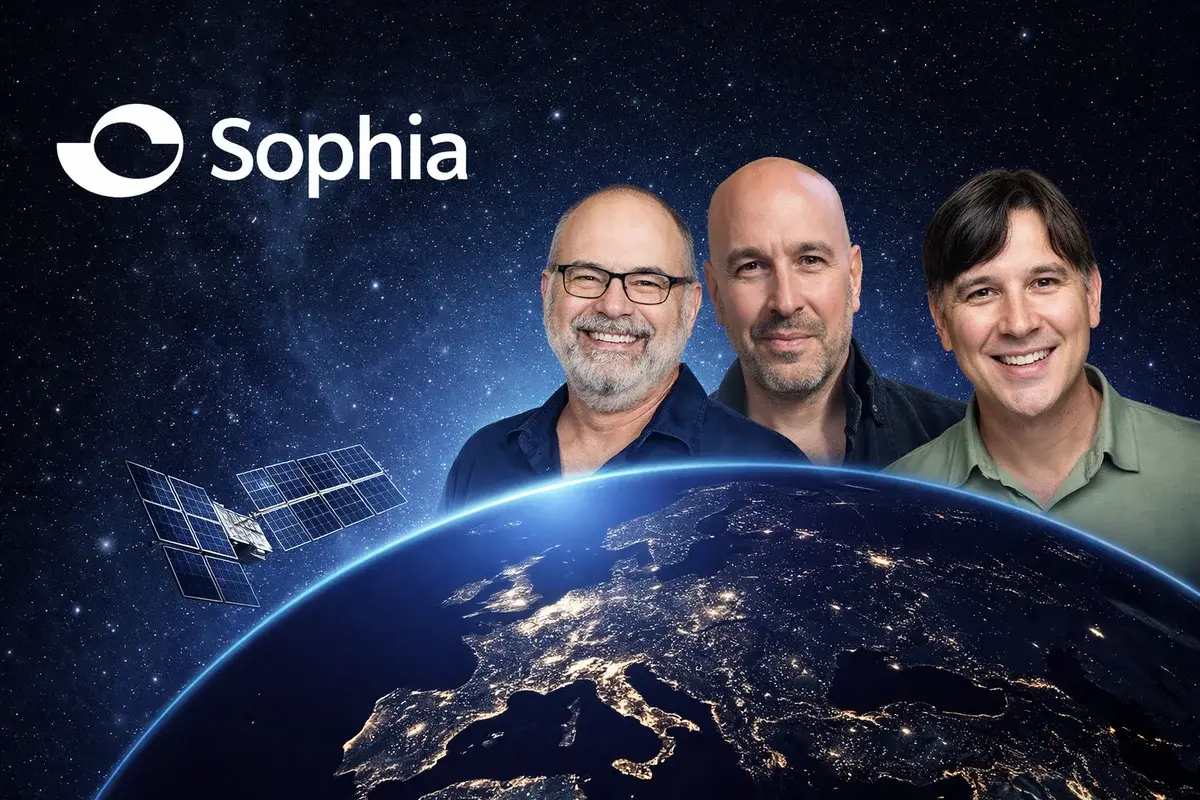
US-based space infrastructure startup Sophia Space has secured $10 million in seed funding to demonstrate a novel passive cooling architecture for space-based computers. Backed by Alpha Funds, KDDI Green Partners Fund and Unlock Venture Partners, the company aims to validate its thin, solar-integrated modular computing system on orbit by 2027–28 using a satellite bus from Apex Space. The model challenges traditional radiator-heavy satellite designs and could materially alter the economics of orbital data centers in the coming decade.
As terrestrial AI workloads intensify, interest in deploying advanced compute infrastructure in orbit has accelerated. Lower latency Earth observation analytics, defense systems, global communications networks and even space-based data centers are moving from concept to feasibility discussions.
Yet the bottleneck is not launch cost alone — it is thermodynamics.
As Nvidia CEO Jensen Huang recently highlighted, space may be cold, but without airflow, heat dissipation becomes a conduction challenge. High-powered processors generate immense thermal loads, and traditional satellite architectures rely on bulky radiators to maintain optimal chip temperatures. These radiators add mass, complexity and cost.
Sophia Space is attempting to bypass that paradigm entirely.
| Metric | Details |
|---|---|
| Capital Raised | $10 Million |
| Round Type | Seed |
| Key Investors | Alpha Funds, KDDI Green Partners Fund, Unlock Venture Partners |
| Technology Focus | Passive-cooled modular space computers |
| Demonstration Target | Late 2027 / Early 2028 |
| Satellite Bus Partner | Apex Space |
The funding enables ground-based validation of its passive cooling concept before an in-orbit demonstration via a commercially procured satellite bus from Apex Space.
Sophia’s architecture stems from research linked to Caltech’s $100 million-endowed orbital solar power initiative. The research originally aimed to develop flexible, sail-like orbital solar arrays capable of beaming energy back to Earth.
The insight was architectural rather than electrical.
Instead of traditional box-shaped satellites, researchers developed thin, flexible panel structures. Sophia’s founders adapted this geometry to computing.
The result is a modular unit called a TILE — a 1-meter by 1-meter solar-integrated server rack only a few centimeters thick.
| Feature | Traditional Satellite | Sophia TILE |
|---|---|---|
| Form Factor | Box-shaped | Thin, sail-like |
| Cooling System | Large radiators | Passive heat spreader |
| Power Efficiency | Lower processing ratio | ~92% to compute |
| Modularity | Limited | Scalable tiles |
| Weight Efficiency | Heavy | Lightweight |
By embedding processors directly against a passive heat spreader within a thin geometry, the system eliminates active cooling mechanisms. This significantly reduces power overhead and structural mass.
DeMillo estimates that approximately 92% of generated power can be directed toward processing workloads — a dramatic efficiency improvement over radiator-heavy systems.
Sophia’s long-term roadmap envisions assembling thousands of TILE units into a 50-meter by 50-meter orbital array capable of delivering 1 megawatt of computing power.
That would effectively constitute a large-scale space data center.
Unlike distributed constellations linked via laser inter-satellite communication, Sophia’s model proposes a centralized compute structure. This reduces interconnect complexity and potentially simplifies deployment.
By contrast, competitors such as SpaceX, Google (exploring AI-driven distributed processing concepts), and emerging players like Starcloud are evaluating conventional satellite geometries that rely on larger radiator arrays for cooling.
Sophia’s thesis is that radiator-heavy architectures will struggle to scale economically in high-density compute environments.
The company’s near-term strategy is pragmatic. Instead of waiting for megawatt-scale infrastructure, Sophia plans to sell TILE modules to existing satellite operators.
Potential use cases include:
Earth observation platforms generating terabytes of sensor data Missile warning and tracking networks Defense and intelligence systems Advanced communications constellations
Today, much of the data generated in orbit is discarded.
Satellites lack onboard processing capacity to analyze data in real time. Round-trip latency to Earth and limited downlink bandwidth constrain usable throughput.
Sophia’s onboard compute model addresses this inefficiency directly.
By processing data in orbit, satellites can transmit refined insights rather than raw data streams — dramatically improving operational efficiency.
Global space investment has shifted from launch vehicles to orbital infrastructure.
| Segment | Capital Trend | Growth Outlook |
|---|---|---|
| Launch Services | Stabilizing | Competitive |
| Satellite Manufacturing | Expanding | Strong |
| Orbital Data Processing | Emerging | High Potential |
| Defense Space Systems | Accelerating | Strategic Priority |
Defense spending, particularly in missile tracking and sensor networks, is driving demand for resilient, high-performance orbital computing.
Commercial demand from Earth observation analytics and climate monitoring further strengthens the opportunity.
Sophia faces multiple hurdles.
Thermal management in vacuum environments remains complex despite passive designs. Long-term material degradation from radiation exposure could affect component longevity. Software orchestration across modular processors must dynamically balance workloads to avoid localized overheating.
Regulatory approval for large orbital structures and collision risk management also remain critical considerations.
Furthermore, achieving megawatt-scale compute in orbit will require launch cost efficiencies and high-reliability assembly strategies.
The $10 million seed round positions Sophia at an early validation stage. Capital intensity will rise substantially as the company approaches orbital demonstration and eventual scale deployment.
Follow-on funding rounds will likely require strategic participation from defense contractors, hyperscale cloud providers or sovereign investment arms.
The economics of space data centers hinge on three variables:
Launch cost per kilogram Power generation efficiency Cooling efficiency per watt of compute
Sophia’s passive cooling innovation directly addresses the third variable.
“Institutional investors are increasingly prioritizing hardware efficiency and sustainable energy utilization in next-generation infrastructure. Orbital computing will only be viable if thermal and power economics improve materially,” says a venture investor tracking aerospace innovation.
The comment underscores how thermodynamic efficiency could become the defining constraint in space compute economics.
Sophia Space represents a high-risk, high-reward frontier infrastructure bet within the emerging orbital economy.
Short-term milestones include ground demonstration success and in-orbit validation by 2027–28. Failure at either stage would materially impact viability.
Long-term upside depends on defense adoption, hyperscale partnerships, and megawatt-scale deployment feasibility.
If passive cooling proves scalable, Sophia’s modular approach could redefine how AI infrastructure expands beyond Earth.
The race to put advanced chips in orbit is no longer science fiction. It is a thermodynamics problem — and Sophia Space is betting it can solve it.
⚠️ DISCLAIMER: We Are Not Financial Advisors

Financial journalist specializing in market analysis, stock research, and investment trends. Dedicated to providing accurate, timely insights for informed decision-making.
Credentials: Experienced financial journalist with expertise in equity markets and economic analysis
The information provided in this article is for educational and informational purposes only and should not be construed as financial, investment, or legal advice. Finscann does not provide personalized investment recommendations.
For detailed terms and conditions, please read our Disclaimer and Terms of Service.
Proptech startup Spintly secures $8 million in Series A funding led by Accel to expand its wireless BLE mesh access control system and AI-powered...

Info Edge, parent of Naukri.com, sets up ₹250 crore B8 Fund-I to invest in growth-stage tech companies.

Indian AI startups unveil real-world deployment solutions at the India AI Impact Summit, spanning voice AI for BFSI, radiology tools, industrial IoT,...

Indian agentic AI startup Gushwork secures $9 million in seed funding to expand engineering and scale AI-driven citation optimization for platforms...

San Francisco-based Kana secures $15 million in seed funding led by Mayfield to launch configurable AI agents for end-to-end marketing workflows.