Loading market data...
Indian agentic AI startup Gushwork secures $9 million in seed funding to expand engineering and scale AI-driven citation optimization for platforms like ChatGPT and Gemini. Deep analysis of business model, venture capital trends, valuation outlook, and growth risks.
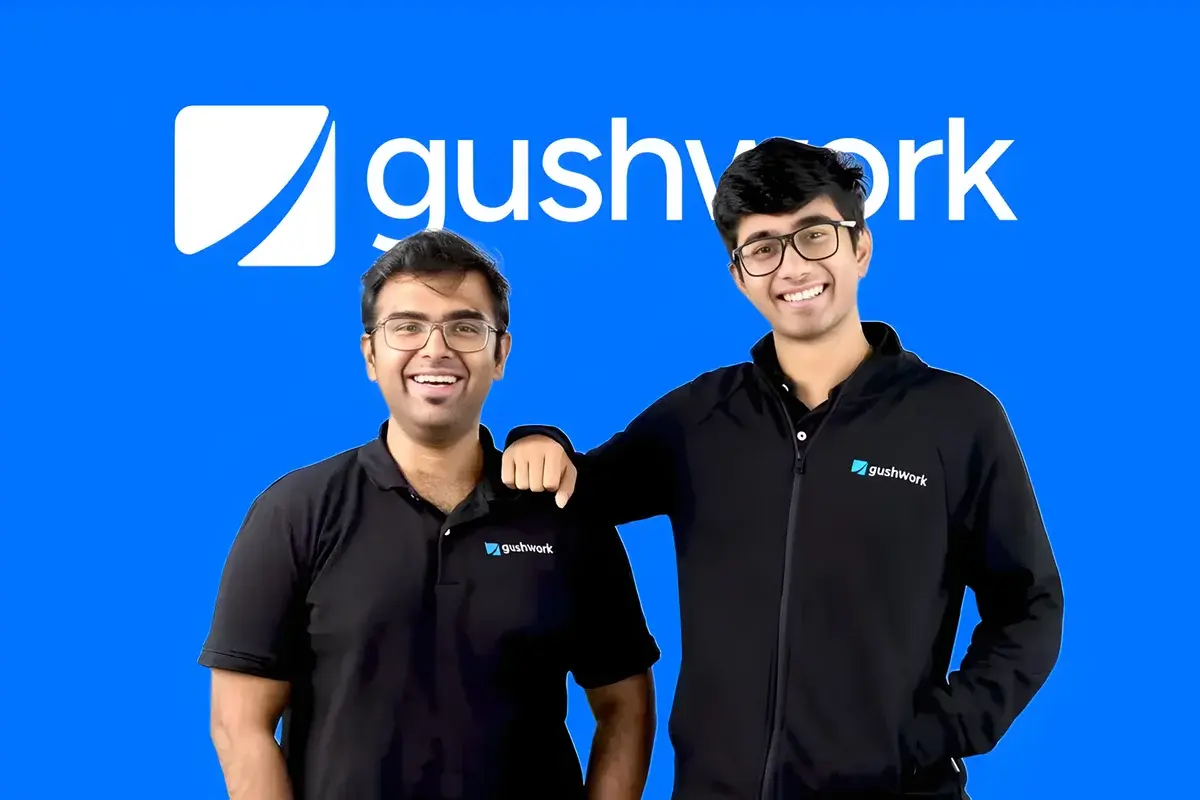
Indian agentic AI startup Gushwork has raised $9 million in seed capital to expand engineering and accelerate product build, positioning itself as an infrastructure layer for AI-driven vendor discovery. As AI platforms increasingly replace traditional search, the company is betting that citation optimization — not SEO — will define digital visibility. The real test lies in scalability, monetization, and defensibility in a rapidly evolving AI ecosystem shaped by venture capital trends and startup funding India momentum.
The generative AI cycle is entering its second phase. The first phase rewarded model builders and foundation layer innovators. The second phase is rewarding infrastructure layers that optimize how businesses interact with those models. As liquidity conditions stabilize and venture capital trends pivot from experimentation to monetization, investors are reallocating capital toward agentic AI systems capable of autonomous execution.
In this backdrop, India’s startup ecosystem is witnessing a structural evolution. The narrative is shifting from chat interfaces to workflow agents. From AI copilots to AI decision engines. Against this macro setting, Gushwork has raised $9 million in seed funding to expand its engineering teams and product capabilities. The round was led by Susquehanna Asia VC with participation from Lightspeed, B Capital, Beenext, Seaborne Capital, Sparrow Capital, and 2.2 Capital.
This is not just another AI startup funding headline. It reflects a deeper capital allocation thesis: AI-mediated discovery is becoming the new distribution channel.
Capital Raise and Strategic Implications
The $9 million seed round places Gushwork among the larger early-stage raises in India’s agentic AI space. At seed stage, such capital implies aggressive product build-out, go-to-market scaling, and hiring velocity. It also suggests investor conviction in category creation rather than incremental feature layering.
Unlike typical AI content tools, Gushwork positions itself as an AI search optimization engine. The company builds autonomous marketing agents designed to ensure that small and medium businesses are cited by large language models such as ChatGPT, Claude, Gemini, and Perplexity.
The funding will reportedly be deployed across three core areas:
This capital deployment strategy signals product depth over surface-level growth hacking.
Business Model and Revenue Architecture
Gushwork’s monetization strategy appears subscription-driven, targeting SMBs that depend on inbound discovery. The company claims AI agent visits to customer websites are already 2x–3x higher than human visits, indicating structural traffic shift.
If accurate, this shift creates a new economic reality: businesses must optimize for AI crawlers, not just search engine spiders.
Unlike traditional SEO firms that rely on keyword-based ranking logic, Gushwork claims its system continuously adapts to:
• AI citation heuristics
• Model retraining cycles
• Authority clustering signals
• Topic relevance recalibration
This implies a recurring revenue opportunity tied to continuous optimization rather than one-time content projects.
Financial Visibility and Unit Economics
As a seed-stage entity founded in 2024, Gushwork does not disclose revenue or EBITDA margins publicly. However, we can analyze likely unit economics based on SaaS benchmarks.
Agentic marketing infrastructure typically commands gross margins above 70%, assuming cloud costs remain manageable. Engineering-heavy buildouts, however, suppress EBITDA margins in early years.
| Financial Metric | Status | Commentary |
|---|---|---|
| Revenue | Undisclosed | Likely early-stage ARR model |
| Gross Margin | Estimated 65–75% | SaaS benchmark range |
| EBITDA | Negative | High product investment cycle |
| Cash Burn | Moderate to High | Engineering expansion phase |
| Runway | ~18–24 months (est.) | Based on $9M raise |
| Valuation | Undisclosed | Seed-stage premium category |
| Debt | Nil | Equity-funded |
| ROE | Not applicable | Early-stage |
Early-stage SaaS typically trades at forward revenue multiples rather than EBITDA. If Gushwork achieves meaningful ARR scale, valuation expansion could follow typical AI premium curves.
Strategic Positioning and Competitive Moat
The durability of Gushwork’s thesis depends on whether AI citation optimization becomes a standalone category or remains a feature absorbed by larger platforms.
Its strategic pillars appear to include:
The moat claim hinges on understanding how large language models cluster authority. If this logic becomes commoditized, defensibility weakens.
Sector-Level Analysis: Agentic AI Landscape
The global generative AI ecosystem is fragmenting into three layers:
| Segment | Growth Momentum | Margin Outlook | Valuation Trend | Risk Level |
|---|---|---|---|---|
| Foundation Models | High | High Capex | Normalizing | Moderate |
| AI Infrastructure Tools | Accelerating | Improving | Premium | Moderate |
| Application Layer AI | Crowded | Volatile | Valuation Reset | High |
Agentic AI infrastructure currently attracts premium venture capital due to perceived scalability.
Capital Flow and Venture Trends
Startup funding India has witnessed selective capital deployment in 2026. While broader venture capital trends show moderation compared to peak-cycle exuberance, AI-centric deals continue to command investor appetite.
Liquidity remains cautious but supportive. Yield compression in global markets has redirected risk capital toward innovation sectors. However, funding discipline has increased. Investors now demand monetization visibility.
“Markets are no longer rewarding growth at any cost. EBITDA visibility and balance sheet strength are becoming central to valuation support,” says a Mumbai-based fund manager.
For Gushwork, monetization clarity will determine follow-on funding valuation.
Growth Drivers
The company’s expansion thesis rests on structural digital transformation.
If AI recommendation engines become dominant referral sources by 2028, the category could expand materially.
Risk Factors
Despite momentum, the risk matrix remains non-trivial.
Unlike dividend stocks or high dividend yield plays that offer passive income stocks stability, early-stage AI ventures inherently carry volatility risk.
Investor Takeaway
Gushwork represents a category bet rather than a conventional SaaS play. The thesis assumes AI systems become primary vendor discovery engines. If this shift materializes, early infrastructure providers may achieve alpha generation.
For Long-Term Investors:
For Tactical Traders (Secondary Market Exposure via AI Ecosystem Stocks):
Valuation comfort will depend on revenue scale milestones rather than near-term EBITDA margins.
What makes Gushwork different from traditional SEO firms?
Gushwork focuses on optimizing for AI citation probability rather than keyword-based ranking. This reflects a structural shift in digital discovery behavior.
Is the $9 million seed round large for Indian AI startups?
Yes, it is among the higher seed-stage raises, signaling strong investor conviction in agentic AI infrastructure.
Does Gushwork disclose financial metrics?
As an early-stage private company, detailed revenue and EBITDA margins are not publicly available.
What is the biggest risk to the business model?
Dependence on third-party AI platforms whose citation algorithms can change without notice.
Could this become a scalable SaaS category?
If AI replaces search as primary discovery, optimization for AI models may evolve into a standalone infrastructure layer.
Gushwork is attempting to build the operating system for AI-mediated vendor discovery. The $9 million raise provides capital to test whether citation optimization becomes as critical as SEO once was.
In the generative AI era, the battle may no longer be for search ranking — but for model citation authority. Whether this becomes a defensible moat or a transient niche will determine the company’s long-term valuation trajectory.

Financial journalist specializing in market analysis, stock research, and investment trends. Dedicated to providing accurate, timely insights for informed decision-making.
Credentials: Experienced financial journalist with expertise in equity markets and economic analysis
The information provided in this article is for educational and informational purposes only and should not be construed as financial, investment, or legal advice. Finscann does not provide personalized investment recommendations.
For detailed terms and conditions, please read our Disclaimer and Terms of Service.
Info Edge, parent of Naukri.com, sets up ₹250 crore B8 Fund-I to invest in growth-stage tech companies.

Indian AI startups unveil real-world deployment solutions at the India AI Impact Summit, spanning voice AI for BFSI, radiology tools, industrial IoT,...
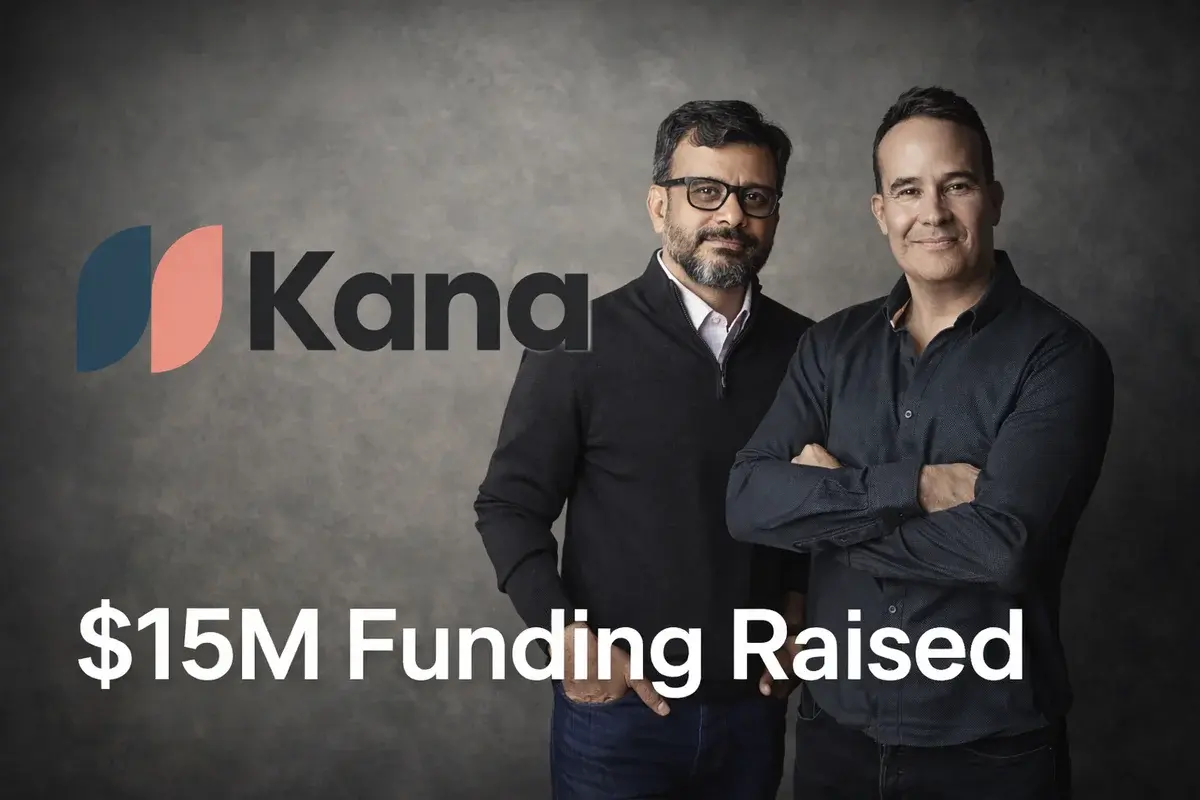
San Francisco-based Kana secures $15 million in seed funding led by Mayfield to launch configurable AI agents for end-to-end marketing workflows.
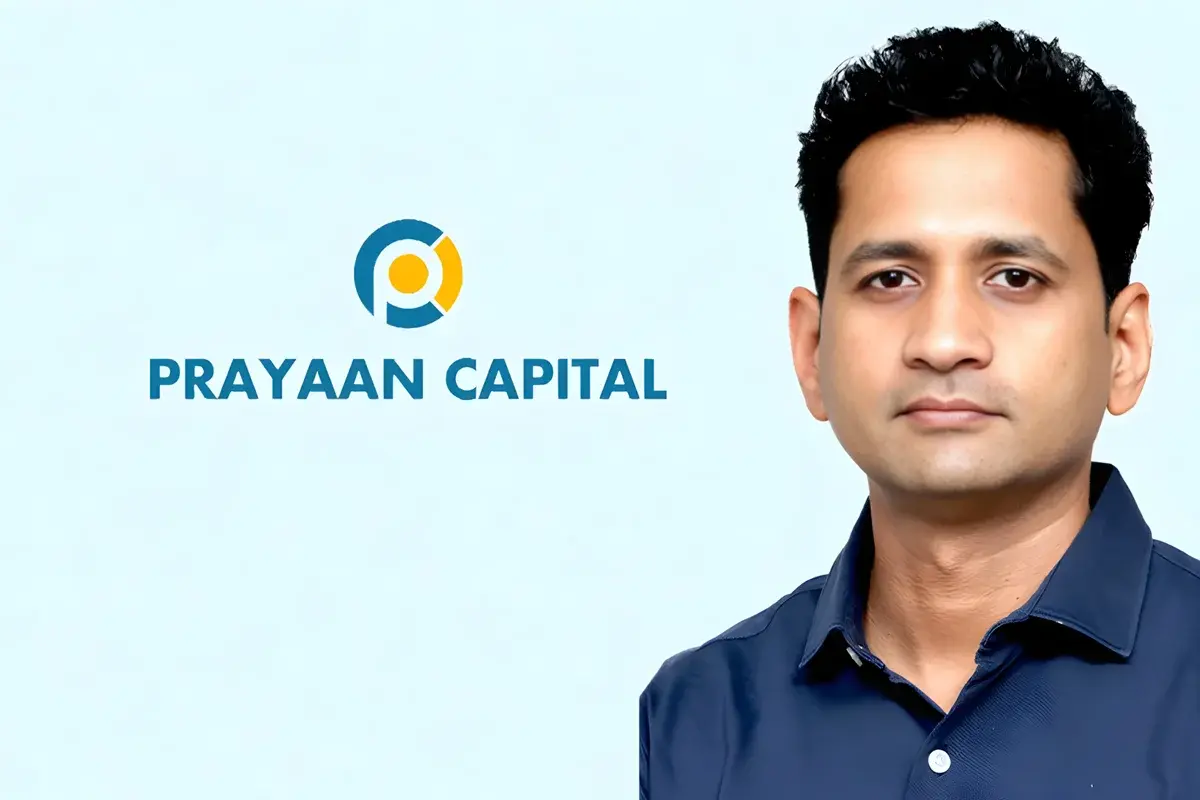
Prayaan Capital secures ₹110 crore in Series A funding led by Peak XV Partners to build a technology-enabled MSME lending platform.

Comprehensive 2026 analysis of Gurugram’s top AI startups including revenue growth, funding rounds, valuation signals, enterprise adoption,...