Loading market data...
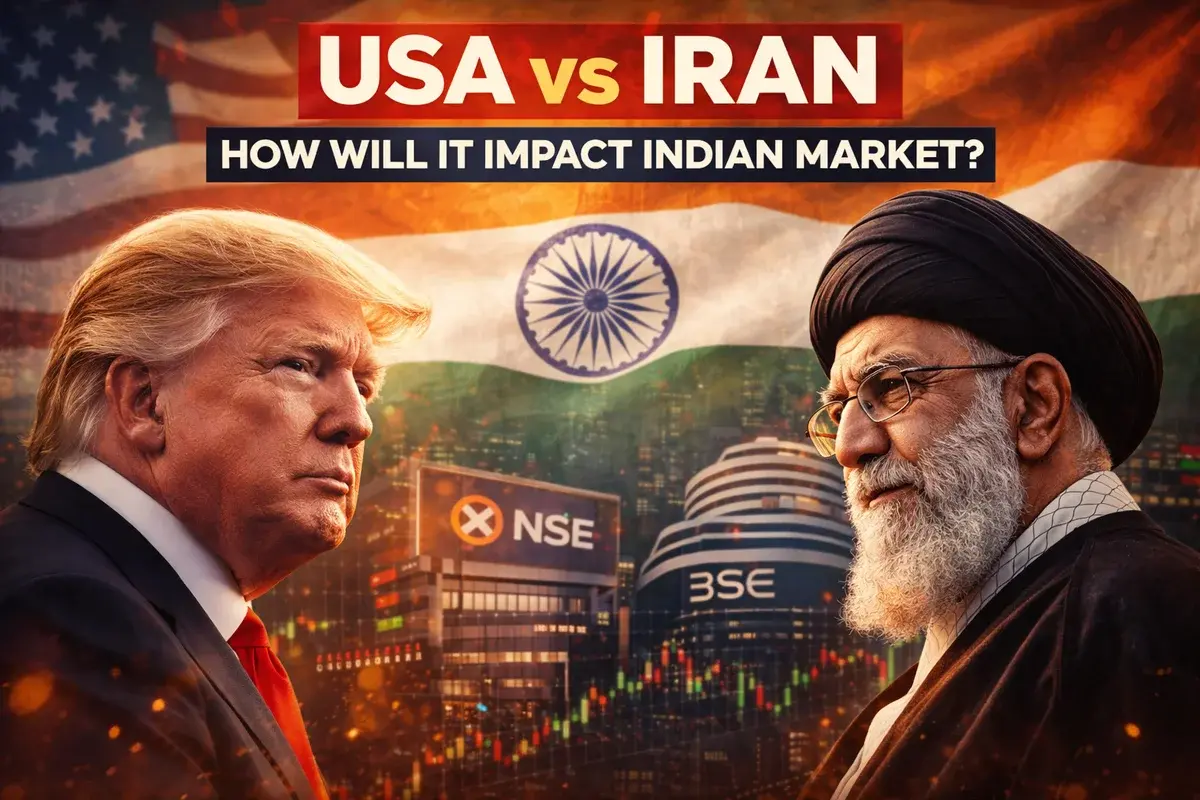
What Will Happen to the Indian Stock Market If the USA and Iran Go to War? A Detailed Impact Analysis
Rising tensions between the United States and Iran have once again put global financial markets on edge. Any direct military confrontation between the two nations could trigger widespread economic and market disruptions, with India’s stock market, currency, inflation, and commodity prices all likely to feel the impact.
Although India does not have deep direct trade exposure to Iran today, history shows that geopolitical conflicts involving the Middle East have a disproportionate influence on Indian equities, crude oil prices, the rupee, and foreign investor flows. Here’s a comprehensive look at how a USA–Iran war scenario could affect the Indian market.
Immediate Impact on Sensex and Nifty: Volatility and Risk-Off Trading
If war breaks out between the USA and Iran, the Indian stock market is likely to react with sharp short-term volatility. Historically, global conflicts lead to a sudden risk-off sentiment, prompting investors to sell equities and move toward safer assets.
In such a scenario, Sensex and Nifty could open lower, mirroring declines across global indices. Foreign institutional investors (FIIs) typically reduce exposure to emerging markets during geopolitical crises, increasing selling pressure in Indian equities. Midcap and smallcap stocks often face deeper corrections as liquidity tightens.
While long-term investors may view such declines as temporary, short-term traders should expect heightened intraday swings and unstable market sentiment.
Crude Oil Prices: The Biggest Risk for India
The most direct and serious impact of a USA–Iran conflict would be felt through global crude oil prices. Iran sits near the Strait of Hormuz, a critical shipping route through which a large portion of the world’s oil supply passes.
Any threat to oil supply routes can push crude prices sharply higher. For India—one of the world’s largest oil importers—this is a major concern. Rising crude prices increase the import bill, widen the current account deficit, and exert pressure on fuel prices.
Higher oil prices also raise costs for transportation, aviation, logistics, and manufacturing, directly impacting corporate margins and consumer inflation in India.
Inflation and RBI Policy: A Delicate Balance
An oil-driven price shock can quickly translate into higher inflation. Fuel price increases tend to spill over into food, freight, and essential goods, affecting household budgets and business costs.
If inflation rises sharply, the Reserve Bank of India (RBI) may be forced to delay interest rate cuts or adopt a tighter monetary stance. This can negatively affect interest-sensitive sectors such as banking, real estate, and automobiles, further influencing stock market performance.
Indian Rupee and Forex Markets Under Pressure
During global geopolitical crises, investors typically move toward safe-haven currencies, especially the US dollar. This often leads to rupee depreciation against the dollar.
A weaker rupee increases the cost of imports, adds to inflationary pressure, and may reduce investor confidence in Indian assets. Currency volatility can also discourage foreign inflows, adding another layer of stress to Indian equity markets.
Safe-Haven Assets Surge: Gold and Silver in Focus
While equities struggle, gold prices in India usually rise during geopolitical tensions. Investors view gold as a hedge against uncertainty, inflation, and currency depreciation.
Silver and government bonds may also attract demand, but gold typically outperforms as the primary safe-haven asset. In previous Middle East conflicts, gold rallies have coincided with equity market corrections in India.
Sector-Wise Impact on the Indian Stock Market
A USA–Iran war would not impact all sectors equally.
Sectors Likely to Face Pressure
Sectors That May Show Resilience
Sector rotation toward defensive stocks is common during periods of geopolitical uncertainty in Indian markets.
Foreign Investor Flows: FII Outflows a Key Risk
Geopolitical conflicts often lead to foreign portfolio investor outflows from emerging markets, including India. FPIs tend to reduce exposure first in risk-sensitive regions, impacting market liquidity and valuations.
That said, India’s strong domestic investor base, SIP inflows, and long-term growth story can help cushion the impact compared to smaller emerging economies.
Trade, Shipping, and Supply Chain Concerns
Even without direct trade ties, prolonged conflict in the Middle East can disrupt global shipping routes, raise freight costs, and delay exports. Indian companies dependent on global supply chains—especially in chemicals, engineering, and manufacturing—could face operational challenges.
What Investors Should Expect Going Forward
If a USA–Iran war escalates:
However, unless the conflict becomes prolonged and global in scale, historical data suggests that Indian markets tend to stabilize once uncertainty reduces.
Final Takeaway: Short-Term Shock, Long-Term Resilience
A war between the USA and Iran would likely cause short-term pain for Indian stock markets, driven by oil prices, inflation fears, currency volatility, and FII outflows. However, India’s strong economic fundamentals, diversified trade profile, and policy buffers provide long-term resilience.
For investors, this kind of geopolitical risk underscores the importance of portfolio diversification, disciplined investing, and avoiding panic-driven decisions.
Disclaimer This article is for informational and educational purposes only and does not constitute financial or investment advice. Stock market investments are subject to market risks, including geopolitical developments. Readers are advised to conduct their own research or consult a qualified financial advisor before making any investment decisions.

Financial journalist specializing in market analysis, stock research, and investment trends. Dedicated to providing accurate, timely insights for informed decision-making.
Credentials: Experienced financial journalist with expertise in equity markets and economic analysis
The information provided in this article is for educational and informational purposes only and should not be construed as financial, investment, or legal advice. Finscann does not provide personalized investment recommendations.
For detailed terms and conditions, please read our Disclaimer and Terms of Service.
India's benchmark indices Sensex and Nifty staged a robust recovery in March 2026, gaining significantly despite ongoing geopolitical tensions.

Geopolitical tensions surrounding the US-Iran conflict led FIIs to dump ₹12,000 crore from Indian shares.

Indian refinery stocks, including Reliance, MRPL, and CPCL, surge up to 5% after China reportedly suspends diesel and gasoline exports amidst...
Indian markets surged in March 2026, with Sensex and Nifty rebounding on de-escalation hopes in the Middle East.
Morgan Stanley cuts 2,500 jobs across investment banking, wealth management, and trading. Despite strong financials, this strategic move signals a...