Loading market data...
India's benchmark indices Sensex and Nifty staged a robust recovery in March 2026, gaining significantly despite ongoing geopolitical tensions. FinScann analyzes the five critical factors driving this market rebound and what investors should watch next.
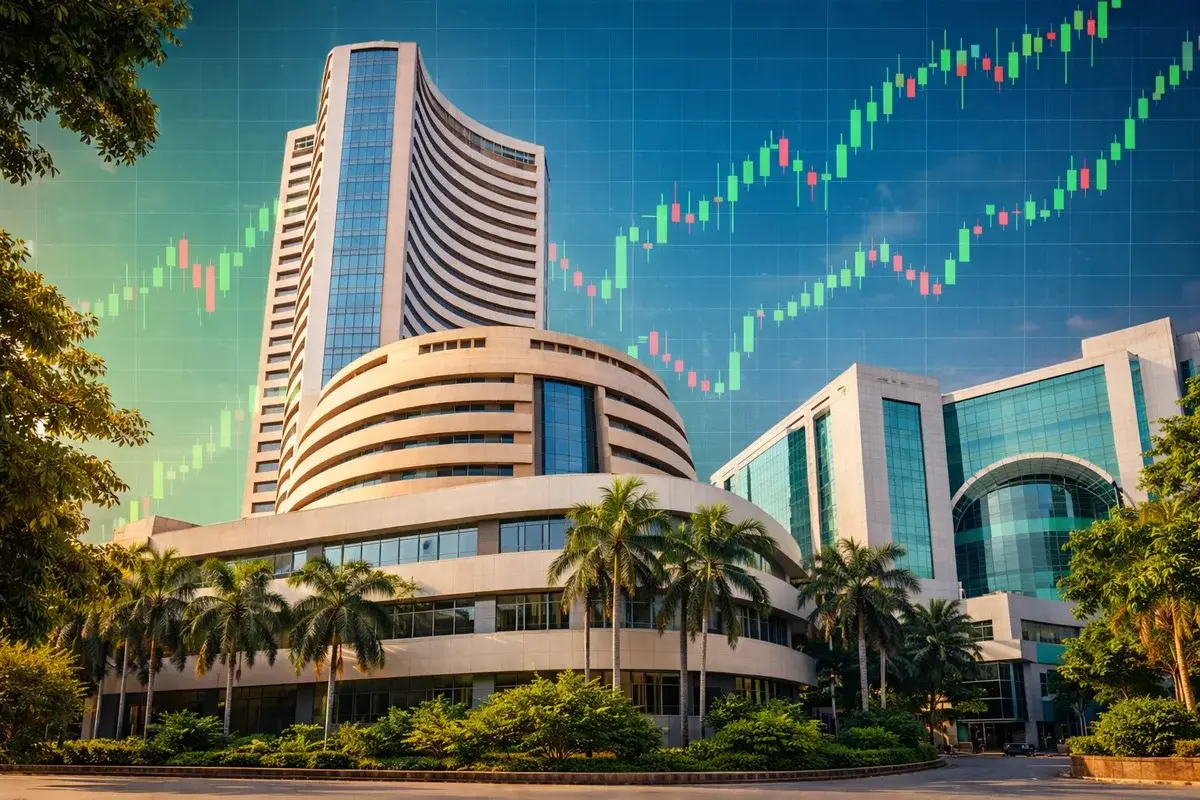
Indian equity markets witnessed a strong resurgence in early March 2026, with the Sensex climbing nearly 900 points and the Nifty 50 closing decisively above the 24,750-mark. This impressive recovery, which added an estimated ₹6 lakh crore to the total market capitalisation of BSE-listed companies, follows a period of intense selling pressure fueled by escalating geopolitical tensions in the Middle East. FinScann's analysis indicates that a confluence of factors, including easing geopolitical fears, positive global cues, and robust domestic buying in key blue-chip stocks like Reliance Industries, underpinned this crucial rebound, signaling a potential valuation reset after the recent correction.
Introduction
The opening weeks of March 2026 presented a challenging landscape for Indian equities, with both the Sensex and Nifty 50 experiencing a notable decline, dropping nearly 4% earlier in the month. Fears surrounding an escalating conflict in the Middle East, particularly involving Iran, Israel, and the United States, sent crude oil prices soaring and triggered widespread risk aversion among global investors. This led to significant Foreign Institutional Investor (FII) outflows and a sharp depreciation of the Indian Rupee. However, the market’s resilience was once again on display, as a powerful recovery materialized, driven by a complex interplay of geopolitical developments, technical factors, and sustained domestic capital allocation. Understanding the mechanisms behind this sharp reversal is critical for investors navigating the inherent volatility of the current market cycle.
The Catalyst
The dramatic market recovery on Thursday, March 5, 2026, was not a singular event but rather a culmination of several pivotal developments that collectively shifted investor sentiment from panic to cautious optimism.
Reports of Iran's Potential Nuclear Program Shift: A key trigger for the market's turnaround was the unconfirmed report by Sky News Arabia suggesting that Iran’s Deputy Foreign Minister expressed the country's readiness to abandon its nuclear program if the US presented a satisfactory offer. While Iran’s state-run IRNA later clarified these comments referred to earlier talks, merely the prospect of de-escalation surrounding a major flashpoint significantly boosted global and Indian markets, dampening fears of an imminent wider conflict.
Positive Global Market Momentum: Indian markets drew strength from a broad-based positive sentiment across global bourses. Following a sharp sell-off in previous sessions, major Asian indices rebounded, with South Korea’s Kospi surging nearly 10% and Japan’s Nikkei up by almost 2%. Wall Street also closed higher in the preceding session, with the tech-heavy Nasdaq gaining over 1% and the S&P 500 rising nearly 1%. This synchronized global recovery provided a strong tailwind for Indian equities.
Oil Supply Reassurances: The immediate concern emanating from the geopolitical tensions was the potential disruption to global oil supplies, particularly through the crucial Strait of Hormuz, which accounts for over 20% of the world’s oil supply. While crude oil prices remained elevated, reassurances from US President Donald Trump regarding measures to ease the movement of tankers in the Gulf, including the potential provision of political risk insurance and financial guarantees by the US International Development Finance Corporation (DFC), helped assuage some fears of a prolonged supply shock. The statement about the US Navy potentially escorting oil tankers further calmed nerves, mitigating the perceived margin pressure for oil-importing nations like India.
Indian Rupee's Resilience: Amidst the global turmoil, the Indian Rupee demonstrated a remarkable recovery, closing higher against the US dollar, appreciating by 0.6% to ₹91.60. This rebound came after the currency had breached its previous all-time low, falling to ₹92.30 per dollar just a day prior. A stronger Rupee is often seen as a positive indicator for the Indian economy, reducing import costs and attracting FII inflows.
Strong Buying in Heavyweight Reliance Industries (RIL) Shares: Shares of Reliance Industries Limited Reliance Industries (RIL), a major blue-chip stock and the heaviest weightage constituent on benchmark indices, surged over 3%, significantly contributing to the overall market gains. Jefferies noted that RIL could be a marginal beneficiary of rising crude oil prices, provided the government does not impose a windfall tax. This selective alpha generation in a market leader instilled confidence and provided substantial upward momentum.
Financial Forensics
The market’s swift rebound saw the Sensex soar by nearly 900 points to close at 80,016, while the Nifty 50 advanced over 285 points to settle at 24,766. This performance effectively snapped a four-session losing streak for the Sensex and a three-day slide for the Nifty 50. The total market capitalisation of all companies listed on the BSE witnessed a substantial increase of approximately ₹6 lakh crore.
Top gainers on the Sensex included prominent blue-chip stocks such as Adani Ports and Special Economic Zone Adani Ports & SEZ, Reliance Industries Limited Reliance Industries, Bajaj Finance, and Larsen & Toubro Larsen & Toubro, each rising between 1-2%. Other significant advancers were Bharat Electronics Bharat Electronics and L&T, which saw gains of 3-4%. Conversely, Tech Mahindra Tech Mahindra, ICICI Bank ICICI Bank, HCL Technologies HCLTech, TCS Tata Consultancy Services, and Hindustan Unilever Hindustan Unilever Limited were among the top losers, indicating a rotation of capital within the market.
Notably, India's volatility index, India VIX, a key measure of market fear, plummeted nearly 16% to 17.86. This significant drop followed a sharp increase of 23% on Wednesday and 25% on Monday, indicating a strong return of risk-on sentiment as expectations of a cooling geopolitical situation emerged.
Despite the market rebound, Foreign Institutional Investors (FIIs) remained net sellers, offloading Indian equities worth ₹8,753 crore on Wednesday, continuing their selling spree throughout the week. This underscores the continued caution among foreign investors regarding geopolitical risks and potential capital outflows. In contrast, Domestic Institutional Investors (DIIs) provided a crucial counterbalance, purchasing Indian equities worth ₹12,068 crore on Wednesday. This sustained domestic buying has been instrumental in stabilizing the market, acting as a buffer against external shocks and highlighting the growing maturity of Indian retail and institutional investment.
Hitesh Tailor, Technical Research Analyst at Choice Broking, commented, "Despite the surge in crude oil prices and persistent geopolitical tensions in West Asia, today’s market rebound appears largely driven by technical and derivative factors. After the recent sharp correction, benchmark indices had slipped into deeply oversold territory, prompting a relief rally. The cooling in volatility, with India VIX easing from elevated levels, suggests that a significant portion of the geopolitical risk premium had already been priced in during the earlier decline." Tailor further added that the Nifty Put-Call Ratio had fallen to lower levels, reflecting "excessive pessimism, which typically triggers a tactical pullback." The index holding above crucial support zones around 24,100–24,300 led to fresh put writing and unwinding of bearish positions, indicating traders' confidence in limited immediate downside.
Company Snapshot: Reliance Industries Limited (RIL)
| Metric | Details |
|---|---|
| Founded | 1973 |
| Sector | Diversified (Oil & Gas Refining & Marketing, Petrochemicals, Retail, Digital Services, New Energy) |
| Revenue Model | Integrated value chain across energy, materials, retail, and digital platforms. |
| Market Position | India's largest conglomerate by market capitalization; leader in various segments including refining, petrochemicals, telecom (Jio), and retail. |
| Key Financial Metrics (FY2026 Estimates/Recent) | Revenue: c. ₹2.59 lakh crore <br/> EBITDA (Dec 2025 Quarter): ₹558.46 Billion <br/> Net Profit Margin (FY26E): 8.19% <br/> Debt/Equity Ratio: 35.7% (declining) <br/> Interest Coverage Ratio: 10.6x <br/> P/E Ratio (Mar 4, 2026): 22.09 |
| Competitive Edge | Scale, vertical integration, strong balance sheet, diversified portfolio, leadership in digital transformation. |
| Moat Analysis | RIL possesses a significant economic moat derived from its sheer scale, capital discipline in massive infrastructure projects, and strategic diversification. Its dominant market share in refining and petrochemicals, coupled with the expansive reach of Jio Platforms and Reliance Retail, creates formidable entry barriers. The integrated ecosystem provides significant cost advantages and pricing power. This wide moat allows RIL to generate consistent cash flows and invest in new high-growth areas like renewable energy, further solidifying its long-term profitability roadmap. Its strategic investments and ability to leverage technology provide a competitive edge. |
Strategic Analysis
The recent market turbulence and subsequent recovery underscore the dynamic nature of India’s equity landscape. Despite pronounced geopolitical jitters, the underlying structural strengths of the Indian economy and its domestic investor base provided crucial resilience. The ability of the market to absorb significant FII selling pressure while still staging a robust recovery speaks to a growing capital allocation discipline and increasing domestic liquidity.
The strategic importance of diversified conglomerates like Reliance Industries in India's growth narrative cannot be overstated. Their deep market penetration, substantial investments in critical infrastructure, and foray into next-generation technologies provide a robust foundation for the broader market. The unit economics of RIL's diversified businesses, particularly in telecom and retail, continue to show strong scalability and capital efficiency. The government's consistent push for Atmanirbhar Bharat (self-reliant India) also provides a tailwind for domestic giants across manufacturing, defense, and digital infrastructure, influencing the long-term industry tailwinds.
Growth Drivers
Robust Domestic Demand: India's large and growing domestic consumption base remains a primary driver, cushioning the economy from global slowdowns.
Government Spending & Policy Support: Continued government focus on infrastructure development (roads, railways, ports), manufacturing incentives (PLI schemes), and digitization initiatives (Digital India) provides long-term structural tailwinds.
Demographic Dividend: A young and aspirational population fuels consumption and workforce growth.
"China Plus One" Strategy: Global supply chain diversification benefits India, attracting new manufacturing and foreign investment.
Technology Adoption: Rapid adoption of digital technologies across sectors, including fintech and e-commerce, enhances productivity and opens new market avenues.
Risk Factors
Persistent Geopolitical Tensions: Ongoing conflicts in the Middle East could reignite crude oil price volatility, leading to margin pressure for Indian industries and exacerbating inflationary concerns.
Global Inflation & Interest Rates: Sustained global inflation and hawkish monetary policies by central banks, including the RBI, could lead to higher borrowing costs and impact corporate earnings.
FII Outflows: Continued selling by Foreign Institutional Investors due to global risk aversion or attractive alternative markets could put pressure on the rupee and equity valuations.
Supply Chain Disruptions: Geopolitical events or other global crises can disrupt critical supply chains, impacting manufacturing and trade.
Regulatory Risks: Changes in domestic tax policies (e.g., windfall tax), trade policies, or sector-specific regulations could introduce uncertainty.
Industry/Sector Heatmap (March 2026 – Post-Recovery Outlook)
| Segment | Current Momentum | Outlook | Capital Flow Sentiment |
|---|---|---|---|
| Energy (Oil & Gas) | Positive (on higher crude) | Neutral to Positive | Selective Buying |
| Financials (Banks, NBFCs) | Mixed | Cautiously Positive | Defensive/Value Buying |
| IT Services | Negative to Neutral | Cautiously Negative | Selective Selling |
| Capital Goods/Infra | Positive | Positive | Strong Buying |
| Auto | Mixed | Neutral | Holding |
| FMCG | Negative to Neutral | Cautiously Negative | Selective Selling |
| Defence | Strong Positive | Highly Positive | Strong Buying |
“Institutional investors are increasingly prioritizing EBITDA visibility and sustainable cash flow generation over top-line growth, especially in a volatile geopolitical environment. The recent market action highlights the flight to quality and the strategic importance of domestic institutional support in buffering external shocks,” says a Mumbai-based fund manager tracking the sector.
Investor Takeaway Section
The recent Sensex and Nifty rebound serves as a potent reminder of the inherent volatility and opportunities within the Indian equity markets, particularly when juxtaposed with global geopolitical shifts. For investors, a nuanced approach is paramount.
Long-Term Investors:
Focus on Fundamentals: Continue to identify companies with strong balance sheets, consistent EBITDA margins, healthy cash flow strength, and manageable debt levels. The recent market dip could offer attractive entry points for quality blue-chip stocks that have undergone a valuation reset.
Diversification is Key: Maintain a diversified portfolio across sectors to mitigate risks associated with specific industry downturns or geopolitical impacts. Consider allocating to sectors with strong long-term structural growth drivers, such as infrastructure, digital services, and manufacturing, benefiting from domestic policies and global supply chain shifts.
Capital Allocation Discipline: Focus on companies that demonstrate prudent capital allocation discipline and a clear profitability roadmap, rather than purely top-line growth.
Short-Term Traders:
Monitor Geopolitical Developments: Remain highly vigilant of geopolitical news flow, especially regarding the Middle East and its impact on crude oil prices and the Rupee.
Technical Indicators: Pay close attention to technical support and resistance levels. The India VIX easing signifies reduced fear, but volatility can quickly return.
FII vs. DII Flows: Track Foreign Institutional Investor and Domestic Institutional Investor activity closely. Sustained DII buying is a positive sign of underlying market strength.
Sector Rotation: Be prepared for swift sector rotation. As geopolitical fears ebb and flow, different sectors will gain or lose favour. Energy and defense stocks may see short-term boosts during heightened tensions, while domestic consumption plays might benefit from stability.
The market has demonstrated its ability to recover sharply, yet the underlying geopolitical jitters remain a potent risk factor. A balanced perspective, emphasizing robust research and risk management, will be crucial for generating alpha generation in the current environment.
Trading Platforms Section
For investors looking to participate in the Indian equity markets, several reputable trading platforms offer comprehensive services. These include:
Zerodha: Known for its low-cost brokerage and advanced trading tools.
Groww: A popular platform for mutual funds and stock investments, particularly among new investors.
Upstox: Offers a range of investment products with competitive brokerage.
Angel One: Provides full-service brokerage alongside digital trading solutions.
Q: What primarily triggered the recent Indian market rebound?
A: The primary triggers for the recent rebound included reports of a potential de-escalation in Iran's nuclear program standoff, a broader positive sentiment across global equity markets, reassurances regarding global oil supply stability, a strengthening Indian Rupee against the US dollar, and significant buying in heavyweight blue-chip stocks like Reliance Industries.
Q: How did geopolitical tensions initially impact Indian equities in March 2026?
A: Geopolitical tensions, particularly involving the Middle East, led to a sharp sell-off in Indian equities in early March 2026. Both the Sensex and Nifty 50 experienced significant declines, accompanied by a surge in crude oil prices, a weakening Indian Rupee, and substantial Foreign Institutional Investor (FII) outflows due to increased risk aversion.
Q: What role did the India VIX play in the market's recovery?
A: The India VIX, the volatility index, dropped nearly 16% during the recovery, signaling a significant reduction in market fear and a return of risk-on sentiment. This suggests that a substantial portion of the geopolitical risk premium had already been priced into the market during the preceding sell-off, paving the way for a relief rally.
Q: What is the significance of Domestic Institutional Investors (DIIs) in the current market scenario?
A: Domestic Institutional Investors (DIIs) played a crucial role in stabilizing the market by consistently purchasing Indian equities, notably buying ₹12,068 crore on Wednesday, March 4, 2026. This sustained domestic buying acted as a vital counterweight to FII selling, providing a strong floor to the market and demonstrating the increasing resilience and maturity of India's domestic capital.
Q: How might rising crude oil prices affect Indian companies, and what is a "windfall tax"?
A: Rising crude oil prices can significantly impact Indian companies, especially those in energy-intensive sectors, by increasing input costs and margin pressure. India, being a major oil importer, is particularly vulnerable to such price spikes. A windfall tax is a levy imposed by the government on unexpected and large profits earned by companies due to external, unforeseen circumstances, such as a sudden surge in commodity prices (e.g., crude oil), rather than operational efficiency. This tax aims to redistribute such excess profits.
In conclusion, the Indian equity market's decisive rebound in early March 2026, defying intense geopolitical jitters, underscores its intrinsic resilience and the growing strength of domestic capital. While external headwinds, particularly from crude oil prices and potential FII outflows, demand continuous monitoring, the swift recovery driven by a confluence of easing global fears and robust internal buying signals a market capable of navigating volatility. Investors are advised to maintain a long-term perspective, focusing on fundamentally strong companies and diversified portfolios, while strategically leveraging short-term opportunities that emerge from temporary dislocations. The current landscape presents both challenges and critical opportunities for value creation and alpha generation.
Disclaimer: For information only; not investment advice. Stock market investments carry risks. Please consult a SEBI-registered advisor before investing. FinScann assumes no liability for decisions made based on this report.

Financial journalist specializing in market analysis, stock research, and investment trends. Dedicated to providing accurate, timely insights for informed decision-making.
Credentials: Experienced financial journalist with expertise in equity markets and economic analysis
The information provided in this article is for educational and informational purposes only and should not be construed as financial, investment, or legal advice. Finscann does not provide personalized investment recommendations.
For detailed terms and conditions, please read our Disclaimer and Terms of Service.

Geopolitical tensions surrounding the US-Iran conflict led FIIs to dump ₹12,000 crore from Indian shares.

Indian refinery stocks, including Reliance, MRPL, and CPCL, surge up to 5% after China reportedly suspends diesel and gasoline exports amidst...
Indian markets surged in March 2026, with Sensex and Nifty rebounding on de-escalation hopes in the Middle East.
Morgan Stanley cuts 2,500 jobs across investment banking, wealth management, and trading. Despite strong financials, this strategic move signals a...
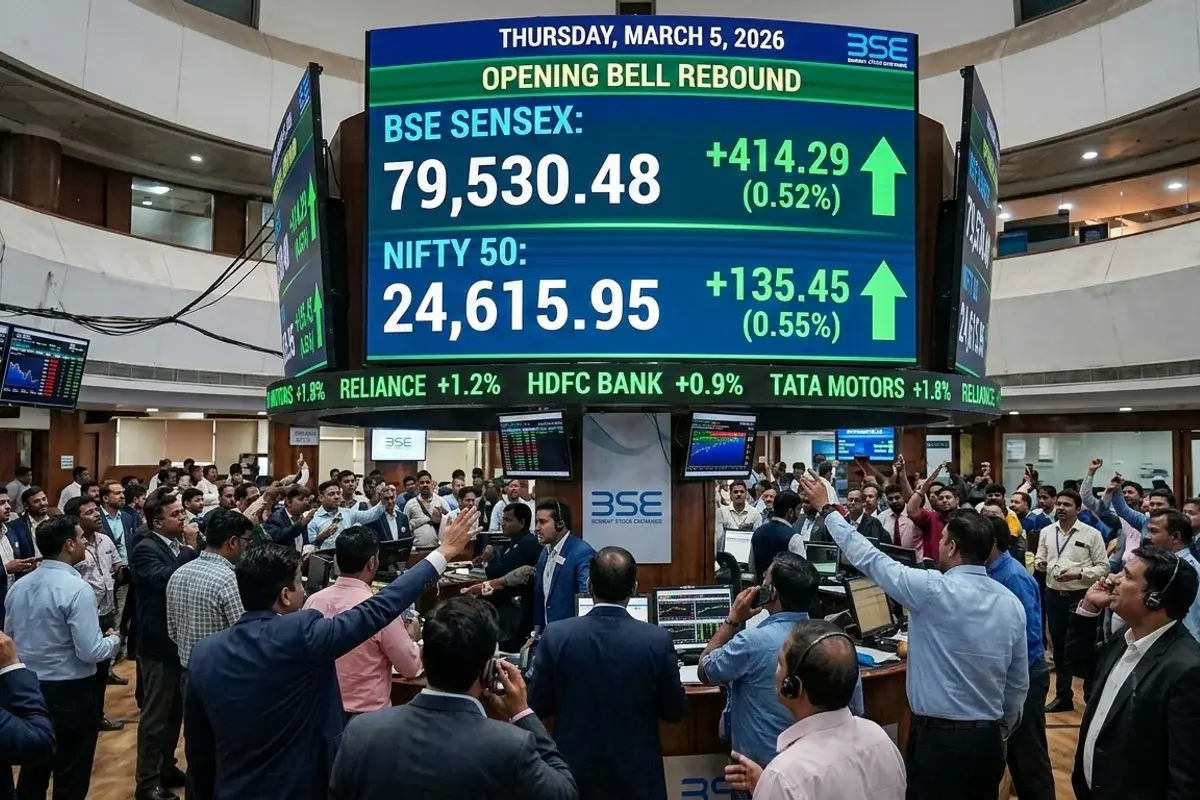
Indian stock markets witnessed a strong rebound on March 5, 2026, with Nifty 50 and Sensex surging.