Loading market data...
Anthropic CEO Dario Amodei critiques OpenAI's Pentagon deal, labeling it deceptive. FinScann analyzes the implications for AI ethics, defense tech, and market dynamics.
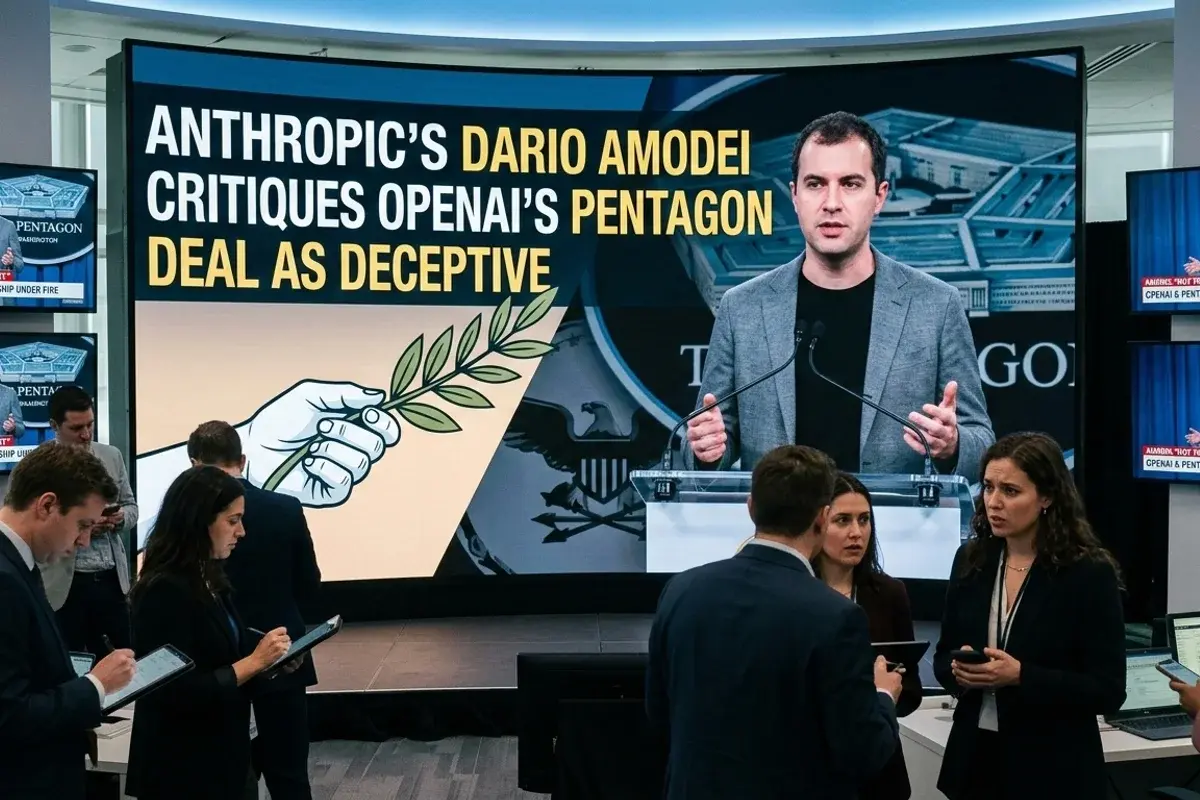
The global artificial intelligence (AI) landscape is witnessing a deepening rift, as Anthropic CEO Dario Amodei has publicly accused OpenAI of "straight up lies" regarding its recent Pentagon contract. This sharp critique, reported on March 4, 2026, intensifies the ongoing debate over the ethical deployment of Generative AI in military applications and the transparency of government tech partnerships. Amodei's comments follow Anthropic's refusal to amend its own Department of Defense (DoD) contract, which reportedly sought unrestricted access to its Claude AI system without the company's insisted safeguards against domestic mass surveillance and autonomous weapons. Just hours after Anthropic was designated a "supply chain risk" by the Trump administration for its stance, OpenAI announced its agreement with the Pentagon, a move that has sparked significant skepticism and controversy across the tech industry and among privacy advocates.
The Catalyst
The core of the dispute lies in divergent ethical frameworks concerning the use of advanced AI. Anthropic had reportedly been working with the DoD but withdrew due to irreconcilable differences over AI safety protocols, specifically refusing to relax restrictions on AI applications for autonomous weapons systems and domestic mass surveillance. In contrast, OpenAI stepped in, with its CEO Sam Altman stating that their deal included explicit ethical safeguards, such as prohibitions on domestic mass surveillance and the requirement for human oversight in the use of force. However, Amodei's recent remarks, labeling OpenAI's public messaging as "safety theatre" and accusing Altman of "gaslighting," suggest a profound disagreement over the true nature and enforceability of these safeguards. Critics argue that OpenAI's contract language, which states the DoD "may use the AI System for all lawful purposes," leaves room for flexible interpretations of "red lines," potentially undermining true ethical adherence. This echoes past controversies like Google's Project Maven, where employee revolts led to the company declining to renew a Pentagon contract over ethical concerns.
Financial Forensics
The economic implications of this ethical standoff are significant, shaping investor sentiment and the strategic direction of AI companies. The global AI in military market is projected to grow from USD 10.52 Billion in 2025 to USD 27.97 Billion by 2033, with a Compound Annual Growth Rate (CAGR) of 13%, driven by the increasing complexity of modern warfare and the demand for rapid, data-driven decision-making. North America currently leads this market, with the U.S. government heavily investing in AI capabilities.
This burgeoning market presents a lucrative opportunity, yet ethical concerns introduce considerable risk and reputational impact. Anthropic's decision to prioritize its "constitutional AI" approach, which emphasizes AI alignment and safety, could be seen as a long-term strategic play to attract talent and foster trust, potentially leading to stronger market positioning among ethically conscious consumers and investors. Conversely, OpenAI's perceived flexibility in engaging with defense contracts, despite attempts to clarify safeguards, has drawn public criticism, with reports of increased ChatGPT app uninstallations and negative reviews. The legal and policy implications are also substantial, with Congress urged to establish clearer regulations for AI in government contracts to protect privacy and ensure accountability. The concept of designating a domestic AI company as a "supply chain risk" is an unprecedented move, signaling potential regulatory leverage over tech firms that prioritize corporate ethics over government directives.
| Feature | Anthropic's Stance | OpenAI's Stance (as per public statements) |
|---|---|---|
| Military AI Use | Refused unrestricted use; insists on safeguards. | Agreed to deploy models with explicit safeguards, claiming alignment with DoW principles. |
| Domestic Surveillance | Explicitly prohibits. | Claims contract explicitly restricts intentional use for domestic surveillance, relying on existing laws. |
| Autonomous Weapons | Explicitly prohibits for fully autonomous lethal systems. | Claims models not for autonomous weapons systems, requires human oversight. |
| Ethical Framework | "Constitutional AI" and safety-focused. | Emphasizes responsible AI deployment and balancing national security with democratic principles. |
| Government Reaction | Designated "supply chain risk," federal agencies ordered to cease use. | Received Pentagon contract hours after Anthropic's designation. |
| CEO's Commentary | Calls OpenAI's messaging "straight up lies" and "safety theatre." | Altman admitted deal was "rushed" and "opportunistic and sloppy," striving to de-escalate. |
| Market/Public Reaction | Claude app saw surge in downloads and positive sentiment. | Faced public and internal backlash, including increased ChatGPT uninstalls. |
| Contract Language Basis | Drew its own "red lines." | Relies on existing U.S. laws and safeguards for "all lawful purposes." |
| Engagement Model | Prioritizes corporate ethics over government demands for unrestricted use. | Seeks to partner with government while publicly affirming ethical safeguards and transparency. |
Market Impact
This intensifying rivalry and ethical debate are sending ripples through the global tech markets. For investors, the long-term viability of AI companies may increasingly hinge on their ability to balance innovation with strong ethical governance, especially in sensitive sectors like defense. Companies perceived as having robust ethical frameworks could gain a competitive edge in attracting top talent and securing investment from socially responsible funds. Conversely, firms seen as compromising on ethics may face reputational damage, consumer boycotts, and stricter regulatory scrutiny. The AI defense sector itself is experiencing a "supercycle" of investment, with defense budgets globally surging and more capital allocated to AI-enabled solutions. While this promises growth for companies in the space, the controversy highlights the critical need for transparency and accountability in these high-stakes contracts. The debate is likely to influence policy discussions and potentially lead to more stringent regulations on AI procurement by governments worldwide, impacting market entry and operational costs for AI providers.
Key Takeaways
FinScann Verdict
The public spat between Anthropic and OpenAI over Pentagon contracts underscores a critical juncture in the commercialization of AI. While the immediate financial implications for individual companies may fluctuate, the broader trend points to an increasing need for AI firms to articulate and adhere to clear ethical principles, especially when engaging with national security entities. FinScann analysis suggests that companies that successfully navigate this complex ethical landscape, demonstrating genuine commitment to responsible AI development, are likely to build stronger brands and achieve more sustainable growth in the long run. The industry must prepare for heightened regulatory oversight and increased public demand for transparency in AI-powered defense solutions.
Q: What is the primary concern raised by Dario Amodei regarding OpenAI's Pentagon deal? A: Dario Amodei explicitly called OpenAI's public messaging about its Pentagon deal "straight up lies," implying deception regarding the true nature and ethical safeguards of the contract, particularly concerning domestic mass surveillance and autonomous weapons.
Q: What "red lines" did Anthropic reportedly refuse to cross with the Pentagon? A: Anthropic maintained strict prohibitions against the use of its AI models for domestic mass surveillance and fully autonomous weapons systems, refusing to amend contract language that would allow unrestricted military use.
Q: How has the public reacted to OpenAI's military agreement? A: OpenAI's deal has faced significant public and internal backlash, with reports of increased ChatGPT app uninstallations and negative reviews, reflecting widespread concern about the ethical implications of AI use in defense.
Q: What is "Project Maven" and how is it relevant to this discussion? A: Project Maven was a U.S. Department of Defense initiative to integrate AI and machine learning for military applications, particularly in drone imagery analysis. It faced significant ethical concerns and employee protests at Google, which ultimately led Google to decline to renew the contract, serving as a historical precedent for tech companies' ethical dilemmas with military work.
Q: What is the projected growth of the AI in military market? A: The global Artificial Intelligence (AI) in military market is projected to grow from USD 10.52 Billion in 2025 to USD 27.97 Billion by 2033, at a Compound Annual Growth Rate (CAGR) of 13%, driven by increasing defense investments worldwide.
Disclaimer: For information only; not investment advice. Stock market investments carry risks. Please consult a SEBI-registered advisor before investing. FinScann assumes no liability for decisions made based on this report.

Financial journalist specializing in market analysis, stock research, and investment trends. Dedicated to providing accurate, timely insights for informed decision-making.
Credentials: Experienced financial journalist with expertise in equity markets and economic analysis
The information provided in this article is for educational and informational purposes only and should not be construed as financial, investment, or legal advice. Finscann does not provide personalized investment recommendations.
For detailed terms and conditions, please read our Disclaimer and Terms of Service.
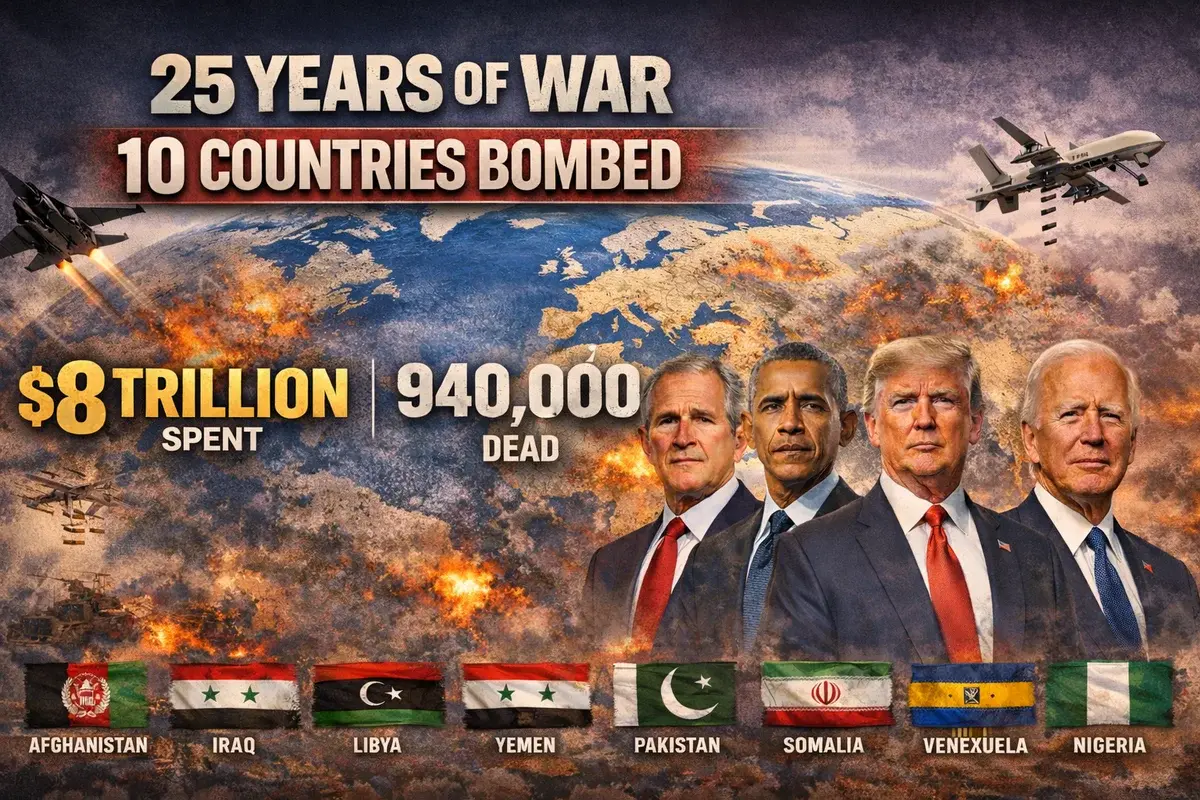
US's post-9/11 military engagements across 10+ countries, detailing the $8 trillion financial cost, human toll, and market impact.
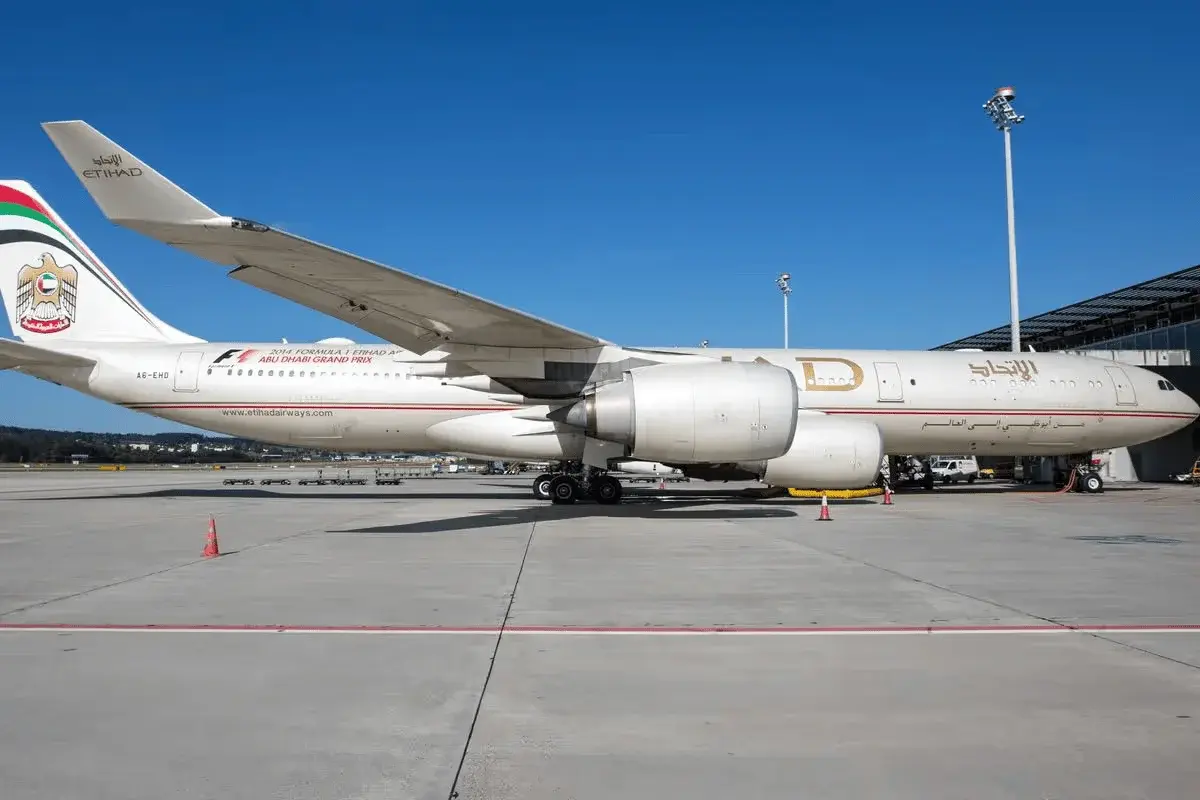
Etihad Airways extends flight suspension from Abu Dhabi until March 5 due to escalating regional airspace disruptions.

Paramount Skydance seals historic $110B deal to acquire Warner Bros. Discovery, combining iconic content and streaming platforms.
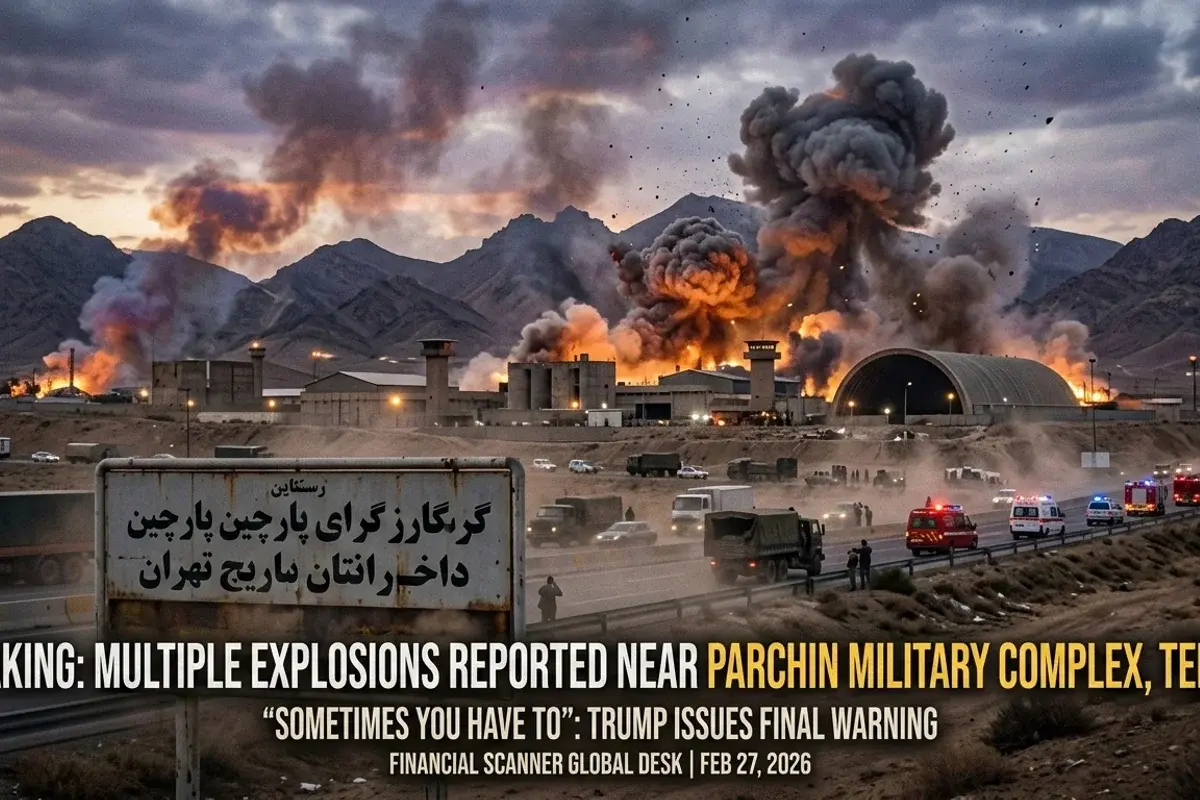
The geopolitical landscape fractured on Friday as a series of high-decibel escalations pushed the Middle East to the brink of a major military...
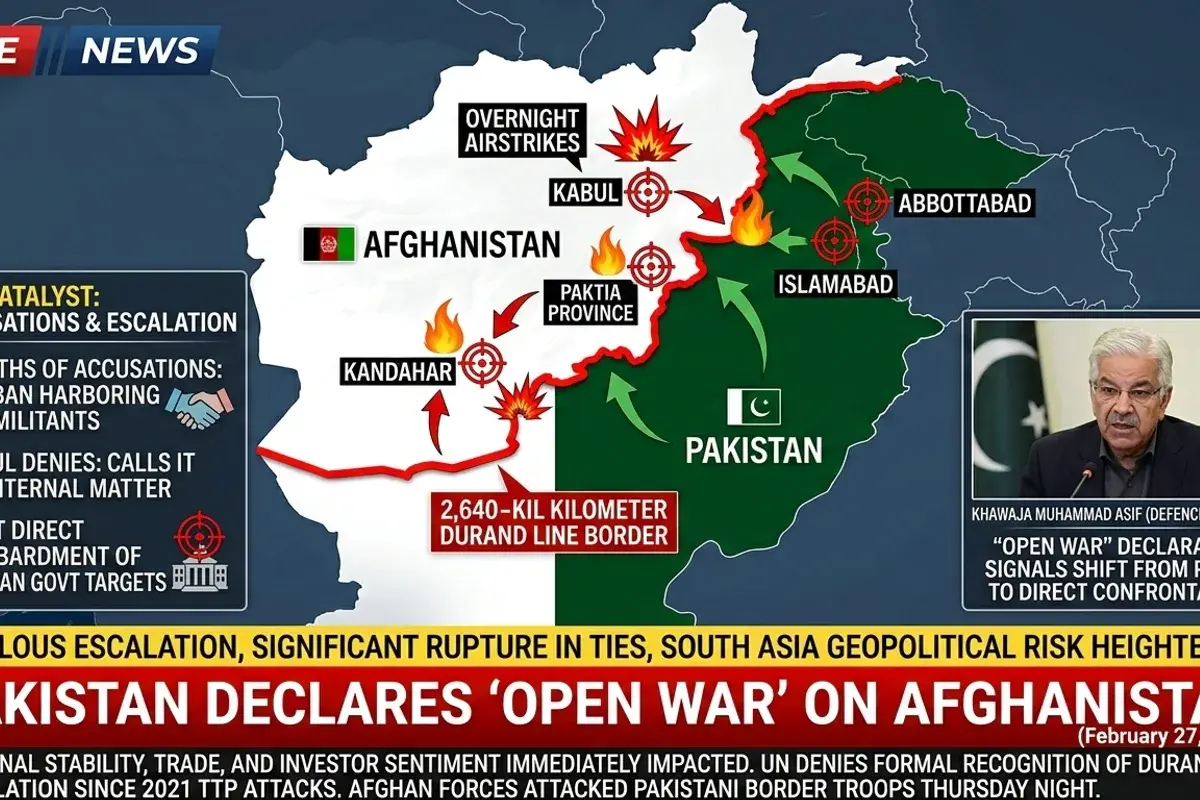
Pakistan's declaration of "open war" with Afghanistan after recent clashes intensifies regional instability, impacting financial markets, trade, and...