Loading market data...
Indian stock markets witnessed a strong rebound on March 5, 2026, with Nifty 50 and Sensex surging. FinScann analyzes the recovery drivers, geopolitical concerns, crude oil impact, and market outlook.
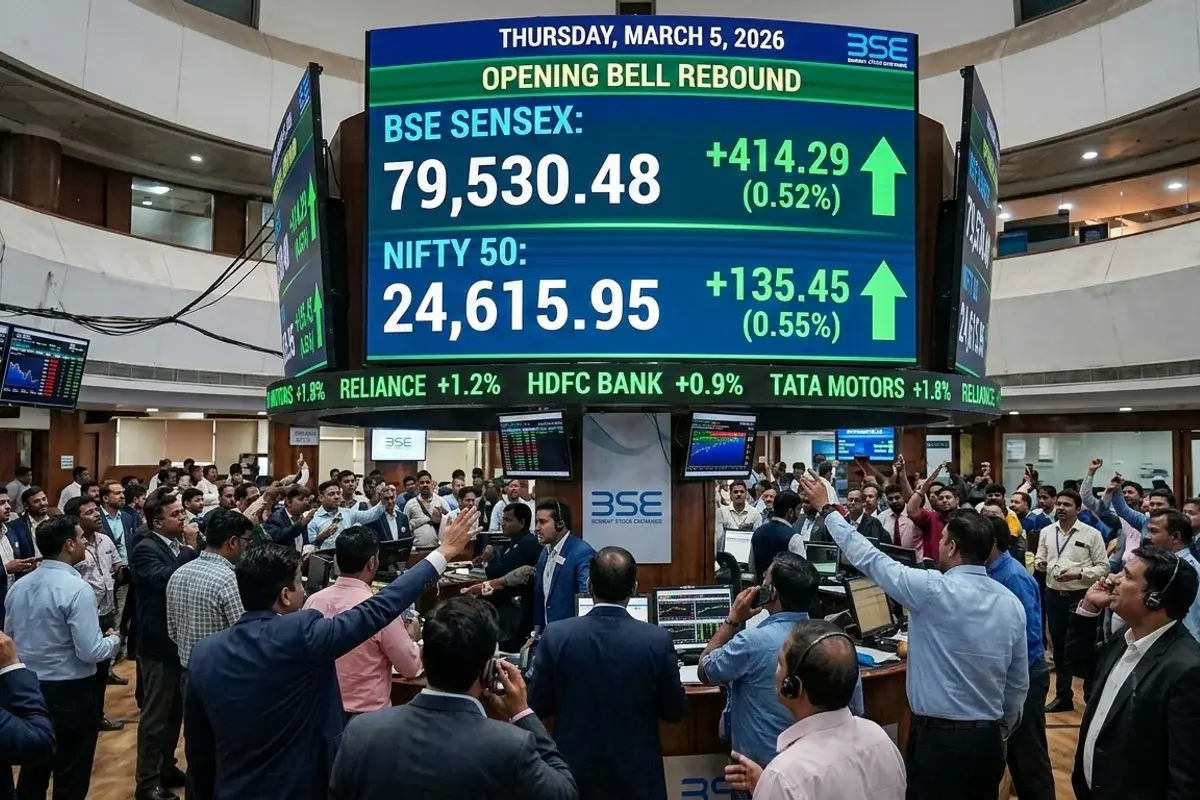
The Indian equity markets staged a robust recovery on Thursday, March 5, 2026, halting a three-day losing streak that saw benchmark indices dip significantly. The Nifty 50 opened notably higher at 24,615.95, marking an increase of 135.45 points or 0.55%. Concurrently, the BSE Sensex commenced trading at 79,530.48, gaining 414.29 points or 0.52%. This crucial rebound, observed across major Indian indices, comes as investors cautiously assess the volatile global landscape, particularly the persistent geopolitical tensions in West Asia and their potential ripple effects on crude oil prices and the Indian economy.
The Catalyst
The immediate trigger for today's positive opening stems largely from a partial recovery in global markets and positive cues from Asian peers, which followed gains on Wall Street overnight. Reports, though unconfirmed, of potential de-escalation in the ongoing conflict between the US, Israel, and Iran also provided a much-needed boost to investor sentiment. This shift in market mood follows a period of intense pressure earlier in the week, where the escalating conflict in the Middle East had sent shockwaves through equity markets globally, prompting a flight to safer assets and a sell-off in emerging markets like India.
The preceding three trading sessions saw the Nifty 50 fall by approximately 2.8% and the Sensex declining over 1,000 points on multiple days, with the Nifty closing below the 24,500 level on Wednesday. Foreign Institutional Investors (FIIs) aggressively divested around ₹11,000 crore from Indian equities over two trading sessions, reflecting heightened risk aversion. However, Domestic Institutional Investors (DIIs) stepped in as strong buyers, absorbing a significant portion of the selling pressure and providing crucial support to the market.
Financial Forensics
The opening bell on March 5, 2026, brought significant relief, with both major indices showing healthy gains.
Key Index Performance on Opening (March 5, 2026)
| Index | Opening Value | Change (Points) | Change (%) | Previous Close (March 4, 2026) |
|---|---|---|---|---|
| Nifty 50 | 24,615.95 | +135.45 | +0.55% | 24,480.50 |
| BSE Sensex | 79,530.48 | +414.29 | +0.52% | 79,116.19 |
| Source: FinScann Analysis based on market data |
This positive opening contrasts sharply with the negative sentiment that pervaded the market previously. On March 4, the Sensex had closed down 1.40% at 79,116.19, and the Nifty 50 had fallen 1.55% to 24,480.50. The India VIX, a measure of market volatility, had surged, indicating increased nervousness among traders.
Market Impact
The rebound signals a temporary easing of immediate selling pressure, driven by opportunistic buying at lower levels and improved global sentiment. However, the underlying caution persists due to the West Asia crisis. The primary concern for India, a major crude oil importer, remains the surge in international crude oil prices. Higher oil costs are inflationary, weigh on the Indian Rupee (which has seen record lows against the US dollar recently), and could widen the current account deficit, potentially impacting corporate earnings.
Sectorally, the Nifty Realty, Nifty Oil and Gas, and Nifty Auto indices led the gains in early trade today. This comes after sectors like IT, Auto, Financials, and Oil Marketing Companies experienced significant pressure in the preceding sessions due to rising crude prices and global growth concerns. Defensive sectors such as Pharma and Metals had shown relative resilience during the downturn, often acting as safe havens.
Key Takeaways for Investors
FinScann Verdict
The Indian stock market's bounce on March 5, 2026, offers a momentary respite but does not signal an end to the prevailing caution. While positive global cues and bargain hunting have provided a lift, the shadow of geopolitical uncertainty and its implications for crude oil prices and inflation continues to loom large. Investors must remain agile, prioritize disciplined asset allocation, and closely track global events to navigate this dynamic environment. FinScann advises a selective approach, favoring robust businesses with strong balance sheets and domestic demand drivers.
What is driving the current rebound in Indian stock markets? A: The rebound on March 5, 2026, is primarily driven by positive global cues, a recovery in Asian markets, and some buying interest emerging after three days of sharp declines. Unconfirmed reports of potential de-escalation in the West Asia conflict also contributed to the improved sentiment.
How are geopolitical tensions in West Asia impacting the Indian market outlook? A: Geopolitical tensions are significantly increasing market volatility and investor caution. For India, a major crude oil importer, the main concern is rising oil prices, which can lead to higher inflation, a weaker Rupee, and an expanded current account deficit. This uncertainty deters Foreign Institutional Investors (FIIs) and encourages a flight to safer assets.
What is the significance of crude oil prices for the Indian economy and stock market? A: Crude oil prices are critical for India as the country imports over 85% of its requirements. A $10 increase in crude oil prices can raise India's inflation by 30-40 basis points and widen the current account deficit. Sustained high oil prices negatively impact corporate margins, consumer spending, and the Indian Rupee, leading to broader market weakness.
Should investors consider buying Indian equities during this volatile period? A: While volatility presents opportunities for long-term investors, a cautious approach is recommended. FinScann suggests staggered buying through SIPs in fundamentally strong, quality large-cap stocks rather than aggressive lump-sum investments. Diversification across asset classes and a focus on domestically-oriented sectors can help mitigate risks.
What are the key support and resistance levels for Nifty 50 and Sensex for traders to watch? A: For Nifty 50, immediate support is around 24,400-24,500 levels, with resistance at 25,000-25,100. For Sensex, key support is near 78,500, and resistance can be found around 79,500-80,000. Traders should exercise caution and use strict stop-losses given the elevated volatility.
Disclaimer: For information only; not investment advice. Stock market investments carry risks. Please consult a SEBI-registered advisor before investing. FinScann assumes no liability for decisions made based on this report.

Financial journalist specializing in market analysis, stock research, and investment trends. Dedicated to providing accurate, timely insights for informed decision-making.
Credentials: Experienced financial journalist with expertise in equity markets and economic analysis
The information provided in this article is for educational and informational purposes only and should not be construed as financial, investment, or legal advice. Finscann does not provide personalized investment recommendations.
For detailed terms and conditions, please read our Disclaimer and Terms of Service.
Indian markets surged in March 2026, with Sensex and Nifty rebounding on de-escalation hopes in the Middle East.

Morgan Stanley cuts 2,500 jobs across investment banking, wealth management, and trading. Despite strong financials, this strategic move signals a...
Indian investors are closely monitoring a diverse set of companies as the market opens on Thursday, March 5, 2026, with key developments poised to...

Escalating West Asia tensions send Indian crude-linked sectors plummeting. FinScann analyzes the severe impact on refiners, paint, and rubber stocks.

Jefferies projects significant upside for KFin Tech and CAMS, but issues a 'Hold' for CDSL due to KRA fee resets and rising tech costs impacting...