Loading market data...
US military action on an Iranian oil hub sends shockwaves through global energy markets, sparking crude supply concerns. FinScann analyzes the impact.

US military forces have obliterated military targets on Iran's Kharg Island, the primary terminal for Iranian oil exports, dramatically escalating geopolitical tensions in the Middle East and triggering widespread fears of a global crude oil supply crunch. This action, announced by President Donald Trump on Friday, March 13, 2026, has sent Brent crude prices soaring above $100 per barrel, with some analysts even warning of a potential surge to $200 a barrel if the conflict prolongs. The development comes amidst an already volatile global energy market, with the Strait of Hormuz — a crucial waterway for approximately one-fifth of global oil and liquefied natural gas (LNG) flows — experiencing severe disruptions for weeks. India, a major oil importer, is particularly vulnerable to these rising crude prices and supply chain disruptions.
The Catalyst
The recent US military action on Kharg Island marks a significant escalation in the ongoing US-Israel-Iran conflict, which began in late February 2026. While President Trump stated that the oil infrastructure itself was deliberately spared "for reasons of decency," he warned of immediate reconsideration if Iran interferes with the free and safe passage of ships through the Strait of Hormuz. This warning comes as Iranian armed forces have already responded to previous strikes by attacking energy infrastructure and threatening vessels cooperating with the US in the region. Indeed, Iranian strikes have already effectively halted maritime traffic in the Strait of Hormuz, a critical choke point for global energy trade. Experts had previously cautioned that military actions against Kharg Island could push oil prices to $150 per barrel. The International Energy Agency (IEA) has described the ongoing Middle East conflict as creating the "largest supply disruption in the history of the global oil market," with global supply projected to plunge by 8 million barrels per day (mb/d) in March due to the Strait's blockage.
Financial Forensics
The immediate financial fallout of the US military action has been a sharp spike in global crude oil benchmarks. Brent crude for May delivery climbed to $103.14 a barrel on March 13, marking an 11.3% weekly gain. Similarly, West Texas Intermediate (WTI) futures for April delivery rose to $98.71 a barrel, up 8.6% for the week. This surge follows a period where Brent crude had already crossed the $100-per-barrel mark earlier in the week. The Indian crude oil basket, which was trading around US$71.62 per barrel on February 23, 2026, has also seen a sharp jump, reaching US$113.57 per barrel by March 11, 2026.
This volatility is exacerbated by the fact that OPEC+ members had opted to maintain stable oil production levels for the first quarter of 2026, weighing market risks and concerns about potential global oversupply. Despite these initial decisions, the International Energy Agency (IEA) announced a record release of 400 million barrels from strategic oil reserves by its member countries on March 11, 2026, to ease supply concerns. The US also agreed to release 172 million barrels from its Strategic Petroleum Reserve. However, analysts note that these releases only partially offset the estimated 11 mb/d of crude and 4 mb/d of oil products lost from supply disruptions.
Market Impact
The escalating Middle East tensions and surging crude oil prices have severely impacted global financial markets, with Indian equities feeling a significant brunt. On Friday, March 13, 2026, both the Nifty 50 and Sensex closed sharply lower. The Nifty declined 488.05 points, or 2.06%, to settle at 23,151.10, while the Sensex dropped 1,470.50 points, or 1.93%, ending the session at 74,563.92. The India VIX, often referred to as the market's "fear gauge," jumped sharply by 6.32% to 22.88.
India's high reliance on crude oil imports, ranging between 85-88% of its requirements, makes its economy particularly vulnerable to these price shocks. Every $10 per barrel increase in crude prices typically adds 0.2-0.4 percentage points to India's wholesale price inflation and can increase the annual import bill by $12-$15 billion. This can put significant pressure on the current account deficit and the Indian Rupee, which has already weakened for a second consecutive week, settling at a new record low. Sectors like metal, PSU banks, and real estate have been among the worst hit.
Key Takeaways
FinScann Verdict
The US military action on Iran's Kharg Island is a critical development that underscores the fragile state of global energy security. While immediate oil infrastructure strikes were avoided, the threat of further escalation and prolonged disruption in the Strait of Hormuz looms large. FinScann advises investors to brace for sustained market volatility and inflationary headwinds, with India's economy particularly susceptible given its substantial oil import dependence. A cautious investment approach, focusing on resilience and strategic diversification, is paramount in these uncertain times.
Q: Why are oil prices rising so sharply after the US military action? A: Oil prices are surging due to heightened geopolitical risk and concerns about significant supply disruptions, especially from the Strait of Hormuz, a crucial shipping route for global crude. The military action against Iran's key oil export terminal amplifies fears of reduced supply.
Q: How does this impact India's economy and stock market? A: India, being a major crude oil importer (85-88% dependency), faces increased import bills, higher inflation, and potential weakening of the Indian Rupee. The Sensex and Nifty have already seen sharp declines due to these concerns, and broader market volatility is expected to persist.
Q: What is the significance of Kharg Island and the Strait of Hormuz? A: Kharg Island is Iran's primary oil export terminal, handling the vast majority of its crude shipments. The Strait of Hormuz is a narrow but vital waterway through which a substantial portion of the world's seaborne oil and gas passes, making any disruption there a global concern.
Q: Should Indian investors buy oil and gas stocks now? A: While upstream oil and gas producers in India might see some benefit from higher crude prices, the sector remains highly sensitive to global events and government policies. Investors should conduct thorough research and consider their risk appetite. Companies like Reliance Industries, Indian Oil Corporation (IOC), and Oil and Natural Gas Corporation (ONGC) are key players to monitor.
Q: What measures are being taken to mitigate the supply concerns? A: The International Energy Agency (IEA) has announced a record release of 400 million barrels from strategic reserves by its member countries, and the US is also releasing oil from its strategic reserves. However, these measures are considered partial offsets to the significant supply disruptions.
Disclaimer: For information only; not investment advice. Stock market investments carry risks. Please consult a SEBI-registered advisor before investing. FinScann assumes no liability for decisions made based on this report.

Financial journalist specializing in market analysis, stock research, and investment trends. Dedicated to providing accurate, timely insights for informed decision-making.
Credentials: Experienced financial journalist with expertise in equity markets and economic analysis
The information provided in this article is for educational and informational purposes only and should not be construed as financial, investment, or legal advice. Finscann does not provide personalized investment recommendations.
For detailed terms and conditions, please read our Disclaimer and Terms of Service.
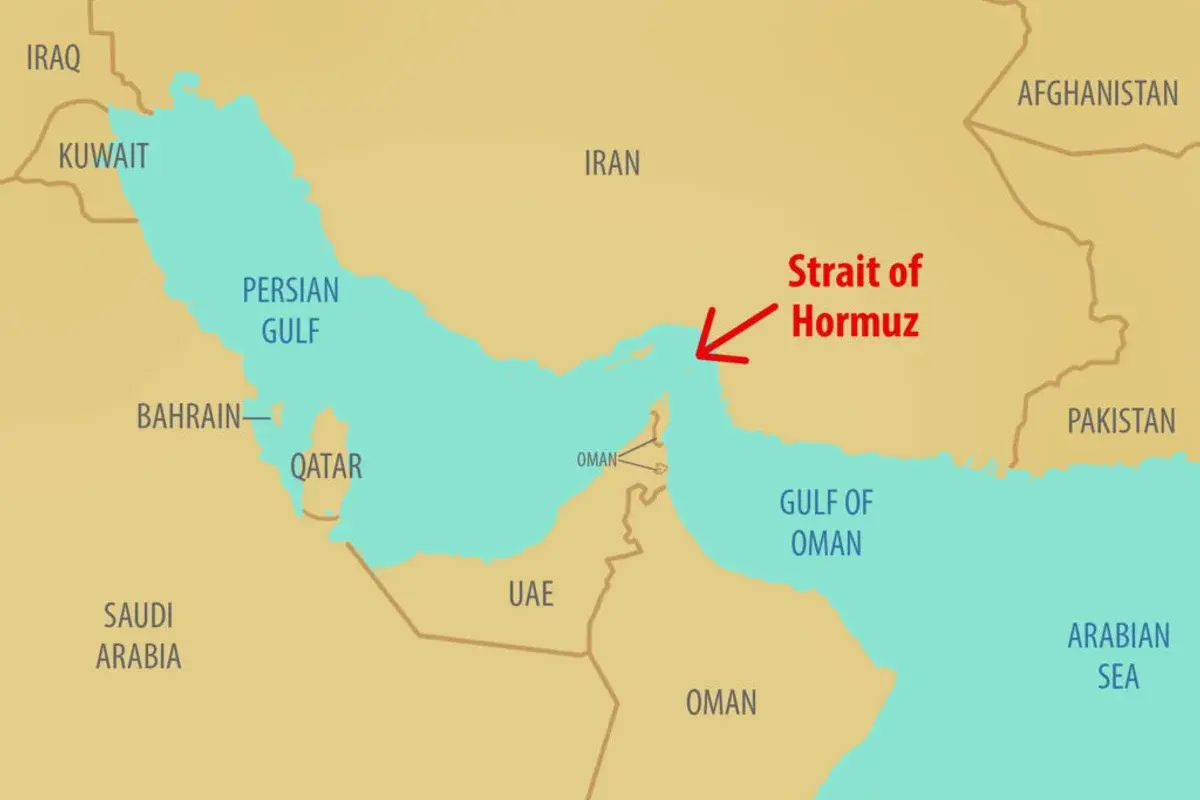
The Strait of Hormuz is a narrow but strategically vital waterway located between Iran and Oman, connecting the Persian Gulf to the Gulf of Oman and...

Global markets reel as Iran-Israel-US conflict escalates in March 2026. Oil prices soar, gold surges, and Indian equities plunge amid severe Strait...
India's Russian crude imports surge 50% in March 2026 to 1.5M bpd, driven by a US waiver and Strait of Hormuz disruptions.

US–Iran conflict enters its 13th day with rising casualties and ongoing airstrikes, while global fuel prices remain stable despite Middle East...

iQOO launches Z11x in India with Dimensity 7400 Turbo chipset, 7200mAh battery, and AI cameras, targeting the competitive mid-range smartphone market.