Loading market data...
US–Iran conflict enters its 13th day with rising casualties and ongoing airstrikes, while global fuel prices remain stable despite Middle East tensions.
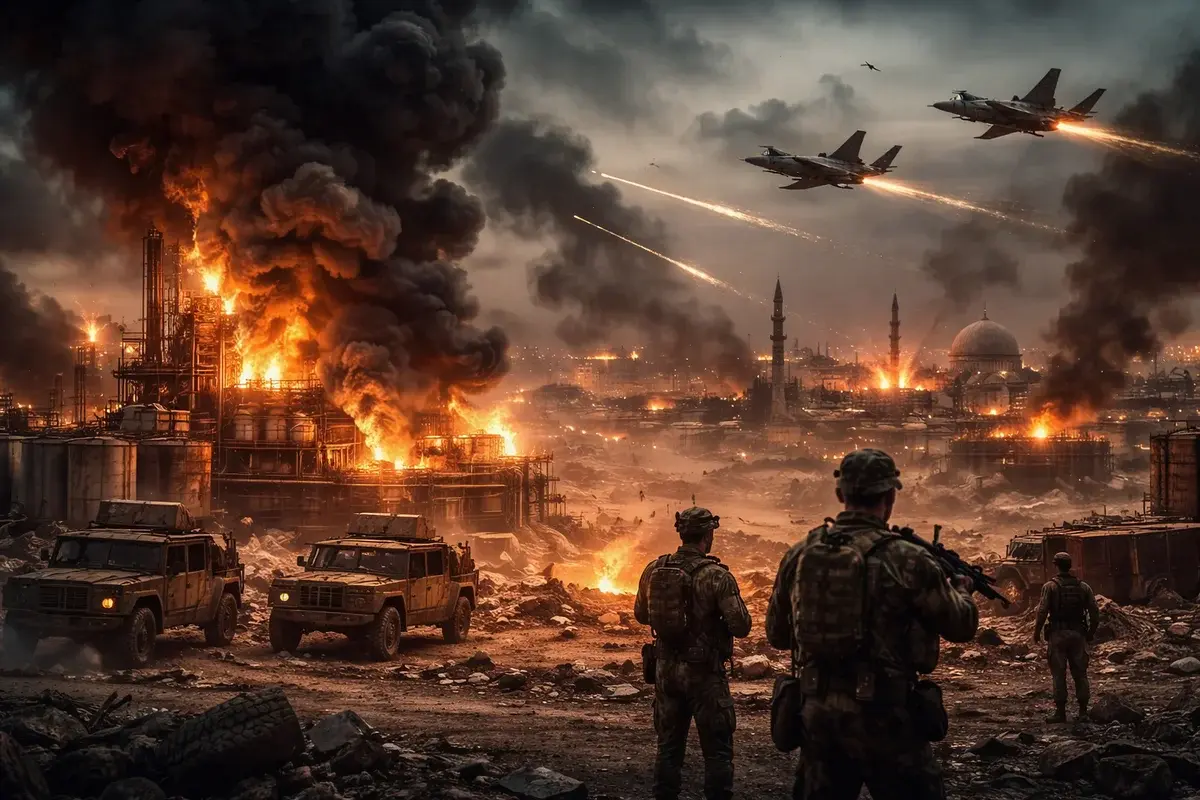
The ongoing military confrontation involving the United States, Israel, and Iran has entered its 13th day, with continued airstrikes, rising casualties, and mixed political messaging from global leaders. Donald Trump, the President of the United States, claimed the military campaign had achieved key objectives but also indicated that operations may continue in order to “finish the job.” Despite the escalation and thousands of reported casualties across multiple countries, global fuel markets have remained relatively stable, with analysts noting that oil supply routes and production infrastructure across the Middle East have not yet faced significant disruptions. The conflict, which also involves Israeli strikes targeting Iranian-backed groups in Lebanon, has intensified geopolitical tensions in one of the world’s most strategically important energy regions, raising concerns among policymakers and market observers about potential implications for global energy markets and regional stability.
| Key Metric | Details |
|---|---|
| Conflict Duration | 13 Days |
| Main Parties | United States, Israel, Iran |
| US Airstrike Targets | 5,500+ reported targets |
| Iran Casualties | 1,255 reported deaths |
| Lebanon Casualties | 570 reported deaths |
| Israel Casualties | 12 reported deaths |
| US Military Casualties | 7 killed, ~140 wounded |
| Energy Market Impact | Fuel prices largely stable |
The Middle East has long been a focal point of geopolitical tensions due to its strategic importance in global energy production and international security dynamics. The latest escalation involving Iran, Israel, and the United States reflects a broader pattern of regional confrontations linked to security concerns, proxy conflicts, and longstanding political rivalries. Analysts note that conflicts in this region often carry global economic implications because the Middle East accounts for a substantial share of worldwide oil production and hosts critical maritime shipping routes used for transporting crude oil and liquefied natural gas.
In recent years, tensions between Iran and Israel have intensified due to disputes over Iran’s regional influence and nuclear program. Israeli officials have repeatedly stated that they view Iranian-backed militant groups operating in neighboring countries as direct security threats. At the same time, the United States has maintained a significant military presence across the region through bases and alliances with several Middle Eastern governments. The convergence of these geopolitical factors has created an environment where localized military actions can quickly escalate into broader regional conflicts.
According to official statements from defense authorities, the US-led military campaign has conducted more than 5,500 airstrike operations targeting Iranian military infrastructure and strategic assets. These operations are part of a broader attempt to weaken Iran’s military capabilities and disrupt the operations of allied militant organizations operating in the region. The Pentagon has confirmed that approximately 140 US service members have been wounded during the conflict, including eight individuals who suffered severe injuries, while seven American personnel have been killed in combat operations.
Meanwhile, Israeli forces have intensified their own military campaign targeting Hezbollah positions in both Lebanon and Iranian territory. Hezbollah, a powerful militant group backed by Iran, has long been viewed by Israeli authorities as one of the most significant security threats along Israel’s northern border. Israeli airstrikes have focused on command centers, weapons depots, and logistics networks believed to support the group’s operations.
Casualty figures released by regional authorities highlight the growing human cost of the conflict. Iranian officials report at least 1,255 fatalities resulting from airstrikes and military operations across the country. In Lebanon, where Israeli strikes have targeted Hezbollah strongholds, officials estimate that approximately 570 people have been killed. Israel has reported 12 civilian and military fatalities linked to retaliatory attacks during the conflict.
Despite the intensity of military operations, global fuel markets have remained relatively stable, a development that has surprised some market observers. Historically, conflicts in the Middle East often trigger immediate spikes in oil prices due to fears of supply disruptions. However, energy analysts tracking global commodity markets suggest that several factors have helped stabilize fuel prices during the current conflict.
One key reason is that major oil production facilities and export infrastructure have not yet been directly targeted. The Strait of Hormuz—a critical maritime route through which roughly one-fifth of global oil shipments pass—remains operational. Shipping activity through the waterway has continued without significant interruption, allowing crude oil supplies to reach international markets.
Another stabilizing factor involves strategic petroleum reserves maintained by several countries, including the United States and China. These reserves are designed to cushion global markets against sudden supply disruptions during geopolitical crises. Analysts also note that global oil production levels have remained relatively strong, with output from producers outside the Middle East helping offset potential supply concerns.
While financial markets closely monitor geopolitical developments in the Middle East, early reactions from commodity traders suggest that investors currently view the conflict as regionally contained rather than a direct threat to global supply chains. Oil price movements have remained moderate, with fluctuations driven primarily by broader economic indicators and global demand forecasts rather than immediate wartime supply disruptions.
Market participants say that energy traders are particularly focused on whether the conflict could expand into neighboring oil-producing nations or disrupt major transport routes. Any escalation that threatens regional infrastructure or maritime shipping lanes could quickly shift market sentiment and trigger volatility in global energy prices. The stability seen so far suggests that investors believe diplomatic channels and strategic deterrence measures are limiting the likelihood of a broader regional war.
The conflict has also prompted governments across the region to issue emergency advisories for their citizens. Several countries, including India, have released contact information for diplomatic missions across Middle Eastern nations to assist citizens who may be affected by the ongoing conflict. Indian embassies in countries such as Bahrain, Iran, Iraq, Israel, Jordan, Kuwait, Lebanon, Oman, Qatar, Palestine, Saudi Arabia, and the United Arab Emirates have published emergency helpline numbers to support travelers and expatriate workers.
Diplomatic observers note that such measures reflect the scale of regional uncertainty generated by the conflict. The Middle East hosts millions of foreign workers and expatriates, many of whom rely on diplomatic support networks during periods of instability. Governments across Asia and Europe have also begun reviewing evacuation plans should the situation escalate further.
Energy markets remain highly sensitive to developments in the Middle East because the region accounts for a large share of global oil exports. Major oil producers such as Saudi Arabia, Iraq, and the United Arab Emirates operate within close proximity to current conflict zones, making the region a central focus for energy security discussions. Industry analysts emphasize that any disruption to infrastructure such as pipelines, refineries, or shipping routes could rapidly impact global energy supply.
Beyond oil markets, the conflict also carries implications for defense industries, logistics networks, and international shipping companies operating in the region. Insurance costs for maritime transport typically rise during periods of military escalation, potentially affecting trade routes that pass through strategic waterways in the Persian Gulf.
While President Trump has declared that the military campaign has achieved key objectives, his statement emphasizing the need to “finish the job” suggests that operations may continue in the coming weeks. Analysts caution that prolonged military activity could increase the risk of broader regional escalation involving additional actors.
Energy market participants, meanwhile, will continue monitoring developments closely for any signs that the conflict could affect oil production facilities or key shipping corridors. Even though fuel prices have remained stable so far, geopolitical risks in the region often evolve rapidly, making the situation a focal point for policymakers, investors, and energy traders worldwide.
The trajectory of the conflict over the coming days will likely determine whether global markets remain calm or begin to reflect heightened geopolitical risk premiums.

Financial journalist specializing in market analysis, stock research, and investment trends. Dedicated to providing accurate, timely insights for informed decision-making.
Credentials: Experienced financial journalist with expertise in equity markets and economic analysis
The information provided in this article is for educational and informational purposes only and should not be construed as financial, investment, or legal advice. Finscann does not provide personalized investment recommendations.
For detailed terms and conditions, please read our Disclaimer and Terms of Service.
Global markets reel as Iran-Israel-US conflict escalates in March 2026. Oil prices soar, gold surges, and Indian equities plunge amid severe Strait...

India's Russian crude imports surge 50% in March 2026 to 1.5M bpd, driven by a US waiver and Strait of Hormuz disruptions.

iQOO launches Z11x in India with Dimensity 7400 Turbo chipset, 7200mAh battery, and AI cameras, targeting the competitive mid-range smartphone market.
India's oil tankers gain critical access to Strait of Hormuz after Iran talks. FinScann analyzes the impact on India's energy security and global oil...
Global oil markets face renewed volatility as Oman evacuates its key Mina Al Fahal export terminal following tanker attacks in Iraqi waters.