Loading market data...
Get FinScann's expert analysis on top pre-market stocks to watch for 11 March 2026. Uncover key drivers, market impact, and actionable insights for your portfolio amid volatile global cues.

Indian equities are poised for a cautious opening on Wednesday, March 11, 2026, as global markets navigate continued geopolitical uncertainties in the Middle East and fluctuating crude oil prices. The GIFT Nifty futures indicate a flat to slightly negative start for the Nifty 50 and Sensex, despite a rebound in Asian markets. Investors will closely monitor corporate announcements and institutional activity in the 15-minute pre-market session (9:00 AM to 9:15 AM IST) to gauge early sentiment and price discovery. Several pre-market stocks to watch are already in focus due to overnight developments and recent financial cues.
The Catalyst
The primary drivers for today's pre-market activity stem from a complex interplay of international and domestic factors. Geopolitical tensions in the Middle East, particularly the ongoing US-Iran conflict, continue to be a significant overhang on global markets, causing volatility in crude oil prices. While there have been reports of potential de-escalation, the situation remains fluid, directly impacting energy-dependent economies like India. Brent crude, which previously surged near $120 per barrel, has seen some retreat, offering a degree of relief.
On the domestic front, Foreign Institutional Investors (FIIs) have continued their selling spree, offloading shares worth ₹4,672.60 crore on March 10, 2026, contributing to a net outflow of over ₹32,849 crore so far this month. Conversely, Domestic Institutional Investors (DIIs) have provided crucial market support, with net purchases of ₹6,333.30 crore on March 10, 2026. This contrasting institutional activity remains a critical factor shaping market sentiment.
Furthermore, the Reserve Bank of India (RBI), having maintained its repo rate at 5.25% with a 'Neutral' stance in its February 2026 monetary policy, has announced Open Market Operation (OMO) purchases of ₹1 lakh crore to infuse liquidity into the banking system, strategically timed ahead of advance tax outflows. This move aims to stabilize liquidity and support monetary policy objectives.
Financial Forensics
Several companies are expected to see heightened activity in the pre-market session due to specific news and sectoral dynamics. FinScann analysis highlights the following stocks in focus for March 11, 2026:
| Company Name | Key Catalyst for 11 March 2026 | Sector | Potential Impact |
|---|---|---|---|
| InterGlobe Aviation (IndiGo) | CEO Pieter Elbers resigned, effective immediately, citing personal reasons. Co-founder Rahul Bhatia takes interim charge. | Aviation | Volatility, investor sentiment |
| Reliance Industries (RIL) | US President Donald Trump announced RIL's partnership in a new US oil refinery project in Texas. Also, tight global markets may keep refining margins higher. | Oil & Gas, Diversified | Positive sentiment, crude oil price sensitivity |
| Whirlpool of India | Completed acquisition of an additional 3.18% equity in Elica India, taking total shareholding to 100%. | Consumer Durables | Positive, integration synergies |
| UCO Bank | Expected to be in focus amid hopes of reduced Middle East tensions. | Public Sector Banking | Positive sentiment, risk-on buying |
| Indian Oil Corporation (IOCL) | In focus due to corporate actions (dividend, rights issue) and impact of volatile crude oil prices. | Oil & Gas, Refining & Marketing | Volatility, news-driven |
| Dr. Lal PathLabs | NCLT approved voluntary liquidation of its arm, Suburban Diagnostics. | Healthcare, Diagnostics | Short-term impact, business restructuring |
| TVS Supply Chain Solutions | Established a 40,000 sq. ft warehousing facility near Chennai in a Free Trade & Warehousing Zone. | Logistics, Supply Chain | Positive, expansionary move |
| Simbaoli Sugars | Scheduled to announce audited results for the period ended March 2026 today. | Sugar, Agro-processing | Earnings-driven volatility |
| Raajmarg Infra Investment Trust | IPO to open today, acquiring, operating, and maintaining road infrastructure assets. | Infrastructure, InvIT | Listing gains/pressure |
| Oil Marketing Companies (OMCs) | HPCL, BPCL, and Indian Oil face pressure from rising crude oil prices due to increased input costs. | Oil & Gas, Refining & Marketing | Negative impact from crude price spikes |
| Paint & Tyre Companies | Companies like Asian Paints, MRF, CEAT are sensitive to crude oil prices and rubber prices, impacting gross margins. | Chemicals, Auto Ancillaries | Negative impact from rising input costs |
| Defence Stocks | Global defence stocks have rallied amid escalating Middle East conflict. | Defence | Positive sentiment |
| AC Stocks (Blue Star, Voltas) | Expected to be in focus with the onset of summer, driving demand for cooling products. | Consumer Durables, HVAC | Seasonal positive sentiment |
Market Impact
The broader Indian market, represented by the Nifty 50 and Sensex, is likely to exhibit volatility. While a positive sentiment from reduced geopolitical tensions could support a rebound, the persistent FII selling might cap significant upside. Sectors like Oil & Gas, particularly OMCs, and chemical-dependent industries such as Paints and Tyres, will remain highly sensitive to crude oil price movements. The aviation sector might see specific movements related to InterGlobe Aviation's management changes. Banking stocks, especially PSUs like UCO Bank, could find support from hopes of reduced global tensions and the RBI's liquidity-infusion measures. The Nifty Bank has shown signs of recovery after recent weakness, and analysts expect consolidation in the near term.
Key Takeaways
FinScann Verdict
For March 11, 2026, FinScann anticipates a session marked by selective buying and continued vigilance. Investors should prioritize a stock-specific approach, carefully evaluating companies with robust fundamentals and clear catalysts. While global headwinds persist, domestic institutional support and the RBI's proactive liquidity management offer a floor to market corrections. Disciplined risk management and a focus on long-term value remain paramount in this environment.
Q: What is pre-market trading in India? A: Pre-market trading in India is a 15-minute session on the National Stock Exchange (NSE) and Bombay Stock Exchange (BSE) that occurs from 9:00 AM to 9:15 AM IST, before the regular trading hours of 9:15 AM to 3:30 PM. This session allows for price discovery by matching demand and supply, helping to reduce volatility at market open due to overnight news or major announcements.
Q: Why is FII/DII data important for Indian stock markets? A: FII (Foreign Institutional Investor) and DII (Domestic Institutional Investor) data provide insights into the daily trading activity of large institutional players in the Indian stock market. FII activity often reflects global sentiment towards Indian equities, while DII activity indicates local sentiment and long-term commitment. Tracking this data helps traders and investors understand broader market trends and sentiment, as significant buying or selling by these institutions can impact market movements.
Q: How do geopolitical events impact Indian stock markets? A: Geopolitical events, especially those involving major oil-producing regions like the Middle East, can significantly impact Indian stock markets. India is a major importer of crude oil, so tensions that affect global oil supply or prices directly influence the country's import bill, inflation, and current account deficit. Such events often lead to increased market volatility, FII outflows, and a weaker rupee, creating a cautious investment environment.
Q: What is the significance of the RBI's Open Market Operations (OMO)? A: The RBI's Open Market Operations (OMO) involve the buying or selling of government securities in the open market to manage liquidity in the banking system. When the RBI buys government securities (as it did recently), it injects liquidity, which can ease interest rates, encourage lending, and support economic growth. These operations are crucial for maintaining financial stability and transmitting monetary policy effectively.
Q: Are there any specific risks associated with pre-market trading? A: Yes, pre-market trading carries certain risks, primarily due to lower liquidity compared to regular market hours. This can lead to wider bid-ask spreads and increased price volatility, making it potentially harder to execute orders at desired prices. Only Nifty 50 and Sensex 30 stocks are typically allowed to trade during the pre-market session for retail investors.
Disclaimer: For information only; not investment advice. Stock market investments carry risks. Please consult a SEBI-registered advisor before investing. FinScann assumes no liability for decisions made based on this report.

Financial journalist specializing in market analysis, stock research, and investment trends. Dedicated to providing accurate, timely insights for informed decision-making.
Credentials: Experienced financial journalist with expertise in equity markets and economic analysis
The information provided in this article is for educational and informational purposes only and should not be construed as financial, investment, or legal advice. Finscann does not provide personalized investment recommendations.
For detailed terms and conditions, please read our Disclaimer and Terms of Service.
Bombay Stock Exchange will conduct a market-wide mock trading session on March 14 to test trading systems across equity, derivatives, currency, and...

Akasa Air partners with Noida International Airport to establish its first MRO facility in India, strengthening aviation infrastructure and...
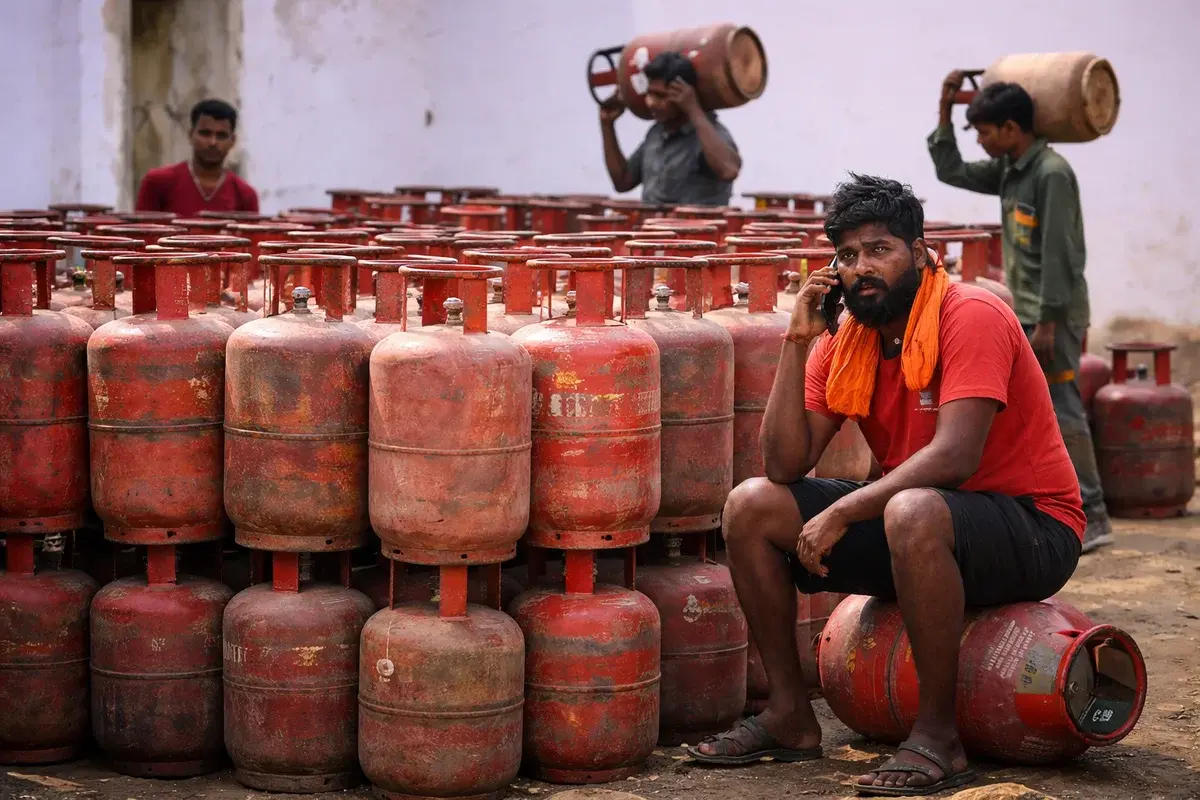
India faces a major LPG shortage as global supply disruptions push prices higher. Restaurants shut, businesses struggle, and households feel the...

Indian markets fall sharply as Nifty drops 300 points and Sensex declines 900 amid rising oil prices, LPG shortages, and sector-wide selling pressure.

Petrol prices in India remain a key economic driver in March 2026, influenced by crude oil, rupee-dollar exchange rates, and taxes affecting...