Loading market data...
The Strait of Hormuz is a narrow but strategically vital waterway located between Iran and Oman, connecting the Persian Gulf to the Gulf of Oman and the Arabian Sea. It is considered the world’s most important oil transit chokepoint because roughly 20% of global petroleum consumption and about one-quarter of all seaborne oil trade passes through it daily. Major oil-exporting countries such as Saudi Arabia, Iraq, the United Arab Emirates, Kuwait, and Iran rely on this route to transport crude oil and liquefied natural gas (LNG) to global markets, particularly in Asia. Any disruption in the Strait of Hormuz can significantly affect global energy prices, shipping costs, and supply chains, making it a critical focal point in global geopolitics and energy security.
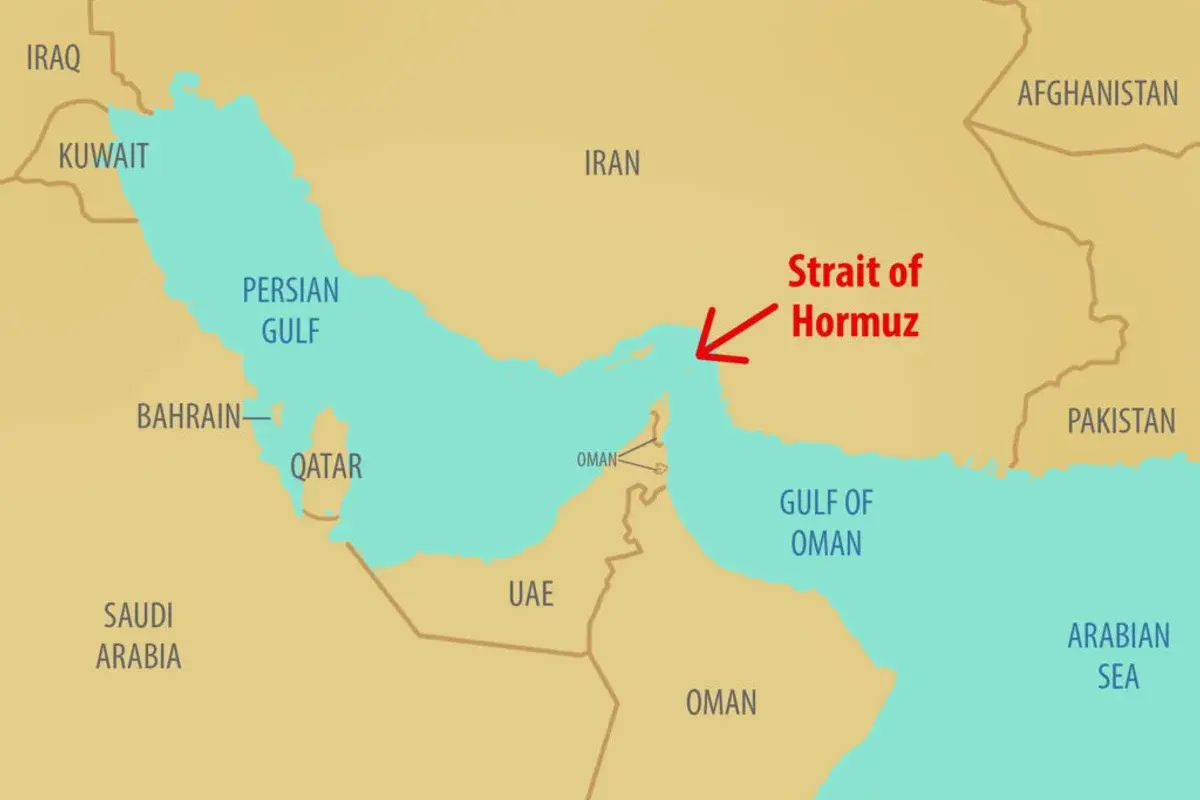
The global energy market is grappling with unprecedented volatility as the Strait of Hormuz, the world's most critical oil transit chokepoint, faces severe disruption in March 2026, following escalating geopolitical tensions in the Middle East. This narrow waterway, which historically carries approximately 20-21% of global petroleum liquids consumption and roughly one-quarter of all seaborne oil trade, has seen commercial traffic effectively halted or reduced to a mere trickle. This crisis, deemed the "largest supply disruption in the history of the global oil market" by some analysts, has sent immediate shockwaves through crude oil prices, insurance premiums, and global supply chains, with profound implications for energy-dependent nations like India.
The Catalyst
The current crisis escalated dramatically following a series of US and Israeli strikes on Iran, which triggered retaliatory actions from Tehran targeting Gulf countries hosting American military facilities. In early March 2026, reports emerged of Iran's Islamic Revolutionary Guards Corps issuing warnings to vessels and even claiming the Strait had been closed, although no formal announcement was made. Nevertheless, the heightened uncertainty and explicit risks prompted numerous trading houses, insurers, and shipping companies to suspend operations in the area, leading to hundreds of oil tankers anchoring in Gulf waters. This geopolitical flashpoint has effectively choked off a vital artery for global energy flow, creating a scenario that experts warn could reshape energy markets for years to come.
Financial Forensics
The Strait of Hormuz is an indispensable conduit for crude oil and liquefied natural gas (LNG) originating from major producers such as Saudi Arabia, Iraq, the United Arab Emirates (UAE), Kuwait, Qatar, and Iran. These five nations alone account for approximately 93.6% of all crude and condensate volumes moving through the Strait. On the demand side, Asia's reliance is overwhelming; 89.2% of crude oil and condensate transiting Hormuz is destined for Asian markets. China leads as the largest importer, receiving 37.7% of these flows, followed by India at 14.7%, South Korea at 12.0%, and Japan at 10.9%.
Prior to the current disruption, average oil flows through the Strait were around 20 million barrels per day (mb/d) in the first half of 2025 and 2024. This volume represents approximately 20% of global oil consumption and roughly one-quarter of total maritime traded oil. Additionally, the Strait is critical for LNG, handling around 20% of global LNG trade. Countries like India, Bangladesh, and Pakistan are particularly vulnerable, having imported almost two-thirds of their total LNG supplies via Hormuz in 2025.
The immediate financial impact has been significant. Brent crude oil prices surged, reportedly reaching $102 per barrel in early March 2026, up from $72 earlier in the year, as traders demand a substantial risk premium. Analysts from Goldman Sachs estimate that a full one-month closure could add $12-$15 per barrel to crude oil prices, even if existing spare pipeline capacities and strategic petroleum reserves are utilized. A severe, week-long disruption could push oil to $140 per barrel.
Major Exporters and Importers via Strait of Hormuz (Q1 2025 Data)
| Category | Country | Share of Crude/Condensate Flow | Volume (Million Barrels/Day) | Key Importer Dependency (Self-Reported) |
|---|---|---|---|---|
| Exporters | Saudi Arabia | 37.2% | ~7.3 | |
| Iraq | 22.8% | ~3.8 | ||
| UAE | 12.9% | ~3.1 | ||
| Iran | 10.6% | ~4.2 | ||
| Kuwait | 10.1% | ~2.5 | ||
| Importers | China | 37.7% | ~5.3 | ~45% of oil imports |
| India | 14.7% | ~2.09 | ~60% of oil imports | |
| South Korea | 12.0% | ~1.7 | ~75% of oil imports | |
| Japan | 10.9% | ~1.55 | ~80% of oil imports | |
| Other Asia | 13.9% |
Source: U.S. Energy Information Administration (EIA) and Visual Capitalist (Q1 2025 data).
Market Impact
The impact extends far beyond crude oil prices. Shipping costs and insurance premiums have surged, with some reports indicating commercial traffic has dropped sharply due to security concerns, even without an official blockade. This elevates the cost of transporting crude, refined products, and liquefied natural gas globally. For India, a major importer of crude, LPG, and LNG, this translates directly into a higher import bill. While India has some strategic petroleum reserves providing cover for over 10-50 days, the vulnerability is particularly acute for LPG and LNG, where imports constitute 80-85% and 60% respectively, with limited alternative sourcing or storage options.
A sustained disruption could lead to a weaker Indian Rupee (INR) against the US Dollar, as higher crude oil prices exacerbate the current account deficit. FinScann analysis suggests that every $10/bbl increase in oil prices could widen India's current account deficit by 0.4-0.5% of GDP, potentially pushing it towards 3% of GDP if oil prices hover around $100/bbl. This, in turn, fuels inflation, with average inflation in India potentially rising above 4.5% for FY2026/27 if oil prices reach $100/bbl. The ripple effects could impact energy-intensive sectors like manufacturing, transportation, and even food production due to rising fertilizer costs, potentially leading to a stagflationary environment.
However, India's Petroleum Minister Hardeep Puri stated on March 12, 2026, that India's fuel supply remains secure. He highlighted that non-Hormuz sources now account for 70% of crude imports, a significant increase from 55% before the crisis, and LPG production has increased by 28% domestically.
Key Takeaways for Investors
FinScann Verdict
The Strait of Hormuz remains unequivocally the world's most vital crude oil chokepoint, with the current geopolitical instability confirming its profound impact on global energy security and prices. While India has demonstrated resilience by diversifying crude sources and boosting domestic LPG production, the prolonged disruption presents significant challenges, particularly for its LNG and LPG imports. FinScann advises investors to remain vigilant, acknowledging the embedded geopolitical risk premium and evaluating portfolios for both defensive plays and opportunities arising from the accelerated shift towards energy diversification.
Q: Why is the Strait of Hormuz so crucial for global oil supply? A: The Strait of Hormuz is critical because it's a narrow, deep-water channel connecting the Persian Gulf, home to some of the world's largest oil producers (like Saudi Arabia, Iraq, UAE), with the open ocean. Approximately 20-21% of the world's daily petroleum liquids consumption and about 25% of all seaborne oil trade passes through this strait, primarily destined for Asian markets.
Q: How much oil passes through the Strait of Hormuz daily in 2026? A: In early March 2026, prior to the severe disruptions, oil flows through the Strait of Hormuz averaged around 20 million barrels per day (mb/d). This figure encompasses both crude oil and petroleum products.
Q: Which countries are most dependent on the Strait of Hormuz for their oil imports? A: Asian countries are overwhelmingly dependent, receiving nearly 90% of crude oil and condensate transiting the Strait. China is the largest single importer (37.7%), followed by India (14.7%), South Korea (12.0%), and Japan (10.9%).
Q: What happens if the Strait of Hormuz is completely blocked? A: A complete and prolonged blockage of the Strait of Hormuz would have catastrophic global economic consequences. It would immediately remove 20% of global oil supply from the market, leading to massive price spikes (potentially up to $140 per barrel or higher) and severe physical shortages due to limited alternative routes and insufficient pipeline capacity. It would also critically impact global LNG supplies, particularly to Asian markets.
Q: How does the Strait of Hormuz crisis affect India specifically? A: India is significantly exposed, with around 40% of its crude oil imports and a substantial portion of its LPG (80-85%) and LNG (60%) imports relying on this route. A prolonged disruption would lead to higher import costs, a weaker INR, an expanded current account deficit, and increased domestic inflation impacting consumers and various sectors. However, India's Petroleum Minister has assured that India has diversified its crude sources and increased domestic LPG production to manage the situation.
Disclaimer: For information only; not investment advice. Stock market investments carry risks. Please consult a SEBI-registered advisor before investing. FinScann assumes no liability for decisions made based on this report.

Financial journalist specializing in market analysis, stock research, and investment trends. Dedicated to providing accurate, timely insights for informed decision-making.
Credentials: Experienced financial journalist with expertise in equity markets and economic analysis
The information provided in this article is for educational and informational purposes only and should not be construed as financial, investment, or legal advice. Finscann does not provide personalized investment recommendations.
For detailed terms and conditions, please read our Disclaimer and Terms of Service.

Global markets reel as Iran-Israel-US conflict escalates in March 2026. Oil prices soar, gold surges, and Indian equities plunge amid severe Strait...
India's Russian crude imports surge 50% in March 2026 to 1.5M bpd, driven by a US waiver and Strait of Hormuz disruptions.

US–Iran conflict enters its 13th day with rising casualties and ongoing airstrikes, while global fuel prices remain stable despite Middle East...

iQOO launches Z11x in India with Dimensity 7400 Turbo chipset, 7200mAh battery, and AI cameras, targeting the competitive mid-range smartphone market.

India's oil tankers gain critical access to Strait of Hormuz after Iran talks. FinScann analyzes the impact on India's energy security and global oil...