Loading market data...
Petrol prices in India remain a key economic driver in March 2026, influenced by crude oil, rupee-dollar exchange rates, and taxes affecting inflation and businesses.

The trajectory of petrol prices across India continues to be a pivotal economic determinant, heavily influencing inflation, consumer spending, and the broader industrial landscape. As of March 2026, petrol prices in major Indian cities remain a focal point of public discourse and economic analysis, primarily driven by a complex interplay of international crude oil benchmarks, the Indian Rupee's (INR) exchange rate against the US Dollar (USD), and a substantial portion of central and state taxes. This intricate pricing mechanism directly impacts the operational costs for businesses across diverse sectors, ranging from logistics and manufacturing to agriculture, while also significantly shaping household budgets and ultimately, the nation's economic growth trajectory. The consistent vigilance over these price movements by financial analysts and policymakers alike underscores their critical importance in the current macroeconomic environment, particularly as India navigates global economic headwinds and domestic developmental priorities.
| Key Metric | Details |
|---|---|
| Primary Driver | Global crude oil prices (Brent, WTI) |
| Key Domestic Factors | Central Excise Duty, State Value Added Tax (VAT), Rupee-Dollar exchange rate, dealer commission |
| Economic Impact | Inflationary pressures (CPI, WPI), logistics costs, consumer spending, manufacturing sector profitability, public sector oil marketing companies (OMCs) financial health |
| Current Context (March 2026) | Continued volatility in international energy markets, government's fiscal considerations regarding tax revenue, ongoing push for ethanol blending to reduce import dependence and support agricultural income, alongside debates around bringing petroleum products under the Goods and Services Tax (GST) regime to rationalize pricing. |
The Catalyst
The primary catalyst behind the persistent fluctuation and elevated levels of petrol prices in India is undeniably the volatility observed in the international crude oil markets. Global geopolitical tensions, often manifesting in supply disruptions or heightened demand expectations, significantly impact benchmark prices like Brent crude and West Texas Intermediate (WTI). For instance, recent conflicts in key oil-producing regions, coupled with decisions from the Organization of the Petroleum Exporting Countries (OPEC+) regarding production quotas, have consistently introduced uncertainty into the market, leading to sharp price swings. Furthermore, the strength or weakness of the Indian Rupee against the US Dollar plays a crucial, albeit often overlooked, role; since India imports over 85% of its crude oil requirements, a depreciating Rupee makes crude purchases more expensive in local currency terms, directly translating into higher retail petrol prices. This dual pressure from global supply-demand dynamics and currency movements creates a challenging environment for oil marketing companies (OMCs) and consumers alike, necessitating a delicate balancing act for policymakers aiming to stabilize domestic fuel costs. The government's continued focus on initiatives such as boosting domestic crude oil exploration and accelerating the renewable energy transition are strategic long-term responses aimed at mitigating this external dependency.
Financial Forensics
A detailed forensic analysis of India's petrol pricing structure reveals a multi-layered system that extends far beyond the global crude oil cost. The retail price of petrol in India is a composite of several key components: the base price of crude oil, freight and insurance charges, refinery processing costs, central excise duty, state-level Value Added Tax (VAT), and dealer commissions. As of early March 2026, the crude oil component typically constitutes around 35-40% of the final retail price, a figure that is subject to daily international market rates. Following this, significant contributions come from government levies. The central excise duty, a fixed component, and the state VAT, which is an ad valorem tax (a percentage of the price), collectively form a substantial portion, often exceeding 40-50% of the retail price in many states. For example, a litre of petrol priced at approximately ₹105 in Delhi might see the base crude cost at roughly ₹40, with central excise contributing around ₹19.90 and state VAT adding another ₹15-20, alongside other charges like dealer commission and freight. These significant tax components highlight the government's reliance on fuel taxation as a major revenue stream, impacting fiscal policy decisions and state budgets. The absence of petroleum products from the Goods and Services Tax (GST) regime further exacerbates price variations across states, as each state retains the autonomy to set its own VAT rates, leading to considerable disparities in retail prices nationwide.
Market Impact
The sustained high petrol prices exert a pervasive influence across various segments of the Indian economy, creating both direct and indirect ripple effects. Directly, the transportation sector bears the immediate brunt, with logistics and freight costs escalating significantly for businesses reliant on road networks. This increase in input costs invariably translates into higher prices for goods and services across the supply chain, fueling inflationary pressures that are meticulously tracked by the Consumer Price Index (CPI) and Wholesale Price Index (WPI). Sectors such as manufacturing, which depend on efficient raw material procurement and finished goods distribution, face compressed profit margins. Consumers, in turn, experience a reduction in their discretionary spending power as a larger portion of their income is allocated to fuel, impacting demand for non-essential goods and services. For the Indian stock market, the financial health of public sector oil marketing companies (OMCs) like Indian Oil Corporation (IOCL), Bharat Petroleum Corporation Limited (BPCL), and Hindustan Petroleum Corporation Limited (HPCL) is directly linked to their ability to pass on international crude oil price increases to consumers, often a politically sensitive decision. Additionally, auto ancillary companies and automotive manufacturers witness demand fluctuations influenced by the total cost of vehicle ownership, which includes fuel expenses. Industry analysts say that while the government aims for fiscal prudence, the balancing act of managing fuel prices against inflation remains a critical challenge for the Reserve Bank of India (RBI) in its monetary policy formulation.
Key Takeaways
FinScann Verdict
FinScann analysis indicates that while global crude oil price volatility remains a significant external force, the substantial tax component levied by both central and state governments critically shapes India's domestic petrol price landscape. The ongoing push for ethanol blending and discussions around rationalizing the tax structure, potentially through GST integration, represent long-term strategic efforts to insulate the Indian economy from external shocks and ensure greater price stability. However, in the immediate term, consumers and businesses should anticipate continued price sensitivity to international crude oil movements and domestic fiscal policy adjustments.
Q: Why are petrol prices in India generally higher than in many other countries? A: Petrol prices in India are often higher primarily due to the significant central excise duty and state-level Value Added Tax (VAT) levied on fuel. These taxes, which are among the highest globally, constitute a substantial portion of the final retail price, sometimes exceeding 40-50%. Additionally, the import dependence on crude oil and the Rupee-Dollar exchange rate also contribute to the pricing structure.
Q: How does the government decide petrol prices in India? A: Since June 2017, petrol and diesel prices in India have been deregulated, meaning they are determined daily by public sector oil marketing companies (OMCs) based on international crude oil prices and the Rupee-Dollar exchange rate. However, the central and state governments influence the final retail price through their respective excise duties and VAT.
Q: What is the impact of global crude oil prices on the Indian economy? A: Fluctuations in global crude oil prices have a direct and significant impact on the Indian economy. As a major importer of crude oil, higher global prices lead to an increased import bill, widening the current account deficit, and potentially weakening the Rupee. Domestically, they translate into higher fuel prices, fueling inflation, increasing transportation costs for businesses, and potentially dampening consumer demand.
Q: What measures is the Indian government taking to manage fuel price volatility? A: The Indian government is pursuing several strategies to manage fuel price volatility. These include encouraging domestic crude oil production, promoting ethanol blending with petrol to reduce import dependence, exploring strategic petroleum reserves, and encouraging the adoption of alternative fuels and electric vehicles to shift away from fossil fuel reliance in the long term. There are also ongoing discussions about rationalizing the tax structure by potentially bringing petroleum products under the GST regime.
Q: How does the Rupee-Dollar exchange rate affect petrol prices? A: Since crude oil is traded internationally in US Dollars, a depreciation of the Indian Rupee against the Dollar makes crude oil imports more expensive in Rupee terms. This increased cost is then passed on to consumers in the form of higher retail petrol prices, even if global crude oil prices in dollar terms remain stable. Conversely, a strengthening Rupee can help offset some of the impact of rising global crude prices.
Disclaimer: For information only; not investment advice. Stock market investments carry risks. Please consult a SEBI-registered advisor before investing. FinScann assumes no liability for decisions made based on this report.

Financial journalist specializing in market analysis, stock research, and investment trends. Dedicated to providing accurate, timely insights for informed decision-making.
Credentials: Experienced financial journalist with expertise in equity markets and economic analysis
The information provided in this article is for educational and informational purposes only and should not be construed as financial, investment, or legal advice. Finscann does not provide personalized investment recommendations.
For detailed terms and conditions, please read our Disclaimer and Terms of Service.
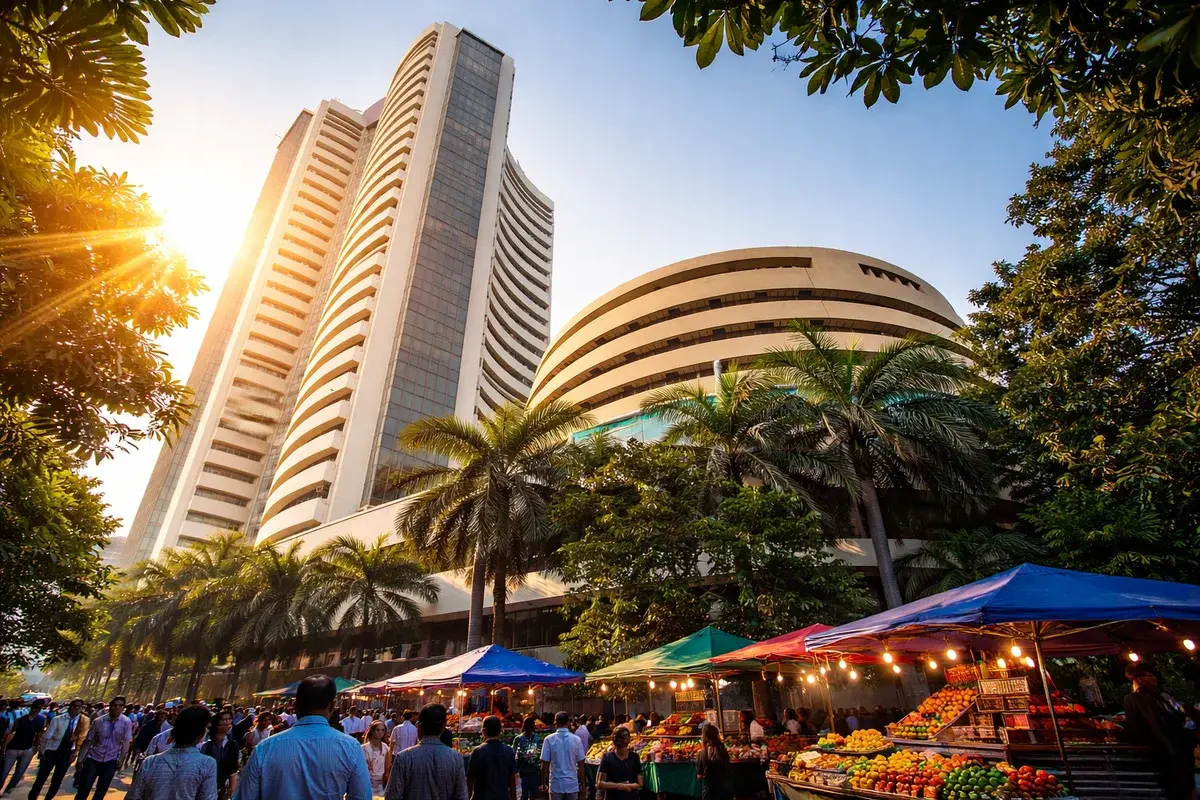
Bombay Stock Exchange will conduct a market-wide mock trading session on March 14 to test trading systems across equity, derivatives, currency, and...

Akasa Air partners with Noida International Airport to establish its first MRO facility in India, strengthening aviation infrastructure and...
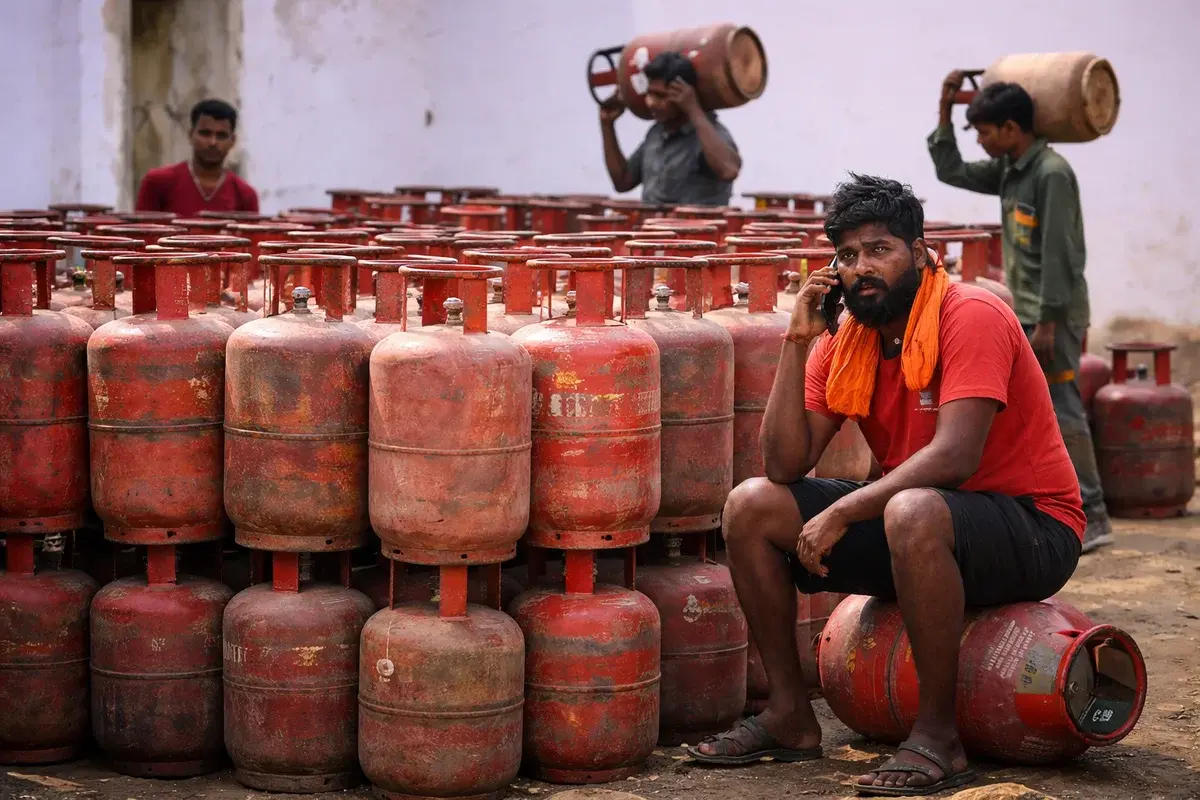
India faces a major LPG shortage as global supply disruptions push prices higher. Restaurants shut, businesses struggle, and households feel the...

Indian markets fall sharply as Nifty drops 300 points and Sensex declines 900 amid rising oil prices, LPG shortages, and sector-wide selling pressure.

Get the latest pre-market analysis for the Indian share market on March 13, 2026. FinScann's expert insights on Nifty 50, Sensex, FII/DII data, and...