Loading market data...
Geopolitical tensions surrounding the US-Iran conflict led FIIs to dump ₹12,000 crore from Indian shares. Explore the impact of soaring crude oil prices on India's market and economy.

The Indian stock market has been gripped by significant volatility as escalating geopolitical tensions between the US and Iran in West Asia triggered a massive sell-off by Foreign Institutional Investors (FIIs). Over the initial two trading days of March 2026, FIIs offloaded Indian equities worth a staggering ₹12,048.29 crore in the cash market, reflecting a pronounced "risk-off" sentiment among global investors. This exodus puts considerable pressure on the Nifty 50 and Sensex benchmarks, raising critical questions about India's macroeconomic stability amidst soaring crude oil prices, a key vulnerability for the import-dependent nation.
The Catalyst: Geopolitical Tensions Reignite Oil Price Fears
The latest surge in geopolitical instability in West Asia, particularly the intensifying conflict involving the United States, Israel, and Iran, has sent shockwaves across global commodity markets. Reports of heightened military action and threats to critical shipping lanes like the Strait of Hormuz have directly fueled a sharp spike in crude oil prices. India, which relies on imports for an estimated 80-85% of its oil needs, faces significant economic headwinds from this scenario.
On Thursday, March 5, 2026, oil prices continued their rally, with Brent crude increasing by $2.44, or 3%, reaching $83.84 per barrel, marking its fifth consecutive session of gains. US West Texas Intermediate (WTI) crude also climbed $2.44, or 3.27%, to $77.10. Domestically, MCX Crude Oil futures (Mar 2026 expiry) surged 2.59% to ₹7,117 per barrel. This sharp increase in energy costs is a primary concern for the Indian economy, as it directly impacts inflation, the current account deficit (CAD), and the stability of the Indian Rupee. Dr. VK Vijayakumar, Chief Investment Strategist at Geojit Financial Services Ltd. , noted that FIIs are likely to remain on the sidelines until there is greater clarity on the geopolitical front and crude prices cool down.
Financial Forensics: FII Exodus vs. DII Resilience
The data reveals a stark divergence in investor behavior. While FIIs aggressively pulled funds, Domestic Institutional Investors (DIIs) provided a crucial counterbalance, injecting substantial capital into the market. On Wednesday, March 4, FIIs divested equities worth ₹8,752.65 crore, whereas DIIs robustly purchased stocks totaling ₹12,068.17 crore, absorbing a significant portion of the foreign selling pressure. Similarly, on Monday, March 2, FIIs sold ₹3,295.64 crore, countered by DII purchases of ₹8,593.87 crore.
This pattern of foreign outflows is not new. FIIs have been net sellers in Indian equities throughout the first quarter of 2026. In February 2026, FIIs offloaded ₹6,640.78 crore, contributing to the Nifty 50 concluding the month at 25,178.65, a 0.6% decrease. The selling was even more pronounced in January 2026, witnessing outflows of ₹41,435.22 crore, with the benchmark closing at 25,320.65, down 3.1% for the month. This persistent FII selling reflects a classic risk-off response to global uncertainties, compelling investors to seek safer assets such as the US dollar and gold, as highlighted by Sudeep Shah, Head of Technical and Derivatives Research at SBI Securities.
FII and DII Investment Flows (March 2026 YTD)
| Investment Category | March 2 (₹ Crore) | March 4 (₹ Crore) | Total Early March (₹ Crore) | February 2026 (₹ Crore) | January 2026 (₹ Crore) |
|---|---|---|---|---|---|
| FII Net Activity | -3,295.64 | -8,752.65 | -12,048.29 | -6,640.78 | -41,435.22 |
| DII Net Activity | +8,593.87 | +12,068.17 | +20,662.04 | +12,293 (approx) | N/A |
Source: Exchange data, FinScann Analysis
Market Impact: Rupee Under Pressure, Inflationary Headwinds Ahead
The immediate aftermath of rising geopolitical tensions and FII selling has been felt acutely across the Indian financial landscape. The Nifty 50 and BSE Sensex have experienced significant declines. On Wednesday, March 4, the Nifty 50 closed 385 points (1.55%) lower at 24,480, while the Sensex tumbled 1,122 points (1.40%) to settle at 79,116, reflecting the bearish sentiment. Analysts predict that Indian equities could face further pressure if the Middle East crisis persists, with some warning that a sustained escalation could push the Nifty below 24,500.
The Indian Rupee has also come under intense pressure, plunging to an all-time low on Wednesday, March 4, to 92.3050 per dollar, a 0.9% depreciation and its steepest fall in 10 months. This depreciation is a direct consequence of higher demand for foreign currency by FIIs repatriating funds and the increased cost of imports, particularly crude oil.
A sustained rise in crude oil prices poses significant risks to India's macroeconomic stability. Experts emphasize that higher import expenses will worsen India’s current account deficit, heighten inflationary pressures, and strain budget balances. Radhika Rao, senior economist at DBS Bank, highlighted that every $10 move in oil prices could raise the current account deficit by 0.35% of GDP, with inflation potentially increasing by 20-30 basis points. Energy-intensive industries like aviation, logistics, paints, and chemicals are particularly vulnerable to these rising costs. The Ministry of External Affairs (MEA) has also underscored that any significant disruption in the Gulf region could have serious economic consequences for India, impacting its strategic and economic interests.
Key Takeaways for Investors
FinScann Verdict: Navigating Volatility with Strategic Prudence
The current geopolitical climate undeniably introduces significant market uncertainty and volatility for Indian equities. While the immediate FII outflows are a concern, the sustained buying by DIIs underscores underlying domestic confidence in India's growth narrative. Investors must remain vigilant, prioritize quality assets, and adopt a disciplined investment trends approach. A prudent strategy involves closely monitoring the crude oil price trajectory and its implications for India's financial performance, while selectively identifying robust business strategy plays for long-term gains.
Q: What triggered the recent FII sell-off in Indian equities? A: The primary trigger for the recent FII sell-off has been the escalating geopolitical tensions between the US and Iran in West Asia, leading to a significant increase in global crude oil prices and heightened global risk aversion. FIIs typically reduce exposure to emerging markets like India during periods of such uncertainty.
Q: How do rising crude oil prices impact the Indian economy and markets? A: As a major oil importer (80-85% of its needs), rising crude prices significantly impact India by increasing the import bill, widening the current account deficit, fueling inflationary pressures, depreciating the Indian Rupee, and potentially straining government finances. This, in turn, can negatively affect corporate margins and overall market sentiment.
Q: Is the Indian market resilient enough to absorb sustained FII outflows? A: While sustained FII outflows create downward pressure, the Indian market has demonstrated resilience, largely due to strong buying support from Domestic Institutional Investors (DIIs). DIIs often act as stabilizers, absorbing foreign selling and reflecting domestic confidence in India's long-term growth story. However, prolonged high crude prices and significant capital flight could test this resilience.
Q: What is the outlook for crude oil prices amidst the US-Iran conflict? A: The outlook for crude oil prices remains highly sensitive to geopolitical developments. Experts believe that if tensions persist or escalate, particularly involving disruptions to major shipping routes like the Strait of Hormuz, prices could remain elevated or even move higher, potentially crossing $90-100 per barrel. Any signs of de-escalation, however, could lead to a cooling down of prices.
Disclaimer: For information only; not investment advice. Stock market investments carry risks. Please consult a SEBI-registered advisor before investing. FinScann assumes no liability for decisions made based on this report.

Financial journalist specializing in market analysis, stock research, and investment trends. Dedicated to providing accurate, timely insights for informed decision-making.
Credentials: Experienced financial journalist with expertise in equity markets and economic analysis
The information provided in this article is for educational and informational purposes only and should not be construed as financial, investment, or legal advice. Finscann does not provide personalized investment recommendations.
For detailed terms and conditions, please read our Disclaimer and Terms of Service.
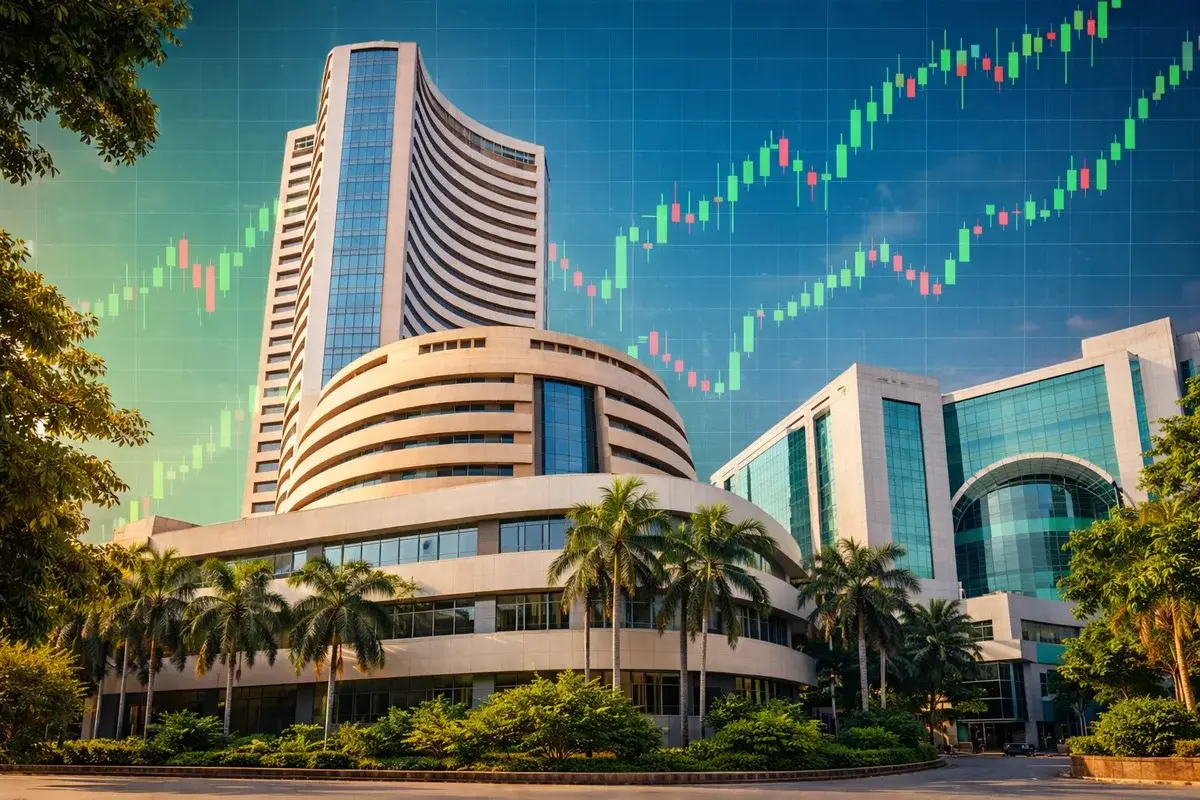
India's benchmark indices Sensex and Nifty staged a robust recovery in March 2026, gaining significantly despite ongoing geopolitical tensions.

Indian refinery stocks, including Reliance, MRPL, and CPCL, surge up to 5% after China reportedly suspends diesel and gasoline exports amidst...
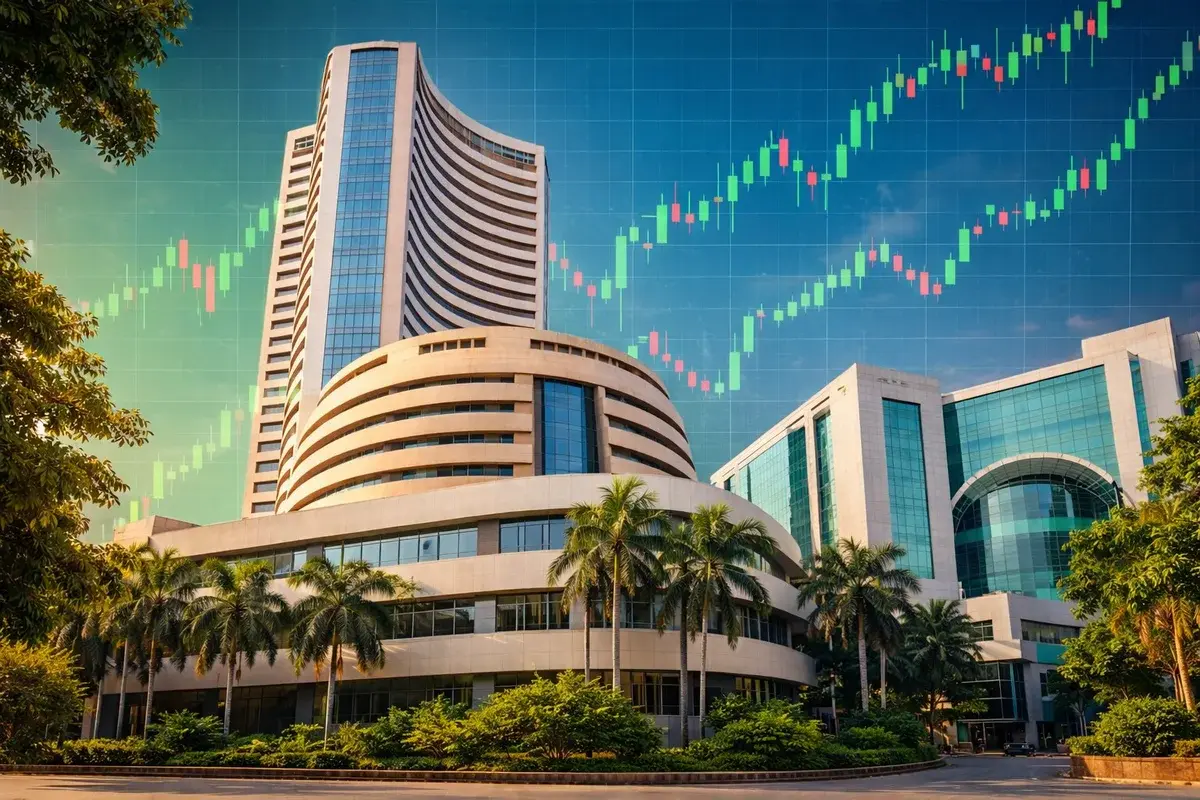
Indian markets surged in March 2026, with Sensex and Nifty rebounding on de-escalation hopes in the Middle East.

Morgan Stanley cuts 2,500 jobs across investment banking, wealth management, and trading. Despite strong financials, this strategic move signals a...
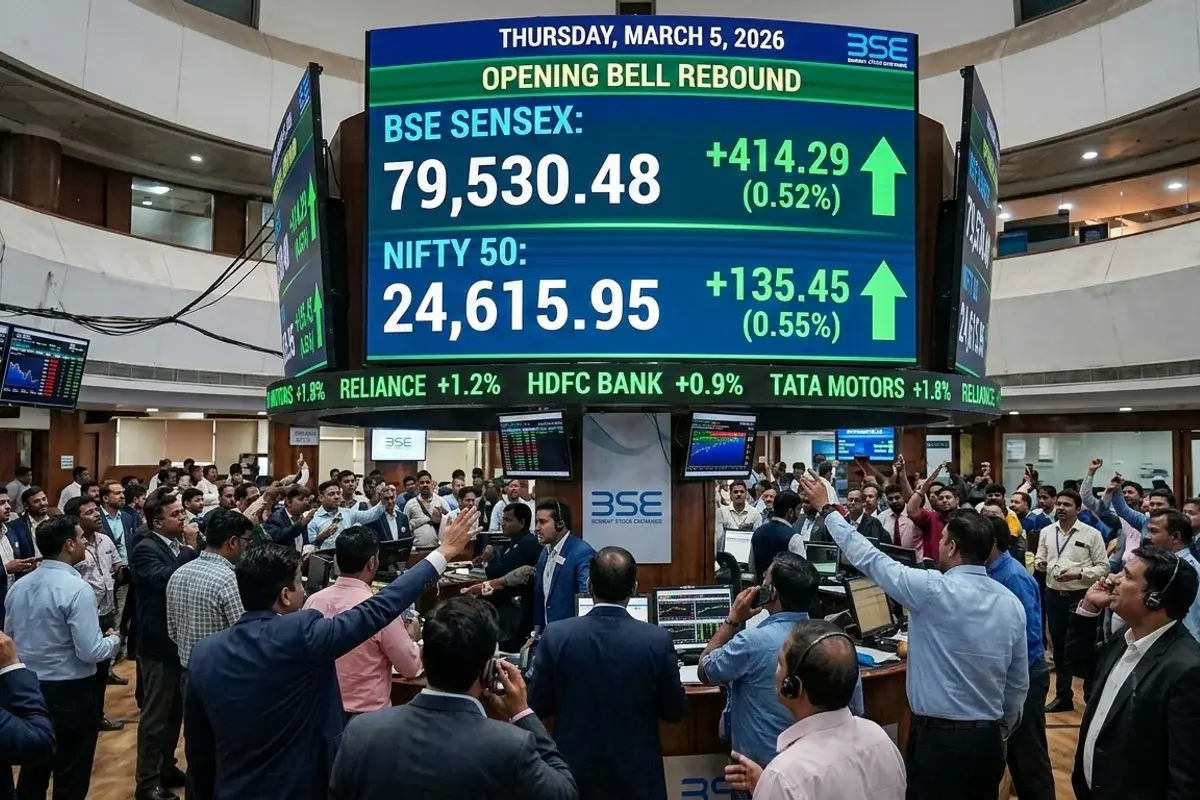
Indian stock markets witnessed a strong rebound on March 5, 2026, with Nifty 50 and Sensex surging.