Loading market data...
KTM AG repays €450M loan to Bajaj Auto's unit, completing restructuring. FinScann analyzes the financial impact on Bajaj Auto, Pierer Mobility, and Indian investors.
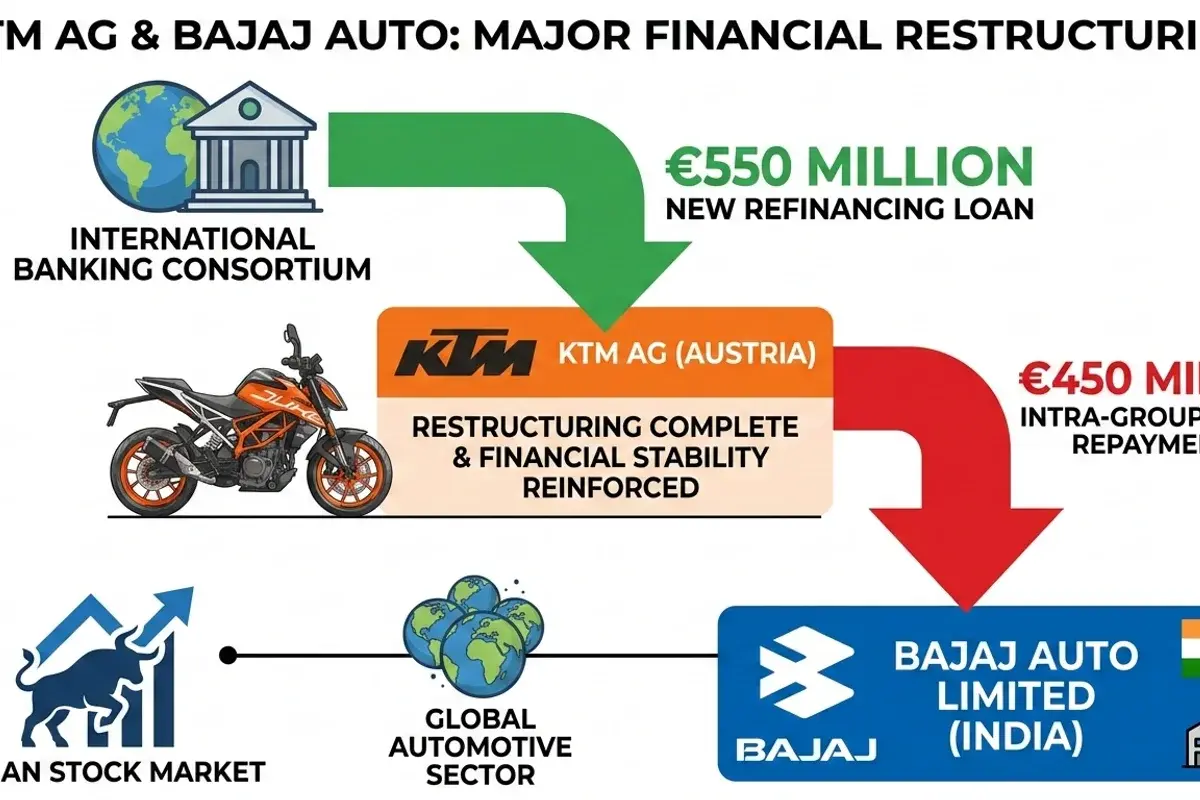
In a significant financial development impacting the global automotive sector and the Indian stock market, KTM AG, a step-down subsidiary of Bajaj Auto Limited through Bajaj Mobility AG, has successfully repaid an intra-group loan of €450 million (approximately ₹4,831.2 crores at an exchange rate of €1 = ₹107.36). This pivotal repayment follows KTM AG securing a new €550 million (approximately ₹5,904.8 crores) unsecured refinancing loan from an international banking consortium. The move marks the completion of KTM AG's extensive restructuring measures and reinforces confidence in its long-term financial stability, with direct implications for Bajaj Auto and your investment strategy.
The Catalyst
KTM AG, a prominent European motorcycle manufacturer, faced severe liquidity stress and operational disruptions in late 2024, leading it to initiate comprehensive restructuring proceedings. To avert potential insolvency, Bajaj Auto International Holdings B.V., a wholly-owned subsidiary of Bajaj Auto, stepped in with crucial financial support in May 2025, extending a €450 million secured term loan to KTM AG. This intra-group financing was instrumental in allowing KTM AG to meet its restructuring plan obligations and continue operations.
Financial Forensics
The latest development sees KTM AG successfully securing a €550 million unsecured, five-year refinancing loan from a consortium of leading international banks, including J.P. Morgan SE, HSBC, DBS Bank Limited, and MUFG Bank Ltd. This new facility, with favourable low to mid-single-digit interest rates, has been explicitly used to repay the earlier €450 million intra-group loan to Bajaj Auto International Holdings B.V.
For Bajaj Auto, this repayment translates into a significant inflow of capital, bolstering its balance sheet and liquidity position. The approximate ₹4,831.2 crore return provides the Indian automotive giant with enhanced financial flexibility, which could be channelled into strategic investments, research and development, or potentially shareholder returns. The successful refinancing by an external banking consortium also signals improved confidence in KTM AG's standalone financial health, reducing its reliance on intra-group funding.
Bajaj Auto's Financial Snapshot (Illustrative)
| Metric | Pre-Repayment (Estimate) | Post-Repayment (Estimate) | Change |
|---|---|---|---|
| Cash & Equivalents (₹ Crores) | X | X + 4,831.2 | Substantial Increase |
| Intra-Group Loans (₹ Crores) | 4,831.2 (Asset) | 0 (Asset) | Repaid and Eliminated |
| Debt Profile | Strong | Stronger | Reduced Intra-Group Risk |
Note: Figures are illustrative based on the loan amount and conversion. Actual impact would depend on Bajaj Auto's overall financial position.
Market Impact
On February 27, 2026, the day of the disclosure, Bajaj Auto's share price was observed trading down by 1.21% at ₹9,988.00 on the NSE as of 11:26 AM IST. While the immediate market reaction showed a slight dip, possibly due to broader market dynamics or profit-taking, the long-term implications are generally positive. The successful refinancing and repayment remove a significant intra-group financial commitment for Bajaj Auto, de-risking its international operations and potentially enhancing investor confidence.
The broader Indian equity market has witnessed volatility in early March 2026, with the Nifty 50 trading around ₹24,590.35 (up 0.45% on March 5, 2026) and the Sensex closing at 80,015.90 (up 1.14% on March 5, 2026). While the auto sector faced headwinds recently due to concerns over rising crude prices and potential demand slowdowns, it has also shown signs of rebound. This specific news for Bajaj Auto provides a company-specific positive catalyst within this fluctuating environment.
Key Takeaways for Investors
FinScann Verdict
The successful €450 million loan repayment by KTM AG to a Bajaj Auto unit marks a definitive positive turning point, solidifying KTM's restructured financial footing and injecting substantial liquidity back into Bajaj Auto. This move, facilitated by a €550 million refinancing, underscores the strategic foresight of Bajaj Auto's management and strengthens the long-term investment thesis for the Indian two-wheeler major. Investors should view this as a clear signal of improved stability and operational efficiency within the broader Bajaj Mobility Group.
Moat Analysis: Bajaj Auto's Strategic Grip on Premium Motorcycles
A "moat" refers to a company's sustainable competitive advantage, protecting its long-term profits and market share. Bajaj Auto's relationship with KTM AG, now under the umbrella of Bajaj Mobility AG, provides a significant strategic moat. As a majority stakeholder (indirectly controlling 74.9% of Bajaj Mobility AG as of November 2025), Bajaj Auto gains deep access to the premium motorcycle segment, advanced R&D, and global distribution networks. This "Investment Play" leverages KTM's engineering prowess and strong brand appeal, particularly in high-performance and off-road motorcycles, while Bajaj contributes its manufacturing scale, cost efficiencies, and expertise in emerging markets. This synergy allows Bajaj Auto to diversify its portfolio beyond its core mass-market offerings, tap into higher-margin segments, and compete effectively on a global stage, insulating it from purely domestic market fluctuations.
Q: What is the significance of this loan repayment for Bajaj Auto? A: The repayment of the €450 million (approximately ₹4,831.2 crores) intra-group loan significantly boosts Bajaj Auto's liquidity and strengthens its balance sheet. It also reduces Bajaj Auto's direct financial exposure to KTM AG, indicating a healthier, more independent financial structure for KTM.
Q: How does KTM AG's refinancing impact its future operations? A: By securing a €550 million unsecured loan from international banks, KTM AG completes its restructuring process, establishes a stronger, long-term financial foundation, and gains stability and flexibility for future growth. This is crucial as KTM AG has shown improved operational performance, with retail sales up 60% in the second half of 2025.
Q: Is Bajaj Auto now the majority owner of KTM AG? A: Yes, Bajaj Auto, through its subsidiary Bajaj Auto International Holdings B.V., indirectly holds a controlling 74.9% interest in Bajaj Mobility AG (formerly Pierer Mobility AG), which is the parent company of KTM AG. This majority control was finalized around November 2025.
Q: What has been the recent performance of KTM AG? A: After a challenging first half of 2025, KTM AG's operational performance showed clear improvement in the second half of the year. Global retail sales increased by approximately 60% compared to H1 2025, wholesale deliveries stabilised, and inventory levels were reduced by over 100,000 units.
Q: How has the Indian stock market reacted to this news? A: While Bajaj Auto's stock saw a slight dip on the day of the disclosure (down 1.21% on February 27, 2026), the broader Nifty 50 and Sensex have shown resilience and some rebound in early March 2026 amidst overall market volatility. The news is generally viewed as a positive de-risking event for Bajaj Auto.
Disclaimer: For information only; not investment advice. Stock market investments carry risks. Please consult a SEBI-registered advisor before investing. FinScann assumes no liability for decisions made based on this report.

Financial journalist specializing in market analysis, stock research, and investment trends. Dedicated to providing accurate, timely insights for informed decision-making.
Credentials: Experienced financial journalist with expertise in equity markets and economic analysis
The information provided in this article is for educational and informational purposes only and should not be construed as financial, investment, or legal advice. Finscann does not provide personalized investment recommendations.
For detailed terms and conditions, please read our Disclaimer and Terms of Service.

Tata Elxsi launches DevStudio.ai, an ASPICE-aligned GenAI platform, poised to accelerate automotive software engineering and enhance productivity for...

Waaree Energies bags a significant 300 MW wind power project in Gujarat, marking a strategic expansion and contributing to India's ambitious...
“ABCL is entering a structurally stronger earnings phase, supported by synchronized momentum across lending, AMC, and insurance.
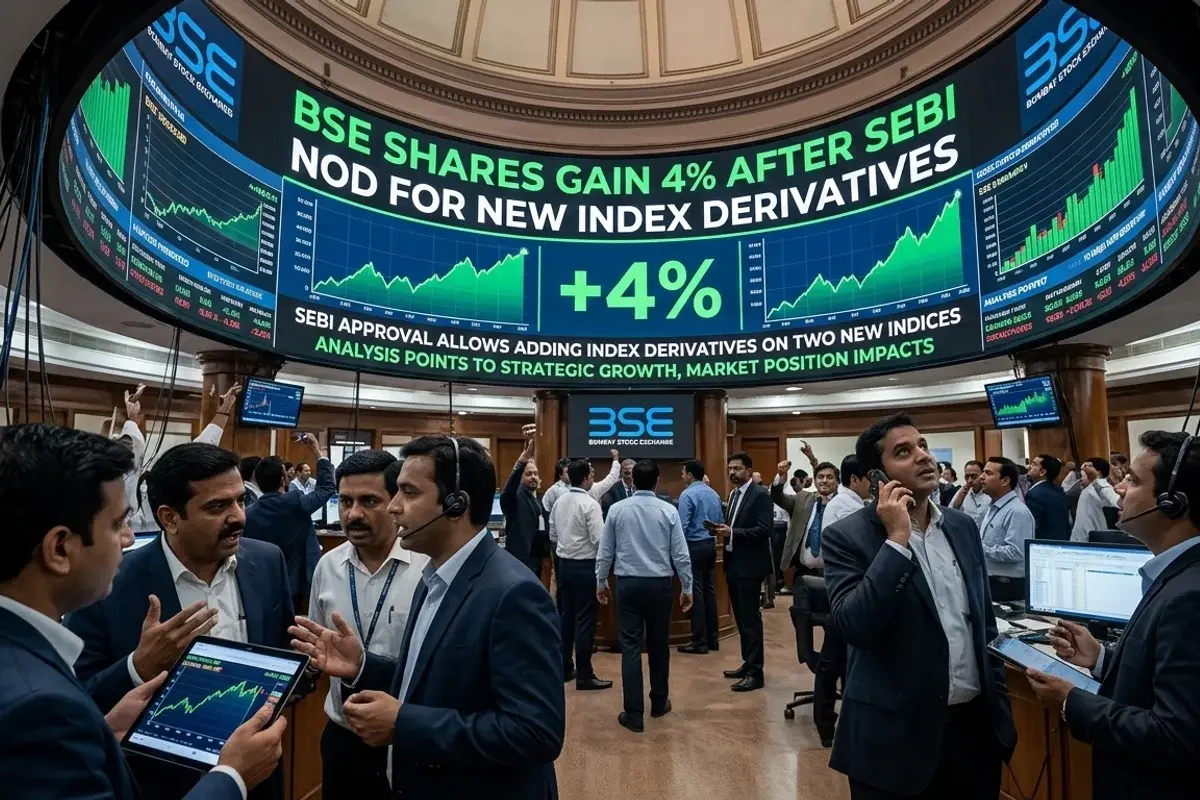
BSE shares surge over 4% after SEBI's critical nod for Sensex Next 30 index derivatives, bolstering its market position and revenue potential.
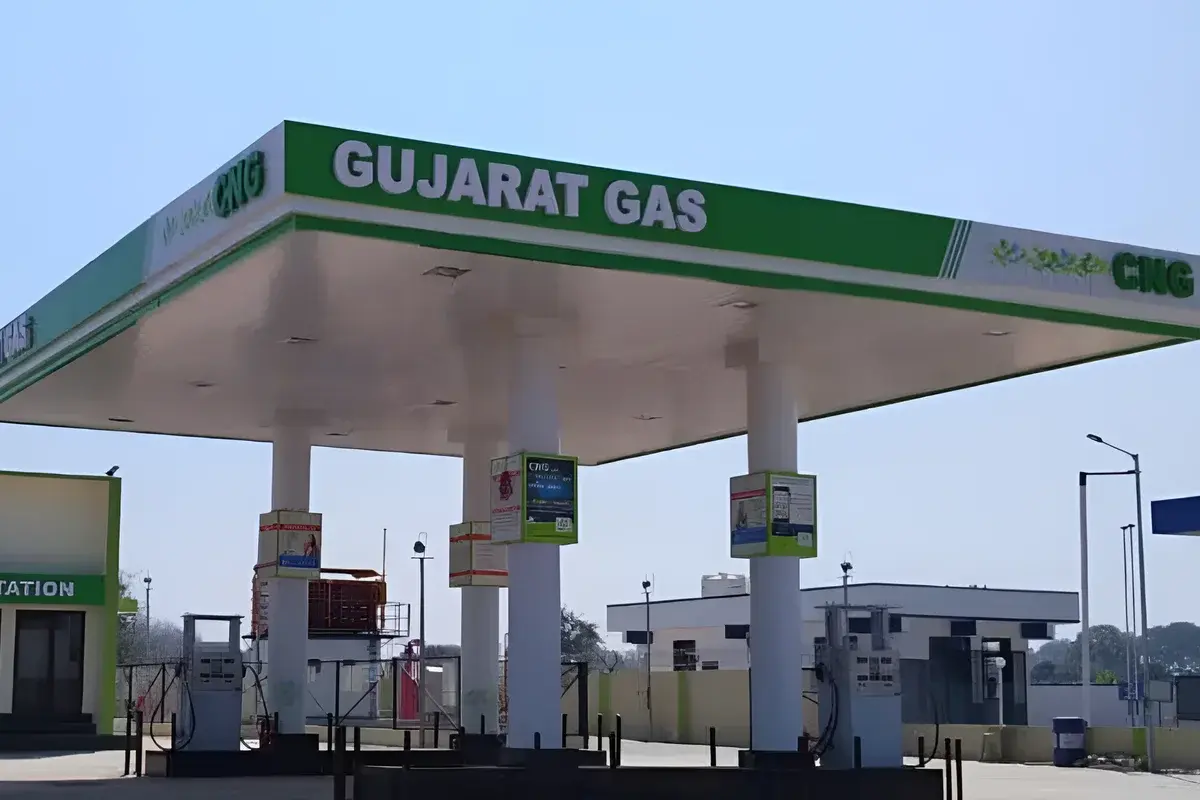
Gujarat Gas shares plunge nearly 7% as Middle East conflict disrupts R-LNG supply, forcing force majeure.