Loading market data...
Indian equity markets consolidated near record highs on February 18, 2026, as banking, infrastructure, and defensive stocks supported the indices. The Nifty hovered around 25,800 while midcaps saw profit booking after a strong rally. Domestic liquidity from institutional investors helped cushion the downside despite global uncertainty. Sector rotation remained the key theme, with leadership shifting toward banks, power, and capital goods.
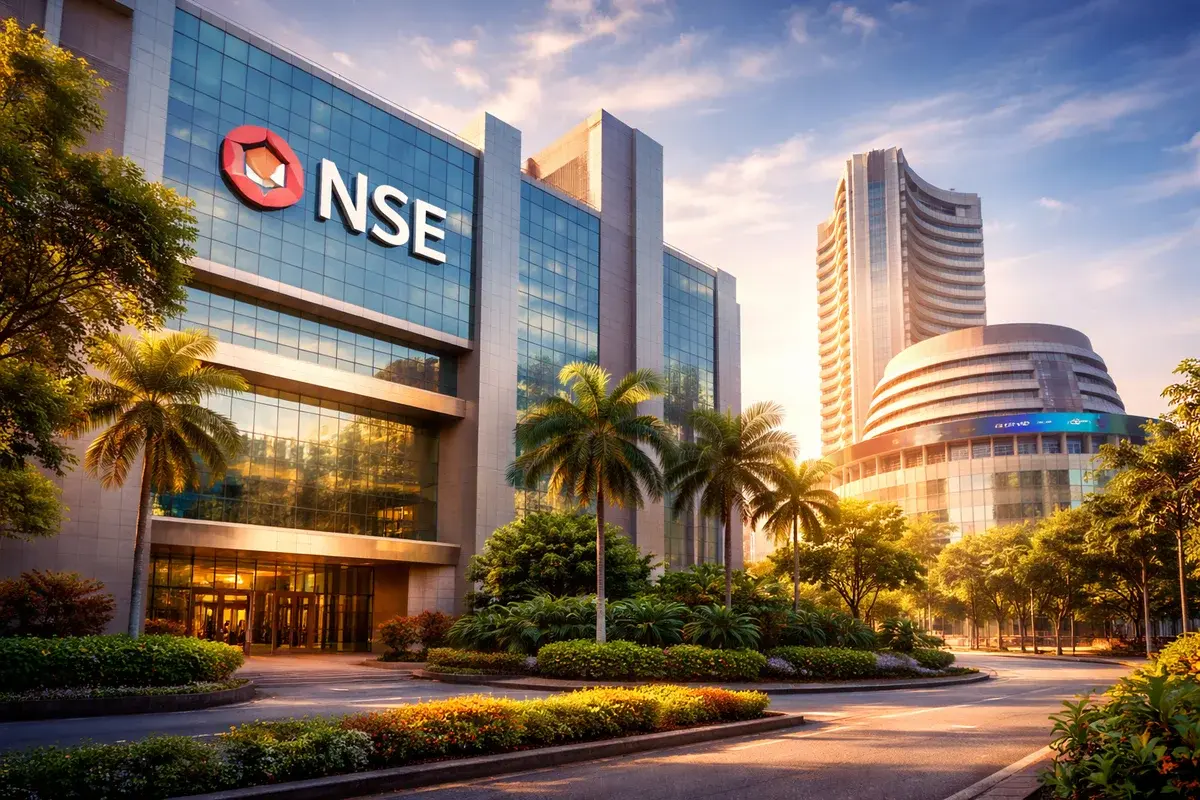
Indian equity markets closed in a narrow range on 18 February 2026, with the Nifty 50 hovering near lifetime highs and the BSE Sensex ending modestly higher. Banking, infrastructure, and defensive stocks supported the indices, while IT, metals, and overheated midcaps saw profit booking. The session reflected a shift from broad-based rallies to selective, sector-driven accumulation.
Indian stock markets are entering a mature phase of the ongoing bull cycle, where sector rotation is replacing broad-based rallies. After a strong run in midcaps and growth stocks, the market is now witnessing capital moving into banking, capital goods, power, and defensive sectors.
On Wednesday, the benchmark indices showed limited movement, reflecting profit booking in extended pockets and selective accumulation in quality large caps.
| Index | Closing Level | Trend |
|---|---|---|
| Nifty 50 | 25,819 | Consolidation near highs |
| BSE Sensex | Slightly higher | Supported by financials |
| Bank Nifty | Outperformed | Led by private banks |
| Midcaps | Mixed | Profit booking visible |
| Small Caps | Selective weakness | Liquidity-driven correction |
| India VIX | Subdued | Stable sentiment |
Markets remain structurally bullish but are transitioning into a stock-specific and sector-specific rally.
| Factor | Observation |
|---|---|
| Index trend | Sideways near highs |
| Liquidity | Strong domestic inflows |
| Sector leadership | Banking, infra, defensives |
| Market breadth | Narrowing |
| Volatility | Low but stable |
Sentiment shift: From aggressive buying → selective, quality-focused accumulation.
| Sector | Reason |
|---|---|
| IT stocks | Global tech weakness |
| Metals | China demand concerns |
| Midcaps | Profit booking after rally |
| Export sectors | Strong USD impact |
Major IT exporters like
| Sector | Key reason |
|---|---|
| Private banks | Strong credit growth outlook |
| PSU banks | Value buying |
| Pharma | Defensive inflows |
| FMCG | Safe-haven demand |
| Infra & capital goods | Capex visibility |
Key sector leaders include:
| Sector | Trend |
|---|---|
| Banking & financials | Leadership intact |
| Capital goods | Structural uptrend |
| Power & utilities | Continued momentum |
| Pharma | Defensive buying |
| FMCG | Safe-haven demand |
| Sector | Reason |
|---|---|
| IT | Global tech volatility |
| Metals | Commodity price uncertainty |
| Midcaps | Valuation-driven profit booking |
| Indicator | Reading |
|---|---|
| Primary trend | Bullish |
| Near-term trend | Sideways consolidation |
| RSI | Cooling from overbought levels |
| Moving averages | Price above key averages |
| Options data | Resistance at 26,000 |
| Level Type | Price Zone |
|---|---|
| Immediate support | 25,650 |
| Critical support | 25,500 |
| Breakdown zone | 25,000–24,800 |
| Near-term resistance | 26,000 |
| Breakout zone | 26,250+ |
| Investor Type | Activity |
|---|---|
| FIIs | Tactical selling |
| DIIs | Consistent buying |
| Retail SIP flows | Strong and stable |
Domestic institutions and SIP inflows remain the primary market stabilizers.
| Asset | Trend | Market Impact |
|---|---|---|
| INR | Slight weakness | Exporters benefit |
| Crude oil | Elevated | Risk for OMC margins |
| Gold | Firm | Safe-haven demand |
| Industrial metals | Volatile | Pressure on metal stocks |
| Segment | Trend |
|---|---|
| Large caps | Driving index stability |
| Midcaps | Signs of exhaustion |
| Small caps | Selective corrections |
This indicates a late-stage rally environment where leadership becomes concentrated.
India’s structural bull thesis remains intact due to:
| Driver | Impact |
|---|---|
| Domestic SIP inflows | Market stability |
| Manufacturing push | Capex growth |
| Banking sector strength | Credit expansion |
| China+1 shift | Export opportunities |
| Infrastructure spending | Earnings visibility |
| Range | Strategy |
|---|---|
| 25,500 – 26,300 | Buy quality stocks on dips |
| Trigger | Outcome |
|---|---|
| Break above 26,000 | Move toward 26,500+ |
Action
| Trigger | Outcome |
|---|---|
| Break below 25,500 | Fall toward 24,800–25,000 |
Action
| Allocation | Strategy |
|---|---|
| 70–80% equities | Large caps & leaders |
| 10–20% cash | For corrections |
| Select midcaps | Only strong fundamentals |
Investors can trade or invest via:
The Indian stock market remains in a structurally bullish phase, supported by strong domestic liquidity, banking sector strength, and infrastructure growth.
However, the rally is entering a selective, leadership-driven stage, where:
For investors, this is a market where quality, sector leadership, and disciplined accumulation will determine returns.
⚠️ DISCLAIMER: We Are Not Financial Advisors This article is for informational purposes only. Stock market investments carry risks. Please consult a SEBI-registered financial advisor before making investment decisions.

Financial journalist specializing in market analysis, stock research, and investment trends. Dedicated to providing accurate, timely insights for informed decision-making.
Credentials: Experienced financial journalist with expertise in equity markets and economic analysis
The information provided in this article is for educational and informational purposes only and should not be construed as financial, investment, or legal advice. Finscann does not provide personalized investment recommendations.
For detailed terms and conditions, please read our Disclaimer and Terms of Service.

Indian stock market plunges on Feb 24, 2026, driven by IT sector fears and global trade tensions.

AgniKul Cosmos achieves a major milestone by test-firing three 3D-printed semi-cryogenic rocket engines simultaneously.
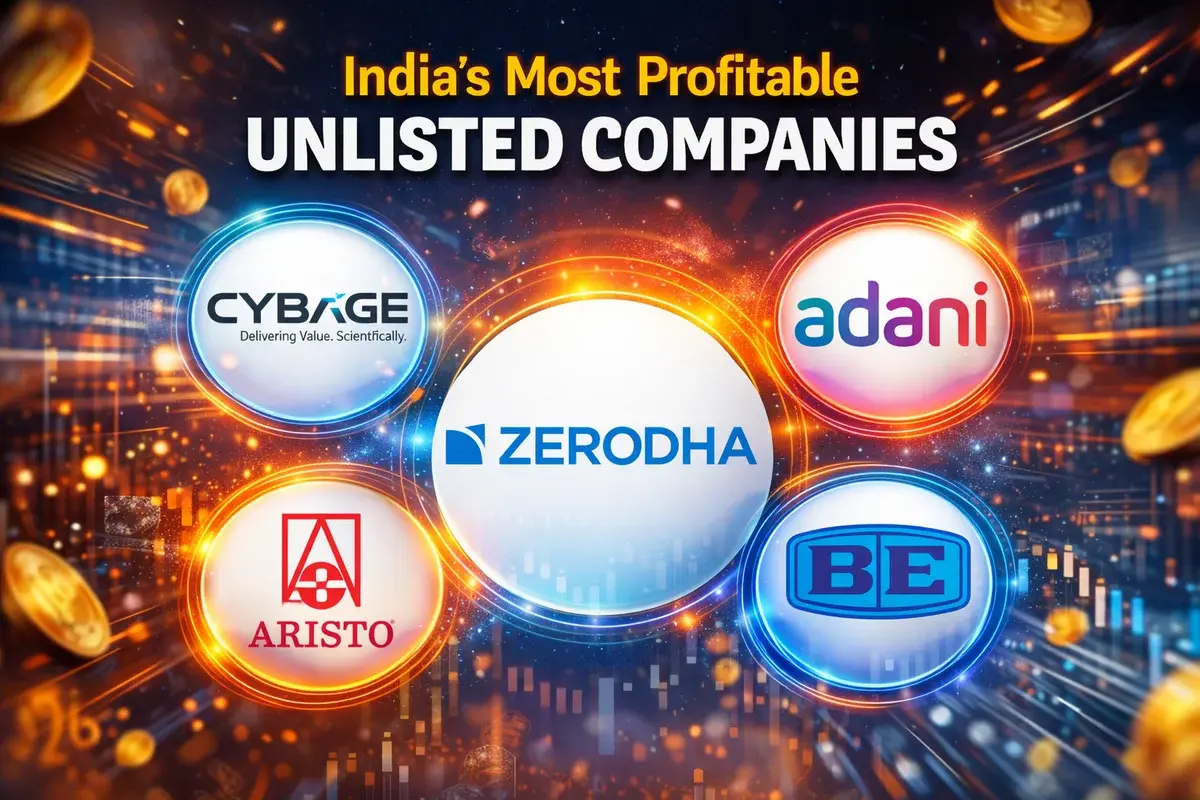
India’s most profitable unlisted companies in 2025 revealed. A leading fintech firm tops the list with a 48% net profit margin and ₹4,235 crore...

Indian stock market crashes as Sensex plunges 1,300 points and ₹6.3 lakh crore in investor wealth evaporates.
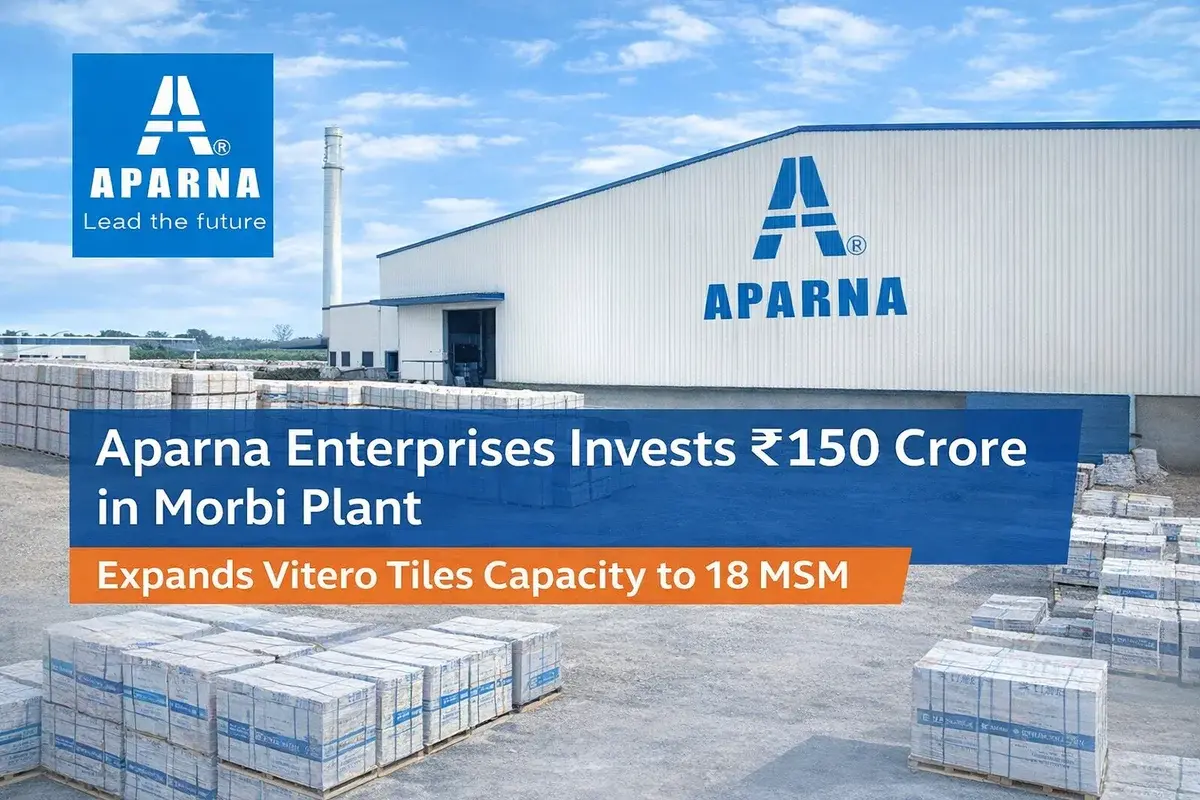
Aparna Enterprises invests ₹150 crore in a new Morbi tile manufacturing plant, boosting Vitero Tiles’ total capacity to 18 MSM.