Loading market data...
FinScann analysis reveals 6 critical factors behind the ₹3 lakh crore Indian market selloff today. Sensex plunged over 800 pts, Nifty below 25,550. Get expert insights.
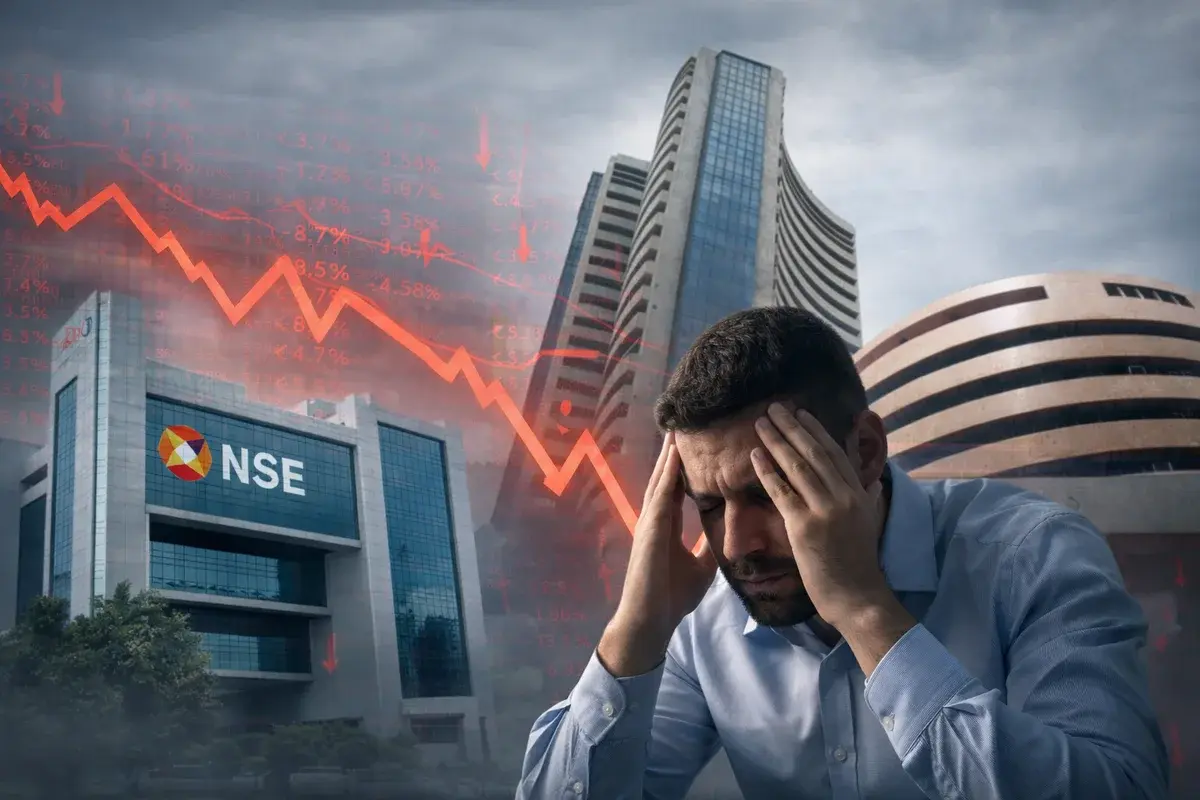
Indian benchmark indices, the Nifty 50 and BSE Sensex, witnessed a sharp decline on Tuesday, February 24, 2026, leading to a massive ₹2.94 lakh crore erosion in investor wealth. The Sensex cracked over 800 points to an intraday low of 82,451, while the Nifty 50 dropped over 150 points, slipping below the crucial 25,550 level. This significant market downturn, driven primarily by heavy selling in IT and auto stocks, has sparked widespread concern among investors across India.
The Catalyst
Several interwoven factors, both domestic and global, converged to create the current market volatility on February 24, 2026. FinScann identifies six major catalysts behind this sharp decline:
Financial Forensics
The market saw a substantial loss in investor wealth, indicating broad-based selling pressure across segments. The total BSE market capitalization plummeted to approximately ₹466 lakh crore from ₹469 lakh crore.
Key Index Movements & IT Sector Performance (February 24, 2026)
| Index/Stock | Movement | Key Level/Percentage Change |
|---|---|---|
| BSE Sensex | Down | 800+ points to 82,451 |
| Nifty 50 | Down | 150+ points to below 25,550 |
| BSE Market Cap | Decline | ₹2.94 lakh crore wiped out; total around ₹466 lakh crore |
| Nifty IT Index | Down | Over 2% to 30,849.05 (some reports indicate nearly 4% intraday) |
| Infosys | Declined | Nearly 3% |
| HCL Technologies | Declined | More than 2% |
| Mphasis | Declined | More than 2% |
| Persistent Systems | Declined | More than 2% |
| TCS, Tech Mahindra, Wipro | Declined | Around 2% each |
| Indian Rupee | Weakened | ₹90.95 against US dollar |
The IT sector has been under pressure, with the Nifty IT index having slid close to 20% so far in February 2026, influenced by AI-driven business disruptions and high US interest rates. Other broader market indices like Nifty Smallcap 250 and Nifty Midcap 150 also traded with cuts, indicating a wide-ranging impact of the negative sentiment.
Market Impact
The sharp selloff signifies a significant shift in investor sentiment, moving from risk-on to cautious and defensive. The confluence of global trade uncertainties, a revolutionary technological shift impacting the IT sector, and geopolitical tensions created an environment ripe for profit-booking and heightened volatility. This market correction highlights the interconnectedness of global financial systems and how international events swiftly ripple through Indian equities. The auto sector also saw a decline, indicating broad-based concerns beyond just IT.
Key Takeaways for Investors
FinScann Verdict
The ₹3 lakh crore selloff on February 24, 2026, underscores the fragility of market sentiment in the face of multiple global and technological headwinds. While the immediate trigger points are clear, FinScann believes this correction serves as a crucial reminder for investors to prioritize robust risk management, strategic diversification, and a deep understanding of evolving technological and geopolitical landscapes. The market's ability to rebound will depend heavily on the clarity emerging from US trade policies and the IT sector's adaptation to AI-driven disruption.
Q: What were the primary drivers of the stock market fall on February 24, 2026? A: The primary drivers included renewed fears of AI disrupting legacy IT systems, former US President Donald Trump's threats of new global tariffs, an overnight selloff in US tech stocks that impacted Asian markets, volatility surrounding the weekly Nifty 50 derivatives expiry, a weakening Indian Rupee, and escalating geopolitical tensions between the US and Iran.
Q: How does the AI impact on COBOL systems affect Indian IT stocks? A: AI tools like Anthropic's Claude Code are designed to automate and modernize legacy COBOL systems more efficiently and cost-effectively. Since many Indian IT companies generate significant revenue from maintaining and modernizing such systems for global clients, this advancement threatens their traditional business models by potentially reducing the demand for human-led consulting and services. This concern led to sharp declines in major Indian IT stocks.
Q: What is the significance of the weekly Nifty 50 expiry for market volatility? A: The weekly expiry of Nifty 50 derivatives, typically on Tuesdays, introduces heightened volatility as traders adjust or close out their futures and options positions. This squaring off of large options positions and fresh hedging activity can lead to larger-than-usual price swings in the underlying index, amplifying any existing selling pressure or market uncertainty.
Q: How do geopolitical tensions in the Middle East influence Indian equities? A: Geopolitical tensions, such as those between the US and Iran, can influence Indian equities through several channels. They often lead to a rise in global crude oil prices, which directly impacts India's import bill and can fuel domestic inflation, squeezing corporate margins and consumer spending. Heightened global uncertainty also tends to trigger a flight to safety, leading to foreign capital outflows from emerging markets like India, putting pressure on the Rupee and stock markets.
Disclaimer: For information only; not investment advice. Stock market investments carry risks. Please consult a SEBI-registered advisor before investing. FinScann assumes no liability for decisions made based on this report.

Financial journalist specializing in market analysis, stock research, and investment trends. Dedicated to providing accurate, timely insights for informed decision-making.
Credentials: Experienced financial journalist with expertise in equity markets and economic analysis
The information provided in this article is for educational and informational purposes only and should not be construed as financial, investment, or legal advice. Finscann does not provide personalized investment recommendations.
For detailed terms and conditions, please read our Disclaimer and Terms of Service.
Apple's gearing up for a significant shift in its laptop lineup with the anticipated launch of its first touch-enabled MacBook Pro series, expected...
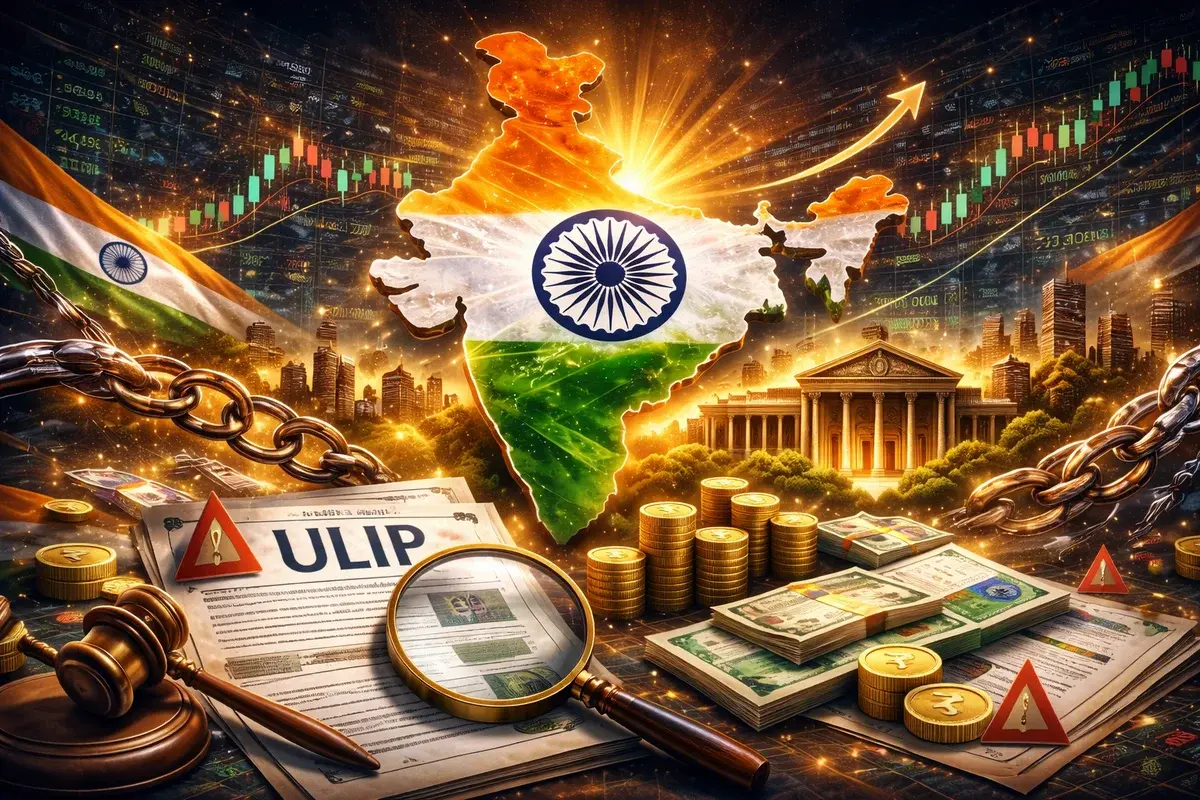
RBI’s February 2026 draft norms impose 100% refund liability, ban kickbacks, and tighten suitability rules to curb ULIP mis-selling.

Discover why Indian markets are surging, with Sensex gaining 500 points, even as the IT sector faces headwinds.
Indian IT majors Infosys and TCS lead a strong rebound, jumping up to 5% in February 2026 after a five-day rout fueled by AI disruption fears.
Stock market preview for February 25, 2026: Key stocks to watch including TechSolutions India, Bharat Bank, and GreenEnergy Manufacturers.