Loading market data...
Rising tensions between the United States and Iran have intensified volatility in global crude oil markets. With Brent and WTI trading near key levels, investors are assessing the risk of Strait of Hormuz disruptions and potential supply shocks. This detailed analysis explores three conflict scenarios, projected 10-day price ranges, OPEC response risks, and key market signals to monitor, offering a structured outlook for traders, policymakers and energy investors.
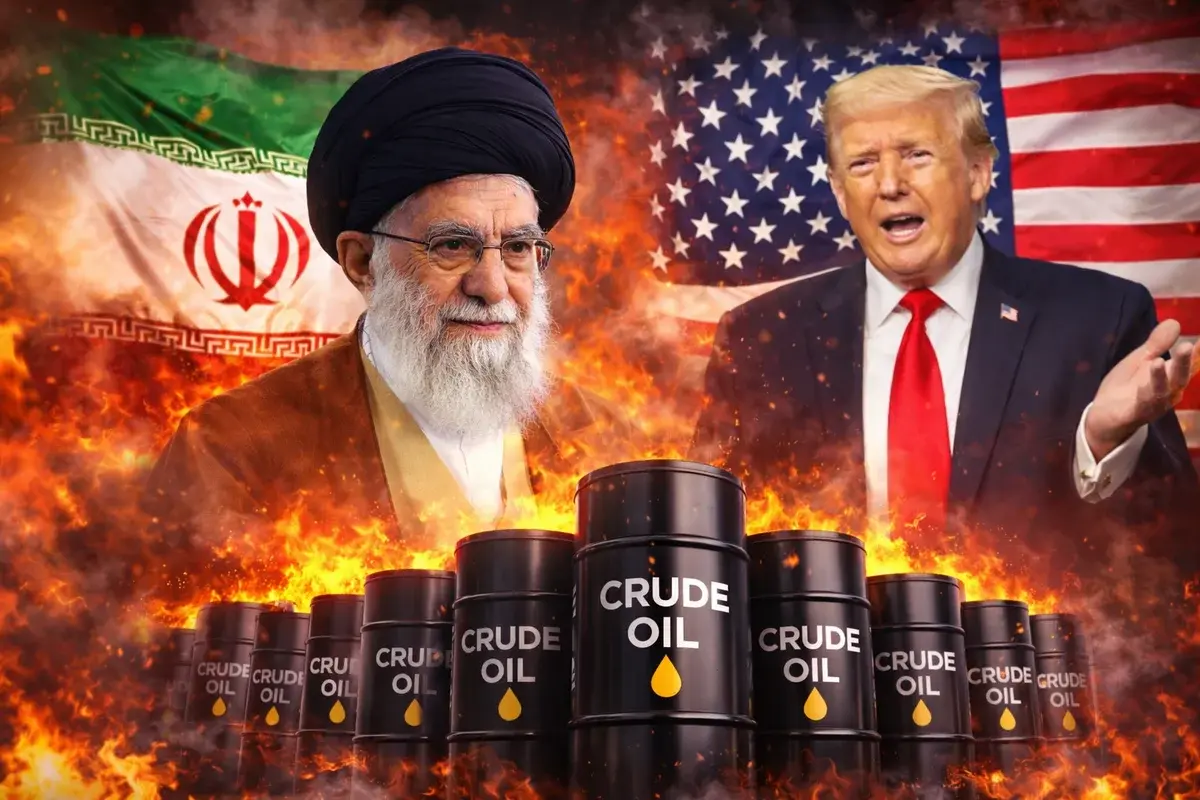
Global crude oil markets are entering a high-volatility phase as geopolitical tensions between the United States and Iran intensify. With Brent crude trading near $71–72 per barrel and WTI around $66–67 per barrel, investors are closely watching potential disruptions in the Strait of Hormuz — a chokepoint that handles nearly 20% of global oil trade.
This detailed analysis explores how crude oil prices could react in the next 10 days under different conflict scenarios, using historical analogues, supply-demand fundamentals, and current market structure.
| Indicator | Latest Market Reference |
|---|---|
| Brent Crude | ~$71.6 per barrel |
| WTI Crude | ~$66.4 per barrel |
| Global Demand Growth (2026) | ~+0.85 mb/d |
| U.S. Crude Inventory (recent weekly move) | -9 million barrels |
Market data references include Reuters, IEA, and EIA.
According to the International Energy Agency, approximately 20% of global seaborne oil passes through the Strait of Hormuz. Any disruption would immediately tighten global supply chains.
Attacks on export terminals, refineries, or pipelines could remove millions of barrels per day from global markets.
War-risk premiums and tanker rerouting significantly increase delivered crude cost even if physical volumes remain unchanged.
The U.S. Energy Information Administration and OPEC+ coordination could release emergency barrels to stabilize markets.
Assumption: Short-lived air strikes, no sustained supply loss.
| Price Impact | Brent | WTI |
|---|---|---|
| Increase | +$5 to +$12 | +$4 to +$10 |
| 10-Day Range | $77–$84 | $70–$76 |
| Probability | ~45% |
Markets typically price a geopolitical risk premium quickly. Historical precedents suggest a $5–$10 spike without sustained physical disruption.
Assumption: Tanker attacks, partial shipping interruption for days/weeks.
| Price Impact | Brent | WTI |
|---|---|---|
| Increase | +$15 to +$30 | +$12 to +$25 |
| 10-Day Range | $87–$102 | $78–$91 |
| Probability | ~35% |
A 2–4 million barrel per day disruption is substantial relative to spare capacity.
Assumption: Sustained export corridor disruption (>4 mb/d loss).
| Price Impact | Brent | WTI |
|---|---|---|
| Increase | +$40 to +$80+ | +$30 to +$70+ |
| 10-Day Range | $110–$160+ | $95–$140+ |
| Probability | ~20% |
Historical modeling from Congressional Research Service and energy conflict data shows severe supply shocks can push prices into triple digits rapidly.
According to the IEA Oil Market Report:
| Indicator | Why It Matters |
|---|---|
| EIA Weekly Inventory Report | Draws signal tightening supply |
| Brent-WTI Spread | Indicates regional tightness |
| Tanker Flow Data (Kpler, Reuters) | Confirms actual shipping disruption |
| OPEC+ Statements | Signals potential offset production |
| U.S. Strategic Reserve Moves | Emergency stabilization measure |
Data can be monitored via EIA Weekly Report and commodity coverage on Reuters.
| Event | Price Reaction |
|---|---|
| Gulf War (1990) | +100% spike pre-intervention |
| Iran Sanctions Escalation | +15–30% short-term |
| Saudi Facility Attack (2019) | +14% single-day jump |
Markets react not only to supply loss but to perceived duration.
Higher crude oil prices feed directly into global CPI, especially in oil-importing nations.
Oil exporters (USD, CAD) strengthen; oil importers face trade deficit pressure.
Often within minutes. Futures markets price in geopolitical premium instantly.
Limited spare capacity exists, but coordination takes time.
Short-term stabilization possible, but sustained war would overwhelm reserves.
Under sustained >4 mb/d disruption, yes — historically plausible.
If tensions escalate into military conflict within the next 10 days:
Markets are forward-looking. Even rumors can trigger volatility spikes.

Financial journalist specializing in market analysis, stock research, and investment trends. Dedicated to providing accurate, timely insights for informed decision-making.
Credentials: Experienced financial journalist with expertise in equity markets and economic analysis
The information provided in this article is for educational and informational purposes only and should not be construed as financial, investment, or legal advice. Finscann does not provide personalized investment recommendations.
For detailed terms and conditions, please read our Disclaimer and Terms of Service.

Amid escalating US-Iran conflict and a full closure of the Strait of Hormuz, crude oil prices surge.

Explore the breaking financial impact of escalating US-Iran tensions on India's economy, crude oil, gold prices, and global markets in March 2026.

China suspends new fuel export contracts as global oil markets tighten due to Middle East tensions and shipping disruptions in the Strait of Hormuz.

Anthropic CEO Dario Amodei critiques OpenAI's Pentagon deal, labeling it deceptive. FinScann analyzes the implications for AI ethics, defense tech,...
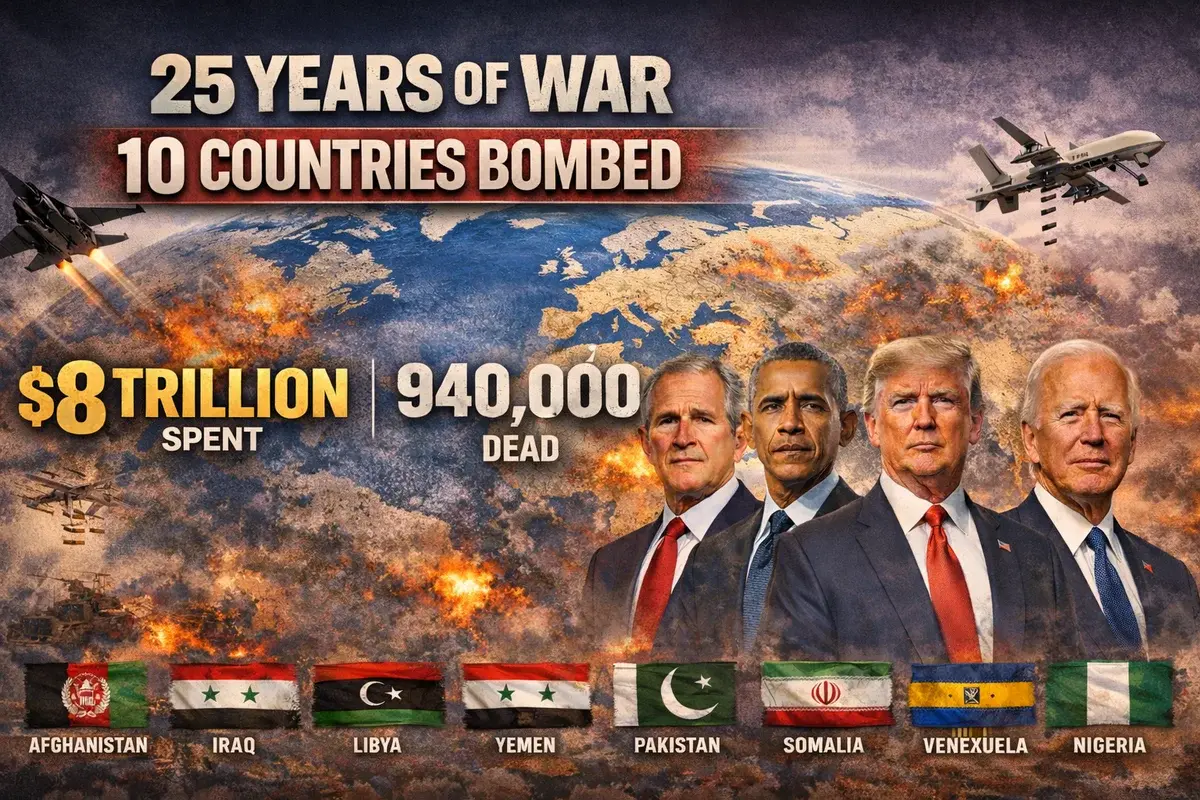
US's post-9/11 military engagements across 10+ countries, detailing the $8 trillion financial cost, human toll, and market impact.