Loading market data...
In a major geopolitical shift, President Trump and PM Modi have announced a "Geopolitical Realignment" deal that trades Indian energy independence for U.S. market access and high-tech partnership.
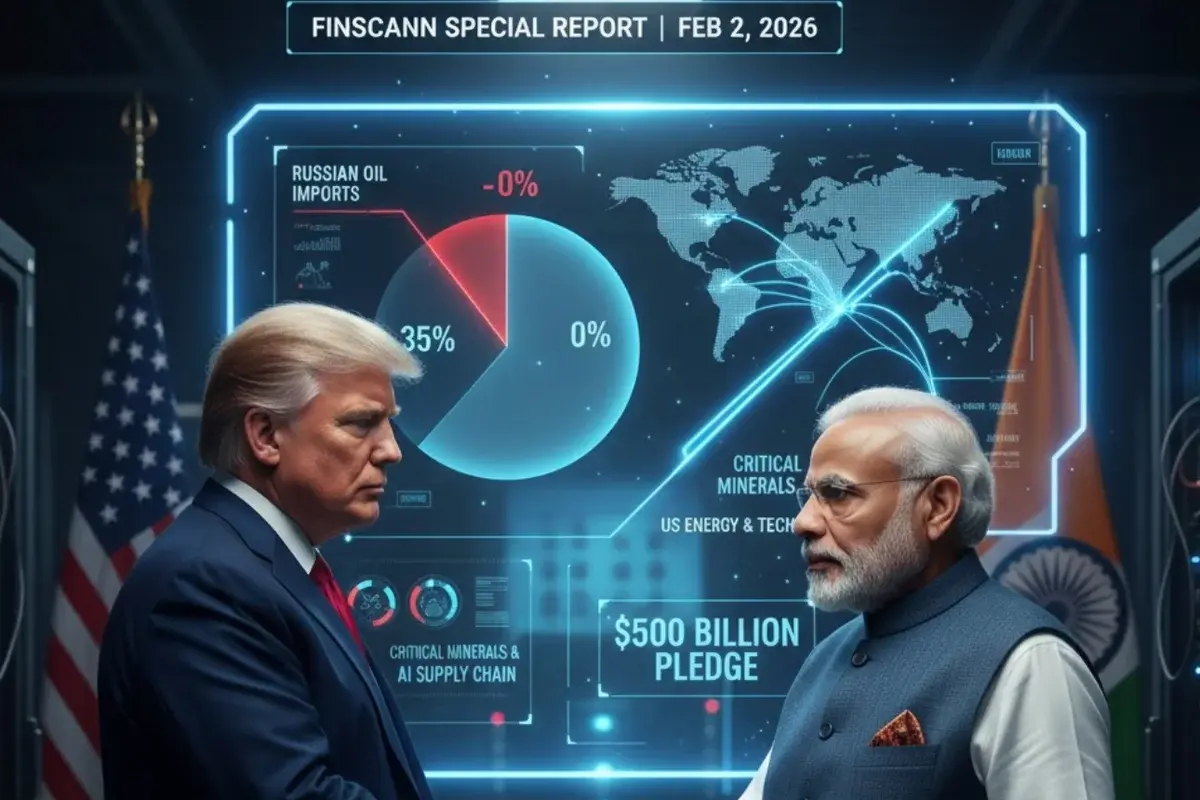
The Trump-Modi Breakthrough: How an 18% Tariff and a Russian Oil Pivot Just Rewrote India's Trade Playbook
FINSCANN SPECIAL REPORT | February 2, 2026
The Deal That Changes Everything
In a stunning diplomatic reversal that caught global markets off guard, President Donald Trump and Prime Minister Narendra Modi announced a comprehensive trade agreement Monday that immediately slashes U.S. tariffs on Indian goods from 25% to 18% — while extracting a strategic commitment from New Delhi to end purchases of Russian crude oil.
The breakthrough, finalized during a phone call between the two leaders this morning, represents far more than a trade truce. It's a geopolitical realignment that links India's energy security to American strategic interests, positions New Delhi as a critical minerals partner in the AI race, and fundamentally reshapes the Indo-Pacific economic architecture.
The headline numbers:
As External Affairs Minister S. Jaishankar touches down in Washington for the inaugural Critical Minerals Ministerial with Secretary of State Marco Rubio, the timing couldn't be more calculated. This isn't just about textiles and tariffs — it's about semiconductors, rare earths, and who controls the supply chains that will power the next decade of technological competition with China.
Breaking Down the Numbers: What India Gave Up — and What It Gained
The Tariff Math
Let's be precise about what changed today. Prior to this agreement, Indian exporters faced a punishing 50% effective tariff structure:
Trump's announcement reduces the baseline to 18%, removing the secondary penalty entirely — a 32-percentage-point reduction that immediately makes Indian goods competitive again in the U.S. market.
For context: Before Trump's tariff war, India exported $87 billion in goods to the U.S. annually. The 50% tariff regime crushed key sectors:
The textile city of Tiruppur alone saw 100,000-200,000 jobs at risk. The 18% tariff, while still elevated, restores a degree of viability — especially when compared to the 10-12% tariffs competitors like Bangladesh and Vietnam enjoy under EU arrangements.
The Russian Oil Sacrifice
This is the concession that will reshape global energy flows. India became Russia's largest crude customer after the Ukraine invasion, importing Russian oil that peaked at 50% of total crude imports by 2025. The numbers are staggering:
India's Russian Oil Dependence (2022-2025):
The strategic logic was simple: Russian Urals crude traded at $15-20 discounts to Brent, allowing Indian refiners to import cheaply, refine into petroleum products, and export to Europe and Asia — generating both energy security and export revenues.
Now that calculation changes dramatically. By committing to halt Russian purchases, India must replace roughly 1.8 million barrels per day with more expensive alternatives:
The cost? India's crude import bill will rise significantly. U.S. crude trades near global benchmarks without the Russian discount. This is a multi-billion-dollar annual cost that India is absorbing for market access.
The Hidden Architecture: Critical Minerals, Semiconductors, and China Containment
While headlines focus on tariffs and oil, the strategic prize is what's happening this week in Washington with Jaishankar's visit. The Critical Minerals Ministerial on February 4 is where the real long-term alignment gets formalized.
The Pax Silica Connection
The U.S. recently launched "Pax Silica" — its flagship program for AI supply chain security and semiconductor ecosystem resilience. India's inclusion (confirmed by Ambassador Sergio Gor in January) positions New Delhi as a critical node in the alternative-to-China rare earth and semiconductor supply chain.
What's at stake:
The Trump administration sees India as the linchpin of a "trusted partner network" that can scale rare earth extraction, processing, and component manufacturing outside Chinese control. The energy and trade concessions are the price of entry into this ecosystem.
The Semiconductor Play
India's semiconductor mission, backed by massive domestic incentives, becomes exponentially more viable with U.S. technology partnerships and equipment access. The critical minerals agreement creates a vertically integrated supply chain:
This isn't just about phones and laptops. Advanced semiconductors power AI data centers, autonomous systems, and defense electronics — the technologies that will define economic and military power through 2040.
Sector-by-Sector: Who Wins, Who Loses, and How Fast
1. Textiles & Apparel
EU FTA hedge: Zero-duty EU access (announced Jan 27) creates diversification. Companies with EU exposure get dual benefit.
2. Leather & Footwear
3. Engineering Goods
4. Gems & Jewelry
5. Marine Products (Shrimp/Seafood)
⚠️ STRATEGIC LOSERS
1. Oil Refiners (Transition Risk)
2. Downstream Petrochemicals
3. Freight & Logistics (Russian Route)
The $500 Billion Question: What Does "Buy American" Actually Mean?
Trump's Truth Social post claims Modi committed to purchase "over $500 BILLION DOLLARS of U.S. Energy, Technology, Agricultural, Coal, and many other products."
Let's break down what this likely entails — and the timeline:
Energy ($250-300 billion over 10 years)
Technology ($100-150 billion over 10 years)
Agriculture ($50-75 billion over 10 years)
Critical Minerals & Advanced Manufacturing ($50-75 billion)
The Finscann Reality Check: The $500 billion figure is almost certainly a 10-year cumulative projection, not annual spend. It's also heavily weighted toward purchases India would make anyway (energy, technology) rather than new trade flows. The real concession is directional — ensuring those purchases flow through U.S. suppliers rather than Russian, Chinese, or European alternatives.
Geopolitical Chess: This Wasn't About Trade — It's About Ukraine and China
The Ukraine Angle
Trump explicitly linked the deal to ending the Ukraine war: "This will help END THE WAR in Ukraine, which is taking place right now, with thousands of people dying each and every week!"
The logic: Russia's war machine runs on oil revenues. India's imports (along with China's) have kept Russian export revenues elevated despite Western sanctions. By cutting off India's purchases:
The problem with this theory: China remains Russia's largest customer (importing even more than India). Unless Beijing follows suit (unlikely), the impact is limited. This is more about Trump demonstrating deal-making prowess and Modi showing flexibility to avoid continued trade war escalation.
The China Containment Play
The broader strategic picture is unmistakable: the U.S. is constructing a parallel economic architecture that excludes China from critical supply chains. India is the keystone.
The blueprint:
Why India matters:
The tariff cut and energy pivot are the down payment for India's admission into this ecosystem. The next decade of partnerships in semiconductors, AI, defense, and space will dwarf today's trade numbers.
The EU Wildcard: India's Three-Dimensional Chess
One week ago, India finalized the "mother of all deals" with the European Union — a comprehensive FTA that eliminates tariffs on 90% of traded goods. This wasn't coincidental timing.
The India-EU FTA (announced Jan 27, 2026):
EU market size: $2 trillion in goods imports; India currently has ~3% share with massive runway
Strategic brilliance: By securing the EU deal first, India entered Trump negotiations with a credible alternative market. If Trump remained intransigent at 50% tariffs, Indian exporters could pivot to Europe. This leverage — combined with Modi's willingness to concede on Russian oil — created the conditions for today's 18% compromise.
The Portfolio Effect for Investors
Smart Indian export companies are now playing a three-market strategy:
Key stocks with diversified exposure:
The Stock Market Reaction: What to Buy, What to Avoid, What to Watch
IMMEDIATE PLAYS (Feb-Mar 2026)
Buy on Relief Rally:
Textile Exporters with U.S. Exposure
Leather & Footwear
Marine Exporters
Strategic Accumulation (12-24 month view): 4. Critical Minerals Equipment & Processing
Defense & Aerospace Components
Data Center & Cloud Infrastructure
AVOID / UNDERWEIGHT
Pure-Play Oil Refiners (Near-Term)
Textiles Heavily Dependent on U.S. with No EU Pivot
Companies with Russian Supply Chain Dependencies
The Risks: What Could Derail This Deal
1. Implementation Ambiguity The deal was announced via Trump Truth Social post and Modi tweet. No formal text has been published. Key questions:
Until formal documentation emerges, markets should price in execution risk.
2. Russian Oil "Halt" May Be Overstated India has historically been pragmatic on energy security. Some scenarios:
India imported 7.7 million tonnes in November 2025 alone. A full halt by February seems logistically implausible. Watch for gradual reduction rather than immediate stop.
3. Domestic Political Backlash in India
Modi's political capital is strong post-2024 elections, but energy inflation is always politically sensitive.
4. U.S. Congressional / Trade Representative Review Trump announced the deal via social media, but:
Historical precedent: Trump's 2019 "deals" with China were often renegotiated or softened during implementation.
5. EU FTA Ratification Delays The India-EU deal still requires European Parliament approval (12-24 months). If this stalls:
Watch for EU parliamentary debates in H2 2026.
The Finscann Verdict: A Tactical Win, A Strategic Masterclass — But Execution Is Everything
Today's Trump-Modi agreement is not the "historic breakthrough" the headlines proclaim — but it's not nothing, either. Here's our clear-eyed assessment:
What This Deal Actually Is
A Damage Control Exercise: India faced economic catastrophe under 50% tariffs. The 18% rate is painful but survivable — a return to the pre-August 2025 status quo with slight improvement. This is relief, not victory.
An Energy Security Gamble: By committing to halt Russian oil, India is trading short-term import cost increases (multi-billion-dollar annual hit) for long-term strategic alignment with the West. This makes sense only if the U.S. delivers on critical minerals, semiconductor partnerships, and defense tech transfer. If those fail to materialize, India paid a high price for a tariff cut.
The Real Prize — Critical Minerals: Today's tariff headlines obscure the bigger story. India's inclusion in Pax Silica, the Critical Minerals Ministerial, and the semiconductor supply chain is worth 10x the trade concessions. If executed well, this positions India as the alternative manufacturing hub to China for the technologies that will define the 2030s.
Modi's Three-Dimensional Chess: By securing the EU FTA first (Jan 27), Modi entered Trump negotiations with leverage. The EU provides an alternative market with better tariff terms (0% vs. 18%) for India's labor-intensive exports. This deal ensures India doesn't lose the U.S. market entirely while the EU opportunity scales.
Investment Implications
Near-term (0-6 months):
Medium-term (6-24 months):
Long-term (3-5 years):
The Bottom Line
The Trump-Modi deal is a necessary tactical step that prevents disaster and buys time. The strategic prize — critical minerals, semiconductors, defense technology — requires execution over years, not headlines over days.
For investors: Don't chase the knee-jerk rally in textile stocks facing 18% tariffs. Focus on the companies positioned for the EU zero-tariff opportunity (KPR Mill, SP Apparels, Welspun) and the long-arc critical minerals/semiconductor/defense plays (L&T, HAL, BEL, data center infrastructure).
For India: This deal works only if the government moves aggressively on rare earth development, semiconductor fab timelines, and defense industrial integration. The $500 billion "Buy American" commitment means nothing if it's just energy purchases India would make anyway. The real test is whether U.S. technology partnerships deliver IP transfer, not just equipment sales.
For Trump: He gets the headline ("I made Modi stop buying Russian oil!") but enforcement will be messy. India's track record is pragmatic adaptation, not rigid compliance. Expect creative interpretations.
For global markets: This is one more data point confirming the world is fragmenting into competing economic blocs (U.S.-India-EU-Japan vs. China-Russia). Supply chain resilience matters more than raw cost efficiency. Companies building diversified manufacturing footprints across multiple geographies will command premium valuations.
What to Watch This Week
February 4: Critical Minerals Ministerial — Does Jaishankar sign India onto specific commitments? Details on rare earth processing partnerships?
February 3-5: Jaishankar-Rubio Bilateral Talks — Will formal trade deal text be released? Is there a joint statement on Russian oil verification?
Indian Refiners' Statements — Do IOC, BPCL, HPCL confirm halting Russian crude purchases? Timeline? Alternative suppliers?
Gift Nifty / Stock Market Open (Feb 3) — Which sectors rally? Is it indiscriminate euphoria or selective (exporters up, refiners down)?
Trump's Next Tariff Targets — With India "resolved," does Trump pivot to threatening other partners (Canada, Mexico, EU, China again)?
Final Thought: The Deal Resets the Board, But the Game Is Just Beginning
Today's announcement is Act I of a multi-year transformation. The immediate market impact — relief for exporters, costs for refiners — matters less than the long-term strategic positioning.
India has chosen its side in the fracturing global order. The economic costs (higher energy imports) and the potential rewards (critical minerals ecosystem, semiconductor manufacturing, defense technology) will take years to play out.
For Indian markets, the lesson is clear: The companies that will win in the next decade are not those optimizing for today's tariff rates. They're the ones building capabilities in semiconductors, rare earth processing, advanced defense electronics, and AI infrastructure.
The Trump-Modi deal is the entry fee. The real work — and the real investment opportunities — start now.
Disclaimer: This analysis is for informational purposes only and does not constitute investment advice. Readers should conduct their own research and consult financial advisors before making investment decisions.

Financial journalist specializing in market analysis, stock research, and investment trends. Dedicated to providing accurate, timely insights for informed decision-making.
Credentials: Experienced financial journalist with expertise in equity markets and economic analysis
The information provided in this article is for educational and informational purposes only and should not be construed as financial, investment, or legal advice. Finscann does not provide personalized investment recommendations.
For detailed terms and conditions, please read our Disclaimer and Terms of Service.
No related topics available

Amid escalating US-Iran conflict and a full closure of the Strait of Hormuz, crude oil prices surge.
Explore the breaking financial impact of escalating US-Iran tensions on India's economy, crude oil, gold prices, and global markets in March 2026.
China suspends new fuel export contracts as global oil markets tighten due to Middle East tensions and shipping disruptions in the Strait of Hormuz.
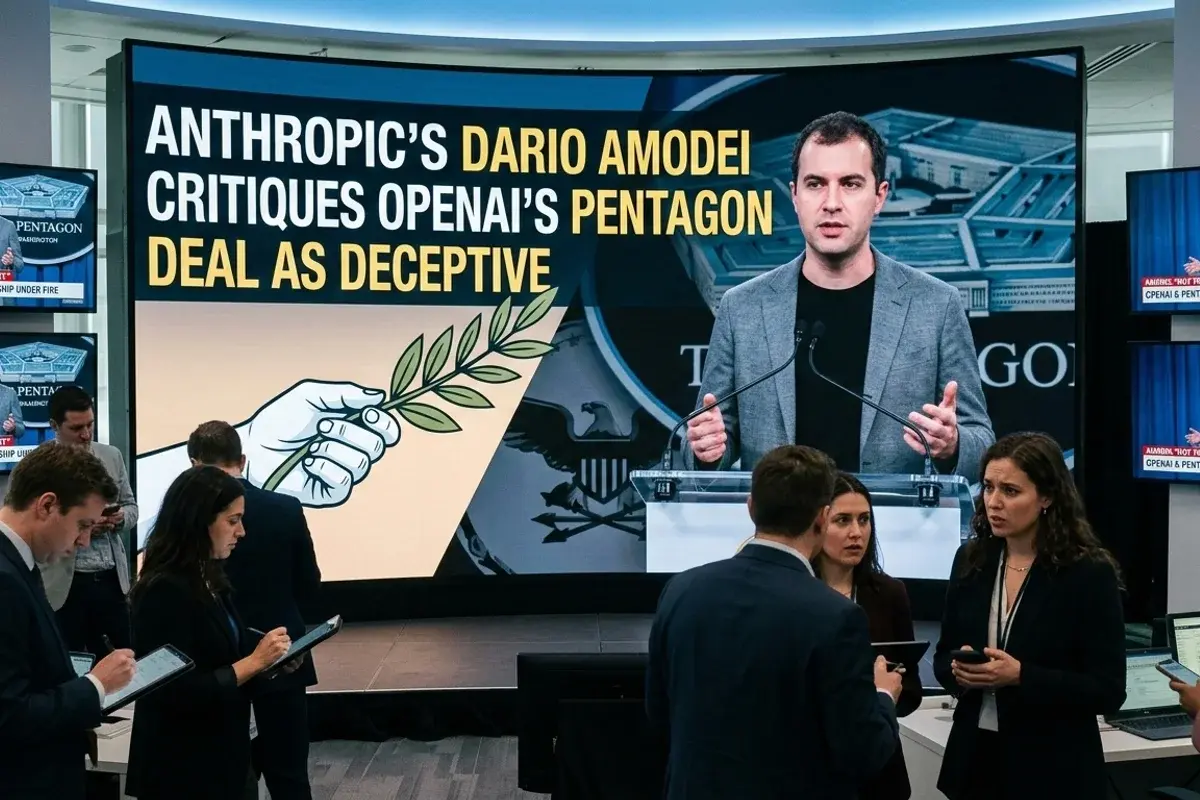
Anthropic CEO Dario Amodei critiques OpenAI's Pentagon deal, labeling it deceptive. FinScann analyzes the implications for AI ethics, defense tech,...
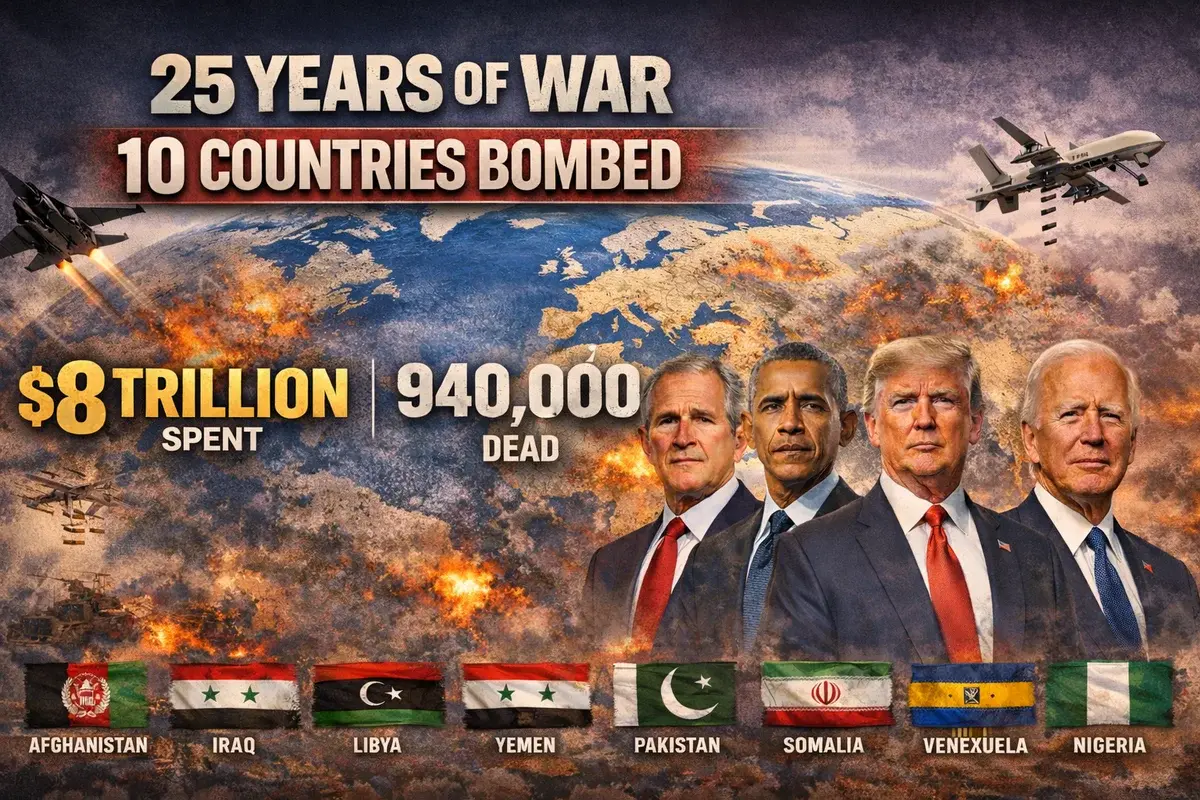
US's post-9/11 military engagements across 10+ countries, detailing the $8 trillion financial cost, human toll, and market impact.