Loading market data...
India and the United States have reached a major trade agreement, cutting US tariffs on Indian goods from 50 percent to 18 percent after talks between President Donald Trump and Prime Minister Narendra Modi. The deal eases pressure on Indian exporters, improves market access for Made in India products, and strengthens bilateral economic ties. It marks a significant reset in India–US trade relations amid shifting global trade dynamics.
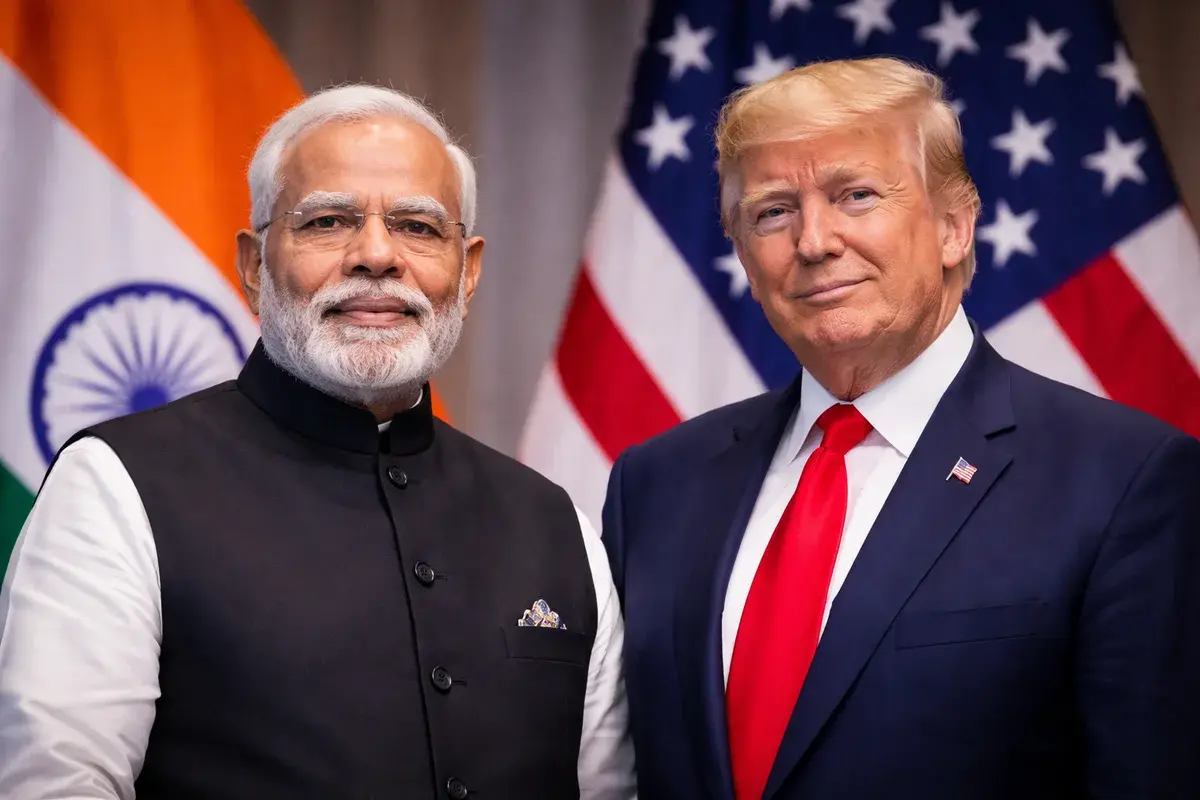
The prolonged tariff standoff between India and the United States ended in a major breakthrough on February 2, 2026, after US President Donald Trump announced a landmark India–US trade deal, sharply reducing tariffs on Indian exports from 50 percent to 18 percent. The announcement followed a direct phone conversation between Trump and Indian Prime Minister Narendra Modi, marking a turning point in bilateral trade relations that had been under strain for over a year.
The development was first signalled by US Ambassador to India Sergio Gor, who confirmed that the two leaders had spoken earlier in the day. The confirmation triggered intense speculation across political, diplomatic, and business circles before the White House officially announced the agreement.
What the India–US Trade Deal Includes
According to official statements released by the White House and President Trump’s post on Truth Social, the agreement significantly lowers trade barriers and resets economic cooperation between the two countries.
Under the deal:
Tariffs on Indian goods entering the US have been reduced to 18 percent
The additional 25 percent punitive tariff linked to India’s purchase of Russian oil has been withdrawn
India has agreed to reduce non-tariff barriers on US goods to zero
India has committed to purchasing over $500 billion worth of US products, including energy, technology, agriculture, coal, and industrial goods
The US, in return, has agreed to restore trade predictability for Indian exporters and remove the harshest penalties imposed in 2025.
PM Modi Calls Deal a Win for ‘Made in India’
Prime Minister Narendra Modi welcomed the agreement, calling it a decisive moment for Indian exporters and manufacturing growth.
“Delighted that Made in India products will now have a reduced tariff of 18%. Big thanks to President Trump on behalf of the 1.4 billion people of India,” Modi said in a post on X.
Modi further said that cooperation between the world’s two largest democracies would unlock unprecedented opportunities for economic growth, investment, and global stability.
How US Tariffs on Indian Goods Escalated: A Timeline
** Timeline of US Tariffs on Indian Exports**
| Date | Development |
|---|---|
| April 2, 2025 | US imposes 26% reciprocal tariffs on Indian goods |
| April 10, 2025 | Tariffs paused for 90 days; 10% baseline duty retained |
| July 31, 2025 | Blanket 25% tariff announced on Indian goods |
| August 7, 2025 | Tariffs raised to 50% over Russian oil purchases |
| February 2, 2026 | Tariffs reduced to 18% under India–US trade deal |
During this period, India faced the highest tariff imposed by the US on any major trading partner, severely impacting export competitiveness.
Why the Trump–Modi Phone Call Was Crucial
The breakthrough came on the same day India’s External Affairs Minister S Jaishankar began a three-day visit to Washington, indicating coordinated diplomatic engagement.
Trade analysts highlight three major factors behind the deal:
Pressure from US manufacturers reliant on Indian supply chains
India’s growing importance in global manufacturing diversification
Strategic geopolitical considerations, including energy security and the Ukraine conflict
Sector-Wise Impact: Who Benefits Most from Lower Tariffs
The tariff reduction is expected to immediately improve margins, order flows, and competitiveness for multiple export-heavy sectors.
** Indian Sectors Gaining from the India–US Trade Deal**
| Sector | Expected Impact |
|---|---|
| Textiles & apparel | Strong revival in US demand |
| Engineering goods | Improved pricing power |
| Pharmaceuticals | Faster regulatory and market access |
| Electronics & components | Boost to contract manufacturing |
| Gems & jewellery | Recovery in exports and volumes |
| Auto components | Improved competitiveness |
Lower tariffs are expected to reinforce India’s role as a China-plus-one manufacturing alternative.
Russian Oil Clause: The Turning Point in Negotiations
One of the most sensitive elements of the agreement was India’s reported commitment to cease purchases of Russian oil, which had earlier triggered an additional 25 percent penalty tariff.
The White House confirmed that:
Tariffs linked to Russian oil purchases will be fully withdrawn
The final tariff rate on Indian goods will remain fixed at 18 percent
This clause aligned US trade policy with broader geopolitical objectives while offering India immediate economic relief.
How Big Is the Trade Impact? Key Numbers Explained
ndia–US Trade at a Glance
| Metric | Value |
|---|---|
| India’s exports to the US (2024) | ~$80 billion |
| Tariff level before deal | 50% |
| Tariff level after deal | 18% |
| US goods India committed to buy | $500+ billion |
| Sectors most affected | Textiles, pharma, engineering |
The deal restores certainty for exporters and reduces inflationary pressure across supply chains.
Political Reactions and Domestic Debate
The agreement sparked political reactions in India, with Congress leader Jairam Ramesh questioning why details of the deal were first revealed by US officials rather than the Indian government.
Despite political criticism, exporters, industry bodies, and market participants largely welcomed the agreement, citing policy clarity and trade stability after months of uncertainty.
What This Means for India–US Trade Going Forward
The trade deal is expected to:
Stabilise bilateral trade flows
Encourage fresh US investment into Indian manufacturing
Strengthen India’s leverage in future trade negotiations
Improve employment prospects in export-oriented sectors
However, analysts note that Section 232 national security tariffs on steel, aluminium, and automobiles remain outside the agreement and may require separate negotiations.
Frequently Asked Questions (FAQs)
What is the new US tariff on Indian goods?
The tariff has been reduced from 50 percent to 18 percent.
Why were tariffs increased earlier?
Tariffs were raised after India continued purchasing Russian oil, triggering a penalty levy.
Has India agreed to buy US products?
Yes, India has committed to purchasing over $500 billion worth of US goods.
Are all US tariffs on India removed?
No. National security tariffs under Section 232 still apply to select products.
Will this help Indian exporters?
Yes. Lower tariffs significantly improve margins, competitiveness, and export growth.

Financial journalist specializing in market analysis, stock research, and investment trends. Dedicated to providing accurate, timely insights for informed decision-making.
Credentials: Experienced financial journalist with expertise in equity markets and economic analysis
The information provided in this article is for educational and informational purposes only and should not be construed as financial, investment, or legal advice. Finscann does not provide personalized investment recommendations.
For detailed terms and conditions, please read our Disclaimer and Terms of Service.

Amid escalating US-Iran conflict and a full closure of the Strait of Hormuz, crude oil prices surge.

Explore the breaking financial impact of escalating US-Iran tensions on India's economy, crude oil, gold prices, and global markets in March 2026.
China suspends new fuel export contracts as global oil markets tighten due to Middle East tensions and shipping disruptions in the Strait of Hormuz.

Anthropic CEO Dario Amodei critiques OpenAI's Pentagon deal, labeling it deceptive. FinScann analyzes the implications for AI ethics, defense tech,...
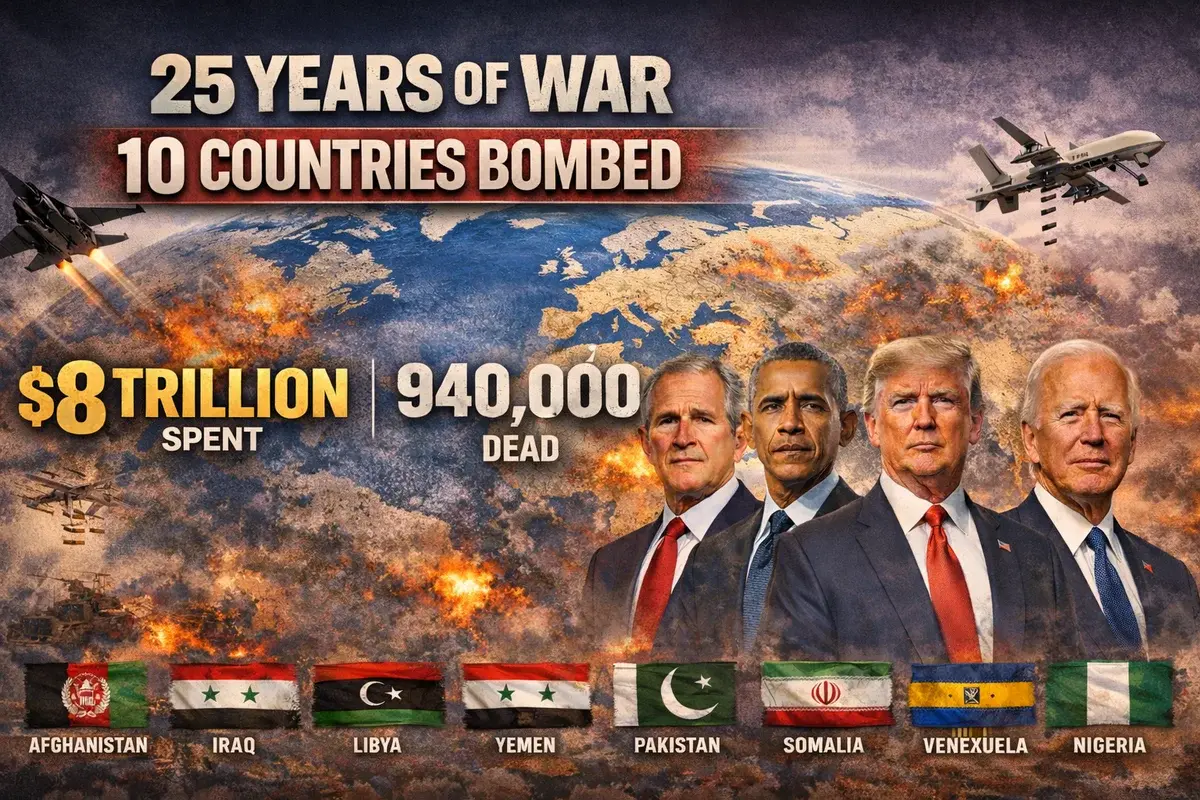
US's post-9/11 military engagements across 10+ countries, detailing the $8 trillion financial cost, human toll, and market impact.