Loading market data...
The recently concluded India–European Union Free Trade Agreement is set to reshape one of India’s most protected sectors — passenger vehicles, especially imported European luxury cars. With import duties on select cars expected to fall sharply from levels as high as 110 percent to 40 percent initially, and potentially as low as 10 percent over time, the deal could lead to significant price corrections for fully imported cars in India. Using BMW as a representative case, this article explains how car prices are calculated today, what exactly changes under the trade deal, and how much cheaper cars could realistically become.

The recently concluded India–European Union Free Trade Agreement is set to reshape one of India’s most protected sectors — passenger vehicles, especially imported European luxury cars. With import duties on select cars expected to fall sharply from levels as high as 110 percent to 40 percent initially, and potentially as low as 10 percent over time, the deal could lead to significant price corrections for fully imported cars in India. Using BMW as a representative case, this article explains how car prices are calculated today, what exactly changes under the trade deal, and how much cheaper cars could realistically become.
Why Car Prices in India Are So High
India has historically imposed some of the highest import duties on cars globally, primarily to protect domestic manufacturing.
For fully imported cars (CBUs – Completely Built Units), the final on-road price includes:
In many cases, taxes alone exceed the factory cost of the vehicle, which is why luxury brands often assemble cars locally to reduce costs.
Current Import Tax Structure on Cars in India
Before the India–EU trade deal, effective import taxation on premium European cars often worked out to 100–125 percent of the vehicle’s import value, depending on engine size, length, and price band.
This meant:
What the India–EU Trade Deal Changes
The trade agreement marks India’s biggest-ever concession on passenger vehicles.
Key structural changes expected under the deal:
Import duty on select European cars cut to 40 percent initially
Further reduction to 10 percent over time or under annual quotas
Phased approach to protect domestic manufacturers
Preference for combustion-engine vehicles first, with EVs likely phased later
Clear rules of origin to ensure benefits go only to genuine EU-made vehicles
This is a structural reset, not a cosmetic adjustment.
Why BMW Is a Good Example
BMW operates in India with a mixed model strategy:
Some models are locally assembled
Others are fully imported
High-end performance and luxury variants are often CBUs
This makes BMW an ideal benchmark to understand which cars benefit most and how much.
How Car Pricing Changes: Step-by-Step Example
Below is a realistic illustrative scenario to show how prices could change.
Assumptions
Import (factory + shipping) value: ₹41 lakh
Dealer and local costs: ~15 percent
Three scenarios compared:
Table 1: BMW Imported Car – Price Impact Illustration
| Scenario | Effective Import Tax | Estimated On-Road Price |
|---|---|---|
| Pre-trade deal | ~110% | ~₹99 lakh |
| Post-deal (40%) | 40% | ~₹66 lakh |
| Preferential phase (10%) | 10% | ~₹52 lakh |
Potential price reduction: ₹33–47 lakh per car depending on eligibility
This explains why the trade deal has generated intense interest among luxury car buyers, dealers, and investors.
Which BMW Cars Benefit the Most
Biggest beneficiaries
Limited or no impact
Broader Impact on the Indian Car Market
For Consumers
For Automakers
For Domestic Manufacturers
Impact on Auto Stocks and Investors
From a market perspective:
Investors are watching:
Will Prices Fall Immediately?
Not instantly for all models.
Reasons include:
However, price correction is structurally unavoidable once competition intensifies.
What Buyers Should Do
What This Means for India’s Auto Policy
The India–EU trade deal signals:
This is a policy pivot, not a one-off concession.
Final Take
The India–EU Free Trade Agreement could fundamentally change how much Indians pay for imported cars.
Using BMW as a benchmark shows that fully imported European cars could become 30–50 percent cheaper over time, depending on eligibility and phase-in timelines.
While the immediate impact will be selective, the long-term direction is clear: India is opening its auto market more than ever before.
For buyers, it means affordability. For manufacturers, it means competition. For the industry, it means transformation.
Disclaimer
This article is for informational and educational purposes only. All price illustrations are indicative and based on hypothetical scenarios. Actual vehicle prices will depend on official duty notifications, rules of origin, exchange rates, state taxes, dealer pricing, and manufacturer strategy. Readers should verify details with authorised dealers and official government notifications before making purchasing or investment decisions.

Financial journalist specializing in market analysis, stock research, and investment trends. Dedicated to providing accurate, timely insights for informed decision-making.
Credentials: Experienced financial journalist with expertise in equity markets and economic analysis
The information provided in this article is for educational and informational purposes only and should not be construed as financial, investment, or legal advice. Finscann does not provide personalized investment recommendations.
For detailed terms and conditions, please read our Disclaimer and Terms of Service.

Amid escalating US-Iran conflict and a full closure of the Strait of Hormuz, crude oil prices surge.

Explore the breaking financial impact of escalating US-Iran tensions on India's economy, crude oil, gold prices, and global markets in March 2026.
China suspends new fuel export contracts as global oil markets tighten due to Middle East tensions and shipping disruptions in the Strait of Hormuz.

Anthropic CEO Dario Amodei critiques OpenAI's Pentagon deal, labeling it deceptive. FinScann analyzes the implications for AI ethics, defense tech,...
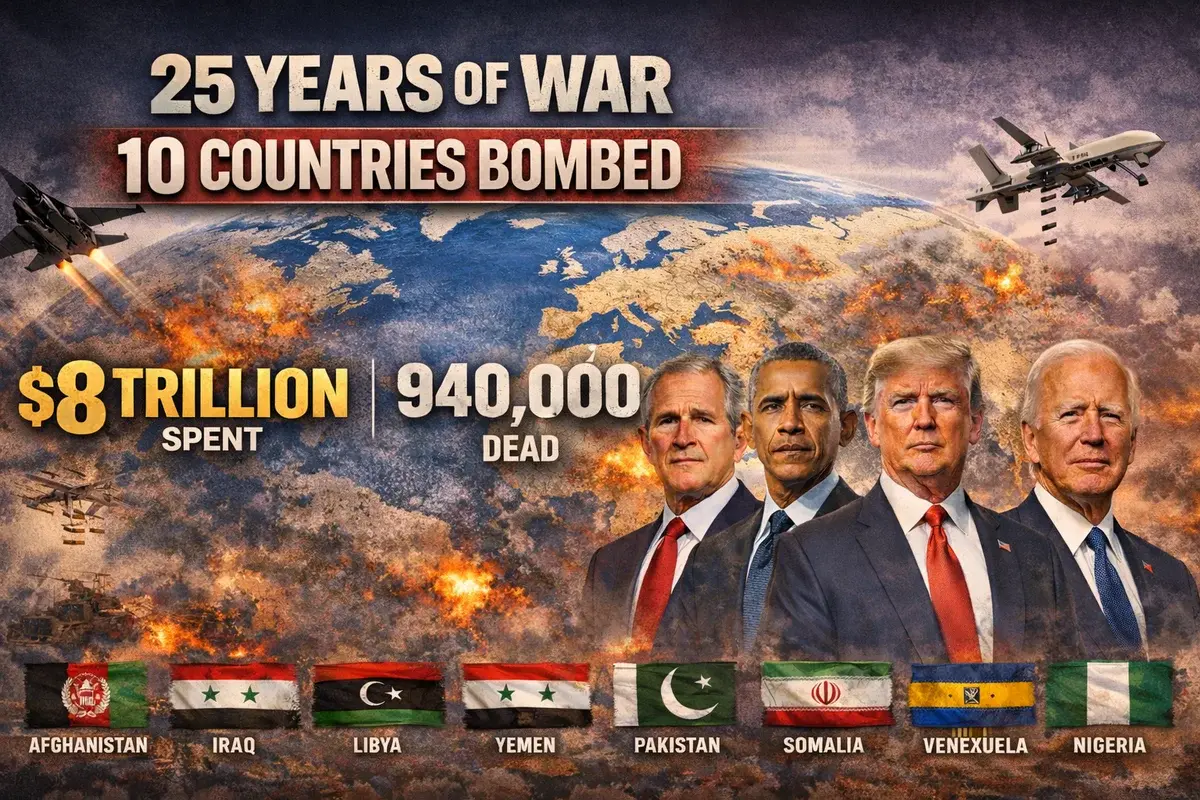
US's post-9/11 military engagements across 10+ countries, detailing the $8 trillion financial cost, human toll, and market impact.