Loading market data...
Synopsis
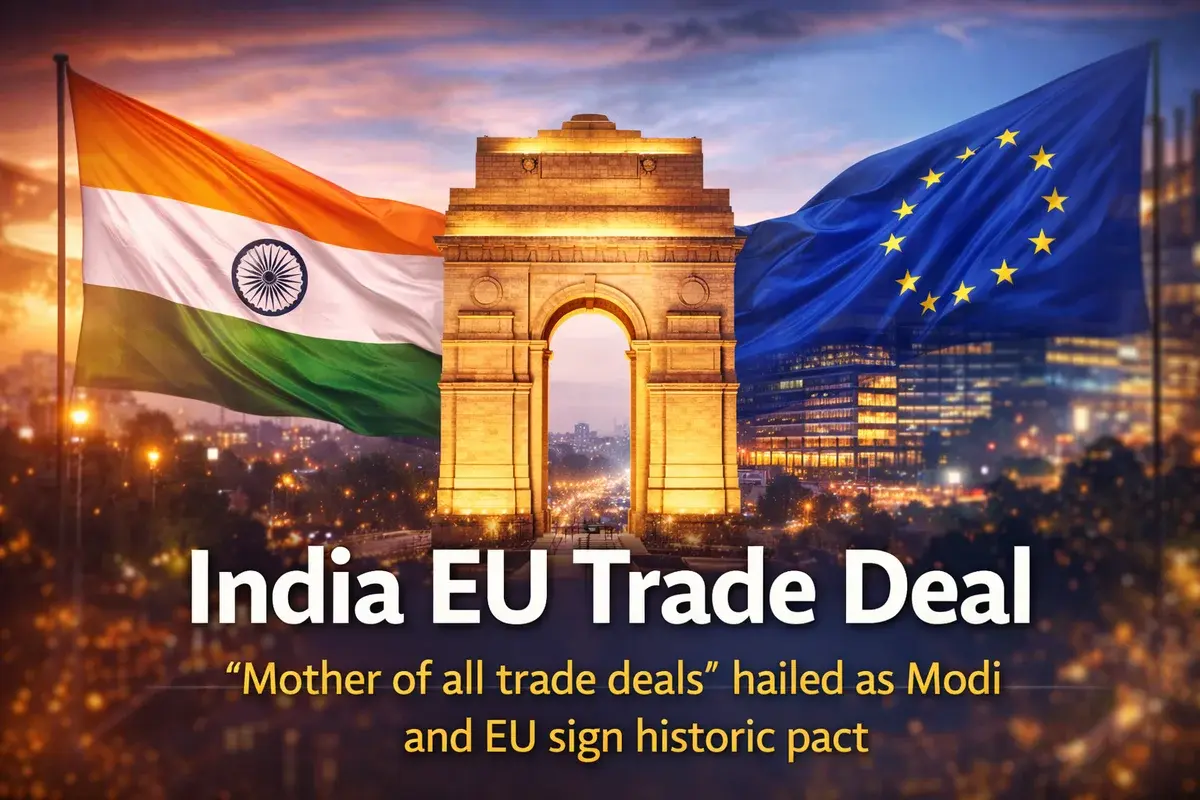
The European Union and India have formally concluded negotiations on a historic Free Trade Agreement (FTA), widely described as the largest and most ambitious trade deal ever signed by either side. The pact connects markets of nearly 2 billion people, unlocks massive tariff reductions, expands access to goods, services, investment, and digital trade, and embeds sustainability and climate commitments at its core. Arriving amid global trade fragmentation, supply-chain realignment, China-plus-one strategies, and geopolitical uncertainty, the EU–India FTA positions both economies as central pillars of rules-based global trade.
A Defining Moment for Global Trade and Economic Diplomacy
On 27 January 2026, India and the European Union concluded negotiations on a landmark Free Trade Agreement, ending nearly two decades of intermittent talks, pauses, and political recalibration.
The timing is critical.
Global trade is under pressure from rising protectionism, tariff wars, geopolitical conflicts, and de-risking strategies. Major economies are reassessing dependencies, while multinational companies are actively restructuring global value chains.
Against this backdrop, the EU–India FTA signals a strategic economic alignment between the world’s second-largest and fourth-largest economies, reinforcing trust, predictability, and long-term cooperation.
European Commission President Ursula von der Leyen described the deal as historic, stating that it establishes a free trade zone of nearly 2 billion people and proves that open, rules-based trade can still deliver growth and stability.
This agreement goes far beyond tariff reductions. It is a geopolitical, economic, and strategic reset.
Scale of the Deal: Why the EU–India FTA Is Unprecedented
The EU–India FTA stands apart due to its breadth, depth, and economic scale.
Why this deal is considered transformational
Largest trade agreement ever concluded by the European Union
Most comprehensive market opening India has granted any partner
Covers goods, services, investment, intellectual property, sustainability, SMEs, and digital trade
Tariff reductions on 96.6 percent of EU goods exports to India
Expected to generate €4 billion in annual tariff savings for EU exporters
Designed to integrate India deeper into global manufacturing and supply chains
Currently, EU–India trade in goods and services exceeds €180 billion annually, supporting nearly 800,000 jobs in the European Union alone. Projections suggest that EU goods exports to India could double by 2032, driven by tariff liberalisation and improved regulatory access.
Table 1: EU–India Trade at a Glance
| Metric | Details |
|---|---|
| Annual trade (goods & services) | €180+ billion |
| Population covered | ~2 billion |
| EU jobs supported | ~800,000 |
| Tariff coverage | 96.6% of EU exports |
| Annual tariff savings | ~€4 billion |
| Expected export growth | Double by 2032 |
Massive Tariff Reductions: What Changes on the Ground
One of the most searched and discussed aspects of the EU–India FTA is tariff reduction, especially in sectors where India historically maintained high import duties to protect domestic industry.
Automobiles and Auto Components
This marks the largest single concession India has ever made in the automotive sector, aligning with global supply-chain integration and EV transition strategies.
Industrial and Manufacturing Goods
These changes dramatically improve cost competitiveness, sourcing efficiency, and manufacturing integration between India and the EU.
Table 2: Key Tariff Reductions Under the EU–India FTA
| Sector | Current Tariff | Post-FTA Outcome |
|---|---|---|
| Cars | Up to 110% | Gradually reduced to ~10% |
| Car parts | High | 0% within 5–10 years |
| Machinery | Up to 44% | Mostly eliminated |
| Chemicals | Up to 22% | Mostly eliminated |
| Pharmaceuticals | Up to 11% | Mostly eliminated |
Agriculture and Agri-Food: A Carefully Balanced Market Opening
Agriculture was one of the most sensitive negotiation areas, particularly for the European Union.
The agreement reduces prohibitive agri-food tariffs, which averaged over 36 percent, while protecting politically and socially sensitive sectors.
Key agricultural outcomes
All imports must continue to comply with strict EU food safety, sanitary, and phytosanitary standards, ensuring consumer protection remains intact.
Services, Financial Markets, and Intellectual Property: India’s Biggest Leap Yet
Beyond goods, the FTA delivers India’s most ambitious commitments on services trade.
Key areas include:
The agreement also strengthens intellectual property protection, covering copyrights, trademarks, industrial designs, trade secrets, and plant variety rights.
This alignment improves investor confidence, innovation protection, and technology collaboration, making India more attractive for high-value global investment.
Sustainability, ESG, and Climate Commitments Take Centre Stage
One of the most searched global trade topics today is ESG and sustainability, and the EU–India FTA reflects this shift.
The agreement includes a dedicated Trade and Sustainable Development chapter, covering climate change mitigation, environmental protection, workers’ rights, gender equality, and responsible supply chains.
Additionally:
Table 3: Sustainability and ESG Commitments
| Area | Commitment |
|---|---|
| Climate | Joint cooperation platform |
| Environment | Enhanced protection measures |
| Labour | Workers’ rights safeguards |
| Gender | Women’s economic participation |
| Financial support | €500 million (indicative) |
Geopolitical Context: Why This Trade Deal Matters Now
Search interest around geopolitics and trade has surged globally — and this deal directly addresses those concerns.
The EU–India FTA arrives amid US tariff uncertainty, China-plus-one supply-chain strategies, and rising demand for stable, democratic, rules-based trade partners.
The agreement strengthens strategic autonomy, reduces overdependence on any single market, and reinforces multilateral trade norms at a time when they are under pressure.
What Happens Next: Implementation and Ratification
The next phase includes legal scrubbing, translation, approval by the EU Council, consent from the European Parliament, and ratification procedures in India.
Once completed, the agreement will enter into force in phases, with tariff reductions and sectoral benefits rolling out over several years.
Final Take
The EU–India Free Trade Agreement is not just another trade pact — it is a structural shift in global economic alignment.
It reshapes tariffs, reconfigures supply chains, embeds sustainability into trade, and anchors cooperation between two of the world’s most influential democracies. At a time when globalisation is being questioned, the deal reinforces the idea that open, rules-based trade remains the most powerful engine of long-term growth.
Disclaimer
This article is for informational and educational purposes only. It is based on official disclosures and publicly available policy information. It does not constitute investment advice, financial recommendations, or policy guidance. Readers should consult official government publications and qualified professionals before making business or investment decisions.

Financial journalist specializing in market analysis, stock research, and investment trends. Dedicated to providing accurate, timely insights for informed decision-making.
Credentials: Experienced financial journalist with expertise in equity markets and economic analysis
The information provided in this article is for educational and informational purposes only and should not be construed as financial, investment, or legal advice. Finscann does not provide personalized investment recommendations.
For detailed terms and conditions, please read our Disclaimer and Terms of Service.

Amid escalating US-Iran conflict and a full closure of the Strait of Hormuz, crude oil prices surge.

Explore the breaking financial impact of escalating US-Iran tensions on India's economy, crude oil, gold prices, and global markets in March 2026.
China suspends new fuel export contracts as global oil markets tighten due to Middle East tensions and shipping disruptions in the Strait of Hormuz.
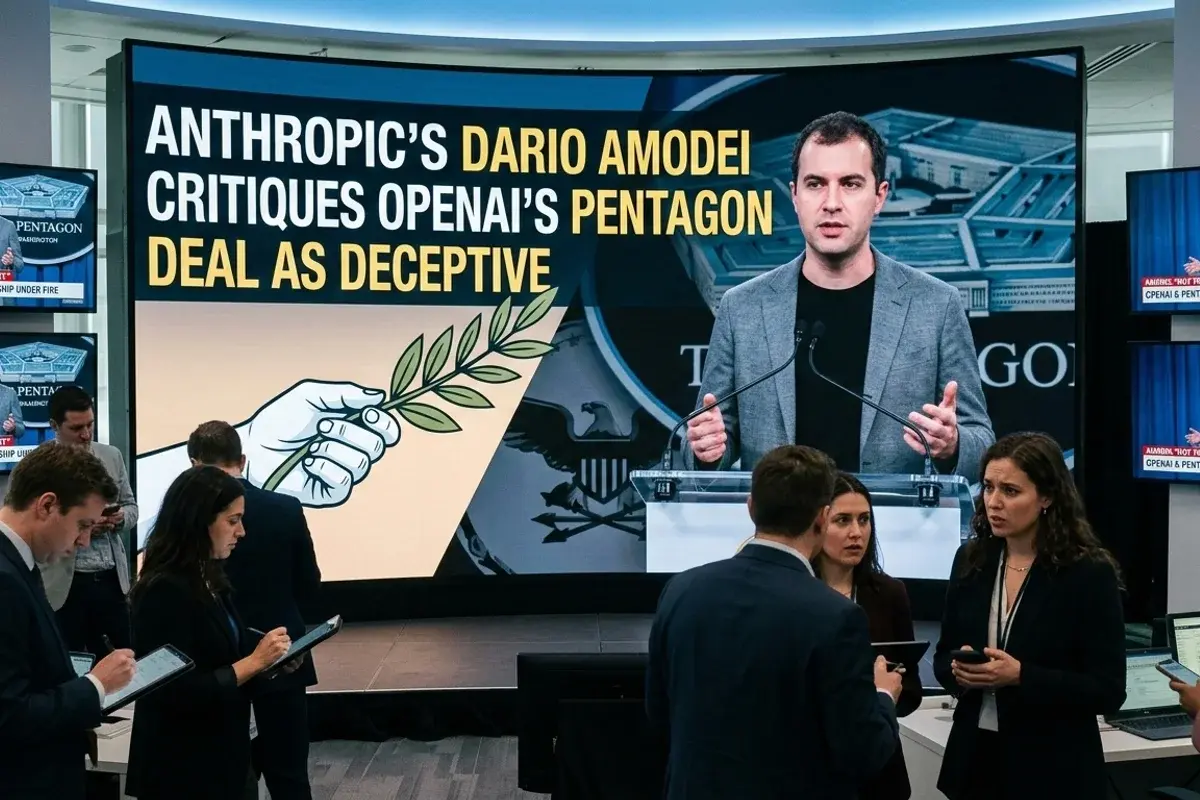
Anthropic CEO Dario Amodei critiques OpenAI's Pentagon deal, labeling it deceptive. FinScann analyzes the implications for AI ethics, defense tech,...
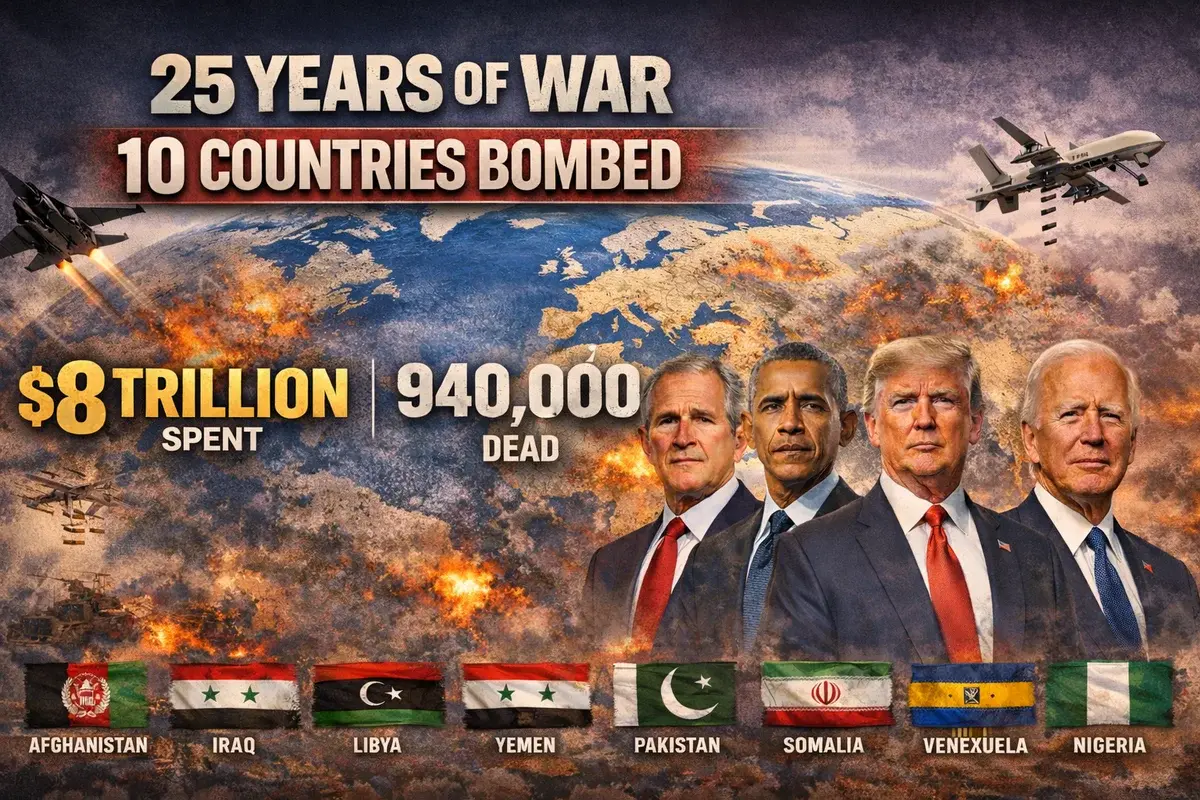
US's post-9/11 military engagements across 10+ countries, detailing the $8 trillion financial cost, human toll, and market impact.