Loading market data...
JPMorgan Chase’s five-day return-to-office mandate has triggered internal tensions, with a resurfaced employee petition highlighting concerns over flexibility, morale, and productivity. Although only about 2,000 employees signed the petition out of more than 300,000, fears of career repercussions suggest deeper dissatisfaction. The policy reflects a broader shift across Wall Street, where major banks are prioritizing in-office culture, compliance, and collaboration over hybrid work models.
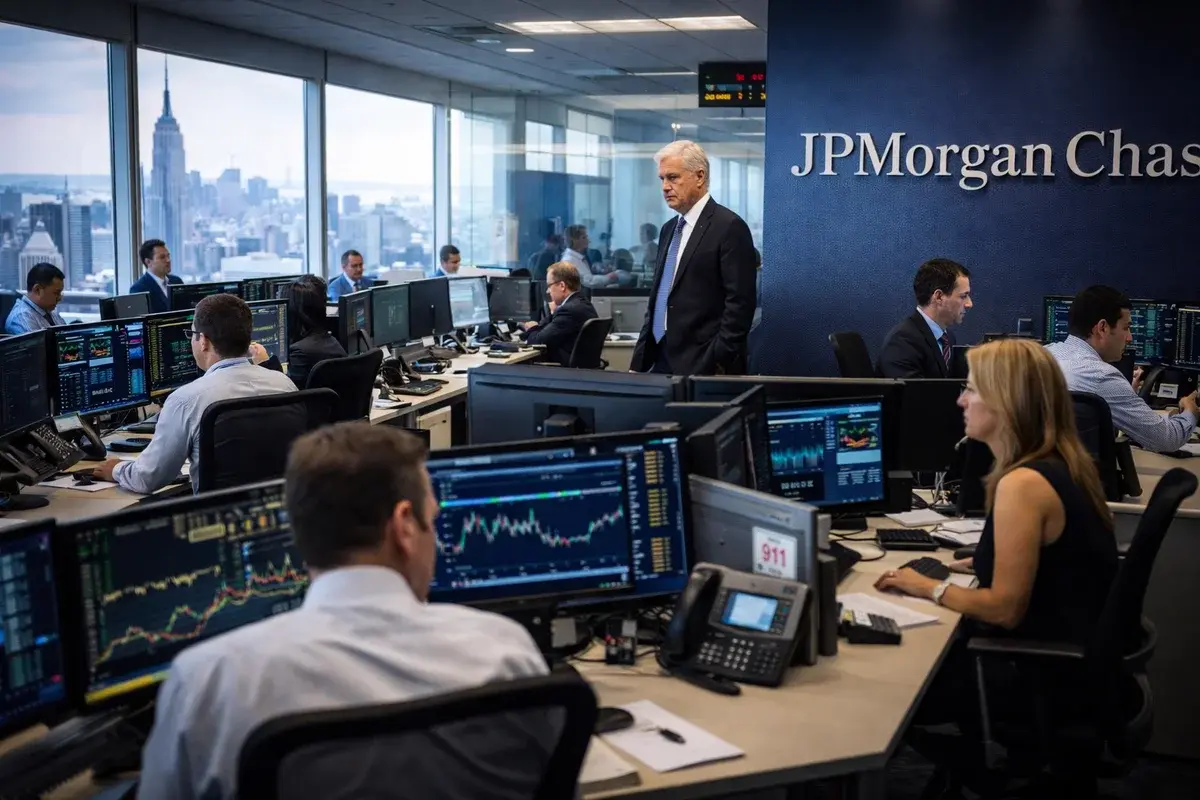
JPMorgan Chase’s five-day return-to-office mandate has reignited tensions between management and employees, as a resurfaced petition urging CEO Jamie Dimon to reconsider gains limited traction. While only about 2,000 staff signed the petition out of a workforce exceeding 300,000, the move highlights deeper concerns around morale, productivity, and career risks tied to dissent. The policy could set the tone for workplace strategies across the global banking sector.
The post-pandemic workplace experiment is entering a decisive phase, and few institutions carry as much influence as JPMorgan Chase. As the world’s largest bank by assets pushes for a full return to office, it is triggering a cultural and strategic debate that extends far beyond a single company. The move signals what could become a “Great Workplace Reversal” across Wall Street.
1. The Mandate: A Full Return to the Office
In March 2025, JPMorgan formally implemented a five-day in-office policy for its workforce, following a directive announced by CEO Jamie Dimon earlier that year. The decision effectively ended hybrid work arrangements for most employees.
Key points of the mandate:
However, the move sparked internal resistance, culminating in a petition that resurfaced nearly a year later.
Expert Insight: “Large banks are prioritizing control, compliance, and culture over flexibility. The shift reflects management’s belief that alpha generation and deal execution improve with physical proximity.”
2. The Petition: Limited Signatures, Deeper Discontent
Despite a workforce of more than 300,000 employees, the petition urging a reconsideration of the policy gathered only around 2,000 signatures.
Key takeaways from the petition dynamics:
Represents less than 1% of the workforce.
Some employees reportedly fear signing due to career repercussions.
Concerns raised about:
An anonymous employee reportedly described signing the petition as “career suicide,” suggesting a culture where dissent may carry professional risks.
3. Productivity vs. Flexibility: The Core Debate
At the heart of the issue is a classic productivity-versus-flexibility trade-off.
Management’s viewpoint:
Employee concerns:
Key Workplace Metrics Under Debate
| Metric | Office-First Model | Hybrid/Remote Model |
|---|---|---|
| Collaboration Speed | High | Moderate |
| Employee Flexibility | Low | High |
| Operational Oversight | Strong | Moderate |
| Talent Retention | Uncertain | Often Higher |
| Real Estate Costs | Higher | Lower |
4. A Signal to the Entire Banking Sector
JPMorgan’s decision carries outsized importance because of its market leadership and cultural influence.
Sector implications:
In a competitive labor market, workplace policies increasingly act as a non-financial compensation lever, influencing hiring and retention.
Expert Insight: “Return-to-office policies are becoming a strategic differentiator. Banks that strike the right balance between flexibility and performance may gain an edge in talent acquisition.”
5. The Morale and Productivity Equation
While the petition’s low signature count suggests compliance, it does not necessarily indicate satisfaction.
Potential business impacts:
A prolonged misalignment between management directives and employee expectations could translate into productivity drag or talent churn, both of which have direct implications for revenue per employee and operating margins.
Trading Platforms for U.S. Market Participants
For investors tracking developments in U.S. banking stocks, several major platforms provide access to American equities:
U.S. Platforms
Global Platforms with U.S. Stock Access
⚠️ DISCLAIMER: We Are Not Financial Advisors This article is for informational and educational purposes only and should not be considered financial or investment advice. Market conditions, company policies, and workplace trends can change rapidly. Always conduct your own research or consult a certified financial advisor before making investment decisions.

Financial journalist specializing in market analysis, stock research, and investment trends. Dedicated to providing accurate, timely insights for informed decision-making.
Credentials: Experienced financial journalist with expertise in equity markets and economic analysis
The information provided in this article is for educational and informational purposes only and should not be construed as financial, investment, or legal advice. Finscann does not provide personalized investment recommendations.
For detailed terms and conditions, please read our Disclaimer and Terms of Service.

Amid escalating US-Iran conflict and a full closure of the Strait of Hormuz, crude oil prices surge.

Explore the breaking financial impact of escalating US-Iran tensions on India's economy, crude oil, gold prices, and global markets in March 2026.

China suspends new fuel export contracts as global oil markets tighten due to Middle East tensions and shipping disruptions in the Strait of Hormuz.

Anthropic CEO Dario Amodei critiques OpenAI's Pentagon deal, labeling it deceptive. FinScann analyzes the implications for AI ethics, defense tech,...

US's post-9/11 military engagements across 10+ countries, detailing the $8 trillion financial cost, human toll, and market impact.