Loading market data...
Dive into how Anthropic AI is shaking up India's IT sector. Get expert analysis from Macquarie, Jefferies, and Motilal Oswal on AI's impact on revenue, jobs, and the future of IT services in February 2026.

Breaking Down Anthropic AI's Impact on Indian IT: Macquarie, Jefferies, and Motilal Oswal Weigh In (February 2026)
The Indian IT sector, a cornerstone of the nation's economy, is currently navigating its most significant transformation since the dawn of cloud computing, spurred by the rapid advancements and deployment of Anthropic AI's generative models. The recent launch of Claude Cowork and its powerful plug-ins has sent shockwaves through global technology markets, leading to a substantial sell-off in IT stocks and sparking intense debate among leading financial institutions like Macquarie, Jefferies, and Motilal Oswal. FinScann delves into their diverse perspectives on how this AI disruption will reshape Indian IT services revenue models and the job market in 2026 and beyond.
The Catalyst
On January 16, 2026, Anthropic unveiled Claude Cowork, an enterprise-focused, agentic AI workspace capable of autonomously planning, executing, and automating multi-step tasks. This was further intensified by the rollout of 11 advanced automation plug-ins on January 30, which enable Claude to execute workflows traditionally handled by large offshore teams or major enterprise SaaS platforms like Salesforce and ServiceNow. The subsequent release of Claude Opus 4.6 around February 5-6, with its multi-agent capabilities and enhanced financial analysis prowess, amplified concerns, explicitly demonstrating AI's ability to perform tasks like contract review, legal briefings, and financial modeling in a fraction of the time and cost.
This pivotal shift from AI as merely an assistant to a potential direct substitute for white-collar, software-driven work rattled investors globally. The market reaction was swift and severe, triggering a "SaaSpocalypse" – a term coined by Jefferies – and causing the Nifty IT index to experience its steepest single-day drop since March 2020 on February 3-4, 2026. This sell-off evaporated approximately ₹2 lakh crore in market capitalization from Indian IT companies, with major players like Infosys (down 8%), TCS (down 7%), and HCLTech (down 5-6%) bearing the brunt.
Financial Forensics: Divergent Analyst Views
The financial community's response to Anthropic's advancements and the broader generative AI wave is bifurcated, reflecting both apprehension and a measured optimism regarding the Indian IT sector's adaptability.
Motilal Oswal's Cautious Outlook: Motilal Oswal Financial Services has taken a cautious stance, highlighting significant revenue risks from AI and automation. The brokerage estimates that 9% to 12% of the Indian IT industry's revenues could be eliminated over the next four years due to AI-led disruption. Earlier projections suggested that 30-40% of IT services revenues, particularly in application development, maintenance, and testing, were vulnerable to AI-led productivity gains, translating to an estimated 2% annual impact on growth. Motilal Oswal further warns that if complex areas like ERP migration and third-party software implementation (which constitute 10-15% of industry revenues) fall under AI's increasing capabilities, the revenue hit could be substantially higher. They note that AI is already compressing ERP implementation timelines from years to mere weeks.
Macquarie's Resilient Perspective: In contrast, Macquarie analysts believe that concerns surrounding AI-driven revenue disruption for Indian IT firms are "overdone". Their analysis suggests that Indian IT majors primarily cater to large, global enterprises operating with highly intricate, multi-country SAP and ERP environments. Macquarie argues that these complex systems, which still generate substantial revenue from ERP-led transformation work, are inherently more resistant to full automation by current AI tools. This view underscores the perceived resilience of large-cap IT companies against immediate, significant disruption, despite the heightened market chatter around AI efficiency.
Jefferies' "SaaSpocalypse" Warning: Jefferies paints a more immediate and stark picture, terming the current situation a "SaaSpocalypse." The investment bank expects AI to weigh heavily on IT-sector revenue growth over the next one to two years, predicting that deflation in legacy service-line revenues will more than offset gains from emerging AI-related opportunities. Jefferies particularly highlights the threat to high-margin application service revenues, which account for 40-70% of total revenues for many Indian IT firms. They caution that current consensus growth estimates for the sector may not fully account for this potential erosion, posing considerable downside risks to valuations. Furthermore, Jefferies emphasizes the vulnerability of the entry-level talent pool, as AI tools are increasingly capable of replacing routine development and testing tasks.
Market Impact: Beyond Valuations
The immediate aftermath of Anthropic's announcements saw widespread repercussions across the Indian IT landscape:
Comparison of Analyst Views on Indian IT Impact
| Metric | Motilal Oswal View | Macquarie View | Jefferies View |
|---|---|---|---|
| Revenue Impact | 9-12% revenue elimination (4 years); 2% annual growth hit. | Concerns "overstated" due to complex enterprise systems. | AI will weigh on growth; deflation offsets gains. |
| Vulnerable Areas | App dev, maintenance, testing, ERP migration, 3rd-party software. | Less vulnerable due to complex SAP/ERP environments. | High-margin application services (40-70% of revenue). |
| Job Market | Implicit risk to traditional roles. | Less direct commentary on immediate job threat. | Threats to entry-level talent pool, routine tasks. |
| Overall Sentiment | Cautious, significant risk of disruption. | Measured, disruption is manageable for large firms. | Highly cautious, "SaaSpocalypse," immediate growth pressure. |
| Key Term | Automation risks, revenue elimination. | Resilience of complex ERP. | SaaSpocalypse, legacy service-line deflation. |
Key Takeaways for Investors
FinScann Verdict
The emergence of Anthropic AI's Claude Cowork and Opus 4.6 marks a definitive inflection point for the Indian IT sector. While Macquarie highlights the resilience of large enterprises due to complex IT landscapes, Motilal Oswal and Jefferies sound clear alarms about potential revenue erosion and job displacement in traditional service lines, coining the term "SaaSpocalypse." FinScann believes that while the initial market reaction has been sharp, reflecting short-term anxiety, the long-term outlook for Indian IT will hinge on its aggressive pivot towards AI-led services, deep upskilling initiatives, and the ability to leverage AI for higher-value consulting and complex integration projects. Companies that can strategically embrace this AI disruption as an opportunity for transformation, rather than just a threat, will define the sector's future growth trajectory. India's strong talent pool and increasing AI investments (India's generative AI market is set for 42% CAGR from 2026-2033) position it to adapt, but the road ahead demands rapid evolution and strategic foresight from all stakeholders.
Q: What exactly are Anthropic AI's Claude Cowork and Opus 4.6, and why are they so disruptive? A: Anthropic's Claude Cowork is an enterprise-focused AI workspace launched in January 2026, designed to autonomously plan and execute multi-step tasks. Its powerful plug-ins, released shortly after, allow it to automate complex workflows across various functions like legal, sales, marketing, and data analysis. Claude Opus 4.6, an upgraded model, further enhances these capabilities with multi-agent teams, a one-million token context window, and the ability to autonomously code, debug, and perform detailed financial analysis. This is disruptive because it transitions AI from an assistive tool to a potential direct substitute for tasks traditionally performed by human workers or specialized software, challenging the core labour arbitrage model of the Indian IT sector.
Q: Which specific Indian IT services are most at risk from Anthropic AI's advancements? A: Services that are highly repetitive, labor-intensive, and involve data processing, contract analysis, compliance monitoring, basic software development (coding, testing, debugging), customer support, and business process outsourcing are most at risk. Jefferies specifically points to high-margin application service revenues, which can constitute 40-70% of some firms' revenues. Motilal Oswal highlights application development, maintenance, and testing. Entry-level roles in the fresher pipeline are particularly vulnerable.
Q: How are Indian IT companies responding to this AI disruption? A: Indian IT firms are actively investing in AI capabilities and reskilling their workforce. Many are reporting that AI deals now form a significant portion of their new contracts, with some indicating nearly 74% of all contracts in the last six quarters were AI-centric. They are focusing on upskilling employees in AI and Machine Learning, prompt engineering, and integrating AI into higher-value consulting and complex system integrations. Anthropic itself is expanding into India, recognizing the country's technical talent and local demand for its enterprise-focused capabilities.
Q: Is the market overreacting, or is this a fundamental shift for Indian IT? A: While some analysts like Macquarie suggest the market's concerns might be "overdone" for firms dealing with complex ERP systems, the overall sentiment from institutions like Jefferies and Motilal Oswal indicates a fundamental, structural shift. The ability of AI to autonomously perform tasks that were previously human- or software-intensive signals a permanent realignment in the IT services value chain. While the speed of market reaction often outpaces real-world adoption, the underlying threat to traditional business models is real and necessitates rapid adaptation.
Q: What opportunities does this AI wave present for the Indian IT sector? A: Despite the challenges, the AI wave presents significant opportunities. These include developing new AI-led service offerings (e.g., AI-assisted testing, prompt engineering), integrating AI models into client operations, modernizing legacy systems for AI readiness, and higher-value consulting around AI strategy and implementation. The Indian generative AI market is projected for robust growth, with a 42% CAGR from 2026 to 2033, indicating a strong demand for AI expertise and solutions. Indian IT firms with their vast talent pool and experience in digital transformation are well-positioned to become key integrators of these new AI tools for global enterprises.
Disclaimer: For information only; not investment advice. Stock market investments carry risks. Please consult a SEBI-registered advisor before investing. FinScann assumes no liability for decisions made based on this report.

Financial journalist specializing in market analysis, stock research, and investment trends. Dedicated to providing accurate, timely insights for informed decision-making.
Credentials: Experienced financial journalist with expertise in equity markets and economic analysis
The information provided in this article is for educational and informational purposes only and should not be construed as financial, investment, or legal advice. Finscann does not provide personalized investment recommendations.
For detailed terms and conditions, please read our Disclaimer and Terms of Service.

Amid escalating US-Iran conflict and a full closure of the Strait of Hormuz, crude oil prices surge.

Explore the breaking financial impact of escalating US-Iran tensions on India's economy, crude oil, gold prices, and global markets in March 2026.

China suspends new fuel export contracts as global oil markets tighten due to Middle East tensions and shipping disruptions in the Strait of Hormuz.

Anthropic CEO Dario Amodei critiques OpenAI's Pentagon deal, labeling it deceptive. FinScann analyzes the implications for AI ethics, defense tech,...
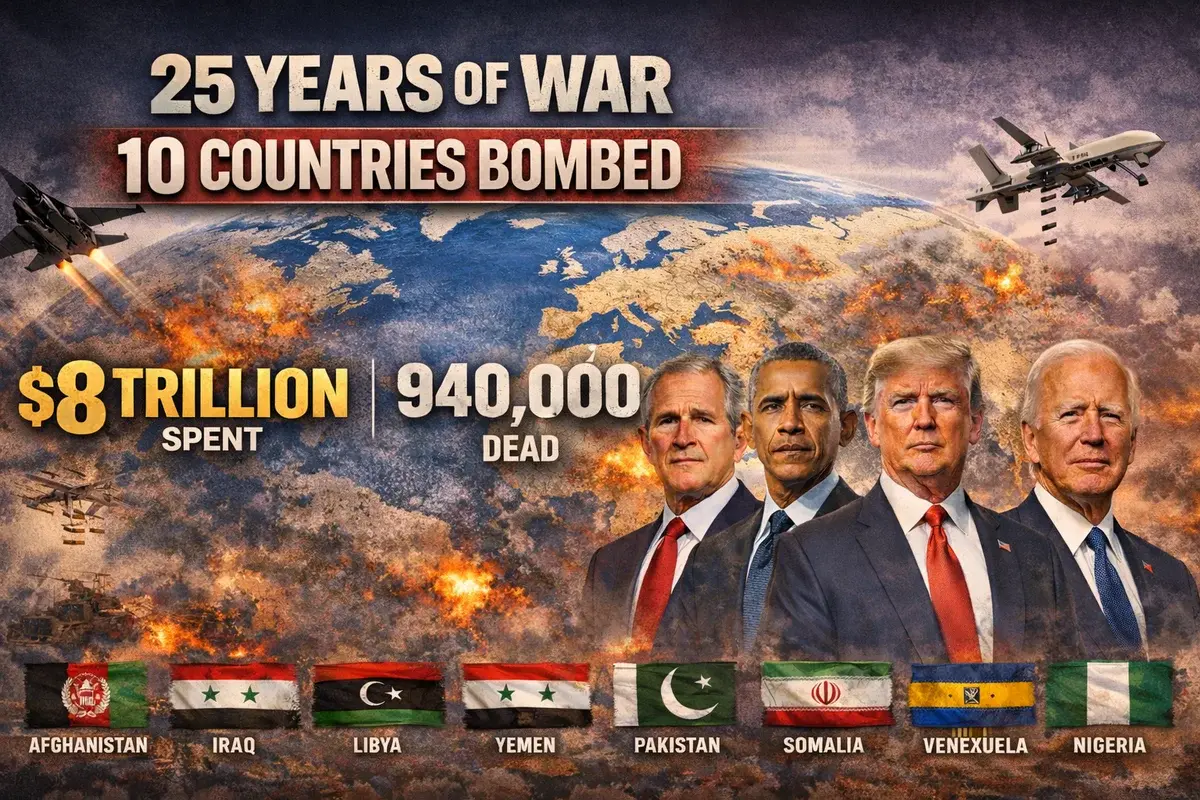
US's post-9/11 military engagements across 10+ countries, detailing the $8 trillion financial cost, human toll, and market impact.