Loading market data...
Introduction: A Silent Yet Powerful Shock to the Dollar System
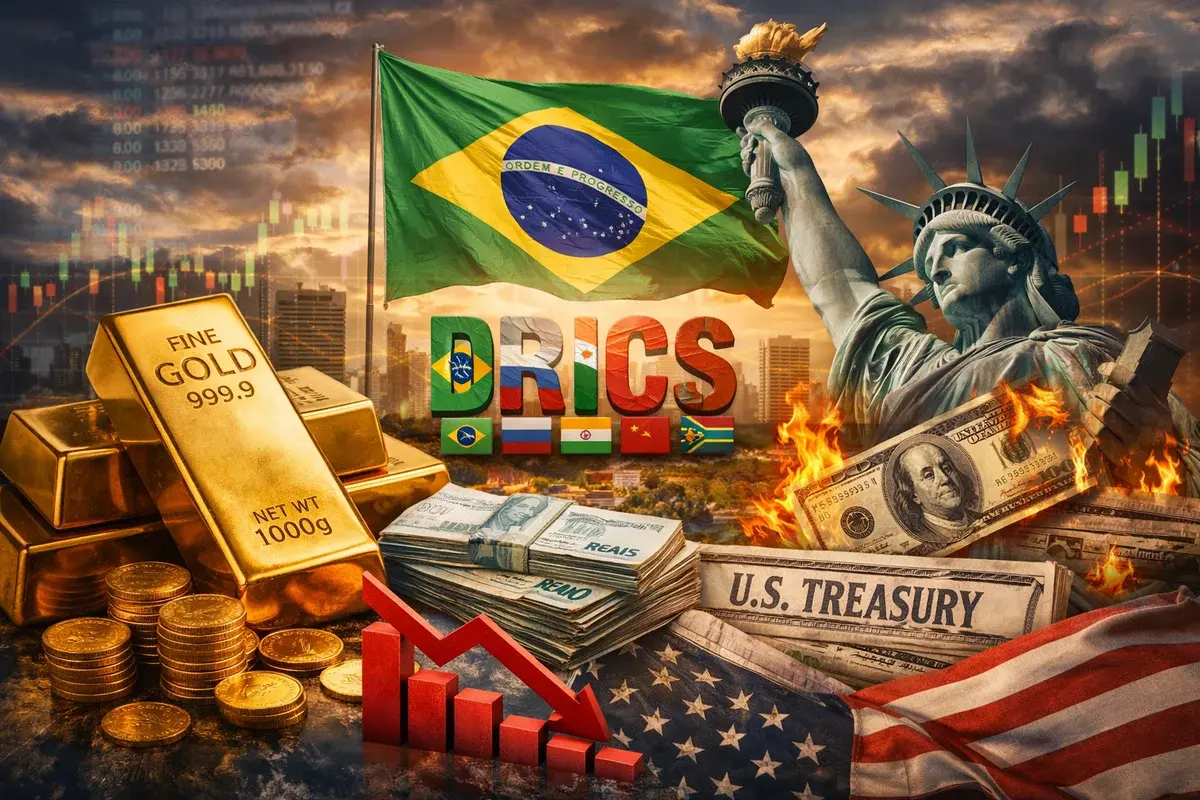
In one of the most consequential reserve-management decisions in recent emerging-market history, Brazil has quietly reshaped its international reserve strategy. Preliminary disclosures indicate that the country sold approximately US$ 61 billion in U.S. Treasury securities, reallocating a substantial portion of that capital into physical gold and non-dollar reserve assets.
While this move may appear technical on the surface, its implications extend far beyond portfolio rebalancing. This decision directly touches the foundations of global monetary dominance, reserve-currency trust, geopolitical risk management, and long-term financial sovereignty.
Brazil’s action represents a tangible acceleration of de-dollarization, a structural trend increasingly discussed among emerging economies and particularly within the BRICS framework. As inflation persistence, sanctions risk, and U.S. fiscal imbalances grow, central banks are reassessing whether a dollar-heavy reserve model remains optimal.
This article provides a comprehensive, SEO-rich analysis of:
Brazil’s Reserve Reallocation: What Exactly Changed?
Brazil’s foreign exchange reserves are managed by the Central Bank of Brazil, one of the most influential monetary authorities in Latin America. Traditionally, Brazil maintained a conservative reserve structure dominated by U.S. Treasury securities due to their liquidity and perceived safety.
| Component | Previous Strategy | New Direction |
|---|---|---|
| U.S. Treasuries | Core reserve asset | Large-scale reduction |
| Gold | Minor allocation | Significant physical accumulation |
| Currency Mix | USD-dominant | Greater diversification |
| Risk Exposure | Dollar-centric | Multi-asset, multi-currency |
The estimated US$ 61 billion Treasury sell-off is among the largest single reductions by a major emerging economy in recent years, signaling a strategic—not tactical—shift.
Strategic Motivations Behind Brazil’s Treasury Exit
Brazil’s decision is driven by a convergence of financial, political, and structural considerations rather than short-term market timing.
| Factor | Why It Matters |
|---|---|
| Rising U.S. Debt | Long-term sustainability concerns |
| Persistent Inflation | Erosion of real returns |
| Sanctions Precedent | Growing fear of asset freezes |
| Monetary Sovereignty | Reduced dependence on external systems |
The global perception of U.S. Treasuries has subtly shifted—from being a risk-free asset to a policy-exposed instrument. For reserve managers, that distinction is increasingly important.
** Why Gold Has Returned to the Center of Monetary Strategy**
Gold is once again being treated not as a legacy asset, but as a strategic monetary anchor.
| Attribute | Gold | Fiat Currency |
|---|---|---|
| Counterparty Risk | None | Exists |
| Sanction Resistance | High | Low |
| Inflation Hedge | Strong | Weak |
| Historical Store of Value | Proven | Limited |
Brazil’s accumulation of physical gold, rather than paper-linked instruments, underscores a preference for tangible, jurisdiction-independent assets.
Over the last decade, global central banks have shifted from net sellers to net buyers of gold, aligning Brazil with a broader international trend.
** De-Dollarization Explained: Structural Evolution, Not Collapse**
De-dollarization does not imply the end of the U.S. dollar. Instead, it reflects a gradual diversification away from over-reliance.
| Domain | Shift Observed |
|---|---|
| Reserve Holdings | Lower USD share |
| Trade Settlement | Local currency invoicing |
| Bilateral Agreements | Non-USD swaps |
| Strategic Assets | Gold accumulation |
The dollar’s long-standing advantage—global trust—is being replaced by a risk-adjusted approach to reserve allocation.
The BRICS Dimension: Collective Momentum, Shared Incentives
Brazil’s decision aligns with broader conversations inside the BRICS bloc, where member nations have openly discussed alternatives to a dollar-centric system.
| Country | Notable Action |
|---|---|
| China | Gradual Treasury reduction |
| Russia | Heavy gold accumulation |
| India | Reserve diversification |
| Brazil | Treasury exit, gold buying |
Rather than challenging the dollar outright, BRICS nations are building optionality—a critical feature in an increasingly fragmented global order.
** Impact on the U.S. Dollar and Treasury Market**
While US$ 61 billion is modest relative to the total U.S. debt market, the symbolic and signaling impact is substantial.
| Area | Expected Effect |
|---|---|
| Treasury Yields | Mild upward pressure |
| Foreign Demand | Gradual softening |
| Federal Reserve | Higher domestic reliance |
| Dollar Confidence | Incremental erosion |
If replicated by other reserve-heavy nations, these actions could reshape long-term capital flows.
Gold and Precious Metals Outlook
Central bank behavior plays a critical role in shaping long-term gold trends.
| Driver | Impact |
|---|---|
| Central Bank Buying | Price support |
| Currency Debasement | Value preservation |
| Geopolitical Risk | Safe-haven demand |
| Multipolar Finance | Reserve relevance |
Silver and other precious metals may benefit indirectly as investor interest broadens beyond traditional assets.
What This Means for Emerging Economies
Brazil’s move sets a precedent for other emerging markets facing similar vulnerabilities.
The transition is likely to be incremental, strategic, and coordinated, not abrupt.
** Investor Perspective: Key Indicators to Monitor**
Long-term investors should track macro signals rather than short-term price reactions.
| Indicator | Why It Matters |
|---|---|
| Central Bank Gold Data | Structural demand |
| TIC Reports | Foreign Treasury appetite |
| Currency Swap Deals | De-dollarization speed |
| BRICS Policy Statements | Strategic coordination |
This trend represents a macro cycle, not a short-term trade.
** Conclusion: A Calculated Move in a Changing Monetary World**
Brazil’s decision to sell US$ 61 billion in U.S. Treasuries and accumulate gold is not a rejection of the global financial system—it is an adaptation to evolving risks.
The world is gradually transitioning from unipolar monetary dominance to a diversified reserve framework. The U.S. dollar will remain influential, but unquestioned dominance is fading.
Gold, once considered obsolete, is reclaiming its role as financial insurance of last resort.
Brazil has not disrupted the system—but it has repositioned itself within it.
And in global finance, positioning defines the future.
Disclaimer: This article includes third-party opinions and macroeconomic analysis. It is for informational purposes only and does not constitute financial advice.

Financial journalist specializing in market analysis, stock research, and investment trends. Dedicated to providing accurate, timely insights for informed decision-making.
Credentials: Experienced financial journalist with expertise in equity markets and economic analysis
The information provided in this article is for educational and informational purposes only and should not be construed as financial, investment, or legal advice. Finscann does not provide personalized investment recommendations.
For detailed terms and conditions, please read our Disclaimer and Terms of Service.

Amid escalating US-Iran conflict and a full closure of the Strait of Hormuz, crude oil prices surge.
Explore the breaking financial impact of escalating US-Iran tensions on India's economy, crude oil, gold prices, and global markets in March 2026.

China suspends new fuel export contracts as global oil markets tighten due to Middle East tensions and shipping disruptions in the Strait of Hormuz.

Anthropic CEO Dario Amodei critiques OpenAI's Pentagon deal, labeling it deceptive. FinScann analyzes the implications for AI ethics, defense tech,...
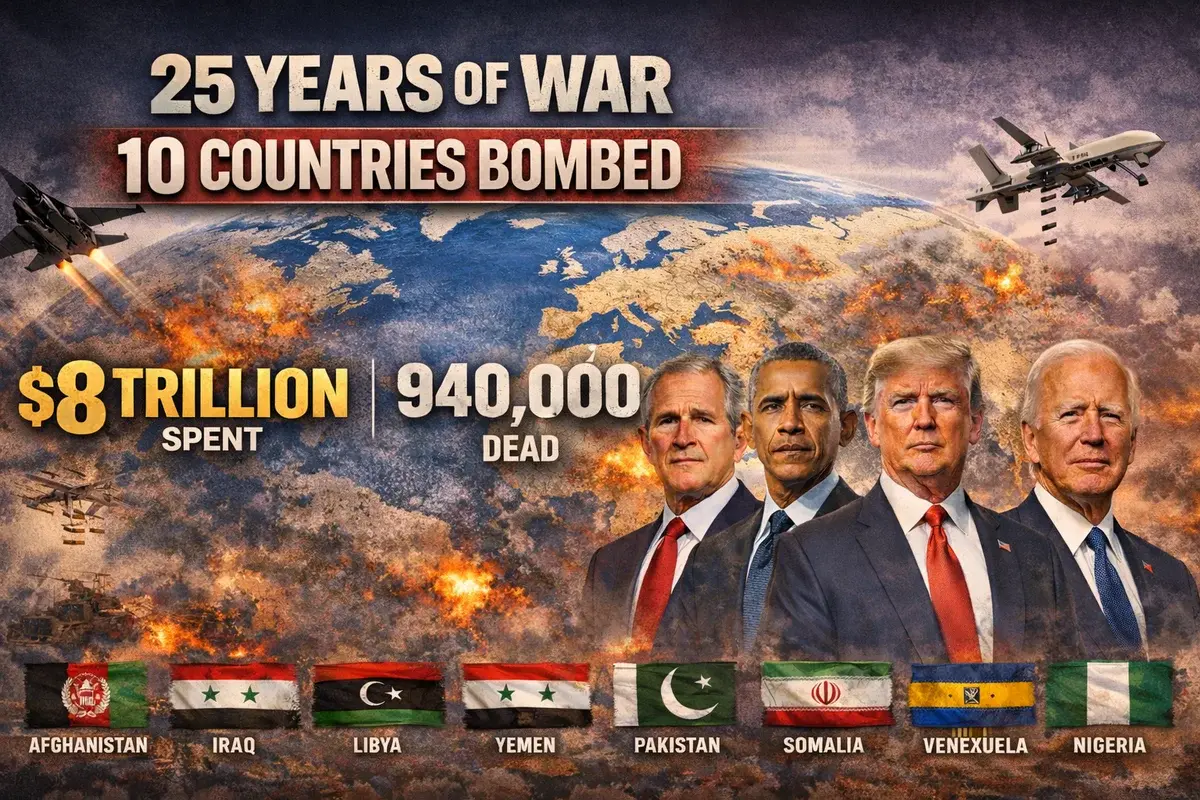
US's post-9/11 military engagements across 10+ countries, detailing the $8 trillion financial cost, human toll, and market impact.