Loading market data...
Vesuvius India Limited reports FY2025 revenue of ₹2,104 crore with net profit at ₹264 crore and recommends ₹1.50 dividend. Detailed analysis of financial performance, margins, EPS, dividend record date, and industrial sector outlook.
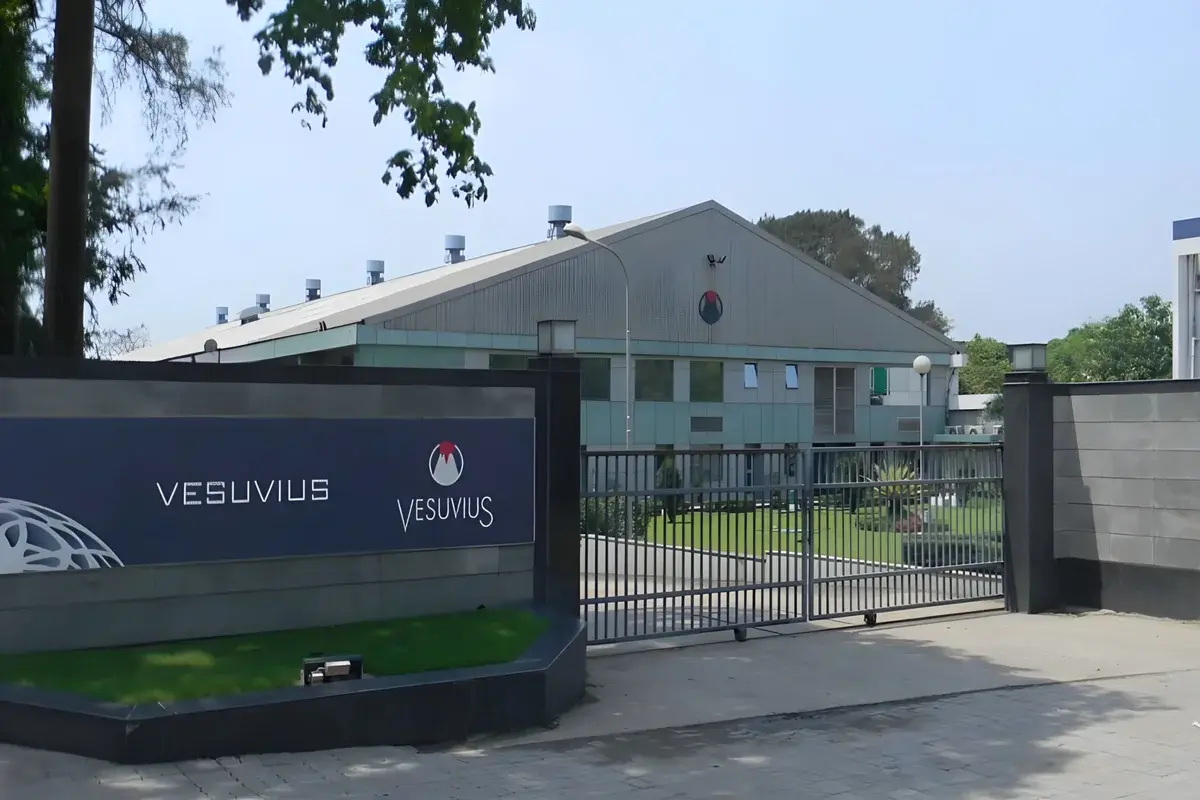
Vesuvius India Limited reported FY2025 revenue of ₹2,104.33 crore, up 12.6% year-on-year, with Profit Before Tax rising to ₹356.38 crore and Net Profit at ₹264.08 crore. The Board recommended a ₹1.50 per share dividend (face value Re.1), with April 30, 2026 as the record date and AGM scheduled for May 7, 2026. Despite cost pressures, EBITDA margins remained resilient, underscoring capital discipline and operating leverage in a steady industrial cycle.
India’s industrial manufacturing ecosystem has navigated FY2025 amid mixed global cues—softening commodity volatility, uneven export demand, and domestic capex continuity. Against this backdrop, refractory and molten metal flow engineering specialist Vesuvius India delivered a stable earnings performance, reflecting pricing power and cost management discipline.
The results are particularly relevant at a time when investors are rotating toward dividend stocks and cash-generative industrial names following a broader valuation reset in midcaps. In an environment where EBITDA margins and free cash flow visibility matter more than headline growth, Vesuvius’ FY25 numbers signal steady execution rather than cyclical exuberance.
Vesuvius India reported Total Income from Operations of ₹2,104.33 crore in FY2025, compared with ₹1,868.57 crore in FY2024, reflecting 12.6% growth. The topline expansion was supported by steady demand from the steel and foundry segments, alongside operating leverage benefits.
Profit Before Tax rose to ₹356.38 crore from ₹348.84 crore in the prior year, indicating moderate but stable earnings expansion. Net Profit stood at ₹264.08 crore, translating into healthy bottom-line conversion despite input cost fluctuations.
| Financial Metric | FY2025 | FY2024 | YoY Trend | Commentary |
|---|---|---|---|---|
| Revenue | ₹2,104.33 Cr | ₹1,868.57 Cr | +12.6% | Strong industrial demand |
| PBT | ₹356.38 Cr | ₹348.84 Cr | +2.2% | Margin resilience |
| Net Profit | ₹264.08 Cr | NA | Stable Growth | Healthy tax efficiency |
| Total Expenses | ₹1,806.89 Cr | NA | Elevated | Raw material & ops cost |
| EPS (₹1 FV) | ₹13.01 | NA | Strong | Earnings visibility |
The relatively modest PBT growth compared to revenue suggests measured margin compression due to cost inflation, yet overall profitability remains robust. The earnings per share of ₹13.01 reflects stable capital efficiency.
While the company did not explicitly disclose EBITDA in the summary, operating trends imply steady margins supported by pricing adjustments and supply chain optimization. Industrial engineering businesses like Vesuvius typically operate with EBITDA margins in the 18–22% band depending on raw material costs and demand cycles.
The improvement in net profit alongside controlled expense growth indicates:
“Markets are increasingly rewarding industrial companies that demonstrate cash flow discipline and steady return ratios rather than cyclical earnings spikes,” says a Mumbai-based fund manager tracking capital goods stocks.
The Board recommended a final dividend of ₹1.50 per equity share (face value Re.1), subject to shareholder approval. The record date is April 30, 2026, with the AGM scheduled for May 7, 2026.
While the dividend yield may not classify Vesuvius among high dividend yield PSU dividend stocks, the payout reinforces consistent capital return policy—a critical factor for long-term investors seeking passive income stocks within industrial segments.
| Dividend Detail | Information |
|---|---|
| Dividend per Share | ₹1.50 |
| Face Value | Re.1 |
| Record Date | April 30, 2026 |
| AGM Date | May 7, 2026 |
The dividend decision reflects confidence in cash flow strength and balance sheet stability.
Corporate governance stability remains central to investor confidence. The Board approved the appointment of Mr. Neeraj Kumar Jumrani as Chief Financial Officer effective March 16, 2026, succeeding Mr. Subhabrata Nandi.
Mr. Jumrani brings over two decades of experience, including senior finance roles within the Linde Group. His background suggests an emphasis on:
Additionally, the appointment of M/s J K & Co as Cost Auditor for FY2026 and multiple senior managerial personnel signals organisational strengthening rather than transition risk.
India’s steel production and infrastructure expansion continue to drive demand for high-performance refractory solutions. Vesuvius operates in a niche but essential segment—flow control and advanced material solutions used in molten metal processing.
| Segment | Demand Momentum | Margin Outlook | Capital Flow Sentiment |
|---|---|---|---|
| Steel-linked Refractories | Stable | Positive Bias | Neutral to Accumulating |
| Industrial Engineering | Improving | Stable | Selective |
| Capital Goods | Gradual Recovery | Expanding | Improving |
Industrial manufacturing names are benefiting from domestic capex revival and supply chain localization themes.
Vesuvius India operates within a technically complex, high-entry-barrier segment. The company benefits from long-standing customer relationships and engineering expertise.
Strategic strengths include:
The business model exhibits durability given the essential nature of its products in industrial production.
Despite operational strength, certain macro risks remain relevant:
However, current balance sheet discipline mitigates short-term stress risk.
Vesuvius India’s FY25 performance reinforces its position as a steady industrial compounder rather than a high-beta cyclical bet. In a market where dividend stocks and blue-chip industrial names are regaining investor preference, the company offers stability over speculative upside.
For Long-Term Investors:
For Tactical Traders:
Valuation comfort would depend on sustained double-digit earnings growth and margin preservation.
Investors can track and trade Vesuvius India shares via platforms such as Zerodha, Groww, Upstox, and Angel One, which provide equity market access and dividend tracking tools.
Q: How strong was Vesuvius India’s revenue growth in FY25?
Revenue rose 12.6% year-on-year, reflecting steady industrial demand.
Q: What is the dividend announced?
₹1.50 per equity share, subject to shareholder approval.
Q: Does the company show margin resilience?
Yes, PBT growth and net profit stability indicate controlled cost structure.
Q: What are the key risks?
Steel demand volatility and raw material cost pressures remain key variables.
Vesuvius India’s FY2025 results reflect disciplined industrial execution rather than headline-grabbing expansion. In a market environment prioritising cash flow clarity and capital discipline, such stability can become a quiet alpha generator.
⚠️ DISCLAIMER: We Are Not Financial Advisors

Financial journalist specializing in market analysis, stock research, and investment trends. Dedicated to providing accurate, timely insights for informed decision-making.
Credentials: Experienced financial journalist with expertise in equity markets and economic analysis
The information provided in this article is for educational and informational purposes only and should not be construed as financial, investment, or legal advice. Finscann does not provide personalized investment recommendations.
For detailed terms and conditions, please read our Disclaimer and Terms of Service.
No related topics available
A ₹590 crore fraud at IDFC FIRST Bank’s Chandigarh branch has triggered arrests, a 20% stock crash, and Haryana government de-empanelment.

IndiGo reports 11% growth in cargo volumes in 2025, driven by expanded belly capacity and three new freighters.
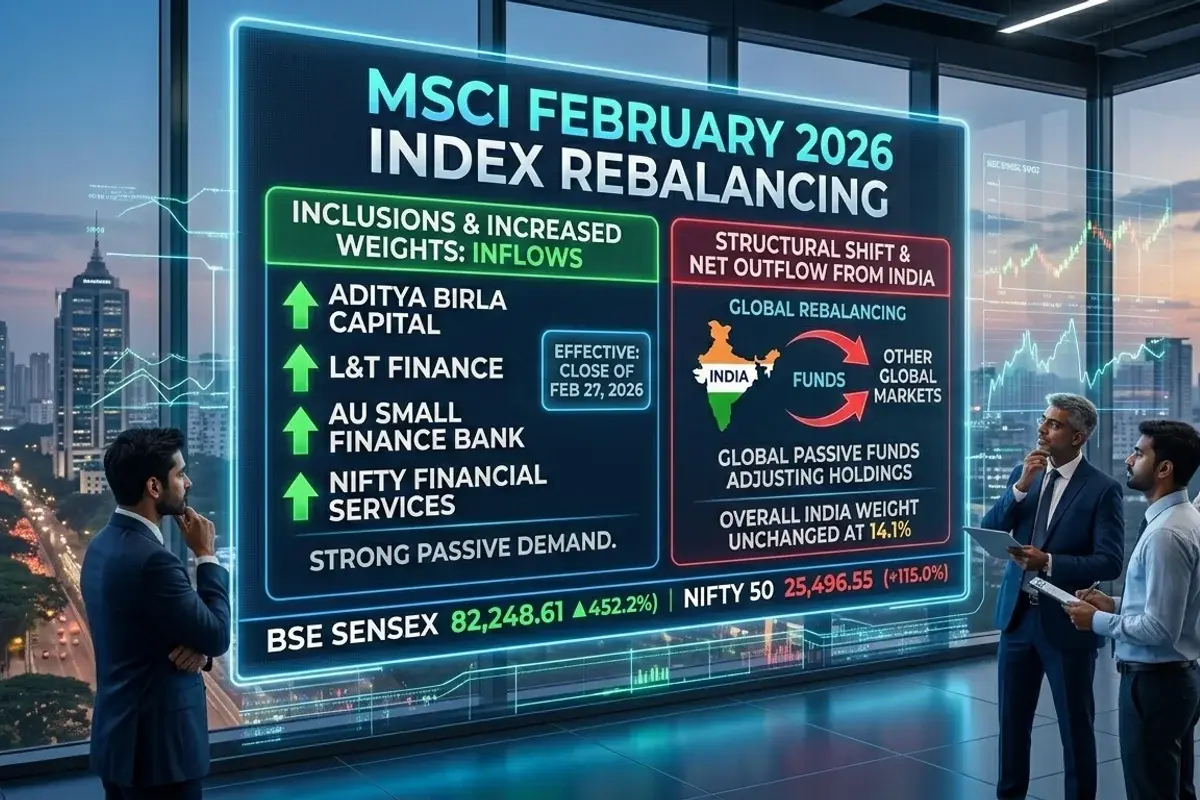
FinScann's latest analysis on the February 2026 MSCI rebalancing reveals potential inflows for Aditya Birla Capital, L&T Finance, and AU Small...

Hyundai Motor Co. invests $6.3 billion (₹52,500 Cr) in AI data centers, robot factories, and hydrogen plants in South Korea.

Tata Steel invests $264 million (₹2,401.50 Cr) in its T Steel Holdings subsidiary. FinScann analyzes the strategic move and its impact on Tata Steel...