Loading market data...
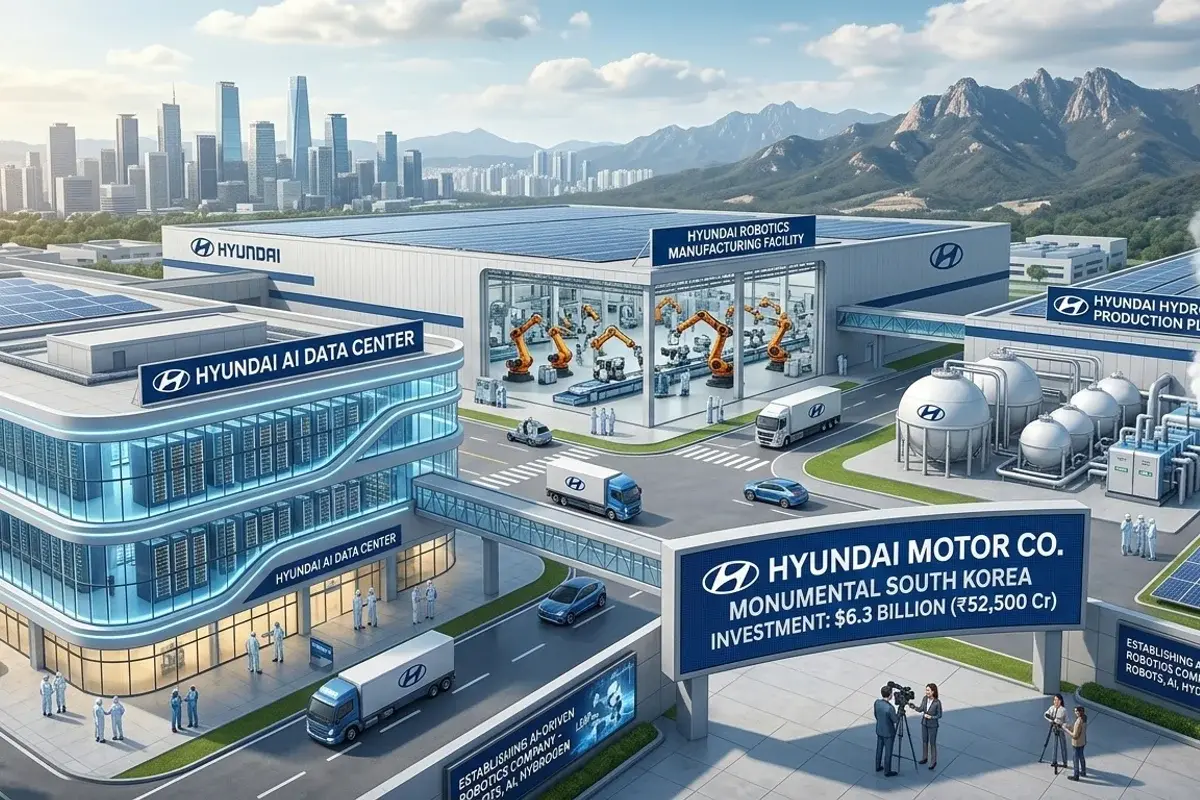
Hyundai Motor Co. invests $6.3 billion (₹52,500 Cr) in AI data centers, robot factories, and hydrogen plants in South Korea. FinScann analyzes the market impact and future outlook for investors in February 2026.
Breaking: Hyundai's $6.3 Billion AI, Robotics & Hydrogen Bet – February 2026 Stock Analysis
Hyundai Motor Co. is making a formidable $6.3 billion (approximately ₹52,500 Cr) leap into cutting-edge technologies, announcing a monumental investment in South Korea to establish an artificial intelligence data center, a robot manufacturing facility, and a hydrogen production plant. This strategic move, officially confirmed on February 27, 2026, accelerates the automaker's pivot towards becoming an AI-driven robotics company, fundamentally reshaping its future growth trajectory and positioning it as a leader in next-generation automotive and energy technologies. The announcement has already sent positive ripples through the market, with Hyundai's shares seeing a significant surge.
The Catalyst
Hyundai's massive $6.3 billion investment is a cornerstone of its broader strategic shift from a traditional automaker to a diversified, future-focused technology conglomerate. This initiative is a critical component of the Hyundai Motor Group's previously outlined 125.2 trillion won (approximately $86 billion) domestic investment plan spanning from 2026 to 2030, aimed at reinforcing its global leadership in emerging sectors. The company recognizes that future competitiveness hinges on advancements in areas like Artificial Intelligence (AI), robotics, hydrogen energy, and software-defined vehicles (SDVs).
This investment, strategically located in South Korea's Saemangeum region, is being executed in collaboration with the South Korean government. The region offers ample land and abundant renewable energy potential, particularly solar, making it an ideal "AI Hydrogen City" testbed. Furthermore, the move addresses South Korea's demographic challenges, such as an aging population and potential labor shortages, by leveraging automation in manufacturing. Earlier partnerships with Nvidia for AI chips and the goal to establish an "AI factory" underscore Hyundai's commitment to building a robust AI infrastructure.
Financial Forensics
The total investment of 9 trillion Korean won, equivalent to approximately $6.3 billion (₹52,500 Cr), is strategically allocated across three core future growth pillars.
The largest portion, 5.8 trillion won, is earmarked for a hyperscale AI data center. This facility is designed to centralize and process vast amounts of data essential for advanced autonomous driving systems and sophisticated robot learning. It is planned to house computing power equivalent to 50,000 GPUs in phases, serving as the "brain" for integrated data management for software-defined vehicle (SDV) development and smart factory advancements.
A significant 400 billion won will be channeled into establishing Korea's first dedicated robot manufacturing plant. This facility aims to mass-produce various industrial and logistics robots, including innovative wearable robots, and foster a local robot parts cluster. Hyundai aims to establish mass production capacity for 30,000 robot units annually by 2028.
The investment also includes 1 trillion won for a large-scale water electrolysis facility dedicated to green hydrogen production, with a capacity to produce 80 tonnes of hydrogen daily. To power these energy-intensive operations, an additional 1.3 trillion won is allocated for a gigawatt-level solar power plant, ensuring a sustainable and renewable energy source for the entire complex. The construction of the AI data center and robotics factory is targeted for completion by the end of 2029.
The project is expected to generate a substantial economic impact of 16 trillion Korean won and create 71,000 direct and indirect jobs.
Hyundai Motor Group's Saemangeum Investment Allocation (USD Billions)
| Category | Estimated Investment (USD Billions) | Strategic Rationale |
|---|---|---|
| AI Data Center | $4.06 (₹33,800 Cr) | Computing power for autonomous driving, robot learning, and SDV development. |
| Robot Manufacturing Plant | $0.28 (₹2,300 Cr) | Mass production of industrial, logistics, and wearable robots. |
| Hydrogen Production Plant | $0.70 (₹5,800 Cr) | Production of 80 tonnes/day of green hydrogen for future mobility and energy. |
| Solar Power Infrastructure | $0.91 (₹7,600 Cr) | Renewable energy supply for AI data center and hydrogen plant. |
| Total | $6.3 (₹52,500 Cr) | Accelerating future tech, diversified growth, economic development. |
Source: Hyundai Motor Co. filings, South Korean Land Ministry, FinScann Analysis. Currency conversion approximate at ₹83.33/USD as of February 2026.
Market Impact
The announcement has been met with immediate investor enthusiasm. Shares of Hyundai Motor Co. surged more than 11% on the news on the Korean Exchange, significantly outperforming the benchmark Kospi index. Affiliate Kia Corp. also saw a rise of over 2%. This positive reaction indicates strong investor confidence in Hyundai's aggressive pursuit of future technologies. Analysts have already begun raising target prices for both Hyundai and Kia, citing enhanced profit visibility due to these strategic AI investments for autonomous driving. Hyundai's stock rally also contributed significantly to the KOSPI index's performance, allowing it to temporarily surpass LG Energy Solution as the third-largest company on the KOSPI.
For investors in the Indian market, this global development holds relevance. While Hyundai Motor Co. is a Korean entity, its Indian subsidiary, Hyundai Motor India Limited (HMIL), is a major player in the Indian automotive sector. HMIL reported its highest-ever monthly domestic sales in January 2026, with 59,107 units, and total sales of 73,137 units. This comes despite slipping to the fourth position in the highly competitive Indian passenger vehicle market in 2025, behind Maruti Suzuki, Tata Motors, and Mahindra & Mahindra. Hyundai has committed an investment of ₹45,000 crore as part of its long-term India strategy, signaling its intent to regain market share, particularly in the booming SUV segment.
The broader Indian auto sector has shown robust performance in fiscal year 2026, with the BSE Auto index surging by 32%, significantly outperforming the Sensex's 8.5% gain. The Nifty Auto index has also gained 22% year-to-date in 2025, reflecting optimism driven by strong festival season demand and robust Q3 FY26 earnings expectations. Hyundai's global push into AI and robotics could translate into more advanced manufacturing capabilities and cutting-edge products for the Indian market in the long run, enhancing its competitive edge against domestic and international rivals.
Key Takeaways
FinScann Verdict
FinScann views Hyundai Motor Co.'s $6.3 billion investment as a bold and necessary strategic pivot that positions the company firmly for future technological leadership. This aggressive move into AI, robotics, and hydrogen demonstrates a clear vision for long-term growth and diversification. While execution will be key, the scale of investment and government collaboration suggest a strong commitment to becoming a dominant player in the next era of mobility and sustainable energy. This is a significant development that warrants close monitoring by investors, particularly those keen on the automotive and tech convergence space.
Q: What is the primary purpose of this massive investment? A: The primary purpose is to accelerate Hyundai Motor Co.'s transition into an AI-driven robotics company and a leader in future technologies by establishing advanced AI data centers, robot manufacturing facilities, and hydrogen production plants in South Korea.
Q: How will the AI data center contribute to Hyundai's future? A: The AI data center, equipped with 50,000 GPUs, will serve as the central brain for processing massive data volumes crucial for developing advanced autonomous driving systems, facilitating robot learning, and accelerating the development of software-defined vehicles (SDVs) and smart factories.
Q: What is a robot factory in the automotive context? A: In the automotive context, a robot factory is a highly automated manufacturing facility dedicated to producing various types of robots, including industrial robots for assembly lines, logistics robots, and even wearable or humanoid robots. These robots enhance efficiency, precision, and safety in manufacturing. Hyundai's new factory aims to produce 30,000 units annually.
Q: How does this investment align with Hyundai's global strategy? A: This investment is a key part of Hyundai Motor Group's broader 125.2 trillion won ($86 billion) domestic investment plan through 2030, aimed at becoming a global leader in robotics and physical artificial intelligence. It signifies a strategic commitment to diversified growth and technological innovation across its global operations.
Q: What is the significance of the Saemangeum region for this project? A: The Saemangeum region in South Korea was chosen for its vast land area and abundant natural resources, particularly sunlight, which is vital for the gigawatt-level solar power plant that will supply renewable energy to the AI data center and hydrogen production facilities. It also benefits from government support and incentives, making it an ideal location for an "AI Hydrogen City."
Disclaimer: For information only; not investment advice. Stock market investments carry risks. Please consult a SEBI-registered advisor before investing. FinScann assumes no liability for decisions made based on this report.

Financial journalist specializing in market analysis, stock research, and investment trends. Dedicated to providing accurate, timely insights for informed decision-making.
Credentials: Experienced financial journalist with expertise in equity markets and economic analysis
The information provided in this article is for educational and informational purposes only and should not be construed as financial, investment, or legal advice. Finscann does not provide personalized investment recommendations.
For detailed terms and conditions, please read our Disclaimer and Terms of Service.
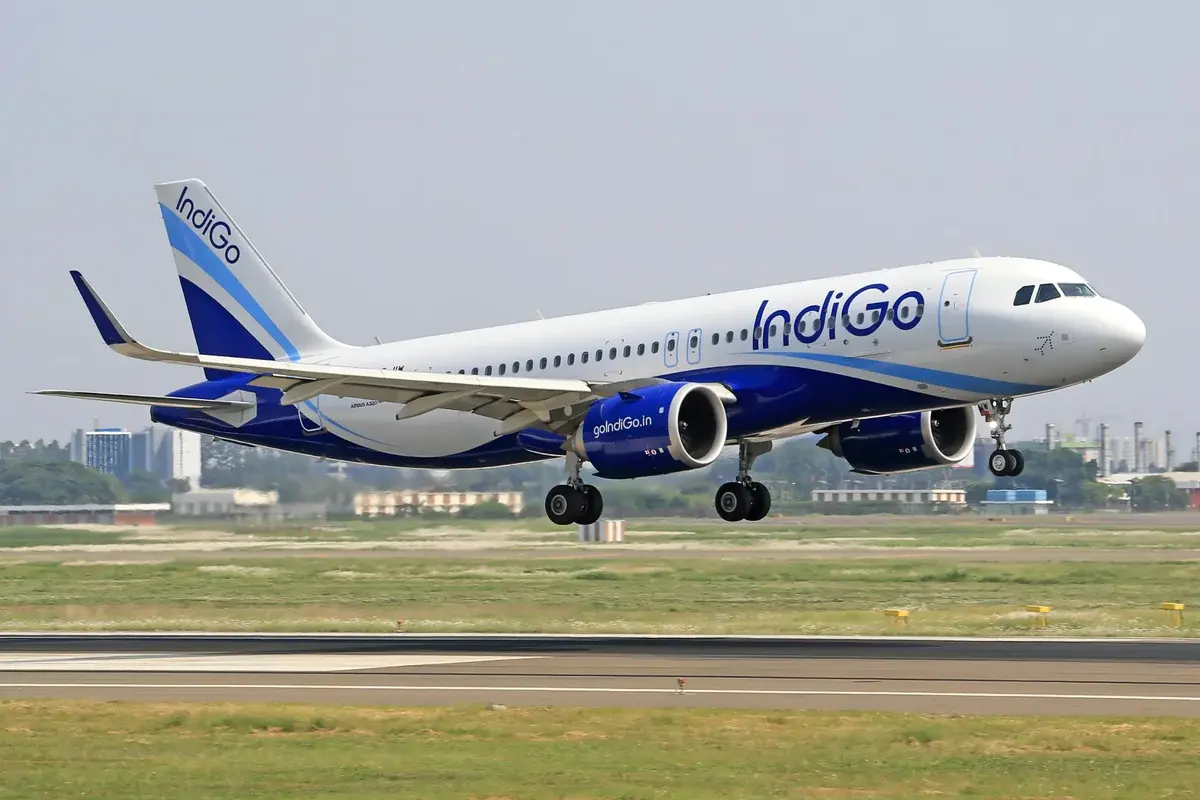
IndiGo announces six new direct routes from Navi Mumbai International Airport effective March 29, 2026, while recalibrating select long haul...
Leading brokerages issue Buy and Outperform ratings on Vedanta, UltraTech Cement, MTAR Technologies, Waaree Energies, Adani Enterprises, Polycab...
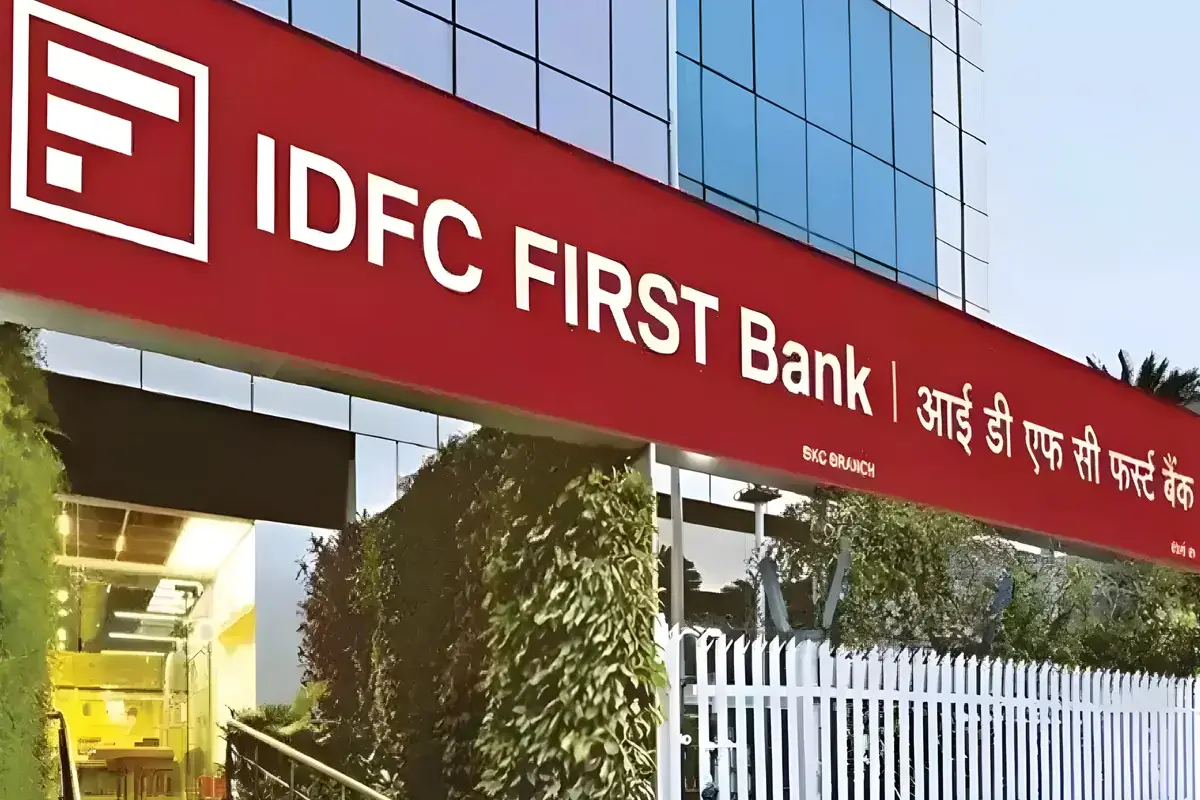
A ₹590 crore fraud at IDFC FIRST Bank’s Chandigarh branch has triggered arrests, a 20% stock crash, and Haryana government de-empanelment.
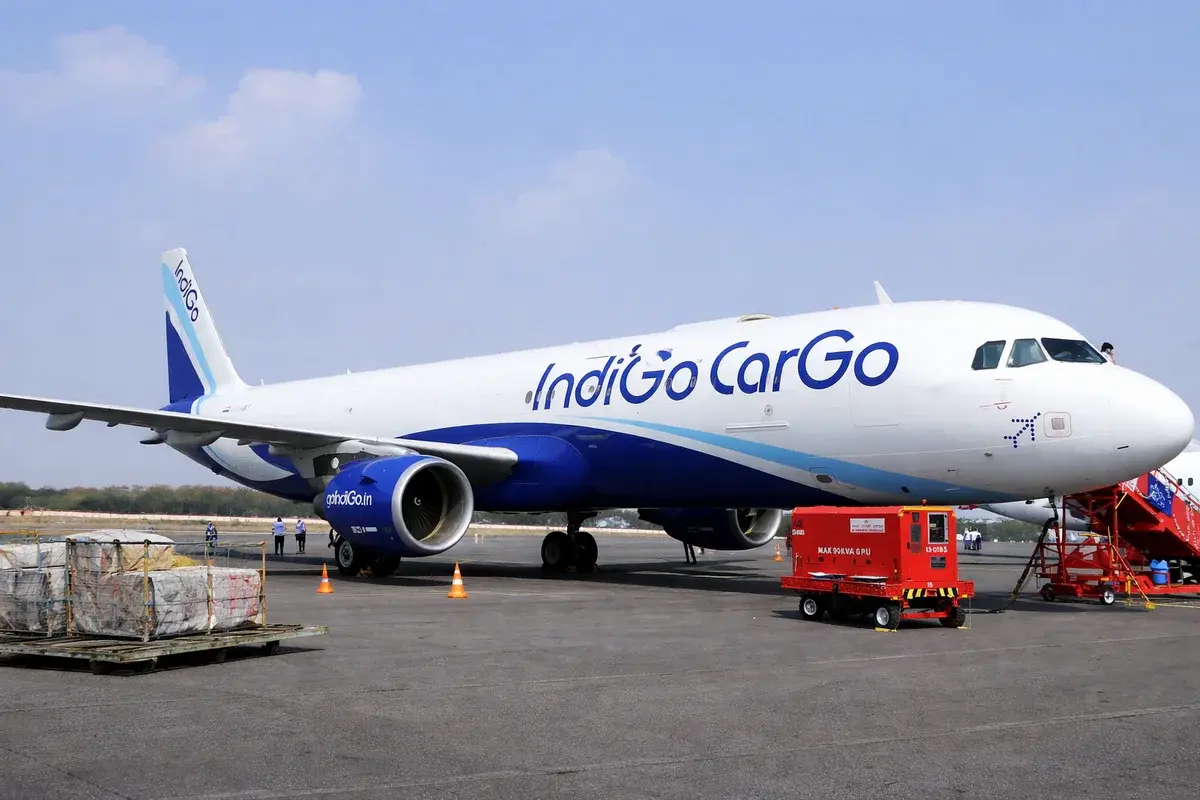
IndiGo reports 11% growth in cargo volumes in 2025, driven by expanded belly capacity and three new freighters.
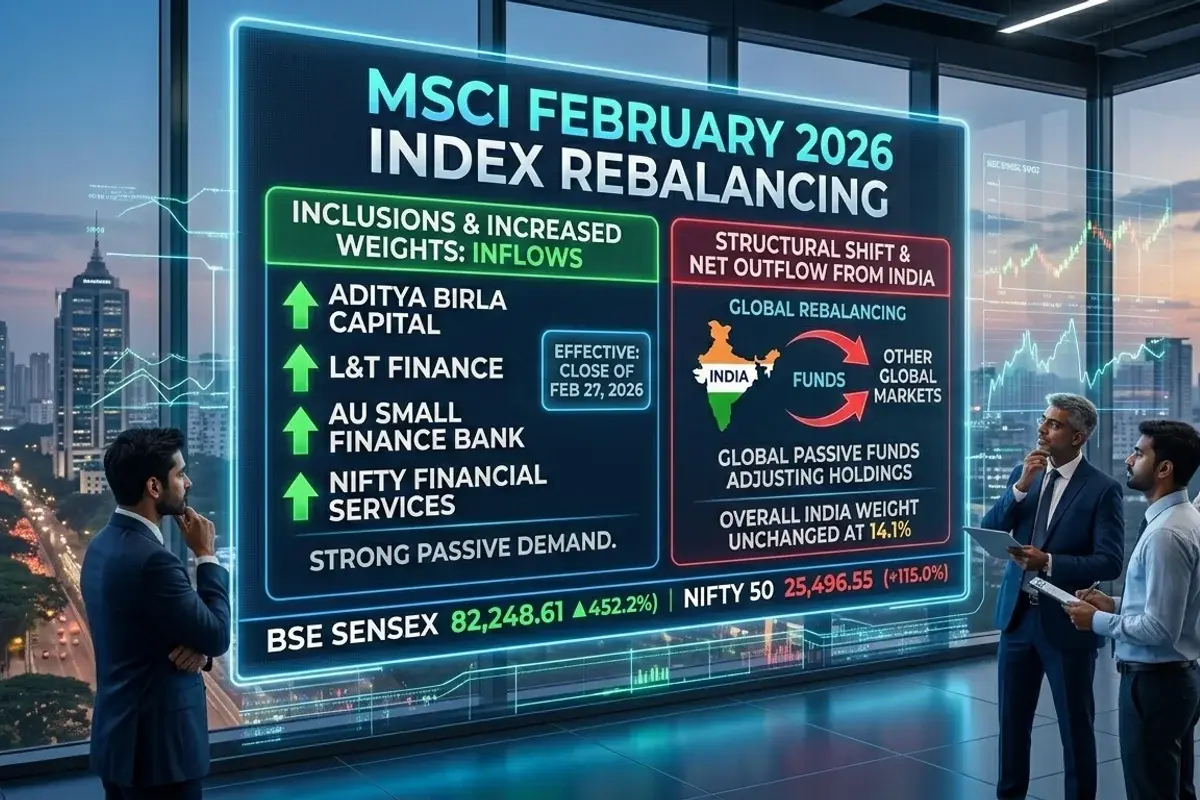
FinScann's latest analysis on the February 2026 MSCI rebalancing reveals potential inflows for Aditya Birla Capital, L&T Finance, and AU Small...