Loading market data...
A ₹590 crore fraud at IDFC FIRST Bank’s Chandigarh branch has triggered arrests, a 20% stock crash, and Haryana government de-empanelment. Deep analysis of the scam, internal control failures, liquidity risks, CASA impact, and investor outlook.
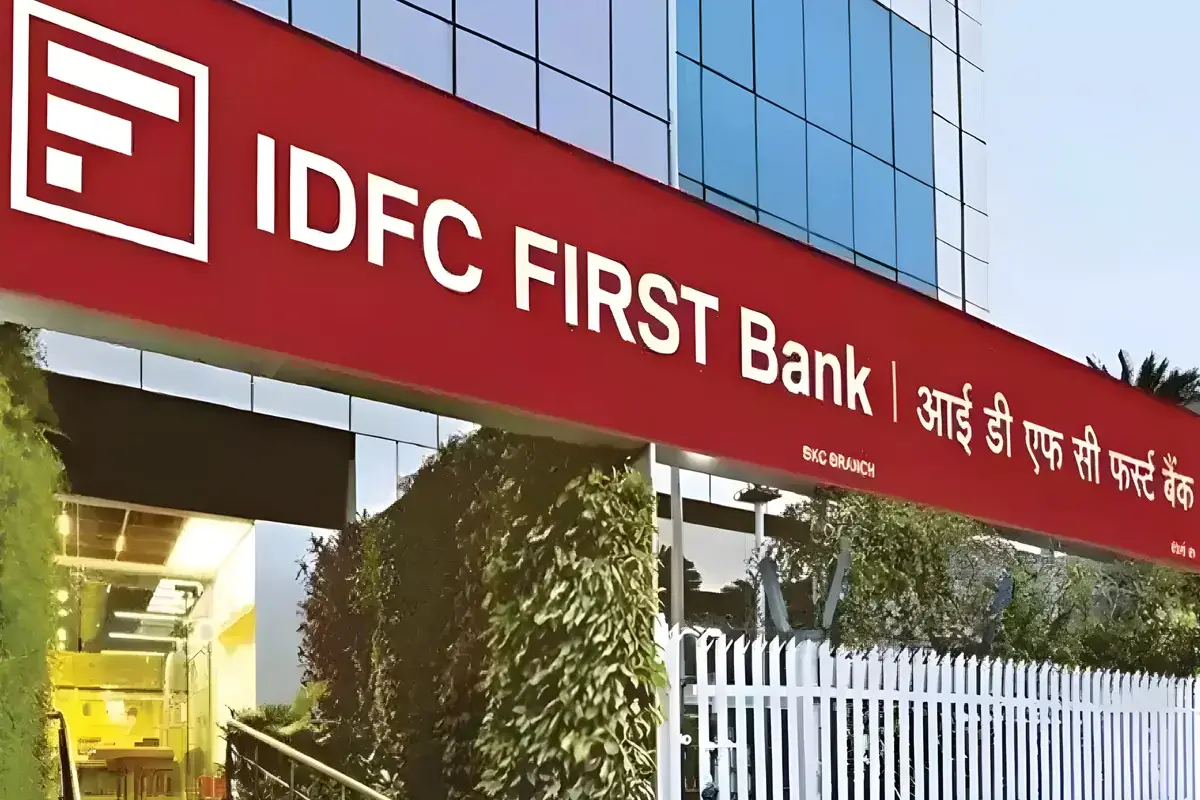
A ₹590-crore fraud detected at the Chandigarh branch of IDFC FIRST Bank has triggered arrests, a 20% lower-circuit fall in the stock, and the de-empanelment of the bank by the Haryana government. While the bank has repaid the principal and significant recoveries have been reported, the episode raises hard questions around internal controls, operational risk, deposit stability, and funding costs in a tightening liquidity cycle. With forensic audits underway, the next few quarters will determine whether this is a contained operational lapse or a broader governance overhang.
Loading chart...
The fraud surfaced when a Haryana government department sought to close an account and transfer balances to another bank. During reconciliation, a sharp mismatch between the reported balance and the actual funds available triggered scrutiny. The issue was escalated, leading to a deeper probe into transactions linked to government scheme accounts.
Two accounts under the MMGAY-2.0 scheme were opened in September 2025 at IDFC FIRST Bank and at AU Small Finance Bank. In January 2026, instructions were issued to close both accounts and move funds to Axis Bank. While AU transferred the full amount with interest, IDFC FIRST transferred only ₹1.27 crore before closing the account—exposing a massive shortfall that eventually ballooned to ₹590 crore upon investigation.
This discrepancy forced immediate internal review, regulatory disclosure, and police action.
Preliminary findings point to employee fraud allegedly executed in connivance with external parties. The primary mechanism involved forged cheques and fraudulent debit instructions.
The alleged tactics included:
CEO V. Vaidyanathan acknowledged that while instructions appeared client-originated, they were fraudulent and processed internally.
Operational risk events of this scale often expose vulnerabilities in:
As of February 25, four individuals were arrested, including two former bank employees and two external partners allegedly linked to beneficiary entities.
Key names reported include:
The arrests suggest the matter has shifted from internal lapse to criminal conspiracy. However, from an investor standpoint, the more pressing question is institutional accountability.
A forensic audit by KPMG is expected to determine whether this was a localized branch-level breach or indicative of systemic control weaknesses.
Markets reacted swiftly. Shares of IDFC FIRST Bank hit the 20% lower circuit, wiping out roughly ₹14,300 crore in market capitalization in a single session.
Such reactions typically reflect:
Banking stocks trade on trust premiums. Once shaken, valuation reset can be severe even if financial damage is contained.
The bank announced full repayment of the principal amount claimed by the Haryana government. State authorities confirmed recovery of approximately ₹556 crore plus nearly ₹22 crore in interest within 24 hours.
From a balance sheet perspective, key considerations include:
| Metric | Immediate Impact | Risk Outlook |
|---|---|---|
| Capital Adequacy | Likely manageable | Monitor if provisions rise |
| Liquidity Coverage Ratio | Short-term stable | Watch deposit outflows |
| CASA Ratio | At risk | Government withdrawal effect |
| Credit Rating | Under watch | Dependent on audit outcome |
| Funding Cost | Likely to rise | CASA decline pressure |
The real risk lies not in the principal repayment but in reputational spillover and deposit volatility.
The Haryana government has de-empanelled IDFC FIRST Bank for state business, resulting in an immediate ₹200 crore outflow of deposits.
In an industry facing deposit growth challenges, this is significant. With loan growth outpacing deposit mobilization across Indian banks, CASA stability is critical.
If government-linked and institutional deposits reduce, the bank may need to:
Lower-cost CASA deposits are central to profitability. A prolonged trust deficit could squeeze margins in upcoming quarters.
While no regulatory sanctions have yet been publicly disclosed, large-scale frauds typically trigger:
Indian banking regulation has tightened considerably post past NBFC and cooperative bank crises. Any sign of systemic weakness could invite sharper oversight.
India’s banking sector has enjoyed strong asset quality improvements, stable NPA ratios, and improving credit demand. However, fraud incidents reintroduce governance risk into valuations.
Banking valuations depend heavily on:
Even if the financial loss is recoverable, reputational damage can cause yield compression in valuation multiples.
The next 60–90 days will be crucial.
Key monitoring factors:
“Fraud events do not destroy banks; opacity does. Markets will reward clarity and swift institutional correction,” says a Mumbai-based banking analyst.
Historically, Indian banking stocks have recovered from operational fraud events if:
However, if deposit attrition accelerates, funding cost pressure could dent earnings projections.
Investors must assess whether the recent correction reflects:
| Risk Category | Short-Term Risk | Long-Term Risk |
|---|---|---|
| Liquidity | Moderate | Manageable |
| Capital Adequacy | Low | Low |
| Reputation | High | Depends on audit |
| Regulatory | Medium | Conditional |
| Earnings Impact | Mild to Moderate | NIM pressure risk |
The ₹590-crore fraud represents a serious operational lapse but not necessarily a solvency crisis. The bank’s swift repayment and recovery efforts signal intent to contain the fallout.
However, banking is a confidence business. The real test lies in deposit stability, regulatory closure, and audit transparency.
If internal controls are demonstrably strengthened and depositor trust holds, the stock could stabilize. If not, the reputational discount may persist longer than the financial loss itself.
The coming quarters will determine whether this episode becomes a footnote or a turning point in IDFC FIRST Bank’s governance narrative.
⚠️ DISCLAIMER: We Are Not Financial Advisors

Financial journalist specializing in market analysis, stock research, and investment trends. Dedicated to providing accurate, timely insights for informed decision-making.
Credentials: Experienced financial journalist with expertise in equity markets and economic analysis
The information provided in this article is for educational and informational purposes only and should not be construed as financial, investment, or legal advice. Finscann does not provide personalized investment recommendations.
For detailed terms and conditions, please read our Disclaimer and Terms of Service.

IndiGo announces six new direct routes from Navi Mumbai International Airport effective March 29, 2026, while recalibrating select long haul...

Leading brokerages issue Buy and Outperform ratings on Vedanta, UltraTech Cement, MTAR Technologies, Waaree Energies, Adani Enterprises, Polycab...

IndiGo reports 11% growth in cargo volumes in 2025, driven by expanded belly capacity and three new freighters.
FinScann's latest analysis on the February 2026 MSCI rebalancing reveals potential inflows for Aditya Birla Capital, L&T Finance, and AU Small...

Hyundai Motor Co. invests $6.3 billion (₹52,500 Cr) in AI data centers, robot factories, and hydrogen plants in South Korea.