Loading market data...
IndiGo announces six new direct routes from Navi Mumbai International Airport effective March 29, 2026, while recalibrating select long haul international services to improve operational reliability and network efficiency.
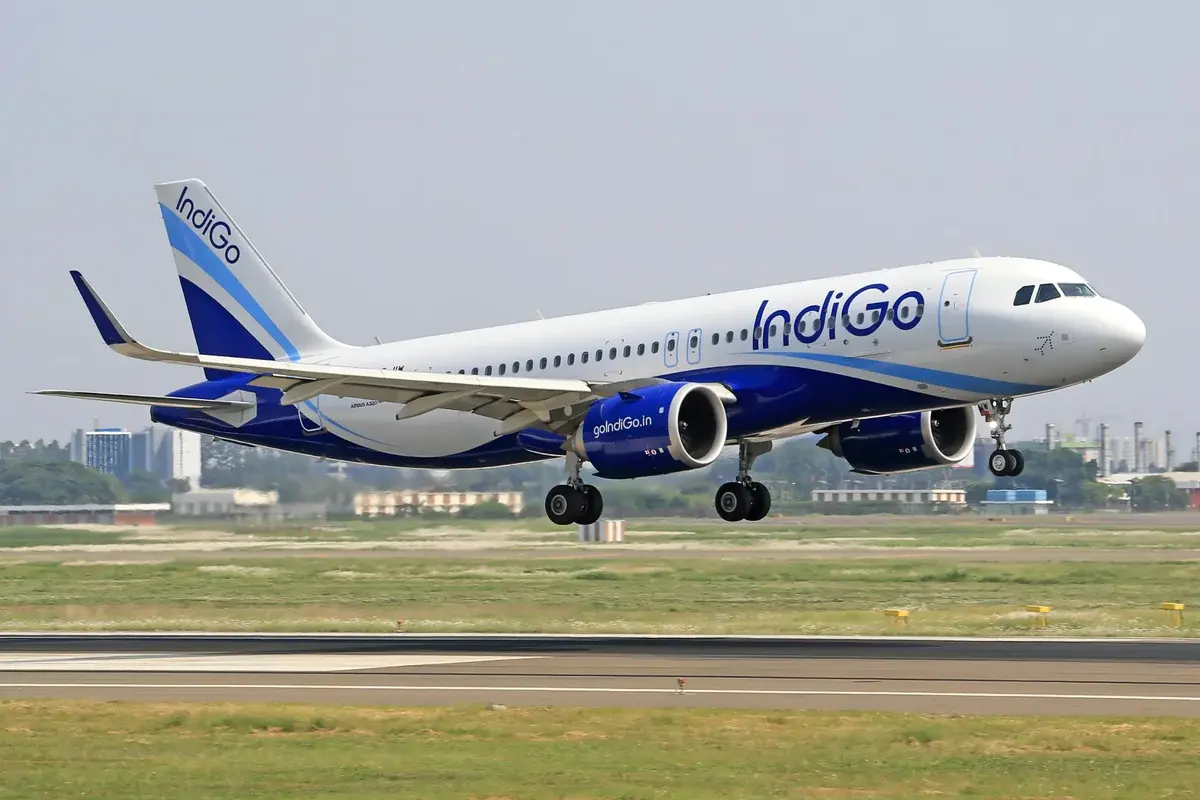
India’s largest airline by market share, IndiGo, has announced the launch of six new direct flights from Navi Mumbai International Airport NMIA, effective March 29, 2026. The new routes will connect NMIA with Ahmedabad, Diu, Goa, Rajkot, Belgaum, and Kolhapur, strengthening regional connectivity even as the carrier recalibrates parts of its international long haul network.
The dual announcement of regional expansion alongside long haul rationalisation highlights a broader strategic pivot underway at India’s dominant low cost carrier.
The new services will be operated using ATR aircraft, reinforcing IndiGo’s commitment to regional aviation and short haul network density. By deploying turboprop aircraft, the airline is optimizing cost structures while improving access to emerging cities.
This move is strategically timed as NMIA gradually emerges as a complementary hub to Mumbai’s primary airport, offering airlines an opportunity to tap incremental demand from western India’s fast growing urban clusters.
| Origin | Destination | Aircraft Type | Category | Strategic Purpose |
|---|---|---|---|---|
| NMIA | Ahmedabad | ATR | Business | Trade and Corporate Travel |
| NMIA | Diu | ATR | Leisure | Tourism Boost |
| NMIA | Goa | ATR | Leisure | High Demand Holiday Route |
| NMIA | Rajkot | ATR | Industrial | Manufacturing Connectivity |
| NMIA | Belgaum | ATR | Regional | Commercial Access |
| NMIA | Kolhapur | ATR | Tier 3 | Regional Economic Link |
Bookings are being progressively opened across IndiGo’s website, mobile application, and travel partners.
By expanding its ATR network, IndiGo is deepening its footprint in the regional aviation ecosystem, where competition remains relatively moderate compared to metro heavy trunk routes.
IndiGo’s new NMIA routes are not random additions. They reflect a calculated balance between business corridors, tourism demand, and underserved regional pockets.
| Route Type | Cities Covered | Revenue Profile | Yield Stability |
|---|---|---|---|
| Business Corridor | Ahmedabad | Corporate + SME Traffic | Stable |
| Tourism Focus | Goa, Diu | Seasonal but High Volume | Moderate |
| Industrial Belt | Rajkot | Manufacturing Travel | Strong |
| Tier 3 Connectivity | Belgaum, Kolhapur | Regional Demand | Growing |
This diversification across route categories reduces dependency on a single demand cluster and improves load factor optimization.
While IndiGo expands domestically, it has simultaneously announced adjustments to its long haul network.
The airline will suspend Copenhagen services from February 17, 2026, reduce Delhi Manchester frequency, and trim Delhi London Heathrow services temporarily.
These changes stem from operational constraints affecting its Boeing 787 9 widebody fleet.
IndiGo began widebody operations in March 2025 under a damp lease arrangement with Norse Atlantic Airways. The move was designed as a transitional step before induction of Airbus A350 900 aircraft beginning in 2028.
Geopolitical airspace restrictions and airport congestion have increased block times, impacting schedule reliability.
| Route | Previous Frequency | Revised Frequency | Action |
|---|---|---|---|
| Copenhagen | Active | Suspended | Temporary Halt |
| Delhi Manchester | 5 Weekly | 4 then 3 Weekly | Reduced |
| Delhi London Heathrow | 5 Weekly | 4 Weekly | Reduced |
Rather than signaling weakness, this recalibration reflects capital discipline and prioritization of schedule reliability over aggressive international expansion.
IndiGo commands more than 60 percent domestic market share, making operational consistency central to brand strength.
Long haul routes carry higher complexity and thinner ramp up margins. By proactively adjusting schedules, the airline is protecting on time performance metrics, customer trust, and network integrity.
This approach contrasts with earlier aviation cycles where airlines pursued international growth at the expense of balance sheet stability.
ATR aircraft provide cost efficient operations for short haul routes with moderate passenger loads. Fuel consumption is lower, and turnaround times are shorter compared to narrow body jets.
From a financial standpoint:
| Parameter | ATR Fleet Advantage |
|---|---|
| Fuel Efficiency | High |
| Trip Cost | Lower than Jet |
| Break Even Load Factor | Reduced |
| Route Flexibility | Strong |
| Capital Intensity | Moderate |
IndiGo’s ATR network expansion aligns with an asset light growth strategy built on demand density rather than aggressive capacity addition.
Navi Mumbai International Airport is expected to ease congestion in Mumbai’s aviation corridor and unlock fresh capacity for airlines.
By scaling early at NMIA, IndiGo positions itself to secure preferred slots, build first mover loyalty, and shape passenger habits before competitive saturation intensifies.
Airlines that establish network density early often capture disproportionate long term market share.
IndiGo’s announcements reflect a dual speed strategy.
Aggressive regional expansion combined with prudent international consolidation.
This balanced model allows the airline to protect margins, maintain operational stability, and capitalize on India’s strong domestic aviation growth story.
Rather than chasing international headlines, IndiGo appears focused on optimizing network economics and long term sustainability.
For passengers:
| Benefit | Impact |
|---|---|
| More Regional Routes | Improved Accessibility |
| Better Schedule Reliability | Reduced Delays |
| Expanded NMIA Operations | Greater Flexibility |
For investors:
| Strategic Signal | Interpretation |
|---|---|
| Domestic Expansion | Revenue Stability |
| Long Haul Rationalisation | Cost Discipline |
| ATR Deployment | Margin Protection |
IndiGo’s ability to expand and consolidate simultaneously reflects operational maturity rarely seen in emerging market carriers.
IndiGo’s launch of six new direct routes from Navi Mumbai International Airport reinforces its dominance in India’s regional aviation landscape. At the same time, measured long haul adjustments demonstrate strategic clarity and financial prudence.
In a sector known for volatility, IndiGo’s approach signals stability over spectacle. As NMIA scales and regional air travel accelerates, the airline appears well positioned to consolidate leadership while protecting profitability.
⚠️ Disclaimer: This article is for informational purposes only and does not constitute investment advice.

Financial journalist specializing in market analysis, stock research, and investment trends. Dedicated to providing accurate, timely insights for informed decision-making.
Credentials: Experienced financial journalist with expertise in equity markets and economic analysis
The information provided in this article is for educational and informational purposes only and should not be construed as financial, investment, or legal advice. Finscann does not provide personalized investment recommendations.
For detailed terms and conditions, please read our Disclaimer and Terms of Service.

Leading brokerages issue Buy and Outperform ratings on Vedanta, UltraTech Cement, MTAR Technologies, Waaree Energies, Adani Enterprises, Polycab...
A ₹590 crore fraud at IDFC FIRST Bank’s Chandigarh branch has triggered arrests, a 20% stock crash, and Haryana government de-empanelment.
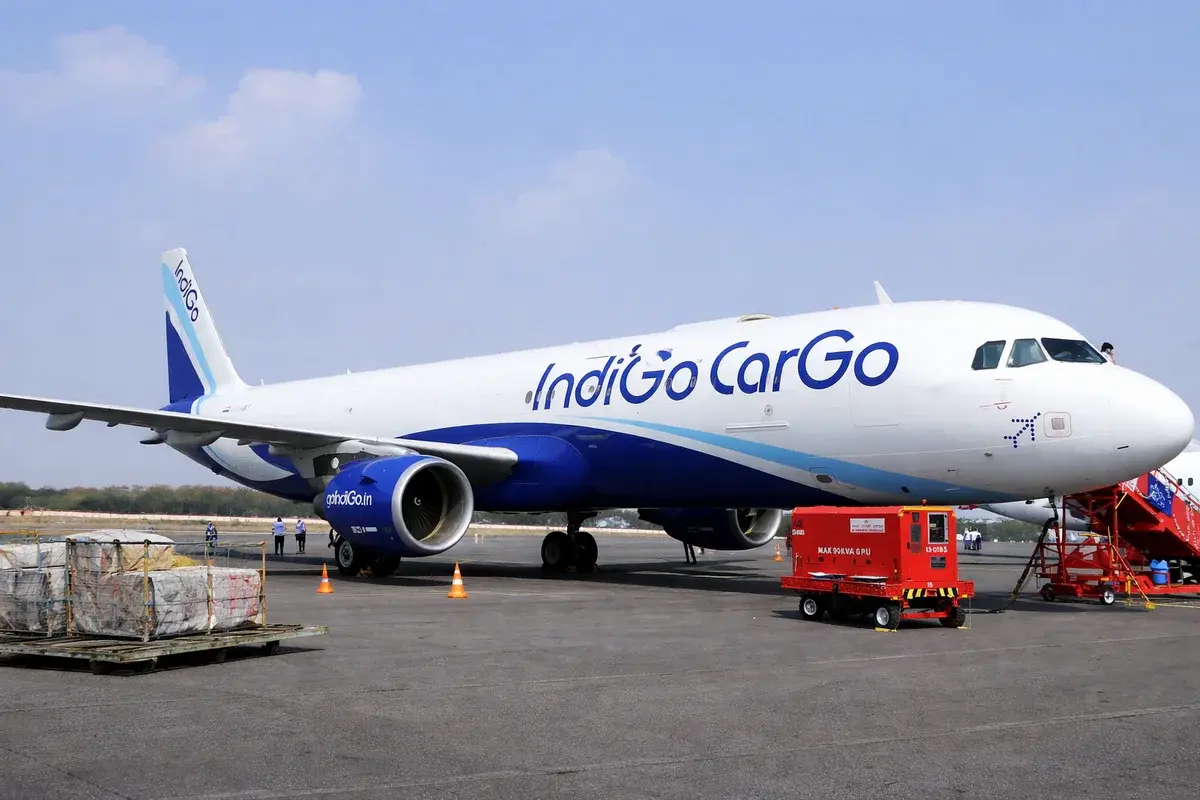
IndiGo reports 11% growth in cargo volumes in 2025, driven by expanded belly capacity and three new freighters.
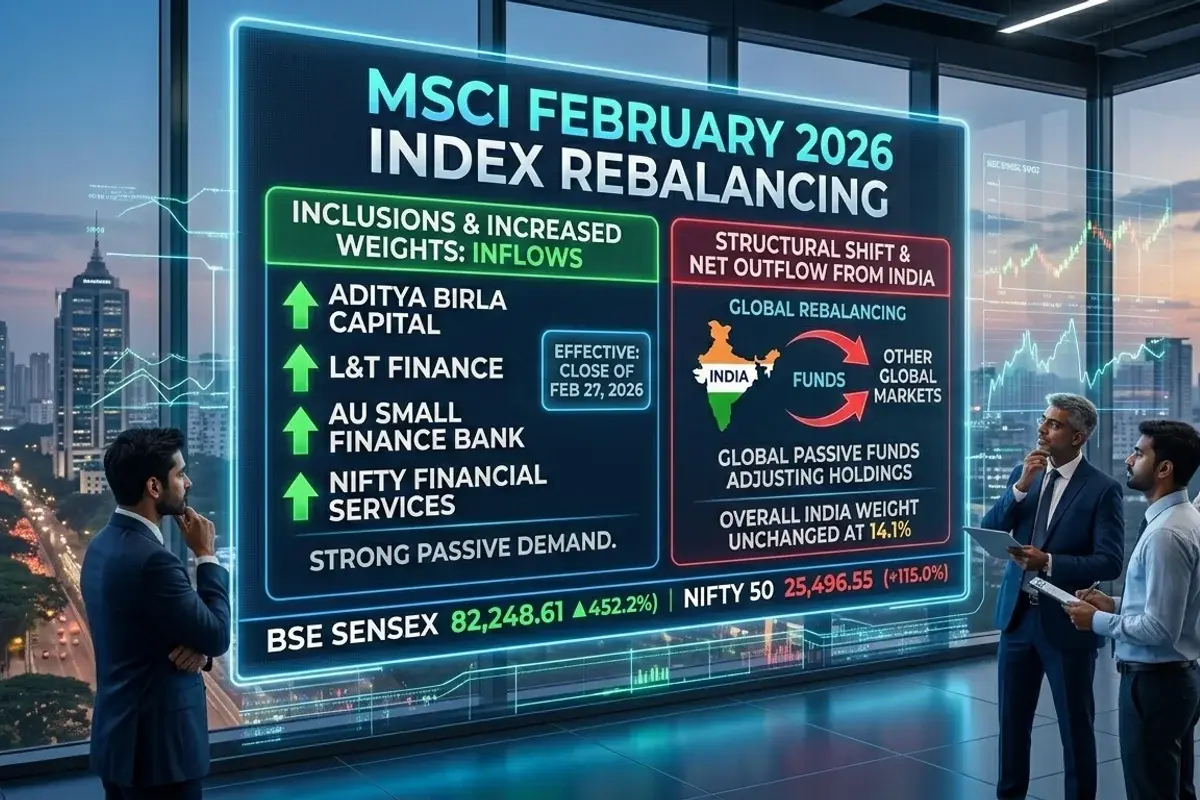
FinScann's latest analysis on the February 2026 MSCI rebalancing reveals potential inflows for Aditya Birla Capital, L&T Finance, and AU Small...

Hyundai Motor Co. invests $6.3 billion (₹52,500 Cr) in AI data centers, robot factories, and hydrogen plants in South Korea.