Loading market data...
FinScann analyzes Indian defence stocks like BEL, BDL surging on geopolitical tensions. Plus, Citi's cautious outlook on IT giants Infosys and HCL Tech in Q1 2026.
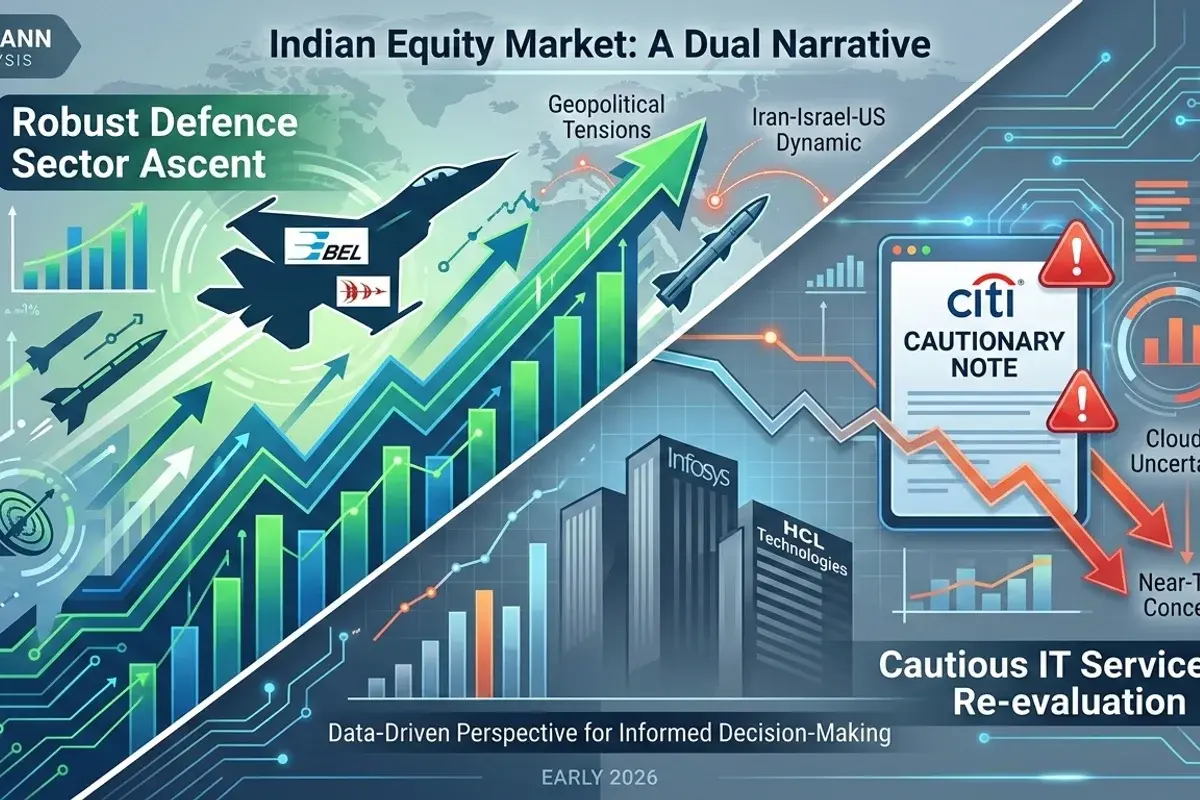
The Indian equity market is currently navigating a dual narrative: the robust, unyielding ascent of the defence sector propelled by escalating global geopolitical tensions, notably the Iran-Israel-US dynamic, and a cautious re-evaluation of the Indian IT services sector, spearheaded by a recent cautionary note from global financial major Citi concerning industry stalwarts Infosys and HCL Technologies. This FinScann analysis delves into these two contrasting investment landscapes, offering a data-driven perspective for informed decision-making in the current volatile market conditions. Investors are witnessing a strategic pivot as Bharat Electronics Ltd. (BEL) and Bharat Dynamics Ltd. (BDL) continue their impressive run, while a cloud of uncertainty looms over the near-term prospects of major IT players, impacting investor sentiment and portfolio strategies in early 2026.
The Catalyst
The recent surge in Indian defence stocks is directly attributable to a confluence of potent factors. The heightened geopolitical instability in the Middle East, with Iran, Israel, and the United States engaged in a delicate and dangerous strategic dance, has underscored the critical importance of national security and defence preparedness globally. This scenario naturally translates into increased defence budgets and procurement cycles for nations, including India.
Domestically, the Indian government's unwavering commitment to the 'Atmanirbhar Bharat' (Self-Reliant India) initiative, particularly in defence manufacturing, continues to be a powerful tailwind. This policy prioritises indigenous production, leading to a substantial pipeline of orders for public sector undertakings (PSUs) like BEL, BDL, Mazagon Dock Shipbuilders Ltd., and Garden Reach Shipbuilders & Engineers Ltd. (GRSE). The Union Budget 2026 is also anticipated to reinforce this commitment with potentially significant allocations to modernise the armed forces and boost domestic defence R&D.
Conversely, the cautious stance on the Indian IT sector by Citi stems from a recognition of persistent global macroeconomic headwinds. Rising interest rates in key markets such as the US and Europe, coupled with inflationary pressures, have led to a discernible slowdown in discretionary spending by corporate clients. This environment has resulted in longer decision cycles for new IT projects and, in some cases, outright deferrals. Citi's analysis specifically points to an expected moderation in deal conversions and sustained pressure on operating margins for Indian IT firms due to wage inflation and a challenging demand environment in the coming quarters. This has particularly impacted the outlook for large-cap players like Infosys and HCL Technologies, which are highly exposed to global enterprise spending.
Financial Forensics
The financial performance metrics paint a starkly different picture for these two sectors.
Defence Sector - Robust Order Books & Growth Visibility
Companies like BEL and BDL have demonstrated remarkable resilience and growth, underpinned by substantial order inflows and a clear revenue trajectory. Bharat Electronics Ltd., a Navratna PSU, continues to benefit from its diversified product portfolio spanning radars, missile systems, electronic warfare, and naval systems. The company's order book stood at over ₹75,000 Crore as of December 31, 2025, providing strong revenue visibility for the next 3-5 years. BEL's Q3 FY26 results showcased a 22% year-on-year revenue growth and a 19% increase in net profit, driven by execution of key defence projects.
Bharat Dynamics Ltd. (BDL), a leading manufacturer of guided missiles and underwater weapons, has also seen its prospects significantly brighten. Recent contract wins for anti-tank guided missiles and torpedoes have bolstered its order book, which crossed ₹20,000 Crore in Q3 FY26. Both companies are investing heavily in R&D, aligning with the government's push for indigenous defence technology, thereby securing future growth avenues.
Comparative Snapshot: Select Defence PSUs (Q3 FY26 Data)
| Company Name | Market Cap (₹ Cr) | Q3 FY26 Revenue Growth (YoY) | Q3 FY26 Net Profit Growth (YoY) | Current Order Book (₹ Cr) | 1-Year Stock Return |
|---|---|---|---|---|---|
| Bharat Electronics Ltd. (BEL) | ₹2,10,000 | 22% | 19% | ₹75,000+ | +95% |
| Bharat Dynamics Ltd. (BDL) | ₹45,000 | 18% | 15% | ₹20,000+ | +110% |
| Mazagon Dock Shipbuilders Ltd. | ₹60,000 | 25% | 21% | ₹40,000+ | +150% |
Source: FinScann Analysis based on company filings and market data as of February 28, 2026.
Indian IT Sector - Navigating Headwinds
The Indian IT sector, while still fundamentally strong in the long term, is grappling with a near-term slowdown. Infosys, a bellwether of the Indian IT industry, reported a modest 4.5% year-on-year revenue growth in constant currency for Q3 FY26, largely due to a cautious client spending environment and project deferrals. Its net profit saw a slight decline of 1.2% compared to the previous year, impacted by wage hikes and increased operational costs. The company maintained its full-year revenue guidance but with a tighter range, signalling reduced visibility.
HCL Technologies presented a somewhat better picture with 6.8% year-on-year revenue growth (constant currency) in Q3 FY26, driven by its services and products & platforms segments. However, Citi's concerns are broader, encompassing the entire sector's ability to maintain high growth rates amidst a challenging macro. The analyst firm highlighted "client budget conservatism and longer deal closure cycles" as primary risks, potentially leading to lower-than-expected revenue guidance revisions across the sector in subsequent quarters. Furthermore, the ongoing attrition rates, though moderating, coupled with the need for competitive talent retention, continue to exert pressure on IT companies' margins.
Comparative Snapshot: Select Indian IT Majors (Q3 FY26 Data)
| Company Name | Market Cap (₹ Cr) | Q3 FY26 Revenue Growth (CC, YoY) | Q3 FY26 Net Profit Growth (YoY) | Citi Rating (February 2026) | 1-Year Stock Return |
|---|---|---|---|---|---|
| Infosys | ₹7,00,000 | +4.5% | -1.2% | Neutral | +18% |
| HCL Technologies | ₹3,80,000 | +6.8% | +3.5% | Neutral | +25% |
| Tata Consultancy Services | ₹14,50,000 | +5.2% | +2.9% | Neutral | +22% |
Source: FinScann Analysis based on company filings and Citi Research report as of February 28, 2026.
Market Impact
The contrasting fortunes of these sectors have created a dynamic shift in market sentiment and capital allocation. The defence sector's strong fundamentals and positive geopolitical tailwinds have made it a preferred defensive play for investors seeking stability and growth amidst global uncertainties. BEL, BDL, and their peers have seen significant upward rerating in their stock prices and valuations, attracting both institutional and retail investors. This influx of capital has further solidified their market positions and enhanced liquidity.
Conversely, the cautious outlook on the IT sector has led to a re-evaluation of valuation multiples for companies like Infosys and HCL Technologies. While these companies remain fundamentally robust with strong cash flows and global client bases, the near-term growth concerns have triggered some profit-booking and a more conservative approach from investors. The Nifty IT index has lagged behind the broader Nifty 50 and Nifty Defence indices, reflecting this sectoral divergence. This scenario presents a potential opportunity for long-term value investors to accumulate quality IT stocks at potentially attractive valuations, but near-term volatility is expected.
Key Takeaways for Investors
FinScann Verdict
The Indian market in early 2026 presents a fascinating dichotomy. While the defence sector, exemplified by BEL and BDL, shines bright on the back of strategic national imperatives and global instability, the once-unassailable Indian IT sector, with Infosys and HCL Technologies at its forefront, is navigating a patch of turbulent waters. FinScann advises investors to leverage the robust growth potential in defence while adopting a selective and patient approach to the IT sector, focusing on quality and long-term value creation.
Q: How are Indian defence stocks performing amidst global tensions? A: Indian defence stocks, including BEL and BDL, are performing exceptionally well. They are experiencing significant surges driven by escalating global geopolitical tensions, increased defence spending worldwide, and the Indian government's strong 'Atmanirbhar Bharat' initiative, which prioritizes indigenous defence manufacturing. Their robust order books and strong revenue visibility underscore this positive momentum.
Q: What are Citi's main concerns for Indian IT stocks like Infosys and HCL Tech? A: Citi's main concerns for Indian IT stocks like Infosys and HCL Technologies stem from global macroeconomic headwinds, including higher interest rates and inflation in key markets. This has led to reduced discretionary spending by corporate clients, longer decision cycles for new IT projects, and persistent pressure on operating margins due to wage inflation.
Q: Is it a good time to invest in defence stocks in India? A: Given the strong sectoral tailwinds from geopolitical developments and government support for indigenous manufacturing, defence stocks in India present a compelling long-term investment theme. However, FinScann advises investors to assess individual company fundamentals, order book execution, and valuations carefully to ensure sustainable returns.
Q: What is the outlook for the Indian IT sector in 2026? A: The outlook for the Indian IT sector in 2026 is challenging in the near term, marked by potential revenue growth moderation and margin pressures. However, the long-term structural growth drivers remain intact, driven by digital transformation, cloud adoption, and AI integration. Investors should anticipate continued volatility but also look for opportunities to invest in resilient companies with strong domain expertise and diversified client portfolios.
Q: How does the 'Atmanirbhar Bharat' initiative impact defence companies like BEL? A: The 'Atmanirbhar Bharat' (Self-Reliant India) initiative significantly impacts defence companies like BEL by prioritising domestic procurement and manufacturing of defence equipment. This policy directly translates into a substantial increase in order inflows, enhanced research and development capabilities, and a reduced reliance on foreign imports, thereby securing a strong and visible growth pipeline for Indian defence PSUs.
Disclaimer: For information only; not investment advice. Stock market investments carry risks. Please consult a SEBI-registered advisor before investing. FinScann assumes no liability for decisions made based on this report.

Financial journalist specializing in market analysis, stock research, and investment trends. Dedicated to providing accurate, timely insights for informed decision-making.
Credentials: Experienced financial journalist with expertise in equity markets and economic analysis
The information provided in this article is for educational and informational purposes only and should not be construed as financial, investment, or legal advice. Finscann does not provide personalized investment recommendations.
For detailed terms and conditions, please read our Disclaimer and Terms of Service.

Discover how a single Japanese-backed company built a 60% dominance in India’s automotive OEM paint industry.

FinScann's latest analysis on Fino Payments, Adani Green, Tata Steel, Mahanagar Gas, and Laurus Labs for March 4, 2026.
Explore the legacy of Ratan Tata and the enduring strength of the Tata Group. A deep look into leadership vision, corporate governance, global...
Deep-dive analysis of Adani Group covering all listed companies including Adani Ports, Adani Green, Adani Power, Adani Enterprises, Ambuja Cement and...
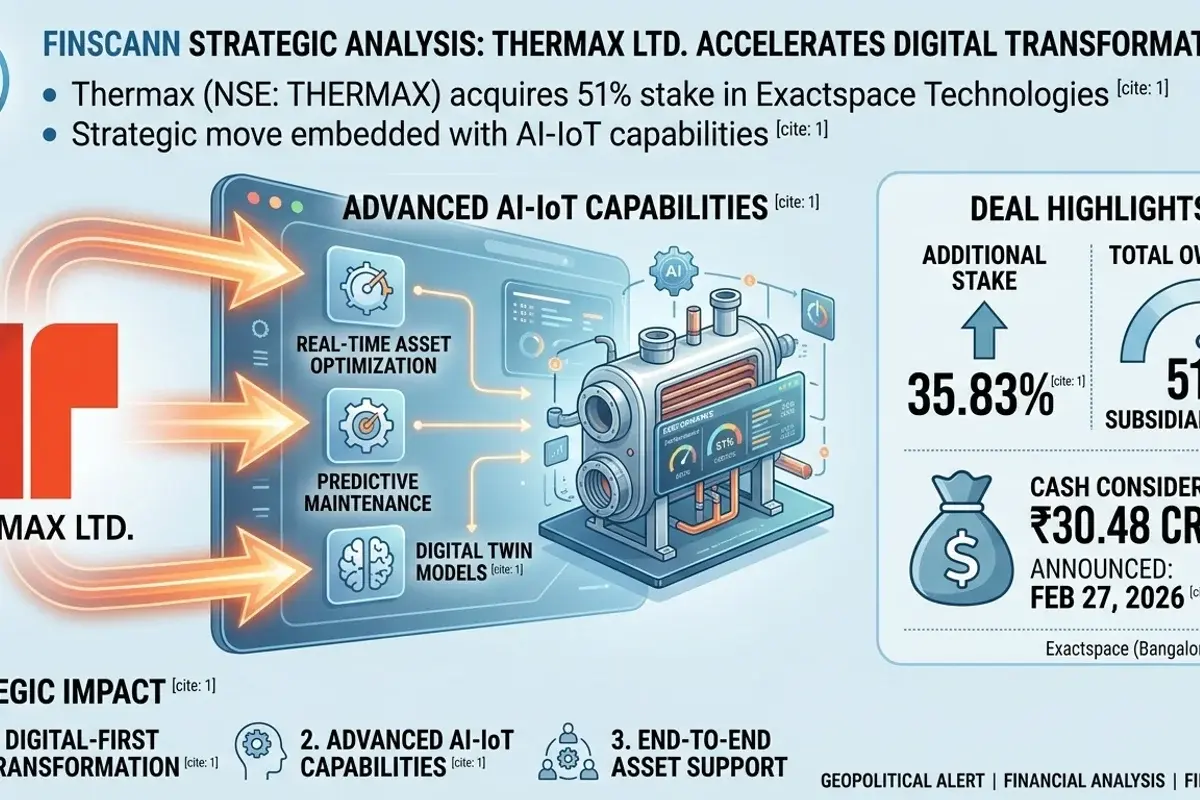
Thermax Ltd. acquires a 51% stake in AI-IoT specialist Exactspace Technologies for ₹30.48 crore, accelerating its digital transformation in India's...