Loading market data...
Deep-dive analysis of Adani Group covering all listed companies including Adani Ports, Adani Green, Adani Power, Adani Enterprises, Ambuja Cement and ACC. Explore revenue growth, EBITDA margins, debt levels, valuation reset, capex cycle, risk factors, and long-term investor outlook in this data-rich financial report.

The Adani Group, spanning ports, power, airports, renewables, transmission, gas distribution, cement, and media, has evolved into one of India’s most strategically critical conglomerates. With consolidated revenues crossing ₹2.5 lakh crore, aggressive capex exceeding ₹1 lakh crore annually, and improving EBITDA visibility across core infrastructure verticals, the group stands at the intersection of scale-driven growth and capital discipline scrutiny. For investors, the central question is not expansion but sustainability of leverage, cash flow conversion, and valuation reset resilience.
Few conglomerates have reshaped India’s infrastructure narrative as dramatically as the Adani Group. From a commodities trading house in the late 1980s, it has transformed into a vertically integrated infrastructure powerhouse with dominant positions across ports, energy, logistics, and utilities.
The timing is critical. India’s capex cycle is accelerating, government-led infrastructure spending remains elevated, and global capital is seeking emerging-market alpha generation opportunities. At the same time, markets are increasingly sensitive to capital discipline, debt levels, and cash runway sustainability particularly after valuation resets seen across leveraged conglomerates globally.
For Adani, the story is no longer just about scale. It is about financial resilience, EBITDA margins stability, and execution under scrutiny.

The group’s listed entities form the backbone of India’s physical and energy infrastructure.
Adani Enterprises Ltd (AEL) – Incubator & diversified infrastructure platform
Adani Ports and Special Economic Zone (APSEZ) – India’s largest private port operator
Adani Green Energy Ltd (AGEL) – Renewable energy leader
Adani Energy Solutions Ltd – Transmission & distribution
Adani Power Ltd – Thermal power generation
Adani Total Gas Ltd – City gas distribution (JV with TotalEnergies)
Ambuja Cements Ltd – Cement & building materials
ACC Ltd – Cement subsidiary

| Metric | Details |
|---|---|
| Founded | 1988 |
| Founder | Gautam Adani |
| Core Sectors | Ports, Power, Renewables, Transmission, Gas, Cement |
| Revenue Model | Infrastructure annuity + regulated returns + commodity-linked |
| Market Position | Sector leader in ports & renewables |
| Capex Intensity | High (₹1L+ crore planned annually) |
| Competitive Edge | Vertical integration + asset scale |
Across listed entities (FY recent consolidated trends):
Consolidated revenue estimated above ₹2.5 lakh crore
Ports & logistics: steady double-digit growth
Renewables: rapid capacity addition driving topline expansion
Cement: post-acquisition ramp-up improving market share
Ports: ~55–60% EBITDA margins (industry-leading)
Transmission: stable regulated returns
Renewables: improving operating leverage
Cement: margin normalization post-acquisition
Infrastructure verticals generate strong operating cash flows
Capex-heavy subsidiaries show stretched free cash flow
EBITDA visibility improving but interest burden remains significant
Net debt remains elevated across group entities
Debt refinancing cycle underway
Asset monetization strategy visible (stake sales, strategic investors)
Valuation multiples across group companies vary widely from premium P/E ratios in renewables to more moderate valuations in power and cement.
Markets now reward balance-sheet clarity more than top-line aggression reflecting broader global yield compression trends.
The Adani model is built on:
Infrastructure annuity assets (ports, transmission)
Regulated return frameworks
Energy transition positioning (green hydrogen, renewables)
Vertical integration across logistics and energy value chains
However, sustainability hinges on:
Cash flow conversion
Debt servicing capability
Maintaining investment-grade perception
“Institutional investors are increasingly prioritizing EBITDA visibility and sustainable cash flow generation over top-line growth,” says a Mumbai-based fund manager tracking the infrastructure sector.
| Segment | Current Momentum | Outlook | Capital Flow Sentiment |
|---|---|---|---|
| Ports & Logistics | Strong | Structural Growth | Positive |
| Renewable Energy | High Growth | Policy Supported | Selectively Bullish |
| Thermal Power | Stable | Demand-Driven | Neutral |
| Transmission | Defensive | Regulated Returns | Positive |
| Cement | Consolidation Phase | Cyclical Recovery | Improving |
India’s largest private port operator
High EBITDA margins
Strong pricing power
Key beneficiary of India’s trade growth
One of the world’s largest renewable energy portfolios
Aggressive capacity expansion
High leverage but long-term PPAs provide revenue stability
Incubation engine (data centers, airports, green hydrogen)
Higher risk, higher optionality
Capital-intensive expansion model
Strategic diversification
Scale advantage
Margin recovery dependent on input cost stabilization
• Massive Indian infrastructure capex cycle
• Energy transition & green hydrogen ambitions
• Port capacity expansion
• Airport privatization wave
• Cement demand from housing & urbanization
• Increasing foreign strategic partnerships
• Elevated debt levels
• Interest rate sensitivity
• Regulatory scrutiny
• Commodity price volatility
• Aggressive capex funding needs
• Reputation-linked volatility risk
| Company | Revenue Scale | EBITDA Profile | Valuation Tone | Strategic Position |
|---|---|---|---|---|
| Adani Ports | Large | High Margin | Premium | Sector Leader |
| Adani Green | Growing | Improving | Volatile Premium | Energy Transition Play |
| Adani Power | Large | Cyclical | Moderate | Thermal Backbone |
| Ambuja Cement | Large | Cyclical Recovery | Balanced | Cement Consolidator |
The market has shifted from rewarding growth-at-any-cost models to favoring:
Capital discipline
Sustainable leverage
Predictable dividend stocks
Cash-flow-backed expansion
While Adani companies are not primarily positioned as high dividend yield or passive income stocks yet, stabilization in cash flows may support future dividend growth.
Yield compression in infrastructure assets could further re-rate stable verticals like ports and transmission.
Focus on core annuity businesses (ports, transmission)
Monitor net debt-to-EBITDA trajectory
Watch refinancing progress and asset monetization
Volatility driven by regulatory news
Sensitive to global capital flows
Watch quarterly EBITDA margins and debt updates
Investors should seek margin of safety during valuation resets rather than chasing momentum rallies.
Capital allocation transparency will be the key re-rating trigger.
Indian investors can access Adani Group stocks via platforms such as Zerodha, Groww, Upstox, and Angel One. Institutional investors typically evaluate exposure via NSE and BSE-listed entities.
Q: Is Adani Group overleveraged?
Debt levels are elevated relative to peers, but refinancing and asset monetization have improved liquidity buffers.
Q: Which Adani company has the strongest fundamentals?
Adani Ports is widely considered the most stable due to high EBITDA margins and predictable cash flows.
Q: Is Adani Green a long-term energy transition bet?
Yes, but valuation sensitivity and leverage levels must be monitored.
Q: Does the group offer dividend stock potential?
Currently limited compared to traditional PSU dividend stocks, but cash flow stability may support future distributions.
The Adani Group represents the dual face of modern India ambition at scale and scrutiny at scale. If capital discipline strengthens and cash flows normalize, the conglomerate could emerge stronger from its valuation reset phase. If leverage remains stretched, markets will continue to demand a discount.
The next five years will determine whether Adani transitions from aggressive expansion to sustainable infrastructure compounding.

Financial journalist specializing in market analysis, stock research, and investment trends. Dedicated to providing accurate, timely insights for informed decision-making.
Credentials: Experienced financial journalist with expertise in equity markets and economic analysis
The information provided in this article is for educational and informational purposes only and should not be construed as financial, investment, or legal advice. Finscann does not provide personalized investment recommendations.
For detailed terms and conditions, please read our Disclaimer and Terms of Service.
No related topics available
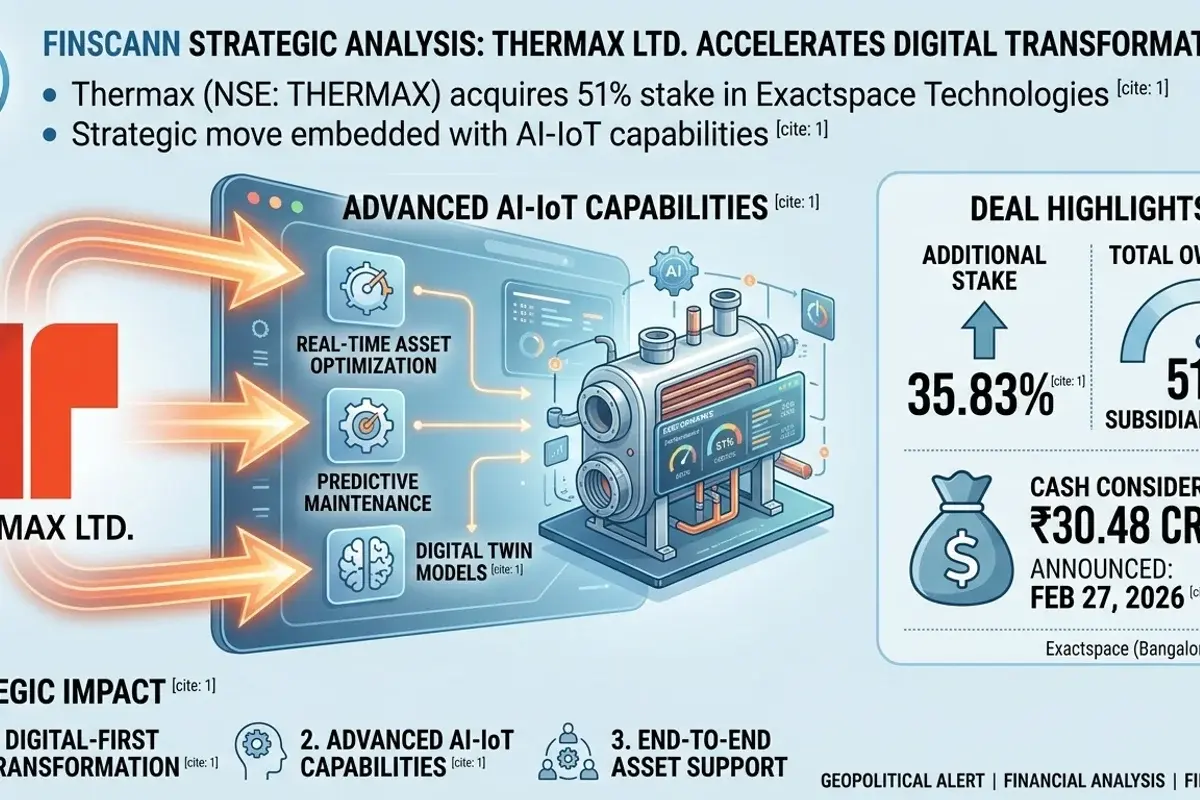
Thermax Ltd. acquires a 51% stake in AI-IoT specialist Exactspace Technologies for ₹30.48 crore, accelerating its digital transformation in India's...

Cipla's U.S. launch of generic Saxenda (liraglutide) signals a major play in the global weight management market.

Jio Financial Services launches the AI-powered JioFinance app in February 2026, transforming India's digital finance with personalized loans,...
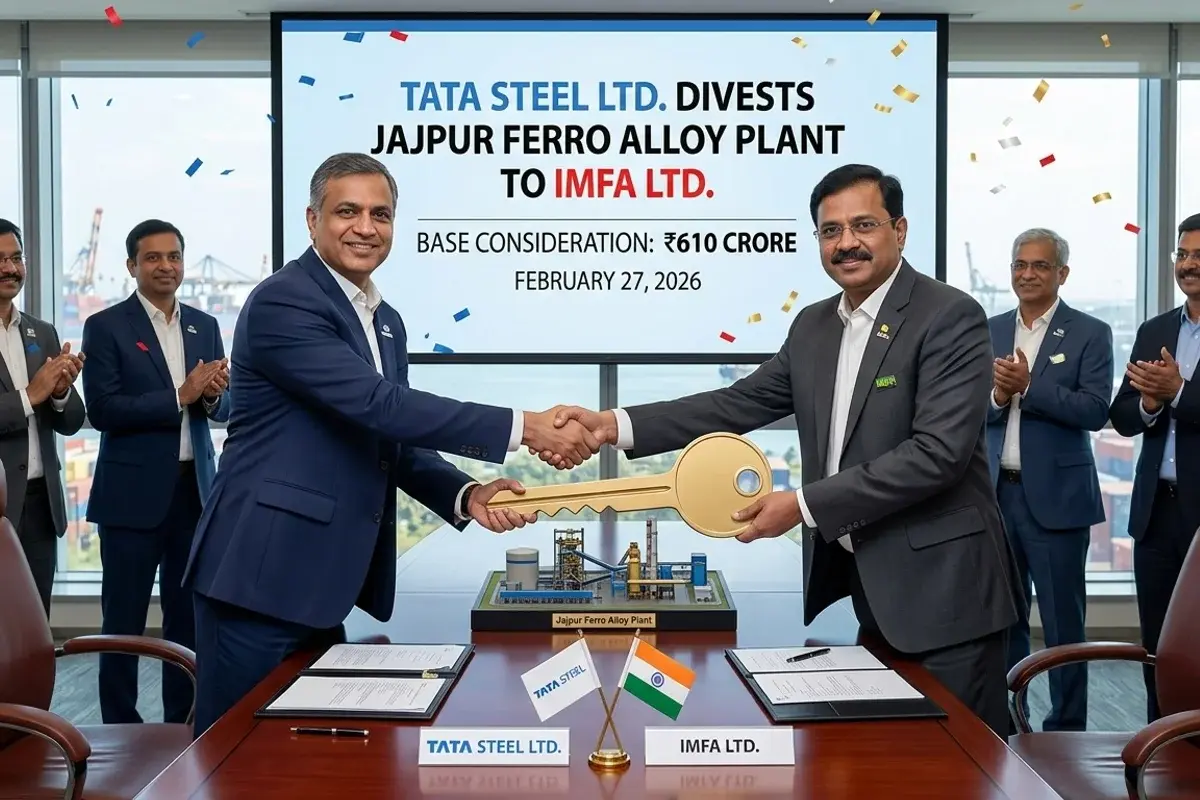
Tata Steel has completed the sale of its Jajpur Ferro Alloy Plant for ₹610 crore to IMFA, aligning with its portfolio optimization strategy.

IIFL Home Finance secures a landmark $300M ADB loan, its first syndicated external commercial borrowing, enhancing affordable housing access for...