Loading market data...
Explore the legacy of Ratan Tata and the enduring strength of the Tata Group. A deep look into leadership vision, corporate governance, global expansion, and the financial evolution of one of India’s most respected conglomerates.
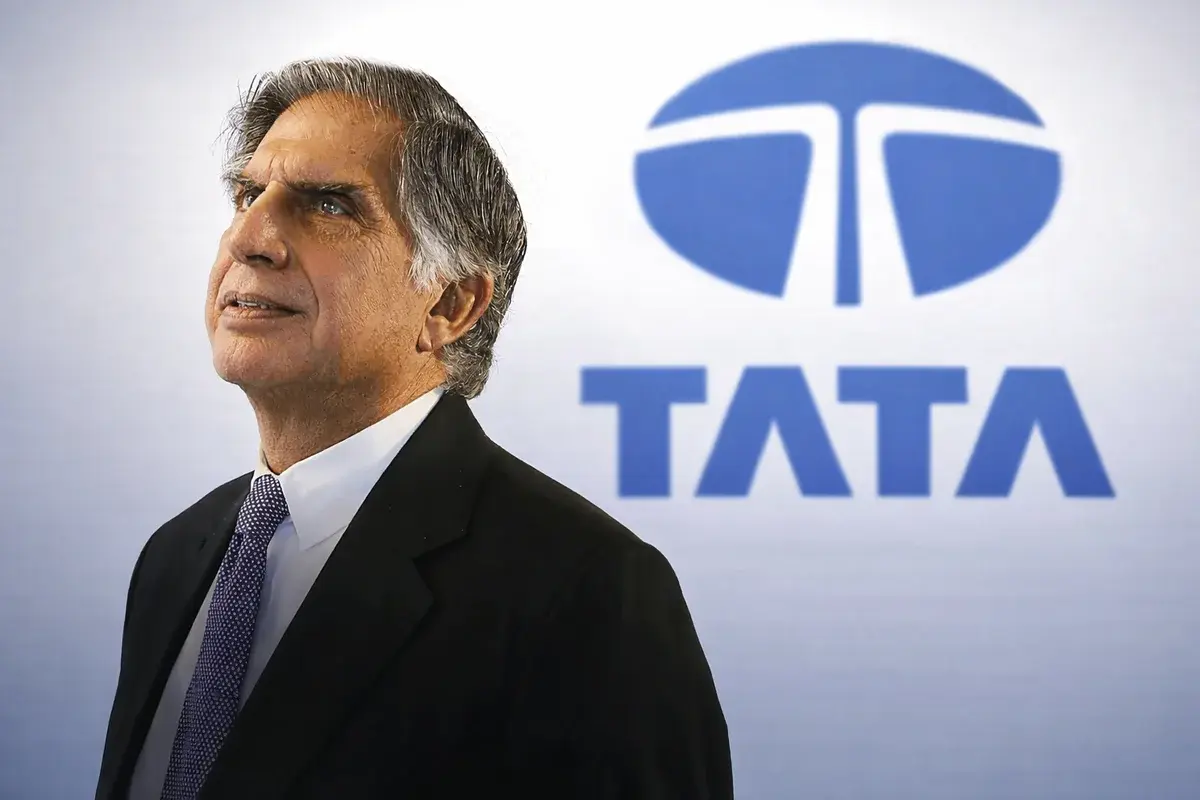
The Tata Group stands as India’s most diversified and institutionally trusted conglomerate, spanning IT services, automotive, steel, energy, retail, consumer goods and hospitality. With strong cash generators like TCS balancing capital intensive businesses such as Tata Motors and Tata Steel, the group represents a blend of annuity income, cyclical recovery and structural growth. Investors must evaluate each listed entity independently, focusing on EBITDA margins, debt levels, capital discipline and free cash flow visibility.
The Tata Group represents a structural proxy for India’s economic transformation. From digital infrastructure and electric mobility to steel production and renewable power, Tata companies operate across the country’s most critical growth engines.
In today’s valuation environment, markets reward predictable cash flows, EBITDA visibility, and capital discipline. The Tata ecosystem blends high margin service businesses with cyclical industrial operations, requiring investors to evaluate each company independently rather than treating the group as a single entity.
| Metric | Details |
|---|---|
| Founded | 1868 |
| Holding Structure | Tata Sons majority owned by Tata Trusts |
| Core Sectors | IT, Automotive, Steel, Energy, Retail, Consumer |
| Listed Entities | 20+ publicly traded companies |
| Revenue Mix | Services, Manufacturing, Infrastructure, Consumer |
| Capital Allocation | Long term, diversified, expansion oriented |
TCS is the financial backbone of the group and one of the most profitable IT services firms globally. It delivers resilient growth supported by long term enterprise contracts and high client retention.
| Metric | Details |
|---|---|
| Annual Revenue | Over 30 billion USD |
| Operating Margin | Approximately 24 percent |
| Net Margin | Around 20 percent |
| Free Cash Flow | Strong and consistent |
| Balance Sheet | Net cash positive historically |
| Valuation Profile | Premium large cap IT multiple |
TCS benefits from diversified vertical exposure and global delivery capabilities. AI driven transformation presents both opportunity and pricing risk.
• Enterprise cloud migration
• Artificial intelligence integration
• Expansion in developed markets
• High margin digital services
• Pricing compression from automation
• Currency volatility
• Global macro slowdown
Tata Motors combines domestic passenger and commercial vehicles with Jaguar Land Rover’s global luxury exposure. The company is aggressively transitioning toward EV leadership while improving free cash flow.
| Metric | Details |
|---|---|
| FY Revenue | ₹439,695 crore |
| EBITDA | ₹57,600 crore |
| Net Profit | ₹28,149 crore |
| Free Cash Flow | Strong improvement in auto segment |
| Debt Position | Gradual deleveraging underway |
Domestic scale advantages and EV expansion define its next phase. JLR provides premium global exposure but introduces cyclicality.
• EV penetration growth • Commercial vehicle recovery • SUV demand strength • Operating leverage from scale
• Commodity cost volatility
• Global demand softness
• High EV capex requirements
Tata Steel is a globally integrated steel producer positioned to benefit from India’s infrastructure push while managing cyclical volatility.
| Metric | Details |
|---|---|
| Annual Revenue | Approximately 26 billion USD |
| EBITDA | Approximately 3 billion USD |
| Margin Trend | Improving through cost discipline |
| Debt | Deleveraging focus |
| Capex | Sustainability and expansion investments |
Integrated operations enhance cost efficiency and product diversification. Green steel transition remains a structural theme.
• Infrastructure expansion
• Automotive demand recovery
• Operational efficiency initiatives
• Steel price fluctuations
• Trade restrictions
• High capital expenditure needs
Tata Power operates across thermal generation, renewables, transmission and distribution with increasing exposure to green energy.
| Metric | Details |
|---|---|
| Business Mix | Thermal, Renewable, Distribution |
| Renewable Capacity | Expanding multi gigawatt pipeline |
| EBITDA Stability | Regulated distribution supports margins |
| Debt Structure | Project linked financing |
Energy transition tailwinds support long term expansion, particularly in solar and EV charging infrastructure.
• Solar capacity growth
• Rooftop installations
• EV charging network rollout
• Regulatory oversight
• Capex intensity
• Execution complexity
Titan represents Tata’s premium retail franchise across jewellery, watches and eyewear.
| Metric | Details |
|---|---|
| Revenue Growth | Strong retail expansion |
| Operating Margins | Healthy and stable |
| Cash Flow | Strong retail driven generation |
| Market Position | Leading organized jewellery brand |
Brand trust and extensive retail presence create durable competitive advantages.
• Premiumization trend
• Store network expansion
• Rising disposable income
• Gold price volatility
• Consumer demand shifts
The FMCG arm focuses on tea, coffee, salt and packaged foods with defensive revenue characteristics.
| Metric | Details |
|---|---|
| Revenue Base | Diversified FMCG portfolio |
| Margin Trend | Improving through premium mix |
| Cash Flow | Stable and defensive |
• Brand premiumization
• Rural penetration
• International expansion
• Commodity inflation
• Competitive intensity
| Segment | Current Momentum | Outlook | Capital Flow Sentiment |
|---|---|---|---|
| IT Services | Strong | Positive | Institutional preference |
| Automotive | Recovery | Medium term growth | Cyclical |
| Steel | Cyclical rebound | Infrastructure driven | Selective |
| Power | Structural growth | Energy transition positive | Strategic |
| Company | Revenue Scale | EBITDA Profile | Valuation Tone | Strategic Position |
|---|---|---|---|---|
| TCS | Global scale | High margin | Premium | Digital leader |
| Tata Motors | Large scale | Improving | Cyclical | EV transition |
| Tata Steel | Global commodity | Cyclical | Moderate | Infra beneficiary |
| Titan | Retail scale | Strong | Growth premium | Consumer brand |
| Tata Power | Utility mix | Stable | Growth play | Renewable expansion |
Institutional investors increasingly prioritize free cash flow visibility and disciplined capital allocation over aggressive expansion. Within the Tata ecosystem, EBITDA durability and balance sheet strength remain central to valuation re rating potential.
• Focus on cash generative businesses such as TCS and Titan
• Monitor deleveraging at Tata Motors and Tata Steel
• Track capex efficiency in renewables and EV expansion
• Watch quarterly earnings surprises
• Track steel spreads and auto sales data
• Monitor global IT demand indicators
High quality annuity businesses command premium multiples. Cyclical companies require margin of safety during downturns.
Indian investors can access Tata Group listed companies through Zerodha, Groww, Upstox and Angel One via NSE and BSE platforms.
Q: Which Tata company offers the most defensive investment profile?
TCS is widely viewed as the most stable due to strong margins, recurring revenue and a net cash balance sheet.
Q: Is Tata Motors positioned well for the EV transition?
Yes, but investors should evaluate capital intensity, battery sourcing strategy and global demand risks before long term allocation.
Q: Does Tata Steel benefit from India’s infrastructure growth?
Domestic infrastructure expansion supports demand, though global steel cycles and pricing volatility remain key risks.
The Tata Group represents India’s institutional industrial backbone. Its diversified portfolio blends high margin digital services with cyclical manufacturing and infrastructure plays. Long term value creation will depend on disciplined capital allocation, balance sheet management and execution in emerging sectors such as AI, EVs and renewable energy.
Investors who separate durable cash flow businesses from cyclical exposures can build a balanced and resilient Tata focused portfolio strategy.
⚠️ DISCLAIMER: We Are Not Financial Advisors

Financial journalist specializing in market analysis, stock research, and investment trends. Dedicated to providing accurate, timely insights for informed decision-making.
Credentials: Experienced financial journalist with expertise in equity markets and economic analysis
The information provided in this article is for educational and informational purposes only and should not be construed as financial, investment, or legal advice. Finscann does not provide personalized investment recommendations.
For detailed terms and conditions, please read our Disclaimer and Terms of Service.
Deep-dive analysis of Adani Group covering all listed companies including Adani Ports, Adani Green, Adani Power, Adani Enterprises, Ambuja Cement and...
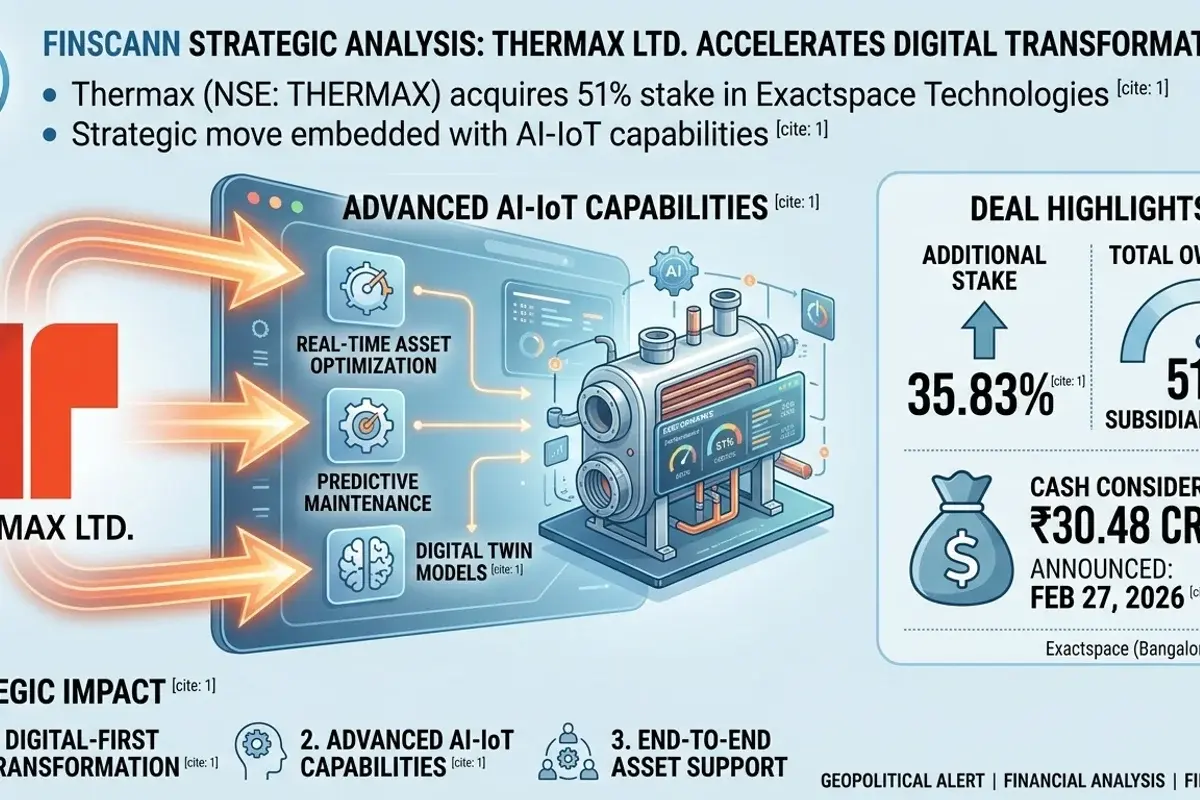
Thermax Ltd. acquires a 51% stake in AI-IoT specialist Exactspace Technologies for ₹30.48 crore, accelerating its digital transformation in India's...

Cipla's U.S. launch of generic Saxenda (liraglutide) signals a major play in the global weight management market.

Jio Financial Services launches the AI-powered JioFinance app in February 2026, transforming India's digital finance with personalized loans,...
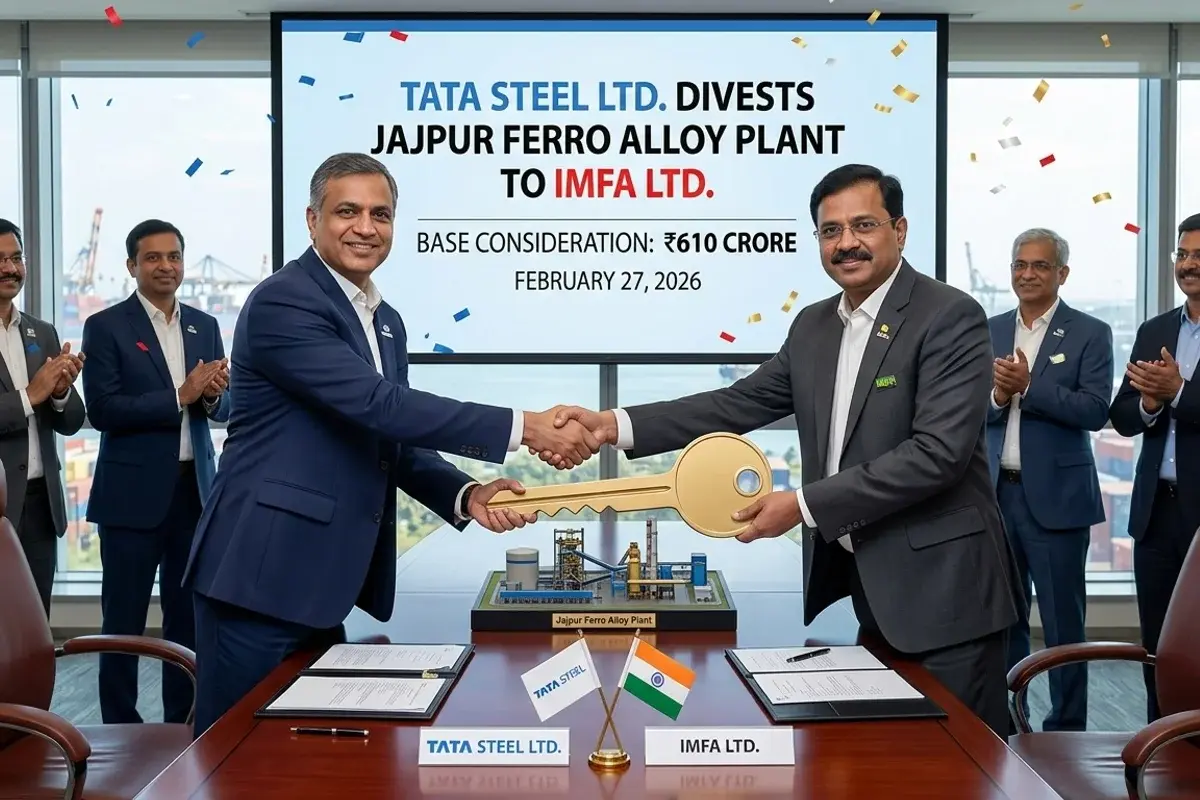
Tata Steel has completed the sale of its Jajpur Ferro Alloy Plant for ₹610 crore to IMFA, aligning with its portfolio optimization strategy.