Loading market data...
Cancer care startup OnCare secures ₹27 crore in Series A funding to expand its oncology support platform. Explore strategic analysis, venture capital trends, growth drivers, risks, and investor insights shaping India’s specialized healthtech sector.
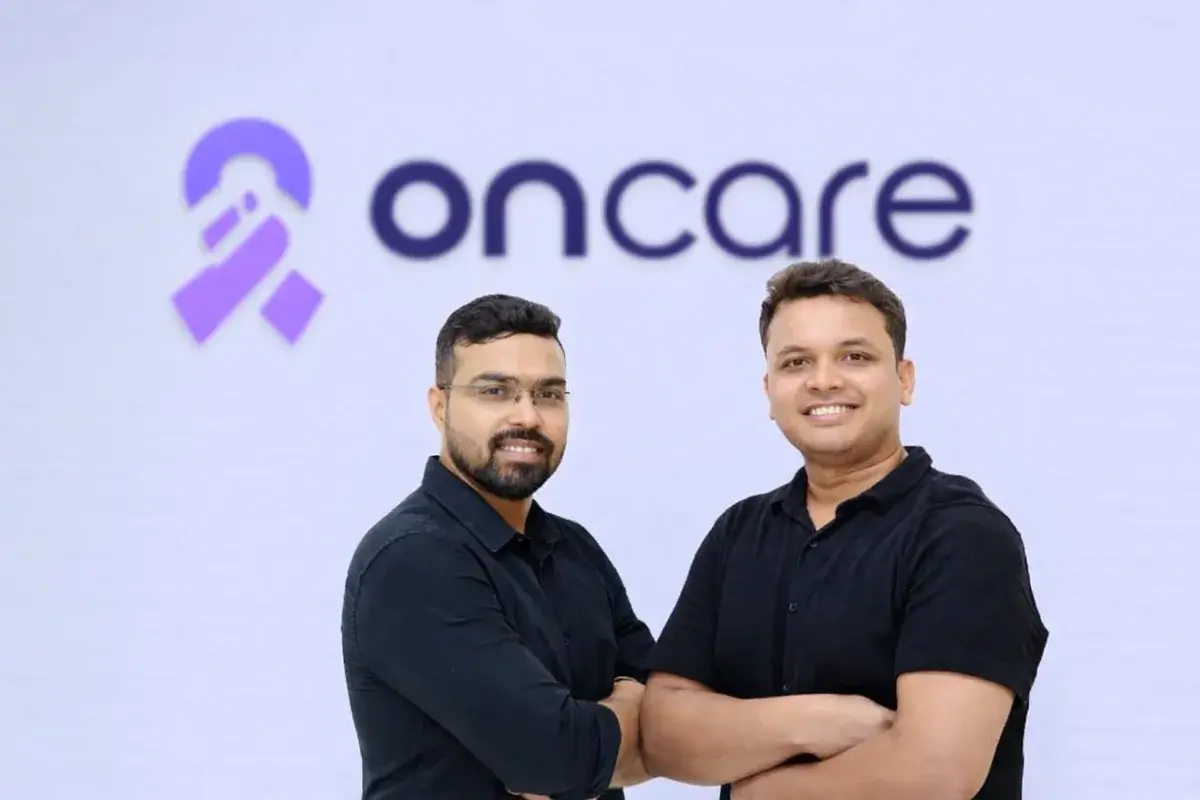
Cancer care startup OnCare has secured ₹27 crore in Series A funding, reinforcing investor conviction in specialized, outcome-driven healthcare platforms. As cancer incidence rises and care pathways remain fragmented, OnCare is positioning itself as a tech-enabled coordination layer across India’s oncology ecosystem. The round reflects a broader shift in startup funding India where capital is flowing toward EBITDA visibility, patient retention models, and scalable health infrastructure over pure growth-at-all-costs narratives.
The Indian healthtech sector is undergoing a structural recalibration. After years of capital flowing into telemedicine, primary consultations, and diagnostics aggregation, venture capital trends are tilting toward verticalized healthcare platforms solving high-complexity clinical journeys.
The ₹27 crore Series A funding in OnCare underscores that pivot.
With cancer incidence rising steadily across India and care delivery remaining highly fragmented between hospitals, oncologists, diagnostic centers, and insurers investors are now backing platforms that address coordination inefficiencies rather than merely digitizing consultations.
This is not a volume play. It is a depth play.
India reports over 1.4 million new cancer cases annually, with incidence projected to rise materially over the next decade due to demographic shifts and lifestyle transitions. Yet oncology care remains structurally disjointed:
This fragmentation creates not just emotional strain but operational inefficiency a space where digital infrastructure layered over clinical expertise can generate significant value.
In an environment where capital discipline is returning and yield compression is forcing venture funds to prioritize sustainable business models, niche healthcare verticals with predictable demand cycles are gaining favor.
| Metric | Details |
|---|---|
| Founded | Early 2020s |
| Sector | Oncology Support Services / HealthTech |
| Revenue Model | Care coordination fees, subscription-based patient services, B2B hospital partnerships |
| Market Position | Emerging oncology-focused navigation platform |
| Key Financial Metrics | Early-stage growth company (pre-profit) |
| Competitive Edge | Clinical specialization + tech-enabled care pathway integration |
While detailed financials remain undisclosed typical for early-stage startups some structural indicators matter:
Unlike consumer health apps dependent on advertising or episodic transactions, oncology navigation platforms benefit from:
These factors support improved unit economics once scale is achieved.
Indian startup funding has normalized from peak 2021 exuberance levels. Investors are prioritizing:
Oncology-focused platforms fit this thesis because:
“Institutional investors are increasingly prioritizing EBITDA visibility and sustainable cash flow generation over top-line growth,” says a Mumbai-based fund manager tracking the sector. “Verticalized healthcare platforms with domain depth stand a better chance of long-term capital efficiency.”
OnCare’s positioning is not as a hospital competitor but as a coordination overlay which reduces capex intensity compared to asset-heavy hospital chains.
This improves:
Barriers to entry include:
Unlike primary telemedicine where switching costs are low oncology navigation builds emotional and informational stickiness.
Technology stack scalability across Tier 1 and Tier 2 cities could materially expand TAM (Total Addressable Market). If executed well, operating leverage could improve as:
• Rising cancer incidence in India • Increased insurance penetration • Digital health adoption post-pandemic • Growing acceptance of care navigation services • Expansion into survivorship and palliative segments • B2B hospital integration partnerships
• Margin pressure from service-heavy model • Regulatory scrutiny in digital health advisory • Competitive intensity from hospital chains • Patient acquisition costs in early stages • Funding constraints if venture capital trends tighten
| Segment | Current Momentum | Outlook | Capital Flow Sentiment |
|---|---|---|---|
| Primary Telemedicine | Moderate | Stable | Neutral |
| Diagnostics Aggregation | Slowing | Competitive | Cautious |
| Oncology Support Platforms | Rising | Strong | Positive |
| Health Insurance Tech | Accelerating | Strong | Bullish |
| Hospital Chains | Stable | Consolidating | Selective |
Early-stage healthtech valuations have undergone a valuation reset post-2022. Investors are:
If OnCare achieves:
It could position itself for a strategic acquisition by hospital majors or global healthcare platforms.
Investors should favor oncology platforms that:
In public markets, comparable plays may emerge over time within healthcare services or digital health IPO pipelines.
If similar healthcare IPO opportunities emerge in Indian markets, investors can access them via:
Maintain neutral allocation sizing given healthcare regulatory sensitivity.
Q: Why are investors backing niche oncology platforms instead of broad telehealth apps? Because oncology care is high-value, high-duration, and operationally complex allowing better monetization and defensibility.
Q: Is this part of a larger startup funding India revival? Not a broad revival but a selective capital rotation toward capital-efficient, domain-specific startups.
Q: What makes oncology support services scalable? Standardized treatment navigation frameworks, hospital integrations, and technology-enabled patient management.
Q: Could hospital chains enter this space directly? Yes, but independent platforms may partner across multiple hospital networks, offering neutral coordination.
Q: What is the biggest risk? Scaling human-intensive care coordination while protecting margins.
India’s healthcare ecosystem is moving from volume-driven teleconsultation plays to complexity-driven clinical verticals. OnCare’s ₹27 crore Series A may appear modest in size but strategically, it signals a capital reorientation toward specialization, operational depth, and patient-outcome alignment.
If executed with capital discipline and scalable infrastructure, oncology navigation platforms could emerge as one of the more defensible alpha generation themes in India’s next healthtech cycle.

Financial journalist specializing in market analysis, stock research, and investment trends. Dedicated to providing accurate, timely insights for informed decision-making.
Credentials: Experienced financial journalist with expertise in equity markets and economic analysis
The information provided in this article is for educational and informational purposes only and should not be construed as financial, investment, or legal advice. Finscann does not provide personalized investment recommendations.
For detailed terms and conditions, please read our Disclaimer and Terms of Service.
Bengaluru-based robotics startup Armatrix raises $2.1 million in pre-seed funding led by pi Ventures to deploy 22-DoF snake-like robotic arms for oil...

The landscape of Indian fintech just shifted. Xflow has announced a $16.6 million Series A funding round led by General Catalyst, marking a pivotal...

Wishlink raises $17.5M led by Vertex Ventures, boosting its creator commerce platform and expanding its network in India's rapidly growing digital...
Indian startups raised $285 million this week, led by Spinny and Statiq, even as overall funding slowed.
Peak XV has successfully raised $1.3 billion to strengthen its investment footprint across India and the Asia-Pacific region.