Loading market data...
India’s largest multinational corporations are capturing a growing share of market expansion, with top players like Maruti Suzuki maintaining strong performance while FMCG majors such as Hindustan Unilever face shifting consumer trends. Premiumisation, evolving consumption patterns, and policy debates around tax cuts are reshaping growth dynamics. The trend highlights a widening gap between industry leaders and smaller players, signaling a more concentrated and competitive corporate landscape in India.
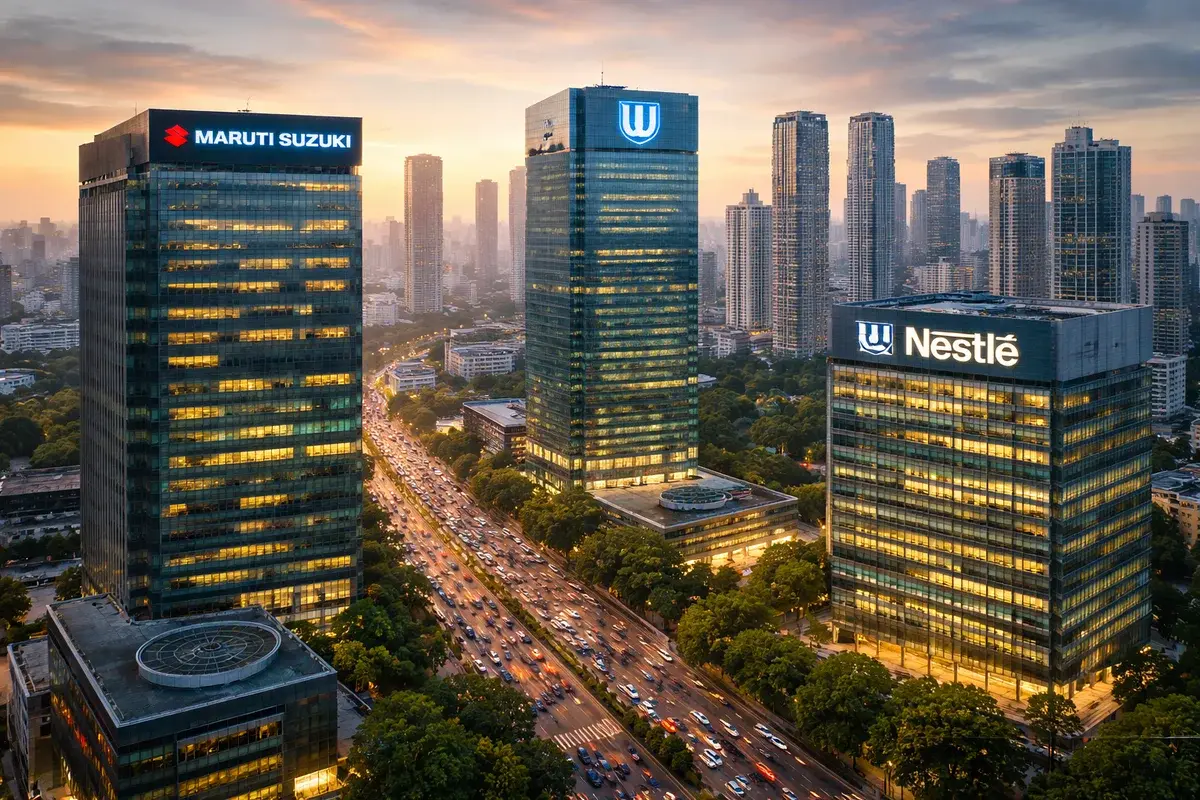
India’s largest multinational corporations are witnessing strong growth, but the gains are increasingly concentrated among top industry leaders. Companies like Maruti Suzuki continue to dominate through scale and market share, while firms such as Hindustan Unilever face headwinds from shifting consumption patterns. Premiumisation trends, policy changes, and evolving consumer preferences are reshaping the competitive landscape, widening the gap between leaders and mid-tier players.
India’s corporate landscape is undergoing a subtle but powerful transformation. The latest Fortune India MNC rankings reveal a concentration of growth among the largest multinational corporations, while smaller and mid-tier firms struggle to keep pace with changing consumer behavior and macroeconomic pressures.
The result is a widening performance gap—one that could reshape sector leadership, valuation premiums, and long-term investor strategies.
Consumption Shifts: The Core Driver of MNC Performance
At the heart of the changing corporate hierarchy is India’s evolving consumption story. Rising incomes, urbanization, and digital access are pushing consumers toward:
This trend is benefiting companies with:
Key consumption trends shaping MNC growth
| Trend | Market Impact |
|---|---|
| Premiumisation | Higher margins for top brands |
| Urban consumption growth | Stronger demand in metros |
| Digital retail expansion | Faster product penetration |
| Brand loyalty | Advantage for market leaders |
Auto Sector Strength: Maruti Suzuki’s Dominance
Maruti Suzuki continues to lead the MNC rankings, reflecting its unmatched scale and distribution reach in the Indian automobile market.
Key strengths behind Maruti’s leadership
The company’s dominance highlights a broader trend: scale is becoming the biggest competitive advantage in India’s consumption-driven sectors.
Expert Insight: “In India’s mass consumption economy, scale and distribution often matter more than innovation alone. Market leaders are able to compound advantages faster than smaller rivals.”
FMCG Pressure: Hindustan Unilever’s Changing Landscape
While auto majors are benefiting from pent-up demand, the FMCG sector is undergoing structural churn.
Hindustan Unilever, one of India’s largest consumer goods companies, is facing:
FMCG sector challenges
| Factor | Impact on HUL and peers |
|---|---|
| Premiumisation | Pressure on mass-market volumes |
| Regional brands | Increased competition |
| Rural slowdown | Weak volume growth |
| Input cost volatility | Margin pressure |
The sector is moving from volume-led growth to value-led growth, forcing companies to rethink product strategies.
The Premiumisation Wave: A Double-Edged Sword
India’s consumers are increasingly willing to pay more for:
While this benefits premium-focused companies, it creates challenges for:
Premiumisation impact across sectors
| Sector | Effect of Premiumisation |
|---|---|
| Auto | Shift to SUVs and higher variants |
| FMCG | Growth in premium personal care |
| Consumer durables | Demand for smart appliances |
| Retail | Rise of branded and organized players |
Policy and Tax Debate: Can Consumption Be Revived?
A key debate among economists and policymakers is whether tax cuts could stimulate consumption and support corporate growth.
Potential policy outcomes
| Policy move | Expected impact |
|---|---|
| Income tax cuts | Higher disposable income |
| GST rationalization | Lower product prices |
| Rural spending programs | Boost to FMCG demand |
If consumption accelerates, mid-tier companies could see a revival. But without policy support, the growth gap between large and small firms may widen further.
Valuation Dynamics: Why Big MNCs Command Premiums
Top MNCs in India typically trade at valuation premiums due to:
Typical valuation advantages
| Factor | Impact on valuation |
|---|---|
| Strong brands | Higher P/E multiples |
| Market share leadership | Investor confidence |
| Stable margins | Lower risk perception |
| Global backing | Capital access advantage |
As growth concentrates among these leaders, valuation premiums may expand further.
The Emerging Corporate Divide
The latest MNC performance trends point to a clear divide.
Large MNCs
Mid-tier companies
This divergence could lead to:
Investor Strategy: What the MNC Trends Signal
Bullish signals
Bearish risks
For investors, the MNC landscape suggests a barbell strategy:
Trading Platforms for Indian and Global Investors
For investors tracking MNC and large-cap stocks:
India-Based Platforms
Global Platforms
⚠️ DISCLAIMER: We Are Not Financial Advisors This article is for informational and educational purposes only and should not be considered financial or investment advice. Equity markets involve risks, and past performance does not guarantee future results. Always conduct your own research or consult a certified financial advisor before making investment decisions.

Financial journalist specializing in market analysis, stock research, and investment trends. Dedicated to providing accurate, timely insights for informed decision-making.
Credentials: Experienced financial journalist with expertise in equity markets and economic analysis
The information provided in this article is for educational and informational purposes only and should not be construed as financial, investment, or legal advice. Finscann does not provide personalized investment recommendations.
For detailed terms and conditions, please read our Disclaimer and Terms of Service.
India's benchmark indices Sensex and Nifty staged a robust recovery in March 2026, gaining significantly despite ongoing geopolitical tensions.

Geopolitical tensions surrounding the US-Iran conflict led FIIs to dump ₹12,000 crore from Indian shares.

Indian refinery stocks, including Reliance, MRPL, and CPCL, surge up to 5% after China reportedly suspends diesel and gasoline exports amidst...
Indian markets surged in March 2026, with Sensex and Nifty rebounding on de-escalation hopes in the Middle East.

Morgan Stanley cuts 2,500 jobs across investment banking, wealth management, and trading. Despite strong financials, this strategic move signals a...