Loading market data...
The Reserve Bank of India has purchased nearly 47 percent of the Centre’s government bond issuances in FY26, injecting over ₹6.39 lakh crore into the banking system through open market operations. This move helped ease liquidity tightness, stabilise bond yields, and support steady credit growth. The central bank’s proactive intervention reflects its commitment to maintaining orderly market conditions amid heavy government borrowing.
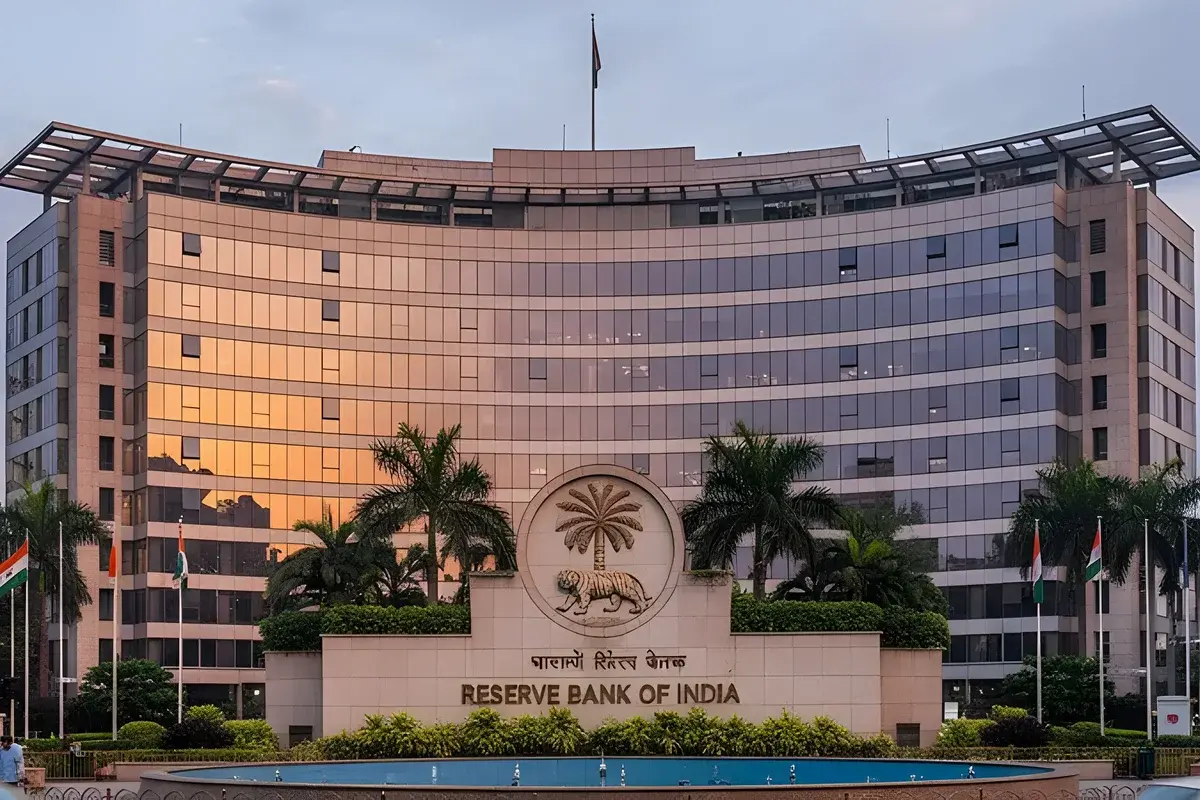
The Reserve Bank of India has purchased nearly 47% of the Centre’s total bond issuances in FY26, injecting over ₹6.39 lakh crore into the banking system through open market operations. The move helped ease liquidity tightness, prevent a spike in bond yields, and ensure stable credit flow to the economy amid heavy government borrowing.
India’s fiscal strategy relies heavily on market borrowings to fund infrastructure, welfare, and growth-oriented programs. However, large government borrowing programs can put pressure on the bond market, often pushing yields higher and tightening liquidity in the banking system.
To prevent such disruptions, the Reserve Bank of India (RBI) has taken a proactive stance in FY26, purchasing a substantial portion of government bonds through Open Market Operations (OMO). This strategic intervention has played a key role in maintaining market stability and supporting credit growth across the economy.
According to official data, the Centre raised ₹13,65,000 crore between April 4, 2025, and February 13, 2026, through government securities.
In response, the Reserve Bank of India official site conducted OMO purchases worth ₹6,39,203 crore, effectively buying around 47% of the total bond supply during the period.
| Metric | Amount |
|---|---|
| Total government borrowing (FY26 till Feb) | ₹13,65,000 crore |
| RBI OMO purchases | ₹6,39,203 crore |
| Share of bond issuances bought by RBI | ~47% |
| Liquidity impact | Significant system-wide injection |
This level of intervention reflects a strong policy stance aimed at keeping financial conditions accommodative.
Open Market Operations are a key monetary policy tool used by central banks.
How OMOs work:
When the RBI buys bonds aggressively:
Large-scale government borrowing can create several challenges for the financial system.
The RBI’s intervention addressed these risks by:
Without RBI support, heavy government borrowing often leads to yield hardening, meaning bond yields rise due to increased supply.
| Market Factor | Without RBI Intervention | With RBI Intervention |
|---|---|---|
| Bond yields | Sharp increase | Stabilised levels |
| Banking liquidity | Tight conditions | Improved liquidity |
| Credit growth | Slower | Supported expansion |
| Corporate borrowing cost | Higher | Contained |
This intervention helped maintain orderly market conditions, which is critical for financial stability.
The banking system relies heavily on liquidity conditions to maintain credit expansion.
Key beneficiaries:
The RBI’s actions go beyond the bond market. They influence the broader economy.
Supports economic growth
Controls borrowing costs
Maintains financial stability
India’s borrowing program has grown steadily in recent years due to:
| Fiscal Year | Gross Borrowing (Approx.) |
|---|---|
| FY23 | ₹14–15 lakh crore |
| FY24 | ₹15–16 lakh crore |
| FY25 | ₹15–16 lakh crore |
| FY26 (till Feb) | ₹13.65 lakh crore |
The consistent high borrowing levels make RBI’s liquidity management role even more critical.
“The RBI’s decision to absorb nearly half of the government’s bond issuances reflects a clear commitment to maintaining orderly financial conditions. Such proactive liquidity management helps stabilise yields, support credit growth, and sustain economic momentum.”
RBI’s bond purchases influence multiple asset classes.
Investors should track these metrics in the coming months:
| Indicator | Why It Matters |
|---|---|
| Banking system liquidity | Shows credit availability |
| Government bond yields | Reflect borrowing costs |
| RBI OMO activity | Indicates policy stance |
| Credit growth data | Signals economic momentum |
| Inflation trends | Influences interest rate decisions |
Despite strong intervention, certain risks remain.
Key risks:
The RBI is expected to remain active in liquidity management as the fiscal year progresses.
If liquidity tightens:
If inflation rises:
The central bank will likely maintain a balanced approach between growth and inflation control.
Investors tracking bond yields, banking stocks, and macro trends can use leading Indian trading platforms:
The RBI’s purchase of 47% of government bond issuances in FY26 highlights a strong commitment to maintaining liquidity and market stability. By injecting over ₹6.39 lakh crore into the banking system, the central bank has helped stabilise yields, support credit growth, and sustain economic momentum.
For investors, the move signals:
The RBI’s policy actions will remain a critical driver of financial market trends in the months ahead.
⚠️ DISCLAIMER: We Are Not Financial Advisors

Financial journalist specializing in market analysis, stock research, and investment trends. Dedicated to providing accurate, timely insights for informed decision-making.
Credentials: Experienced financial journalist with expertise in equity markets and economic analysis
The information provided in this article is for educational and informational purposes only and should not be construed as financial, investment, or legal advice. Finscann does not provide personalized investment recommendations.
For detailed terms and conditions, please read our Disclaimer and Terms of Service.

AgniKul Cosmos achieves a major milestone by test-firing three 3D-printed semi-cryogenic rocket engines simultaneously.

India’s most profitable unlisted companies in 2025 revealed. A leading fintech firm tops the list with a 48% net profit margin and ₹4,235 crore...

Indian stock market crashes as Sensex plunges 1,300 points and ₹6.3 lakh crore in investor wealth evaporates.

Aparna Enterprises invests ₹150 crore in a new Morbi tile manufacturing plant, boosting Vitero Tiles’ total capacity to 18 MSM.

Deepinder Goyal steps into India’s defence innovation space as LAT Aerospace acquires Sharang Shakti, signaling a strategic push into indigenous...