Loading market data...
India faces a major LPG shortage as global supply disruptions push prices higher. Restaurants shut, businesses struggle, and households feel the impact.
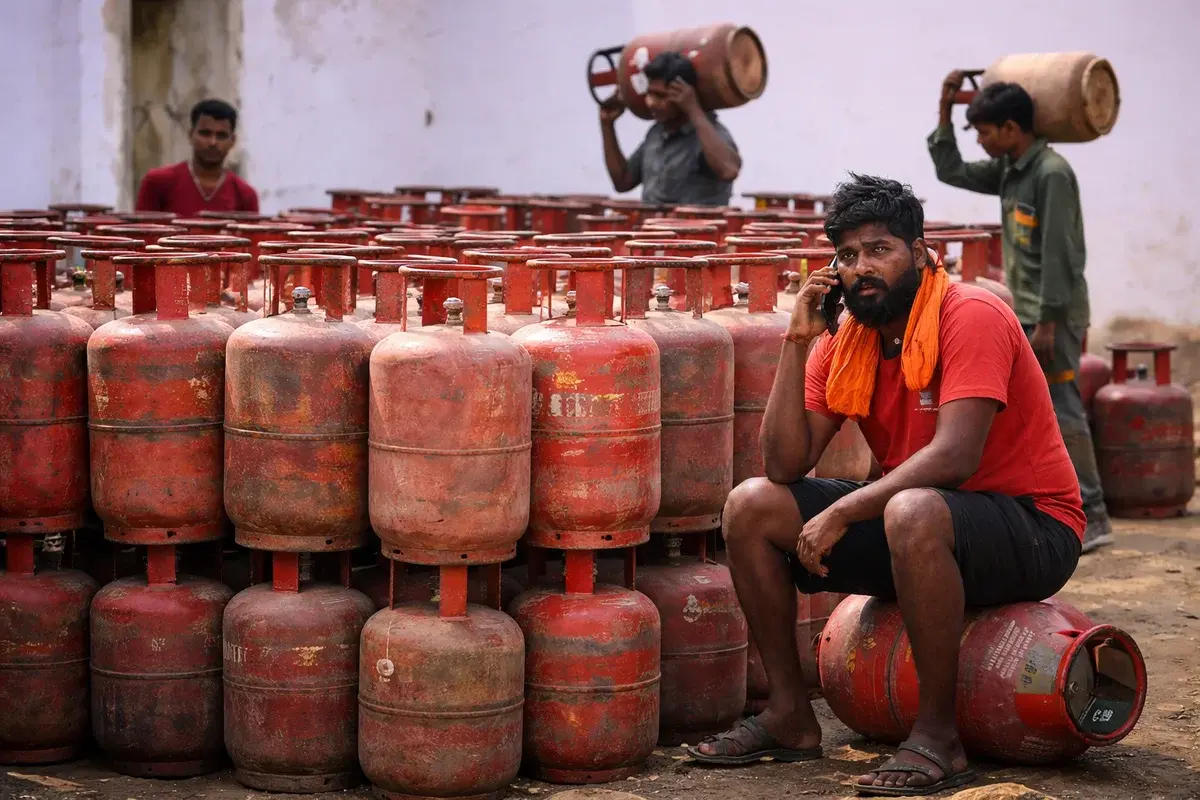
India is currently facing one of its most significant Liquefied Petroleum Gas (LPG) supply disruptions in recent years, with shortages spreading across multiple states and affecting households, restaurants, small businesses, and public institutions. The crisis has emerged as a direct consequence of geopolitical tensions in West Asia, which have disrupted energy trade routes passing through the Strait of Hormuz, a key corridor for global LPG shipments. As imports tighten and domestic demand surges, LPG booking systems have reportedly collapsed in some regions, forcing businesses to shut down temporarily and pushing many consumers toward alternative fuels.
The shortage highlights a structural challenge in India’s energy ecosystem: the country depends on imports for nearly 60–65% of its LPG supply, making domestic markets vulnerable to geopolitical shocks and supply chain disruptions.
LPG prices vary slightly across states due to transportation costs, local taxes, and distribution expenses. Below are approximate retail prices for a 14.2 kg domestic LPG cylinder in major Indian states and cities.
| State / City | LPG Price (₹ per 14.2 kg cylinder) |
|---|---|
| Delhi | ₹903 |
| Mumbai (Maharashtra) | ₹902 |
| Kolkata (West Bengal) | ₹929 |
| Chennai (Tamil Nadu) | ₹918 |
| Hyderabad (Telangana) | ₹955 |
| Bengaluru (Karnataka) | ₹905 |
| Thiruvananthapuram (Kerala) | ₹915 |
| Ahmedabad (Gujarat) | ₹910 |
| Jaipur (Rajasthan) | ₹906 |
| Lucknow (Uttar Pradesh) | ₹940 |
| Patna (Bihar) | ₹1001 |
| Ranchi (Jharkhand) | ₹960 |
| Bhopal (Madhya Pradesh) | ₹908 |
| Chandigarh | ₹912 |
| Guwahati (Assam) | ₹955 |
Commercial LPG cylinders (19 kg) used by restaurants and hotels are significantly more expensive, often costing between ₹1,750 and ₹2,100 depending on the region.
The current LPG shortage is closely tied to disruptions in global energy supply chains, particularly those involving the Strait of Hormuz, through which a substantial portion of global LPG and natural gas shipments pass. Escalating geopolitical tensions and military confrontations in the Middle East have disrupted shipping activity, forcing tanker operators and energy traders to reduce shipments.
India imports LPG primarily from countries such as:
These countries export LPG through the Persian Gulf shipping corridor, meaning any disruption in the region immediately affects global LPG supply and pricing.
Industry analysts estimate that more than half of India’s LPG imports transit through Hormuz-linked shipping routes, making the domestic market particularly vulnerable during geopolitical crises.
The LPG shortage has begun to severely impact businesses that depend heavily on gas for cooking and heating. Restaurants, street vendors, catering services, hostels, and industrial kitchens are among the worst affected.
Reports indicate that in Kerala alone nearly 40% of restaurants temporarily shut down or reduced operations due to lack of LPG supply. Many establishments have been forced to switch to alternative energy sources such as:
However, switching fuels is not always feasible due to safety regulations, equipment requirements, and operational costs.
For street vendors and gig economy workers, the shortage has created additional financial stress. Food vendors who rely on LPG cylinders for cooking have reported rising operating costs and reduced daily sales.
Distribution networks across several states have reported significant strain as consumers rush to secure LPG cylinders. Panic buying and hoarding have further intensified the shortage, particularly in urban areas.
In some regions, booking platforms used by LPG distributors have reportedly collapsed due to excessive demand, leaving consumers unable to secure timely deliveries.
Authorities have warned that black-market trading of LPG cylinders may increase during supply disruptions, prompting state governments to step up monitoring and enforcement against illegal reselling.
To address the crisis, the Indian government has initiated a series of emergency measures aimed at stabilizing supply and reducing pressure on LPG distribution networks.
Key interventions include:
The government has also accelerated efforts to diversify LPG imports by sourcing additional shipments from countries including:
These diversification efforts aim to reduce reliance on Middle Eastern supply routes in the long term.
India’s dependence on imported LPG has grown rapidly over the past decade due to the expansion of the Pradhan Mantri Ujjwala Yojana (PMUY) program, which has provided subsidized LPG connections to millions of households.
While the initiative significantly improved access to clean cooking fuel, it also increased overall LPG demand across the country.
Today:
The remainder must be imported, leaving the country exposed to global energy shocks.
The LPG shortage is not only a supply crisis but also an economic challenge with ripple effects across multiple sectors.
Higher LPG prices and shortages can lead to:
Economists warn that prolonged LPG disruptions could also affect urban employment in the food service industry, which supports millions of informal workers.
The current LPG crisis underscores a critical issue for India’s energy security: reliance on imported fuels.
Experts suggest several long-term solutions to reduce vulnerability:
Transitioning to diversified energy sources could help protect households and businesses from future global supply disruptions.
While government measures may ease the immediate shortage, energy analysts believe the situation will remain fragile as long as geopolitical tensions continue to disrupt global shipping routes.
For businesses and households across India, the LPG crisis serves as a reminder of how global energy markets can directly affect daily life.
In the coming months, markets will closely monitor global supply conditions, government interventions, and import diversification strategies to determine whether India can stabilize LPG supply and avoid further disruptions.

Financial journalist specializing in market analysis, stock research, and investment trends. Dedicated to providing accurate, timely insights for informed decision-making.
Credentials: Experienced financial journalist with expertise in equity markets and economic analysis
The information provided in this article is for educational and informational purposes only and should not be construed as financial, investment, or legal advice. Finscann does not provide personalized investment recommendations.
For detailed terms and conditions, please read our Disclaimer and Terms of Service.
Bombay Stock Exchange will conduct a market-wide mock trading session on March 14 to test trading systems across equity, derivatives, currency, and...
Akasa Air partners with Noida International Airport to establish its first MRO facility in India, strengthening aviation infrastructure and...

Indian markets fall sharply as Nifty drops 300 points and Sensex declines 900 amid rising oil prices, LPG shortages, and sector-wide selling pressure.
Petrol prices in India remain a key economic driver in March 2026, influenced by crude oil, rupee-dollar exchange rates, and taxes affecting...

Get the latest pre-market analysis for the Indian share market on March 13, 2026. FinScann's expert insights on Nifty 50, Sensex, FII/DII data, and...