Loading market data...
Bombay Stock Exchange will conduct a market-wide mock trading session on March 14 to test trading systems across equity, derivatives, currency, and commodity segments.
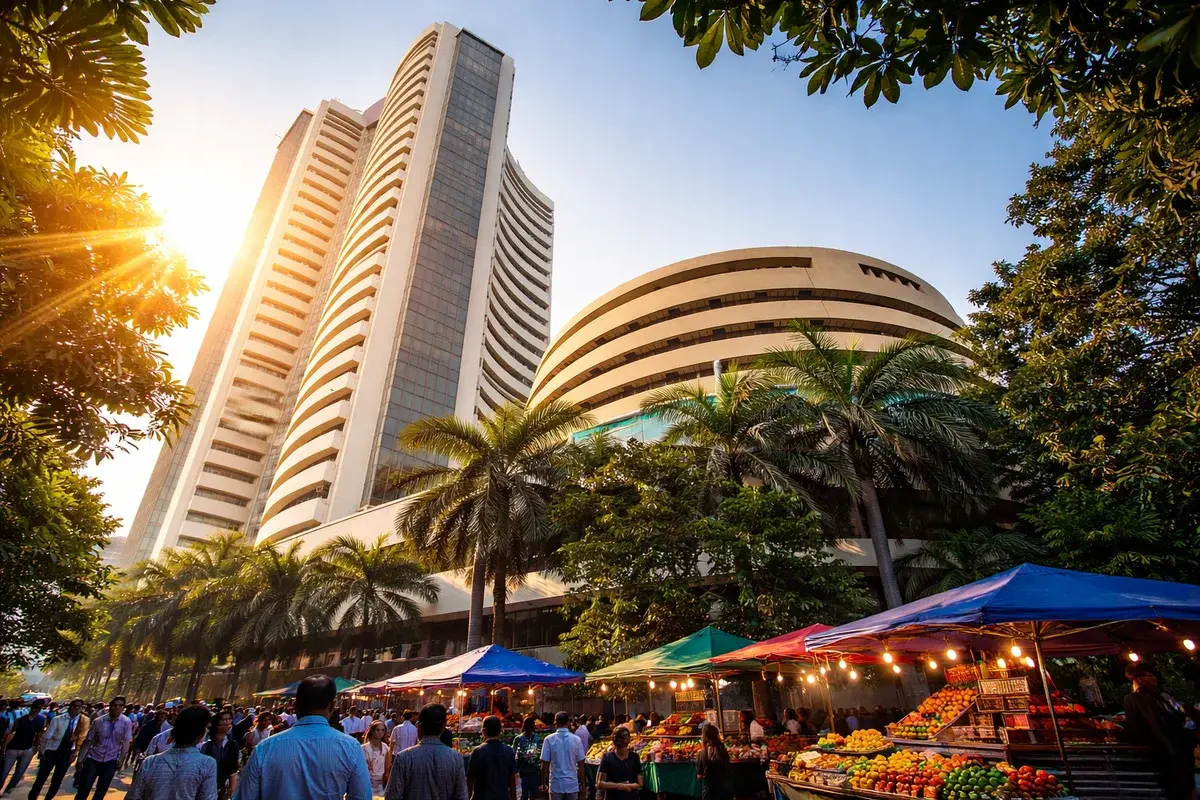
India’s premier stock exchange Bombay Stock Exchange has announced a market-wide mock trading session scheduled for March 14, aimed at testing the robustness and reliability of its trading infrastructure across multiple market segments. The exercise is part of the exchange’s regular system readiness program designed to ensure that brokers, trading members, and market participants can operate seamlessly during live trading conditions. The drill will cover equities, equity derivatives, currency derivatives, and commodity segments, allowing participants to test connectivity, order management systems, and trading workflows under simulated market conditions.
This proactive initiative underscores the importance of operational resilience in modern financial markets where high-frequency transactions and algorithmic trading require highly reliable exchange infrastructure.
| Key Metric | Details |
|---|---|
| Exchange | Bombay Stock Exchange (BSE) |
| Event | Market-wide mock trading session |
| Date | March 14 |
| Segments Covered | Equity, Currency, Commodity, Equity Derivatives |
| Objective | System readiness and operational testing |
The mock trading drill organized by Bombay Stock Exchange is designed to simulate real-time trading scenarios that allow brokers, clearing members, and trading firms to verify the performance of their trading platforms and connectivity with the exchange.
Stock exchanges regularly conduct such exercises to ensure that both the exchange’s infrastructure and the trading systems used by brokers can handle market activity without disruptions. These tests help identify potential technical issues in advance and provide participants an opportunity to fix them before actual trading sessions.
The exercise will replicate live market conditions by allowing trading members to place, modify, and cancel orders while monitoring trade confirmations and system responses.
The upcoming mock trading session will include several key segments of the financial markets:
Equity segment
Equity derivatives (futures and options)
Currency derivatives
Commodity derivatives
By covering these multiple segments, the exchange ensures that participants across different trading categories can test their systems comprehensively.
For derivatives traders in particular, verifying order routing and risk management systems is critical because derivatives markets involve complex trading strategies and higher transaction volumes.
The inclusion of futures and options trading in the drill allows participants to check margin systems, risk limits, and order execution capabilities under simulated conditions.
Modern stock markets rely heavily on electronic trading systems where transactions are executed within milliseconds. Any disruption in trading infrastructure can impact liquidity, price discovery, and investor confidence.
The mock drill allows brokers and institutional traders to test various operational aspects such as:
Such testing is particularly important for brokerage firms using algorithmic trading strategies that require high-speed data feeds and automated order execution.
The exercise also helps ensure that disaster recovery systems and backup connectivity options function properly in case of technical disruptions.
Operational reliability is a cornerstone of modern financial markets. Exchanges like Bombay Stock Exchange conduct periodic system testing to minimize the risk of technical failures during live trading hours.
In recent years, financial markets around the world have experienced occasional technical glitches that temporarily halted trading activities. As a result, regulators and exchanges have strengthened testing protocols to ensure robust trading infrastructure.
Regular mock trading sessions allow exchanges to maintain high standards of operational integrity while providing brokers with the opportunity to ensure their systems meet the technical requirements of the trading environment.
Mock trading sessions are a standard practice followed by major stock exchanges globally. Leading exchanges such as NYSE, NASDAQ, and London Stock Exchange conduct similar drills to test market infrastructure and ensure operational readiness.
These exercises help exchanges and trading firms prepare for unexpected events such as system upgrades, increased trading volumes, or emergency scenarios that could disrupt market operations.
By conducting regular system readiness exercises, exchanges ensure that market participants can maintain smooth trading operations even during periods of high volatility or heavy transaction loads.
For brokers and trading firms, participation in the mock trading session is an opportunity to ensure that their technology infrastructure remains compatible with exchange systems.
Financial institutions often use these drills to test new trading software, system upgrades, or changes in risk management frameworks.
Institutional traders, proprietary trading firms, and brokerage houses will likely use the session to monitor system performance and verify that trading platforms can handle high transaction volumes.
Such testing helps firms reduce operational risks and maintain compliance with exchange regulations.
As India’s capital markets continue to expand with growing participation from retail and institutional investors, maintaining robust trading infrastructure is becoming increasingly important.
With rising trading volumes and the growing adoption of algorithmic trading, exchanges must ensure that their systems remain resilient and capable of handling large-scale market activity.
The upcoming mock trading drill by Bombay Stock Exchange is expected to help strengthen operational preparedness among brokers and trading participants while reinforcing confidence in the reliability of India’s financial market infrastructure.
By regularly conducting such exercises, the exchange continues to support a stable and efficient trading environment for investors across the country.

Financial journalist specializing in market analysis, stock research, and investment trends. Dedicated to providing accurate, timely insights for informed decision-making.
Credentials: Experienced financial journalist with expertise in equity markets and economic analysis
The information provided in this article is for educational and informational purposes only and should not be construed as financial, investment, or legal advice. Finscann does not provide personalized investment recommendations.
For detailed terms and conditions, please read our Disclaimer and Terms of Service.

Akasa Air partners with Noida International Airport to establish its first MRO facility in India, strengthening aviation infrastructure and...

India faces a major LPG shortage as global supply disruptions push prices higher. Restaurants shut, businesses struggle, and households feel the...

Indian markets fall sharply as Nifty drops 300 points and Sensex declines 900 amid rising oil prices, LPG shortages, and sector-wide selling pressure.

Petrol prices in India remain a key economic driver in March 2026, influenced by crude oil, rupee-dollar exchange rates, and taxes affecting...

Get the latest pre-market analysis for the Indian share market on March 13, 2026. FinScann's expert insights on Nifty 50, Sensex, FII/DII data, and...