Loading market data...

Overview — why the Union Budget moves markets
The Union Budget is the government’s annual fiscal blueprint. It sets tax rules, spending plans (capex), subsidies, fiscal deficit targets, and sectoral allocations — all of which change the risk/reward calculations for companies, investors, and foreign funds. When the Finance Minister unveils the Budget, stock markets (Sensex, Nifty and sectoral indices) often react instantly — sometimes violently — because the Budget alters cash flows, demand outlooks and perceived policy risk for entire sectors.
Below I break down how budgets affect markets, which sectors typically gain or lose, how traders/investors should prepare, and practical watchlists and tactics to use on Budget day and in the weeks after.
1) Direct channels: the immediate mechanics that move prices
Tax changes (corporate & personal) — any change in corporate tax, surcharge, dividend distribution tax, or capital gains tax changes company earnings or investor after-tax returns. Policy tweak → earnings/re-rating → instant price move.
Capital expenditure (capex) allocation — big capex numbers (roads, rail, power, renewables) lift order books for infrastructure, cement, steel, engineering and heavy electrical names. Markets price future revenue flows into current valuations.
Subsidies and transfer payments — raises or cuts in subsidy budgets (fertiliser, fuel, food) affect consumer demand, farming incomes, and sector revenue.
Indirect tax & import duty changes — reduction in import duty can hurt domestic manufacturers (e.g., gold/jewellery, electronics), while higher duty protects local players.
Regulatory & structural measures — reforms (privatisation, disinvestment schedules, regulatory relaxations for startups/MSMEs) create immediate sentiment shifts and long-term structural re-rating.
Fiscal deficit & borrowing plan — higher borrowing can push bond yields up, crowd out private investment and pressure interest-rate-sensitive sectors (real estate, banks). Lower-than-expected deficit often supports equities.
2) Sector map — who usually benefits and who often loses (Budget-sensitive sectors)
| Sector | How Budget affects it | Typical Budget-day reaction |
|---|---|---|
| Infrastructure (roads, rail, ports) | Higher capex → more orders for EPC, cement, steel | Positive |
| Banking / NBFCs | Fiscal stimulus raises credit demand; bond yield movement affects margins | Mixed — depends on interest-rate cues |
| Realty & Construction | Infrastructure + housing incentives → demand boost | Positive if housing incentives announced |
| Pharma / Healthcare | Increased public health spend or R&D incentives → positive | Positive |
| Auto / EV / Electronics | Import duty cuts hurt; production-linked incentives (PLI) help | Volatile |
| FMCG / Consumer | Tax relief / subsidy cuts affect disposable income | Positive for consumers if reliefs announced |
| Metals & Mining | Infrastructure push lifts demand; export/import duties shift margins | Positive on capex |
| Gold / Jewellery | Import duty cut → domestic prices fall → negative for domestic miners/sellers | Negative if duty cut |
| IT & Services | Incentives for R&D, data centres, exports → positive | Positive on export-friendly measures |
3) Typical market timeline: what happens and when
T-minus 48–24 hours (rumour & positioning): Derivatives desks and HNI traders adjust positions — implied volatility rises, options skew changes. Expect buildup in protective hedges (put buying).
Budget hour (11:00 AM IST): Instant headlines & first reactions. High-frequency trading and algorithmic funds respond within seconds. Indices can gap.
T+0 to T+3 days: Sector rotation — winners/losers become clearer; midcaps often show higher moves. Liquidity can be choppy.
T+1 week: Market digests documents: detailed budget papers solidify the initial moves. Analysts publish earnings & valuation revisions.
T+1–3 months: The real impact depends on budget execution (how fast capex flows into projects) and RBI/monetary reaction.
4) How investors & traders should act — practical playbook
Short-term traders (intraday / 0–7 days):
Medium-term investors (1–12 months):
Long-term investors (3+ years):
5) Quick watchlist (example stocks/categories to monitor after a pro-capex Budget)
6) Example table — Market indicators to monitor immediately after Budget
| Indicator | Why it matters | How to read it |
|---|---|---|
| 10-year government bond yield | Reflects borrowing plan & inflation expectations | Rising yields can weigh on banks/real estate |
| INR vs USD | Tax and import duty surprises can affect currency | Sharp INR moves influence exporters/importers |
| Sectoral index futures (banks, infra, metal) | Show which sectors market prices in as winners | Futures gap higher → sector likely to rally |
| FII net flows | Foreign investor sentiment gauge | Heavy selling amplifies decline; inflows support rally |
| Commodity prices (crude, steel, gold) | Input cost & demand signals | Capex lift → commodity demand up |
**7) FAQs **
Q: Does Union Budget always move the Sensex and Nifty?
A: Yes — budgets change taxation, spending and borrowing, which directly alter earnings and macro risks. The magnitude depends on surprises vs. expectations.
Q: Should retail investors sell before Budget?
A: No blanket rule. If you are short-term trader, reduce leveraged exposure. Long-term investors should assess sector-specific opportunities and use corrections to accumulate quality names.
Q: What sectors usually benefit from higher capex?
A: Infrastructure (EPC), cement, steel, construction equipment, engineering, and rails/transport suppliers.
Q: How fast do budget measures translate into corporate revenue?
A: Many capex measures take 6–24 months to reflect in corporate revenues. Immediate winners are often contractors and suppliers with existing orderbooks.
8) Final checklist: exactly what to monitor on Budget day (actionable)
Conclusion — the Budget is a catalyst, not a prophecy
A Union Budget reshapes probabilities for millions of business decisions and investor flows. It is both a catalyst (causing immediate re-pricing) and a roadmap (shaping medium/long-term structural trends). Smart investors use Budget-day volatility to reassess risk exposure, identify sector-level winners, and then wait for execution evidence before making large, concentrated bets.
Disclaimer: This article is educational and not financial advice. Always consult a certified investment advisor and perform company-level analysis before acting.

Financial journalist specializing in market analysis, stock research, and investment trends. Dedicated to providing accurate, timely insights for informed decision-making.
Credentials: Experienced financial journalist with expertise in equity markets and economic analysis
The information provided in this article is for educational and informational purposes only and should not be construed as financial, investment, or legal advice. Finscann does not provide personalized investment recommendations.
For detailed terms and conditions, please read our Disclaimer and Terms of Service.
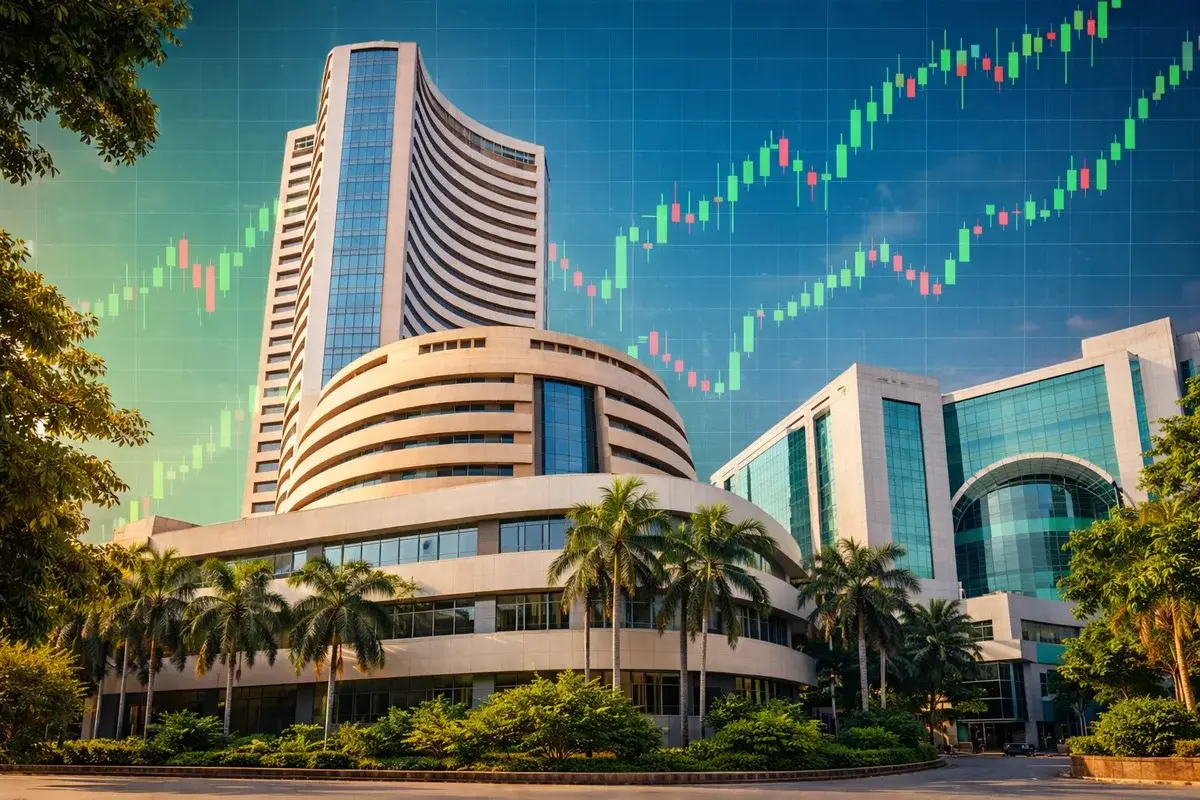
India's benchmark indices Sensex and Nifty staged a robust recovery in March 2026, gaining significantly despite ongoing geopolitical tensions.

Geopolitical tensions surrounding the US-Iran conflict led FIIs to dump ₹12,000 crore from Indian shares.

Indian refinery stocks, including Reliance, MRPL, and CPCL, surge up to 5% after China reportedly suspends diesel and gasoline exports amidst...
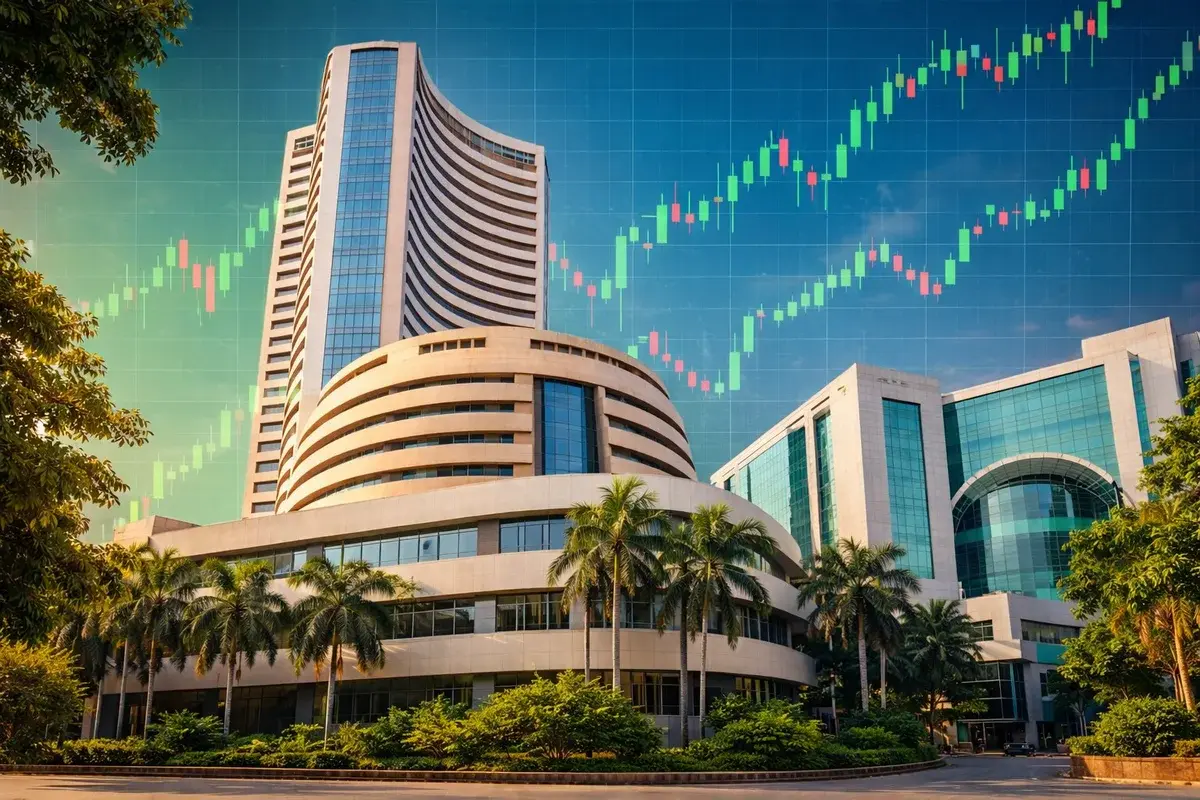
Indian markets surged in March 2026, with Sensex and Nifty rebounding on de-escalation hopes in the Middle East.

Morgan Stanley cuts 2,500 jobs across investment banking, wealth management, and trading. Despite strong financials, this strategic move signals a...