Loading market data...
On February 3, 2026, the Indian market witnessed a powerful institutional reversal following the historic India-US trade deal, which slashed export tariffs to 18%. Foreign Institutional Investors (FIIs) ended their selling streak with a massive net buy of ₹5,236 Cr, while Domestic Institutional Investors (DIIs) supported the rally with ₹1,014 Cr. This "double engine" buying powered the Nifty 50 to a record 1,000-point jump, signaling a structural shift toward quality, export-led growth.
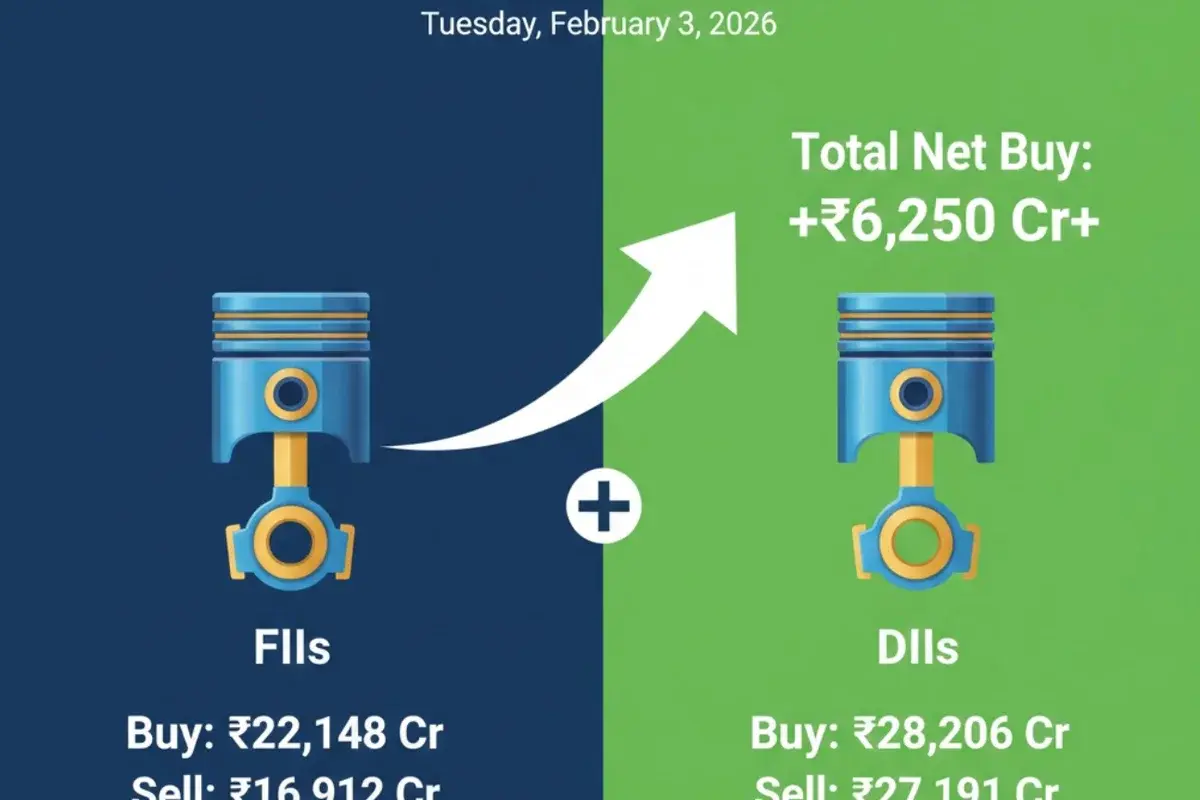
The date February 3, 2026, will be remembered as the day the "smart money" stopped watching from the sidelines and started charging. In a dramatic reversal of the multi-month selling streak that had plagued Indian equities, Foreign Institutional Investors (FIIs) returned with a vengeance, joining forces with domestic bulls to ignite a historic market rally.
The Numbers That Matter
The provisional data from the NSE and BSE tells a story of overwhelming conviction:
The Catalyst: A Geopolitical Masterstroke
Why the sudden change of heart? The primary trigger was the historic $500 billion India-US trade deal.
For months, the market had been weighed down by the "Tariff Overhang." When Washington slashed reciprocal tariffs on Indian goods from 50% to a mere 18%, the economic calculus for Indian exporters shifted overnight. This deal didn't just move numbers; it moved sentiment. FIIs, who had pulled out over ₹1 lakh crore since August 2025, finally saw the "quality play" they were waiting for.
Why This Buying is Different
This isn't just a "dead cat bounce" or a speculative flutter. It represents a structural pivot:
The Finscann Verdict: Trade with Intent
Retail investors often react to the price move, but the pros track the volume move. Today's data suggests that institutions are no longer panicking—they are positioning for a new cycle of growth.
The message is clear: the floor has shifted. When the big fish start buying, it’s time to stop looking for the exit and start looking for quality.
"Smart money doesn't talk. It moves."
Disclaimer
Investment in the securities market is subject to market risks. Read all related documents carefully before investing. This article is for informational purposes only and does not constitute financial advice. Past performance is not indicative of future results. Please consult a SEBI-registered financial advisor before making any investment decisions.

Financial journalist specializing in market analysis, stock research, and investment trends. Dedicated to providing accurate, timely insights for informed decision-making.
Credentials: Experienced financial journalist with expertise in equity markets and economic analysis
The information provided in this article is for educational and informational purposes only and should not be construed as financial, investment, or legal advice. Finscann does not provide personalized investment recommendations.
For detailed terms and conditions, please read our Disclaimer and Terms of Service.
India's benchmark indices Sensex and Nifty staged a robust recovery in March 2026, gaining significantly despite ongoing geopolitical tensions.

Geopolitical tensions surrounding the US-Iran conflict led FIIs to dump ₹12,000 crore from Indian shares.

Indian refinery stocks, including Reliance, MRPL, and CPCL, surge up to 5% after China reportedly suspends diesel and gasoline exports amidst...
Indian markets surged in March 2026, with Sensex and Nifty rebounding on de-escalation hopes in the Middle East.
Morgan Stanley cuts 2,500 jobs across investment banking, wealth management, and trading. Despite strong financials, this strategic move signals a...