Loading market data...
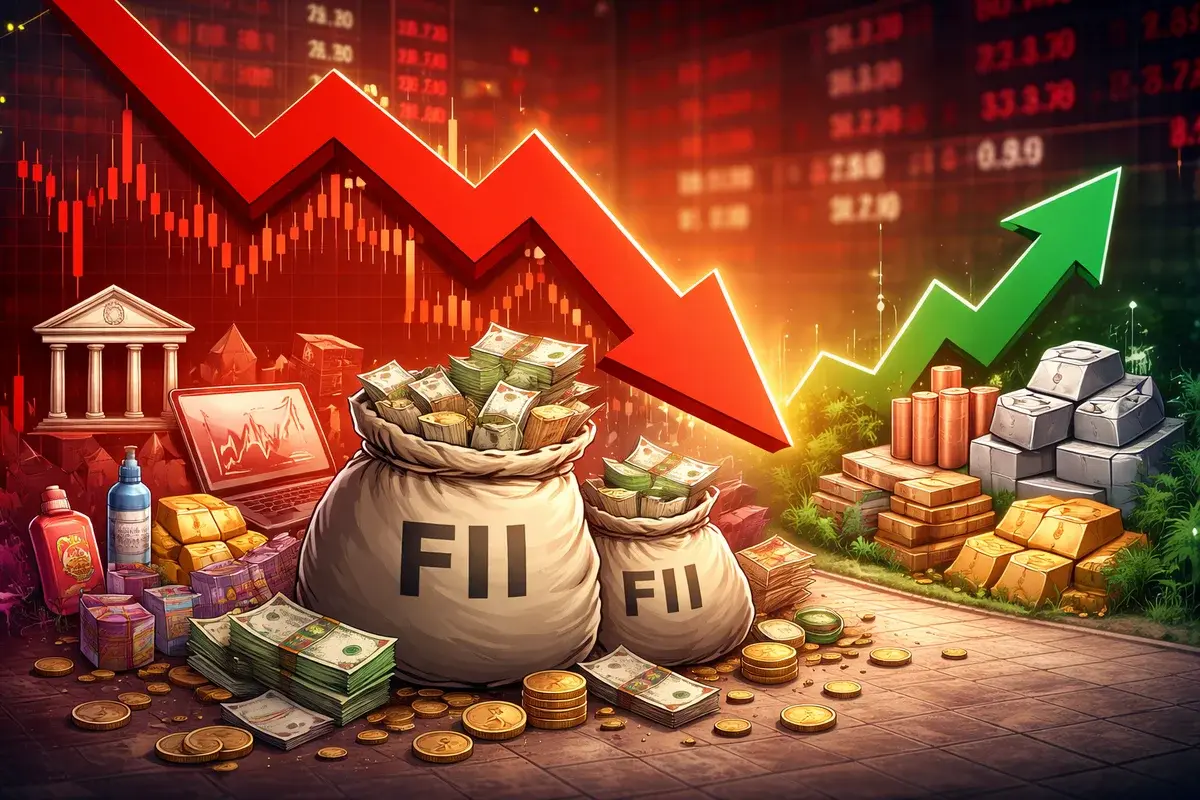
Indian equity markets have entered a turbulent phase in early 2026 as foreign institutional investors (FIIs) pulled out a massive ₹19,015 crore in just the first half of January. The aggressive selling has sent shockwaves across frontline indices, with banks, IT, FMCG, and consumer stocks facing the heaviest pressure, even as metals emerged as the only sector attracting meaningful foreign inflows.
The sharp FII exodus comes against a backdrop of disappointing Q3 earnings, rising geopolitical risks, a weaker rupee, and uncertainty surrounding the India–US trade negotiations, raising fresh concerns about near-term market stability.
FII Selloff in Numbers: Where the Money Is Flowing Out
According to data from NSDL, foreign investors have aggressively reduced exposure to multiple key sectors:
| Sector | Net FII Outflow (₹ crore) |
|---|---|
| FMCG & Consumer Staples | Heavy outflows |
| Financial Services & Banks | Significant selling |
| IT Services | Persistent outflows |
| Consumer Services | Large withdrawals |
| Telecom & Healthcare | Moderate selling |
| Metals | ₹2,689 crore inflow |
In total, over ₹15,000 crore has been pulled out from FMCG, financials, IT, and consumer-facing sectors alone, reflecting a decisive shift in global investor positioning.
Why FIIs Are Selling Indian Equities in 2026
Several macro and domestic factors have converged to trigger the selloff:
The combination has made FIIs cautious on India despite resilient domestic demand.
Banks, IT, FMCG: Why These Sectors Were Hit the Hardest
Banking & Financials While asset quality remains stable, FIIs are wary of margin pressure, slower credit growth normalization, and valuation fatigue after years of outperformance.
IT Services The IT sector continues to struggle with weak global tech spending, cautious client budgets, and uncertain US demand, leading to sustained foreign selling.
FMCG & Consumer Stocks High valuations, margin pressures from input costs, and mixed urban demand trends have made FMCG stocks vulnerable during this risk-off phase.
Metals: The Only Sector Attracting FII Buying
In stark contrast, metals have emerged as the sole bright spot amid the market turmoil.
Foreign investors infused ₹2,689 crore into metal stocks, driven by expectations of a global metal super cycle, resilient demand, supply constraints, and a softer US dollar.
Pinakin Parekh of HSBC highlighted strong prospects in:
HSBC has raised metal price forecasts sharply:
HSBC’s Metal Picks: Where Analysts See Upside
HSBC remains bullish on select metal stocks:
| Stock | Analyst View |
|---|---|
| Hindalco | Preferred large-cap play |
| NALCO | Strong pure aluminium exposure |
| Hindustan Zinc | Upgraded to Buy |
Earnings estimates for these companies have been revised 6–24% higher, with HSBC projections now 5–45% above Street consensus, suggesting further upside potential.
Domestic Brokerages Turn Selective, Not Bearish
Despite the heavy FII selling, domestic brokerages are not turning outright bearish. Instead, they are reshuffling portfolios toward sectors with domestic demand visibility.
Prabhudas Lilladher’s Strategy Shift
The brokerage is:
Q3 Demand Signals: A Mixed but Encouraging Picture
Prabhudas Lilladher highlighted contrasting demand trends:
The brokerage believes domestic-oriented sectors can outperform in the near-to-medium term.
UBS Stays Cautious on India
Global brokerage UBS continues to remain underweight on India, citing:
However, UBS acknowledges that resilient domestic demand, government capex, tax adjustments, and supportive monetary policy have partially offset external pressures.
UBS prefers private banks and consumption staples in the current environment.
What This Means for Indian Investors
The ₹19,000 crore FII selloff underscores a critical shift:
For retail and long-term investors, this phase may offer selective accumulation opportunities, especially in sectors aligned with domestic growth and global commodity tailwinds.
Key Sectors to Watch Going Forward
Final Takeaway
The early-2026 FII selloff has created near-term volatility but also sharpened market differentiation. While banks, IT, and FMCG remain under pressure, metals are emerging as a structural winner, supported by global macro trends.
As foreign investors reassess risk, stock selection, earnings visibility, and sector rotation will define market performance rather than broad index moves.
Disclaimer This article is for informational and educational purposes only and does not constitute investment advice. Stock market investments are subject to market risks. Readers are advised to conduct their own research or consult a qualified financial advisor before making any investment decisions.

Financial journalist specializing in market analysis, stock research, and investment trends. Dedicated to providing accurate, timely insights for informed decision-making.
Credentials: Experienced financial journalist with expertise in equity markets and economic analysis
The information provided in this article is for educational and informational purposes only and should not be construed as financial, investment, or legal advice. Finscann does not provide personalized investment recommendations.
For detailed terms and conditions, please read our Disclaimer and Terms of Service.
India's benchmark indices Sensex and Nifty staged a robust recovery in March 2026, gaining significantly despite ongoing geopolitical tensions.

Geopolitical tensions surrounding the US-Iran conflict led FIIs to dump ₹12,000 crore from Indian shares.

Indian refinery stocks, including Reliance, MRPL, and CPCL, surge up to 5% after China reportedly suspends diesel and gasoline exports amidst...
Indian markets surged in March 2026, with Sensex and Nifty rebounding on de-escalation hopes in the Middle East.
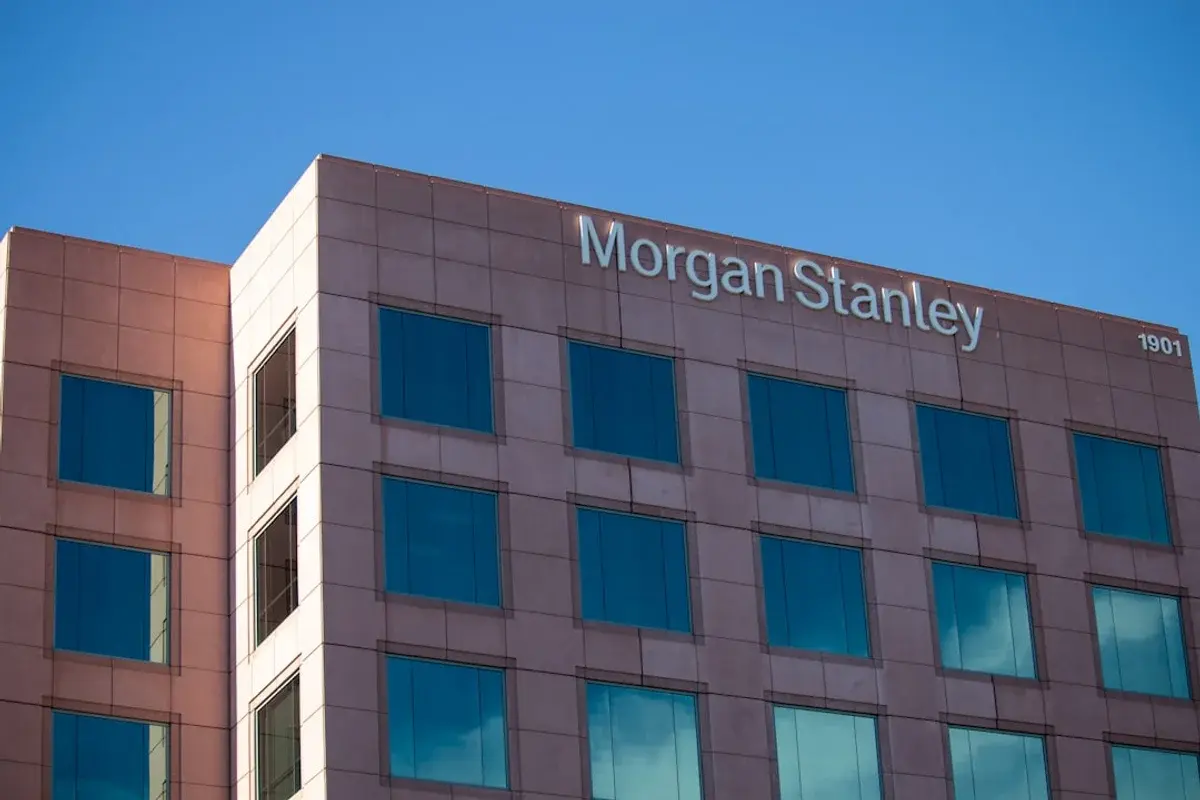
Morgan Stanley cuts 2,500 jobs across investment banking, wealth management, and trading. Despite strong financials, this strategic move signals a...