Loading market data...
US Customs and Border Protection halts 'illegal' IEEPA tariffs after Supreme Court ruling, impacting global trade. What it means for importers and new Trump duties.
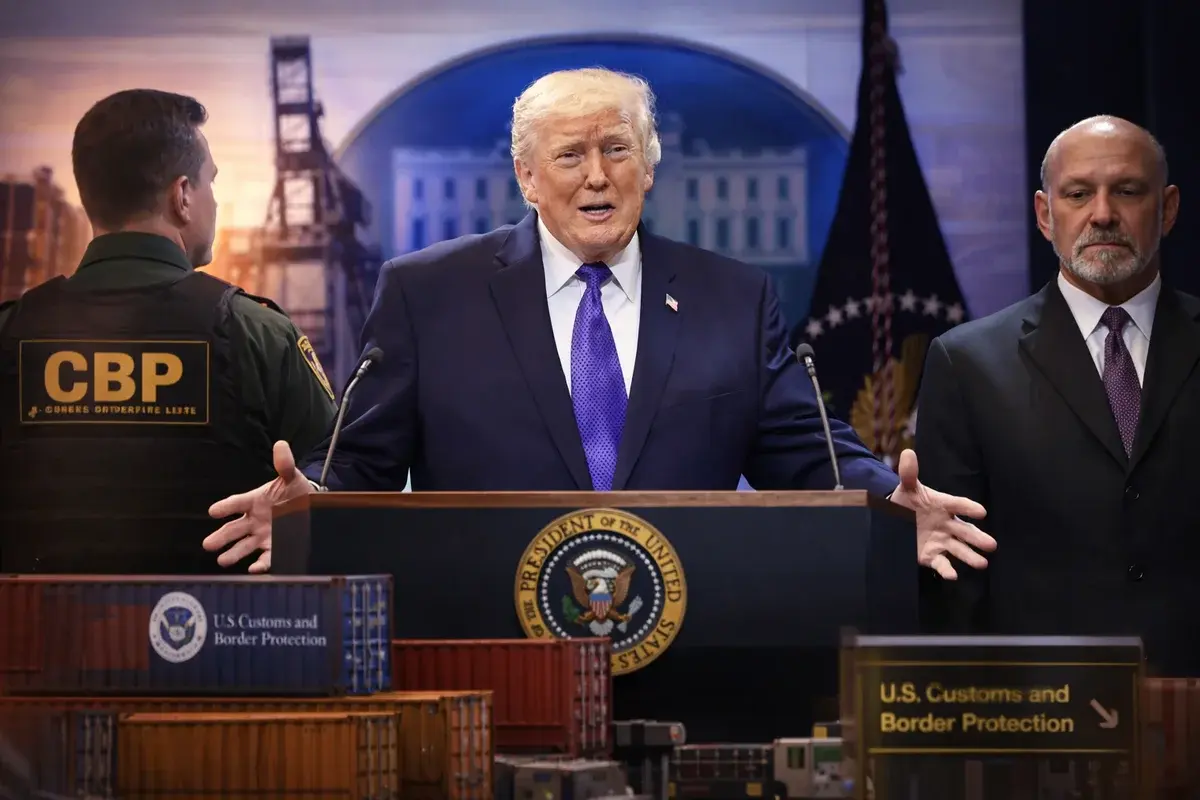
The U.S. Customs and Border Protection (CBP) agency is set to halt the collection of tariffs imposed under the International Emergency Economic Powers Act (IEEPA) at 12:01 a.m. EST (0501 GMT) on Tuesday, February 24, 2026, more than three days after the U.S. Supreme Court declared these duties illegal. This pivotal decision impacts global trade dynamics and signals a significant shift in U.S. tariff policy, even as former President Donald Trump introduces a new 15% global tariff under separate legal authority to replace the invalidated levies.
The Catalyst
The core of this unfolding financial event lies in the U.S. Supreme Court's landmark ruling on Friday, February 20, 2026. In a decisive 6-3 decision, the highest court in the U.S. determined that the IEEPA, initially intended for national emergencies, does not grant the President the authority to impose tariffs. This ruling directly invalidated a substantial portion of the tariffs President Trump had implemented, challenging the scope of executive power in trade policy. The Supreme Court's judgment effectively struck down the "Liberation Day" tariffs and others imposed under IEEPA, deeming them illegal.
Financial Forensics
The financial ramifications of the Supreme Court's ruling are substantial. The IEEPA tariffs had generated an enormous amount of revenue for the U.S. Treasury. Estimates from Penn-Wharton Budget Model economists suggest that over $175 billion in U.S. Treasury revenue generated by the IEEPA tariffs is now subject to potential refunds. These tariffs were reportedly generating more than $500 million per day in gross revenue. Despite the ruling, CBP continued to collect these tariffs for several days after the Supreme Court's decision and, as of February 23, 2026, has not provided any information regarding possible refunds for affected importers. This lack of clarity on refunds could lead to a protracted legal battle, as indicated by President Trump, who suggested a "years-long court fight" over the estimated $175 billion.
To provide a clear picture of the current tariff landscape, FinScann analysis presents the status of key U.S. tariff categories:
| Tariff Statute/Authority | Status after Supreme Court Ruling (Feb 2026) | Implications for Businesses |
|---|---|---|
| International Emergency Economic Powers Act (IEEPA) | Illegal; collection to halt Feb 24, 2026. | Importers cease paying these specific duties. Potential for $175 billion in refunds, though process is unclear. |
| Section 232 National Security Statute | Remains in effect. | Tariffs on goods like steel and aluminum continue to apply. |
| Section 301 Unfair Trade Practices Statute | Remains in effect. | Tariffs primarily targeting goods from countries deemed to engage in unfair trade practices (e.g., China) continue. |
| New 15% Global Tariff (Section 122) | Imposed; effective Feb 24, 2026. | Replaces IEEPA tariffs. New costs for importers, potentially for up to 150 days. |
Market Impact
The immediate market reaction to the tariff news has been notable. The U.S. dollar experienced a slump, declining by 0.4% against a basket of other currencies, while gold, often seen as a safe-haven asset, jumped by 0.6% to $5,135 an ounce. Futures tracking the U.S. S&P 500 stock market also slipped by 0.5%. This volatility underscores the uncertainty that trade policy shifts introduce into global financial markets. While importers may find some relief from the invalidated IEEPA tariffs, the simultaneous imposition of a new 15% global tariff under Section 122 of the U.S. Trade Act of 1974 means trade tensions and associated costs are far from over. This new levy, which can be in place for up to 150 days unless extended by Congress, indicates a continuing proactive stance on trade policy. Businesses must now adapt their supply chain and pricing strategies to navigate this evolving regulatory landscape.
Key Takeaways
FinScann Verdict
The Supreme Court's ruling on IEEPA tariffs and the immediate counter-move by former President Trump to impose new global duties highlight a persistent and unpredictable trade environment. While the cessation of illegal tariffs offers a glimmer of relief, the absence of a clear refund process and the activation of new levies mean businesses and investors must remain highly vigilant. FinScann advises you to meticulously assess supply chain exposures and monitor policy developments closely, as trade remains a significant factor in global economic forecasts.
Q: What specific tariffs did the U.S. Supreme Court rule illegal?
A: The U.S. Supreme Court declared tariffs imposed under the International Emergency Economic Powers Act (IEEPA) illegal on February 20, 2026.
Q: When will the U.S. stop collecting the illegal IEEPA tariffs?
A: The U.S. Customs and Border Protection (CBP) will halt collections of these tariffs at 12:01 a.m. EST (0501 GMT) on Tuesday, February 24, 2026.
Q: Will importers receive refunds for previously paid IEEPA tariffs?
A: As of February 23, 2026, CBP has provided no information regarding potential refunds for importers who paid the now-illegal IEEPA tariffs. Estimates suggest over $175 billion in revenue generated by these duties is subject to potential refunds, but the process and timeline are unclear, with some predicting lengthy litigation.
Q: Are all Trump-era tariffs now invalid?
A: No, the collection halt only affects IEEPA-related tariffs. Other significant tariffs, such as those under the Section 232 national security statute and the Section 301 unfair trade practices statute, remain fully in effect.
Q: Has the U.S. imposed any new tariffs to replace the IEEPA duties?
A: Yes, coinciding with the IEEPA tariff halt, former President Donald Trump has imposed a new 15% global tariff under a different legal authority (Section 122 of the U.S. Trade Act of 1974) to replace the duties struck down by the Supreme Court. This new tariff can be in place for up to 150 days unless Congress approves an extension.

Financial journalist specializing in market analysis, stock research, and investment trends. Dedicated to providing accurate, timely insights for informed decision-making.
Credentials: Experienced financial journalist with expertise in equity markets and economic analysis
The information provided in this article is for educational and informational purposes only and should not be construed as financial, investment, or legal advice. Finscann does not provide personalized investment recommendations.
For detailed terms and conditions, please read our Disclaimer and Terms of Service.
Indian solar stocks face sharp decline after new US import duties of 126%, impacting major players like Waaree Energies and Adani Green.

Potpie AI secures $2.2 million in pre-seed funding led by Emergent Ventures with backing from All In Capital, DeVC, and PointOne Capital.
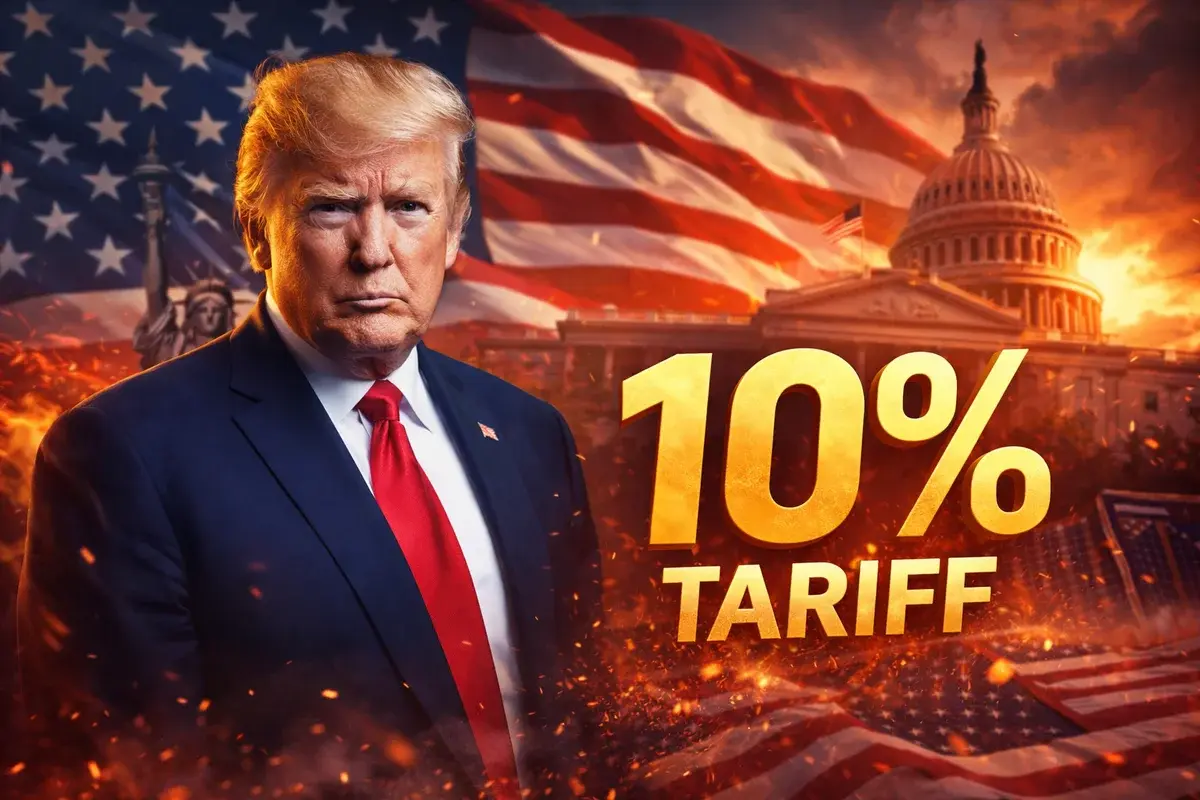
The US officially implements a 10% tariff following a Supreme Court ruling, reshaping trade policy expectations.

China’s export controls targeting major Japanese industrial companies escalate geopolitical tensions, raising supply chain risks, margin pressure,...
Meta AI director faces email crisis as OpenClaw unexpectedly deletes crucial data. FinScann analyzes the financial and ethical implications for Meta...