Loading market data...
FinScann analysis on Trump's new 10% global tariff, effective February 24, 2026, its market impact, and implications for India after the Supreme Court ruling.
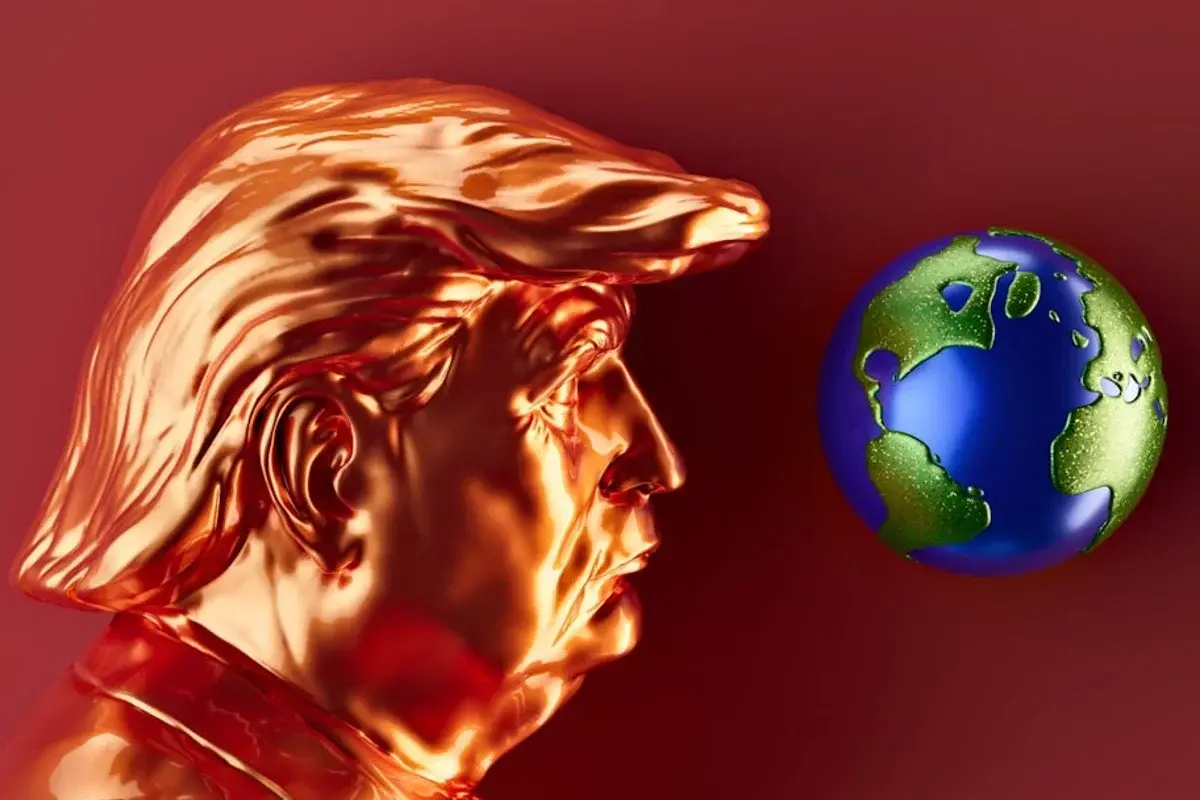
Breaking News: Trump Imposes New 10% Global Tariff in Three Days, S&P 500 Sees Volatile Peak After Supreme Court Overturn in February 2026
In a dramatic turn of global trade policy, U.S. President Donald Trump has announced a sweeping 10% tariff on nearly all imports, set to take effect in just three days on February 24, 2026. This assertive move comes hot on the heels of a landmark Supreme Court ruling that significantly curtailed his executive authority to impose broad tariffs under the International Emergency Economic Powers Act (IEEPA), effectively striking down many of his previous trade duties. The S&P 500 initially surged following the Supreme Court's decision, hitting a day's peak, but market sentiment turned cautious as the President immediately declared his intent to impose new levies under Section 122 of the Trade Act of 1974. This FinScann analysis delves into the critical implications of this rapid policy shift for global markets, international supply chains, and particularly, the Indian economy.
The Catalyst
The stage for this latest trade upheaval was set on Friday, February 20, 2026, when the U.S. Supreme Court delivered a 6-3 ruling, rejecting President Trump's long-standing reliance on the IEEPA to unilaterally levy tariffs. The court's decision, which asserted that the power to tax lies with Congress, was a significant legal rebuke, upending the leverage the administration had wielded in trade negotiations. This ruling was initially perceived by markets as a positive development, potentially alleviating price pressures and fostering greater predictability in trade relations.
However, President Trump swiftly responded to what he termed a "ridiculous, poorly written, and extraordinarily anti-American decision". Hours after the ruling, he signed an executive order, immediately issuing a proclamation to impose a 10% duty on most goods imported into the U.S. for a period of 150 days, citing Section 122 of the Trade Act of 1974. This section allows the president to impose tariffs of up to 15% for 150 days to address "fundamental international payments problems". While some exemptions were noted for critical minerals, metals, energy products, certain food imports, and goods covered by the USMCA trade deal with Canada and Mexico, the blanket nature of this new tariff is a clear reassertion of his protectionist stance. Subsequent statements by President Trump even hinted at a potential escalation to a 15% global tariff, underscoring the unpredictable nature of the ongoing trade landscape.
Financial Forensics
The economic rationale behind blanket tariffs is often debated. Proponents argue they protect domestic industries and reduce trade deficits, while critics warn of higher consumer costs and reduced economic growth. Previous analyses by the Penn Wharton Budget Model in April 2025 projected that a broad tariff regime could lead to a 6% reduction in long-run U.S. GDP and a 5% decline in wages. More recent projections (November 2023) for a similar 10% blanket tariff, assuming retaliatory measures by trading partners, estimated a 0.31% decrease in U.S. GDP (₹5.2 Trillion, or $62 billion) and a ₹10.3 Trillion ($123.3 billion) reduction in U.S. welfare. These figures highlight the substantial economic headwinds such policies can generate.
The immediate implementation of a 10% tariff will directly impact the landed cost of goods for U.S. importers, who are likely to pass these costs onto consumers, contributing to inflationary pressures. This is particularly pertinent given that the U.S. economy recently reported a slowing GDP growth rate of 1.4% in the fourth quarter of 2025, alongside higher-than-expected inflation data (PCE price index up 0.4% month-over-month).
For India, the situation is nuanced. Just weeks ago, on February 6, 2026, the U.S. had agreed to eliminate a 25% tariff on Indian imports, setting a new reciprocal tariff of 18% following an interim trade deal. This deal also promised the removal of tariffs on key Indian exports such as generic pharmaceuticals, gems, diamonds, and aircraft parts, contingent on the agreement's conclusion. The Supreme Court's ruling itself initially suggested that a majority of Indian exports would no longer face the invalidated IEEPA tariffs. However, the new 10% global tariff introduces an additional layer of complexity. Indian goods could now face an additional 10% on top of existing duties, or an effective rate increase, potentially shifting the recently agreed-upon 18% upwards. Some reports indicate Indian goods may face a temporary 15% reciprocal levy, replacing the earlier structure.
Comparison of Tariff Scenarios for Indian Exports to U.S.
| Scenario | Previous IEEPA Tariff (Example) | Feb 6, 2026 Deal Rate | Post-SCOTUS Ruling (Pre-New Tariff) | New Global Tariff (Feb 24, 2026) | Potential Effective Rate for India (Estimates) |
|---|---|---|---|---|---|
| Tariff Rate (on select goods) | Up to 25% (or higher) | 18% | Most IEEPA tariffs struck down | 10% (blanket) | 15% (temporary reciprocal levy) or 18% + 10% = 28% (if additive) |
| Impact | High cost barrier | Reduced trade friction | Short-term relief | New, broad cost barrier | Renewed uncertainty, higher costs |
| Source: FinScann Analysis, February 2026, based on reported data. |
Market Impact
Global equity markets, including India's Sensex and Nifty, had initially seen positive reactions to the Supreme Court's decision, with U.S.-listed shares across various economies showing gains, as the ruling implied less trade uncertainty. The S&P 500 specifically experienced an initial surge of 0.3% to 0.69% on Friday following the ruling, hitting a day's peak before ending modestly higher amidst renewed confusion over the new tariffs. This positive initial market response was driven by the expectation that the removal of broad tariffs could alleviate inflationary pressures and provide more predictability for businesses.
However, the President's immediate counter-announcement of a new 10% global tariff has injected fresh volatility. While the dollar index saw a marginal depreciation of 0.03% to 0.2% and yields on benchmark 10-year US Treasuries climbed slightly after the ruling, the long-term market reaction will hinge on the perceived durability and enforcement of these new tariffs. Industries heavily reliant on imports, such as consumer goods, manufacturing, and automotive, are expected to face renewed pressure. Indian equity markets may witness sector-specific corrections, especially in export-oriented sectors, if the combined tariff burden rises significantly. The Confederation of Indian Textile Industry (CITI) Secretary General, Chandrima Chatterjee, noted that while India had a competitive edge previously, the industry is closely assessing the impact, maintaining optimism for ongoing bilateral negotiations to secure advantages.
Key Takeaways for Investors
FinScann Verdict
President Trump's immediate imposition of a new 10% global tariff following the Supreme Court's ruling on his previous tariffs has ushered in a fresh era of trade uncertainty. While the S&P 500 initially reacted positively to the court's decision, the swift countermove ensures that global markets, including India's, will remain highly sensitive to trade policy developments. FinScann advises investors to prioritize diversified portfolios, closely monitor official policy pronouncements, and assess the long-term resilience of companies against evolving trade barriers and potential retaliatory measures.
Q: How will the new 10% global tariff affect U.S. consumers? A: U.S. consumers are likely to bear the brunt of the new 10% global tariff through higher prices on imported goods, as businesses often pass increased costs onto the end-user. This could contribute to inflation and potentially reduce purchasing power.
Q: What was the Supreme Court's primary reason for overturning Trump's previous tariffs? A: The Supreme Court ruled that President Trump exceeded his constitutional authority by using the International Emergency Economic Powers Act (IEEPA) to impose broad tariffs without clear congressional backing, asserting that the power to tax or levy tariffs ultimately lies with Congress.
Q: How does this new tariff impact the recent U.S.-India trade deal? A: The new 10% global tariff complicates the recently agreed-upon U.S.-India trade framework, which saw a reduction of reciprocal tariffs on Indian goods to 18% and the removal of tariffs on specific items like generic pharmaceuticals. While some products might still see tariff removal, other Indian exports could now face an additional 10%, potentially negating some of the benefits of the interim deal, or facing a temporary 15% reciprocal levy.
Q: What is Section 122 of the Trade Act of 1974, and how does it differ from IEEPA? A: Section 122 of the Trade Act of 1974 allows the U.S. President to impose tariffs of up to 15% for a maximum of 150 days to address "fundamental international payments problems". This differs from the IEEPA, which the Supreme Court ruled could not be used for broad tariff imposition, as IEEPA was intended for national emergencies and the court found that it did not authorize the president to unilaterally set tariffs without congressional approval.
Q: Will the S&P 500 continue to be volatile in the coming weeks? A: Given the ongoing uncertainty surrounding President Trump's trade policy, including the possibility of the 10% tariff escalating to 15% and potential retaliatory measures from other countries, the S&P 500 is likely to experience continued volatility in the short to medium term. Investors will closely watch for further policy statements and their economic implications.
Disclaimer: For information only; not investment advice. Stock market investments carry risks. Please consult a SEBI-registered advisor before investing. FinScann assumes no liability for decisions made based on this report.

Financial journalist specializing in market analysis, stock research, and investment trends. Dedicated to providing accurate, timely insights for informed decision-making.
Credentials: Experienced financial journalist with expertise in equity markets and economic analysis
The information provided in this article is for educational and informational purposes only and should not be construed as financial, investment, or legal advice. Finscann does not provide personalized investment recommendations.
For detailed terms and conditions, please read our Disclaimer and Terms of Service.
Indian solar stocks face sharp decline after new US import duties of 126%, impacting major players like Waaree Energies and Adani Green.

Potpie AI secures $2.2 million in pre-seed funding led by Emergent Ventures with backing from All In Capital, DeVC, and PointOne Capital.
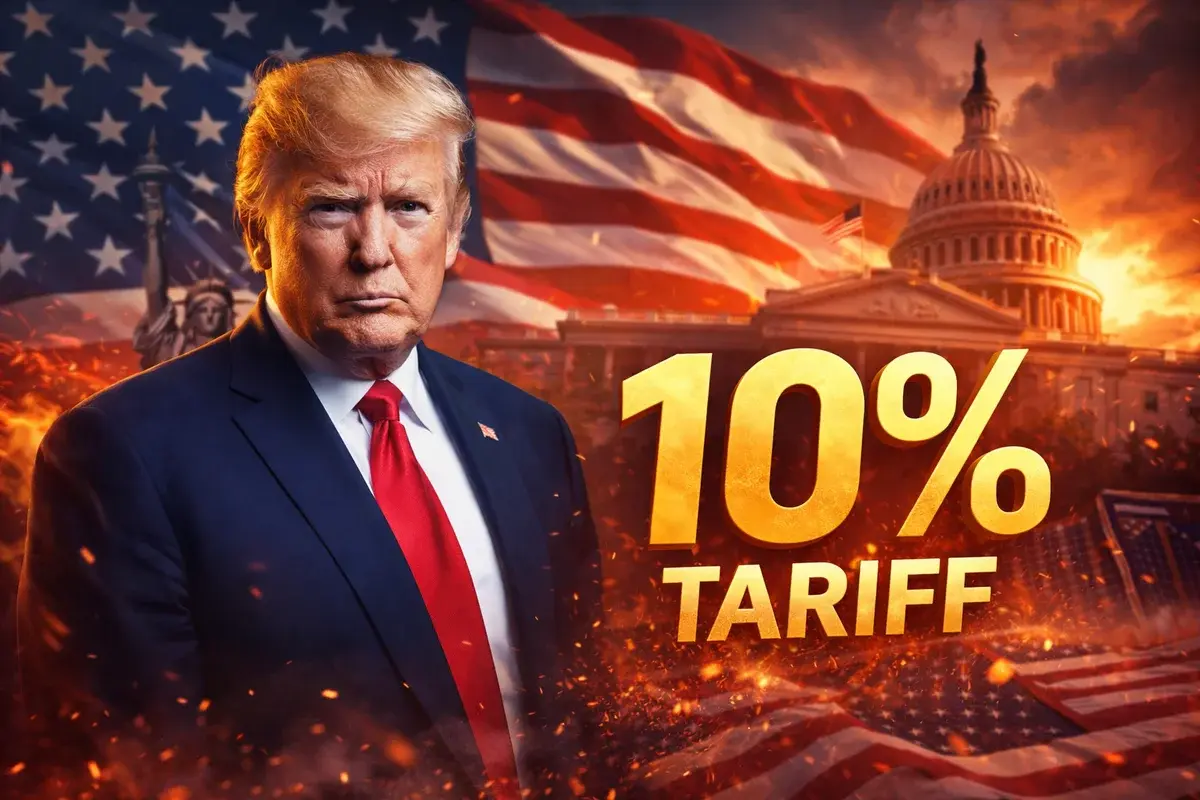
The US officially implements a 10% tariff following a Supreme Court ruling, reshaping trade policy expectations.

China’s export controls targeting major Japanese industrial companies escalate geopolitical tensions, raising supply chain risks, margin pressure,...
Meta AI director faces email crisis as OpenClaw unexpectedly deletes crucial data. FinScann analyzes the financial and ethical implications for Meta...